Verify the Payment Page Is HTTPS: Safe Deposits for Surgery in China
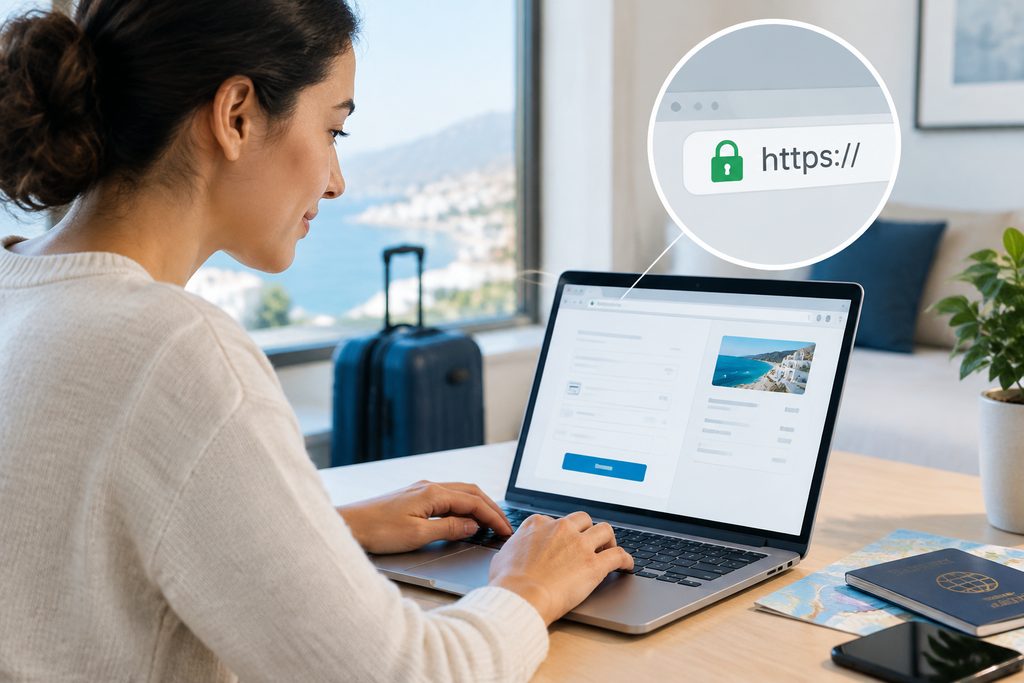
Verify the Payment Page Is HTTPS: The Short Answer
Yes, paying a deposit for surgery in China online can be safe — but only when you verify the payment page uses HTTPS and the receiving account belongs to the hospital’s official international department. That’s the short answer. The longer answer involves knowing what HTTPS actually protects, what it doesn’t, and how to spot the difference between a legitimate hospital payment portal and a convincing fraud. According to the China Association of Non-Public Medical Institutions, over 300,000 international patients traveled to China for medical treatment in 2019, and cross-border payment disputes remain one of the top three concerns cited by first-time patients.
HTTPS encrypts the data between your browser and the server. It prevents a third party from intercepting your card number mid-transmission. But HTTPS alone does not verify that the entity on the other end is a real hospital. A scammer can buy an SSL certificate for a fake domain in under an hour. So the real question is not just “is the page encrypted?” — it’s “is the page encrypted, and is the page actually run by the hospital?”
Who This Is Right For — and Who It Isn’t
Verifying payment security before sending money to a Chinese hospital is relevant for every international patient, but some situations demand more scrutiny than others.
You should absolutely verify payment security if:
- You are booking surgery through a hospital’s international department or VIP channel, where deposits range from $3,000 to $20,000 depending on the procedure
- You are working with a medical concierge or facilitator who is handling payment on your behalf
- You are paying for a written second opinion or video consultation before traveling
- You have been asked to wire funds to an individual’s personal bank account rather than a corporate hospital account
- You are arranging care for a child or elderly family member, where the financial stakes feel more acute
You should pause and reconsider if:
- The hospital’s website does not list an official international patient office with a published phone number
- You are being pressured to pay within 24 hours to “hold your surgery slot”
- The payment request comes from a free email address like Gmail, Yahoo, or a WeChat-only contact
- The quoted price is dramatically lower than what other hospitals charge for the same procedure — a $2,000 cardiac bypass is not a bargain, it’s a red flag
- You cannot find the hospital on the Fudan University hospital rankings or JCI accreditation list
The Options, Compared
International patients paying for surgery in China typically encounter one of four payment routes. Each has a different risk profile and different verification steps. Here is how they stack up:
| Payment Method | Typical Use | Security Level | Verification Required | Refund Difficulty |
|---|---|---|---|---|
| Hospital official online portal (HTTPS) | Deposits, consultation fees | High — if domain verified | Check SSL certificate, domain age, hospital phone confirmation | Moderate — hospital policy dependent |
| International bank wire transfer (SWIFT) | Large surgery deposits | High — but irreversible once sent | Confirm exact beneficiary name matches hospital’s registered legal entity | Very difficult — wires are final |
| Third-party medical concierge payment | Coordination fees, package deposits | Variable — depends on the agency | Check business registration, client reviews, contract terms | Moderate — contract dependent |
| Credit card via hospital’s payment processor | Smaller fees, consultations | High — chargeback protection | Verify the processor is legitimate (Stripe, Alipay Global, UnionPay International) | Easier — card issuer can intervene |
Most patients paying for major surgery will use a SWIFT wire transfer for the deposit, because Chinese public hospitals rarely accept international credit cards for large amounts. That means the verification step before sending the wire is the most important moment in the entire process. A wire transfer is like handing someone cash — once it leaves your account, getting it back requires the recipient’s cooperation.
How to Verify Hospital Payment Security China: A Step-by-Step Check
This section is the one thing you should do before sending any money. The process takes about 30 minutes and can save you from losing thousands.
Step 1: Confirm the domain is real. Hospitals in China use domains ending in .cn, .com.cn, or .org.cn. A legitimate hospital will have a domain registered years ago, not months ago. You can check domain age using public WHOIS lookup tools. A domain registered 90 days ago claiming to be Peking Union Medical College Hospital is a scam. The real hospital’s domain has been active for over a decade.
Step 2: Inspect the SSL certificate. Click the padlock icon in your browser. The certificate should be issued to the exact domain you are visiting, not a different domain or a wildcard that looks suspicious. A legitimate hospital payment page will use an Extended Validation (EV) or Organization Validation (OV) certificate, which shows the registered company name in the certificate details. If the certificate only shows “Domain Validation,” it means anyone with control of that domain could have obtained it.
Step 3: Call the hospital’s international office directly. Find the phone number on the hospital’s official website — not from the email or WhatsApp message that directed you to the payment page. Ask them to confirm the exact payment URL and the exact beneficiary name for wire transfers. If the person on the phone cannot confirm the payment URL, hang up and find another hospital.
Step 4: Verify the beneficiary name on the wire transfer. The receiving account should be in the name of the hospital itself — for example, “Peking Union Medical College Hospital” — not an individual person’s name and not a trading company with an unrelated name. Chinese hospitals are registered as public institutions, and their bank accounts reflect that legal status.
Step 5: Request a written payment confirmation. Ask for an official receipt or payment confirmation on hospital letterhead before you travel. This document is your proof of payment and will be required when you arrive to check in for your procedure.
What It Costs: Deposits and Payment Structures
Understanding what you are paying for helps you spot irregularities. Chinese public hospitals typically require a deposit before admission for surgery. The deposit amount varies by procedure and hospital tier.
For a cardiac bypass at a top-tier public hospital like Fuwai Hospital, the total cost ranges from $12,000 to $20,000, and the upfront deposit is usually 30% to 50% of the estimated total. That means you might be asked to wire $4,000 to $10,000 before you ever set foot in Beijing. For orthopedic surgery at a hospital like Peking University Third Hospital, deposits typically range from $3,000 to $8,000. For cancer treatment at a hospital like Fudan University Shanghai Cancer Center, initial deposits often run between $5,000 and $15,000 depending on the treatment plan.
These deposits are applied to your treatment costs. They are not separate fees. If the final bill is lower than the deposit, the hospital refunds the difference. If it is higher, you pay the balance before discharge. The variance depends on case complexity, length of stay, and whether complications arise.
Private international hospitals in China, such as United Family Healthcare or Jiahui Health, often have different structures. Some accept international credit cards directly, and some work with insurance companies for direct billing. Their deposits tend to be lower as a percentage but the total costs are higher — typically 2 to 3 times public hospital prices.
Practical Considerations: Medical Tourism Payment Protection China
Several practical factors affect how you should approach payment security when arranging surgery in China.
Records and documentation. Before any payment is discussed, the hospital should have already reviewed your medical records. A legitimate hospital will not request payment before a doctor has assessed your case and confirmed that surgery is appropriate. If someone asks for money before any medical review, that is not a hospital — that is a sales operation.
Visa category. You will need an S2 visa for medical treatment in China, and the hospital’s international department should provide an invitation letter that supports your visa application. If the entity requesting payment cannot provide a proper hospital invitation letter, do not send money. The S2 visa is the correct category for short-term medical treatment and private affairs. It is not the same as an M visa, which is for commercial and trade activities and has no connection to medical travel.
Payment methods and limits. International wire transfers to Chinese hospital accounts usually take 3 to 5 business days. Some banks have daily wire limits for international transfers, so you may need to split the deposit into multiple transfers. Confirm with your bank before the payment deadline. Also note that Chinese public hospitals do not typically accept PayPal, Venmo, or cryptocurrency. If someone asks you to pay via Western Union or MoneyGram, it is almost certainly fraud.
Insurance. Most international health insurance plans reimburse after treatment rather than paying upfront. That means you will need to cover the deposit yourself and file for reimbursement afterward. Keep every receipt and payment confirmation. Some private international hospitals in China have direct billing arrangements with major insurers — if this matters to you, check before choosing a hospital.
Language and follow-up. After you return home, you may need follow-up care or documentation from the Chinese hospital. Ensure the hospital’s international department will provide discharge summaries and surgical records in English. This is standard at top-tier hospitals like those on the Fudan University rankings, but it is not universal. Ask before you pay.
Frequently Asked Questions
It is safe when you pay through a hospital’s verified HTTPS portal or wire funds to the hospital’s official corporate account after confirming the beneficiary name, and when you have spoken directly with the hospital’s international office to confirm the payment details. It is not safe when you pay through an unverified third party, send money to an individual’s account, or skip the verification steps because you feel rushed. HTTPS encryption protects your data in transit — it does not protect you from a fraudulent recipient.
Check the domain age using a WHOIS lookup, inspect the SSL certificate to see who it was issued to, call the hospital’s published international office phone number to confirm the payment URL, and verify that the wire transfer beneficiary name matches the hospital’s registered legal entity. If any of these checks fail or feel uncertain, stop and investigate further. Legitimate hospitals are used to these verification calls and will not pressure you.
Contact your bank immediately. For wire transfers, recovery is difficult but not impossible if you act within 24 to 48 hours. For credit card payments, you can file a chargeback. Report the fraud to your local police and to the Chinese embassy or consulate in your country. The reality is that prevention is the only reliable protection — recovery rates for international wire fraud are low, often below 20%.
Some private international hospitals accept international credit cards, but most public hospitals — including the top-ranked institutions on the Fudan University list — do not. For public hospital deposits, expect to use a SWIFT wire transfer. This is standard practice and not a red flag by itself. The red flag is when the wire instructions name an individual or an unrelated company as the beneficiary.
A reputable medical concierge can help you navigate the payment process, but you should never hand over money without understanding exactly where it is going. Ask for the agency’s business registration, request a written contract that specifies what the fee covers, and confirm whether the concierge fee is separate from the hospital deposit. Legitimate services are transparent about their fee structure. Our team at China Medical Services helps patients verify hospital payment details and coordinate with international departments, but we always recommend patients confirm payment instructions directly with the hospital before sending funds.
Your Next Step
Verifying payment security before sending money to a Chinese hospital is not paranoia — it is the same due diligence you would apply to any major purchase, except the stakes are higher. Take the 30 minutes to check the domain, inspect the certificate, and call the hospital directly. If the payment details check out, you can proceed with confidence. If anything feels off, walk away — there are 340+ top-ranked hospitals in China, and another one will have the expertise you need.
We are China Medical Services, a medical concierge organization that connects international patients with top-tier Chinese hospitals. We are not a hospital, and we do not provide diagnoses or medical advice. What we do is help you verify hospital credentials, coordinate with international departments, and navigate the logistics of treatment in China. If you want a second set of eyes on a payment request or help confirming a hospital’s legitimacy, you can reach us for a free consultation.
Verify before you wire. The right hospital will welcome the scrutiny.
For more medical information and treatment options in China, visit chinamedservices.com (China Medical Services).
