Verify the Agent’s Reviews Aren’t Bought: Spotting Fake Testimonials for China Medical Travel
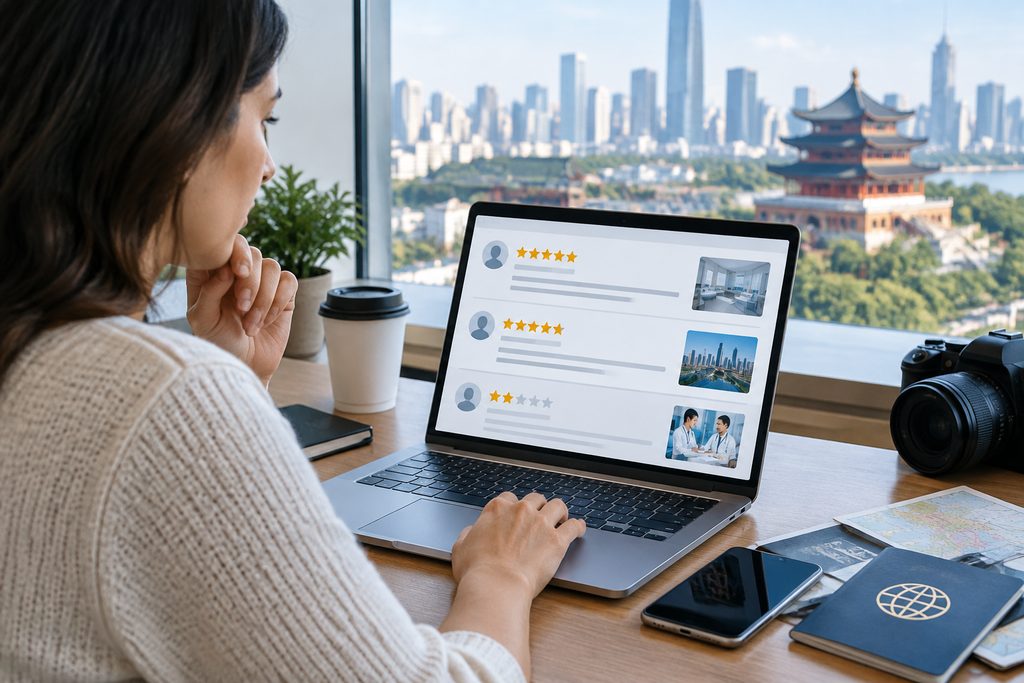
Verify the Agent’s Reviews Aren’t Bought: A Practical Guide for Medical Travelers
When you are planning a medical trip to China, the stakes are high. You are trusting a medical concierge or facilitator with your health, your money, and your itinerary. So it is natural to ask: how do I verify the agent’s reviews aren’t bought? In simple terms, this means checking whether the glowing testimonials on a company’s website or social media are genuine experiences from real patients, or paid fabrications designed to lure you in. It is not about paranoia. It is about protecting yourself from a sophisticated industry of fake reviews that targets medical travelers specifically.
Our team has spent years navigating the intersection of Chinese healthcare and international patient expectations. We have seen the good, the bad, and the manipulated. This guide will walk you through the concrete steps to separate real feedback from manufactured noise.
How This Actually Works, Step by Step
Let’s be honest about the landscape. The medical tourism industry in China is growing fast, and with it, a shadow market of reputation management. Some agencies buy reviews in bulk. Others pressure patients to leave positive feedback before they have even left the recovery room. A few go further, creating entirely fictional personas with stock photos and invented treatment stories. So verifying reviews is not a one-time check. It is a systematic process.
Here is the sequence we recommend. First, you collect every review you can find—not just the ones on the agent’s website. Then you look for patterns. Real reviews have specific details: the name of the hospital, the department, the doctor’s specialty, the exact procedure, the cost range, the complication that arose. Fake reviews are vague. They say things like “great service” or “highly recommended” without any concrete anchor. Then you cross-reference. Does the reviewer exist elsewhere online? Does the hospital they mention actually perform that procedure? Does the timeline make sense?
Finally, you test the agent directly. Ask for references. A legitimate facilitator will offer to connect you with a past patient—subject to privacy consent, of course. A fraudulent one will deflect, make excuses, or offer a “confidentiality” reason that sounds suspiciously convenient.
Why Fake Reviews Are So Common in Medical Travel to China
The economics explain a lot. A single international patient undergoing a complex cardiac procedure or orthopedic surgery can represent $20,000 to $80,000 in hospital and service fees. The commission for a facilitator is substantial. That creates a powerful incentive to look more established than you are. A new agency with no track record can buy 50 positive reviews for a few hundred dollars. Within a week, they appear as credible as a company that has been operating for a decade.
But there is a deeper reason. Language barriers and distance make verification difficult for Western patients. You cannot easily call a past patient in Germany or the United States. You cannot walk into the agency’s office in Shanghai to see if it is real. You are relying on digital signals. And digital signals are cheap to fake. That is exactly why learning to verify the agent’s reviews aren’t bought is a survival skill for medical travelers, not just a nice-to-have.
Consider the scale. According to a 2021 study published in the Journal of Medical Internet Research, approximately 30% of online health-related reviews show signs of manipulation. That is nearly one in three. The same study noted that medical tourism platforms were particularly vulnerable because they operate across multiple jurisdictions with inconsistent oversight. When you combine that with the fact that China’s medical system is unfamiliar to most Western patients, you get a perfect environment for review fraud.
So what does a bought review actually look like in this niche? Often it is a short, generic post: “Excellent medical facilitator, very professional team, helped me with everything.” No hospital name. No procedure. No dates. No mention of visa type or language challenges. Just enough to boost the star rating. Sometimes the same text appears on multiple platforms with different usernames. Sometimes the account was created the same week the review was posted and has no other activity.
A Realistic Timeline
Verifying reviews takes time. If you are rushing to book a surgery, you will cut corners. Here is what a realistic verification timeline looks like for a medical traveler considering China.
| Stage | What Happens | Time Required |
|---|---|---|
| Day 1-3 | Collect all available reviews across platforms: Google, Trustpilot, Facebook, Reddit, specialized medical tourism forums | 2-3 hours of focused work |
| Day 4-7 | Cross-reference reviewer profiles, check for duplicate text, look for patterns of suspicious timing (e.g., 5 reviews in one day) | 3-5 hours |
| Week 2 | Contact the agent and request references; ask specific questions about hospital names, visa process, and complications | 1-2 video calls, plus email follow-ups |
| Week 3 | Verify the agent’s business registration, physical address, and partnership claims with the hospitals they mention | 5-10 hours, depending on responsiveness |
| Week 4 | Make a decision; if proceeding, start document translation and hospital appointment coordination | Ongoing |
Notice the waiting steps people forget. Document translation for medical records can take 3-5 business days. Hospital appointment lead times for top specialists at places like Fuwai Hospital or Peking Union Medical College Hospital can be 2-4 weeks. Visa processing for an S2 visa—the correct category for medical treatment in China—typically takes 1-3 weeks depending on your home country’s Chinese embassy. None of these steps can be rushed. So if an agent promises you a surgery date within days of your first contact, that is itself a red flag, regardless of what their reviews say.
What Can Go Wrong — and What Happens Then
Ask for verifiable references. Request the agent’s Chinese business registration number and check it against the National Enterprise Credit Information Publicity System. Ask specific questions about visa categories, hospital appointment procedures, and pricing. If the agent cannot answer competently, walk away regardless of what the reviews say.
It depends entirely on the facilitator’s verifiable track record. If you have confirmed their business registration, cross-referenced their hospital partnerships, and spoken with a past patient, a deposit is a normal part of the process. If you have not done these things, a deposit is a gamble. Pay by credit card when possible for chargeback protection. Avoid wire transfers to unfamiliar entities.
Your Next Step
Verifying reviews is not about distrusting everyone. It is about applying the same rigor to your medical facilitator that you would apply to a surgeon or a hospital. The best agents welcome scrutiny. They have nothing to hide. Our team at China Medical Services focuses on case management: translating records, coordinating through official hospital international departments, and providing bilingual companions. We do not promise outcomes. We do not guarantee access to specific specialists. We do provide transparent pricing and verifiable information. If you are considering medical treatment in China, start with a free consultation. We will help you evaluate your options honestly—including whether China is the right choice for you at all.
Take your time. Ask hard questions. And never let a five-star rating replace your own due diligence.
Frequently Asked Questions
Yes. The hospitals used for international patients are JCI-accredited and follow the same international safety standards as top hospitals in the US and Europe. Surgical teams perform high volumes of procedures — often more than their Western counterparts — which studies show leads to better outcomes.
Costs vary by procedure and hospital, but international patients typically save 40-80% compared to US prices — even when factoring in travel and accommodation. A consultation with our team will give you an exact, all-inclusive quote with no hidden fees.
Send us your existing medical reports to get started. We handle everything from hospital selection and appointment scheduling to visa assistance and post-operative recovery planning. Your medical records are reviewed by the specialist before you even book a flight.
For more medical information and treatment options in China, visit chinamedservices.com (China Medical Services).
