Mismatched Names: A Sign Something Is Off in Medical Tourism
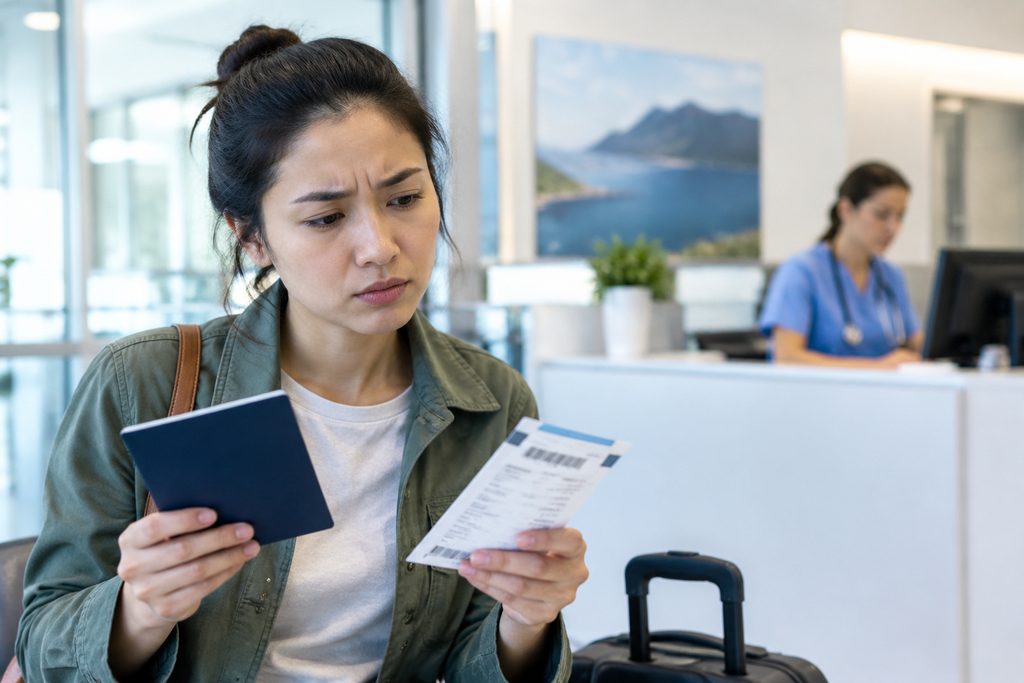
You searched for a hospital name. The website says one thing. The invoice says another. A doctor’s name appears differently on a listing site and a medical license. That feeling in your stomach? Worth listening to. In medical travel, a mismatched name is rarely a typo. It is usually a signal that an intermediary, a marketing agency, or a clinic is obscuring who actually provides care. This matters enormously when you are evaluating something as serious as the best hospital for liver transplant in China — a search that pulls up dozens of polished websites, many of which are not hospitals at all.
Before booking anything, you need to understand what a name mismatch actually means. It can be a hospital using a commercial brand instead of its licensed entity name. It can be a broker listing a “partner hospital” that has no formal relationship with the surgeon pictured. It can be a doctor whose English name is a transliteration that does not match any verifiable registration. In every case, the mismatch creates a problem: you cannot verify credentials, you cannot confirm where your money goes, and you cannot hold anyone accountable if something goes wrong.
Our team at China Medical Services reviews hospital documentation daily. We have seen the full spectrum — from innocent administrative lag to deliberate misrepresentation. The goal of this article is to teach you how to tell the difference, and what practical steps protect you before you wire a deposit.
How This Actually Works, Step by Step
Let us walk through the real sequence of verifying a hospital and doctor in China before you commit to surgery or treatment. This is the process we follow internally, and you can do it yourself with patience and the right questions.
First, you request the hospital’s full legal name and address from whoever is communicating with you. Not the brand name. The registered entity name as it appears on the medical institution license. In China, every hospital — public or private — holds a license issued by the National Health Commission or a provincial health authority. That license has one official name. If the person you are talking to cannot produce it, or gives you a name that does not match the building’s signage, stop there.
Second, you ask for the treating doctor’s name in Chinese characters and their medical license number. This is the step most international patients skip. They get an English name like “Dr. Zhang” and assume that is enough. It is not. “Zhang” is one of the most common surnames in the world. Without the Chinese characters and license number, you cannot confirm which Zhang you are dealing with, where they trained, or whether they are actually credentialed in the specialty you need.
Third, you cross-check both names against official databases. The National Medical Products Administration and provincial health commissions maintain public registries. Some are in Chinese only. That is why patients hire bilingual coordinators — not to translate menus, but to read license databases and call hospital international departments to confirm a doctor’s current affiliation.
What comes back from a proper check? You should receive a written confirmation from the hospital’s international department stating: the doctor’s full name, their department, their title, and the dates they are available. If the intermediary refuses to provide this, or says it is “not how things work in China,” that is a mismatch in process, not just in names.
Why Name Mismatches Happen — and When to Worry
Request the doctor’s Chinese name and medical license number. Cross-check that number against the provincial health commission’s public registry. A licensed doctor’s number is unique and does not change. If the intermediary cannot provide it, or provides a different number when you ask twice, do not proceed.
Yes, if you go through a hospital’s international department or a verified coordinator. The risk is not the surgery itself — China’s top hospitals perform high volumes of complex procedures. The risk is miscommunication and navigation. A bilingual companion or international department staff mitigates that risk. Without language support, even registering for an appointment becomes difficult.
You have the right to refuse and ask for the surgeon you verified. Get the original surgeon’s name and license number in writing before you travel. If the hospital substitutes a different surgeon, ask for that surgeon’s credentials and decide whether to accept or reschedule. Do not sign a consent form under pressure.
Be careful. Public hospitals in China do not allow overseas patients to pre-book ordinary outpatient appointments. What brokers offer is usually access through the hospital’s international or VIP department, which charges higher fees — roughly 1.5 to 2 times the standard rate. That is legitimate if the broker is transparent about the channel and the fees. It is not legitimate if they claim to have a special relationship that bypasses the system.
Your Next Step
Name mismatches are rarely harmless. They are usually a sign that someone in the chain is not who they claim to be. The fix is not paranoia — it is verification. Request legal names, license numbers, and written confirmations. Cross-check everything. Take your time.
Our team at China Medical Services helps international patients verify hospitals and doctors, coordinate appointments, and navigate treatment in China. We do not promise access that does not exist, and we do not obscure who is providing your care. If you want a second pair of eyes on a hospital or doctor you are considering, start with a free consultation. We will tell you what checks to run and help you run them.
Frequently Asked Questions
Yes. The hospitals used for international patients are JCI-accredited and follow the same international safety standards as top hospitals in the US and Europe. Surgical teams perform high volumes of procedures — often more than their Western counterparts — which studies show leads to better outcomes.
Costs vary by procedure and hospital, but international patients typically save 40-80% compared to US prices — even when factoring in travel and accommodation. A consultation with our team will give you an exact, all-inclusive quote with no hidden fees.
Send us your existing medical reports to get started. We handle everything from hospital selection and appointment scheduling to visa assistance and post-operative recovery planning. Your medical records are reviewed by the specialist before you even book a flight.
For more medical information and treatment options in China, visit chinamedservices.com (China Medical Services).
