Verify the Hospital’s WeChat Account Is Official: A Step-by-Step Safety Guide
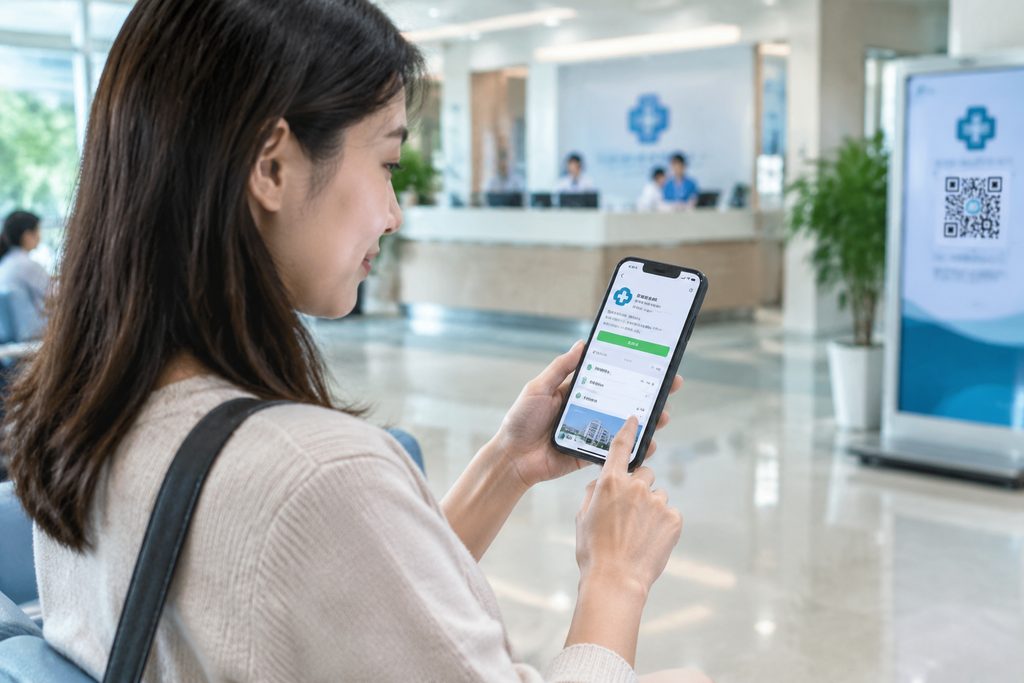
You’ve probably heard that WeChat is just a messaging app. For international patients, it’s actually the front door to China’s healthcare system — and that door has counterfeit copies. A fake hospital WeChat account can collect your medical history, demand deposits, and vanish. The good news: verifying a hospital’s WeChat account in China takes about ten minutes if you know the three markers to check. We’ll walk through each one.
This guide exists because we’ve seen the aftermath of patients who skipped verification. They lost consultation fees. They sent scans to strangers. Some flew to China expecting an appointment that never existed. None of that needs to happen to you.
Verify Hospital WeChat Account China: The Short Answer
The fastest way to verify a hospital WeChat account in China is to check for the blue “Verified” badge next to the account name, confirm the WeChat ID matches the hospital’s official website, and cross-reference the account’s registration entity with the hospital’s legal name in Chinese. If all three align, the account is almost certainly official.
But here’s the catch: the blue badge alone isn’t bulletproof. Scammers have registered accounts with names that look official at a glance. And some legitimate hospital departments run separate accounts without full verification. So you need the full method, not just one check.
Who This Is Right For — and Who It Isn’t
This verification process matters most if you’re planning to send medical records, pay consultation fees, or schedule appointments through WeChat before arriving in China. It’s also critical if a hospital representative contacted you first — outbound contact is a common vector for fraud.
Who should invest the ten minutes:
- Patients who received a WeChat ID from a referral agent, social media post, or forum recommendation
- Anyone asked to pay a deposit or “registration fee” via WeChat transfer
- Families coordinating care for a relative who doesn’t read Chinese
- Patients comparing hospitals for a specific specialty like oncology or cardiac surgery
Who can skip the deep dive:
- Patients already working with an established medical concierge who handles hospital communication
- Those using only hospital websites with verified domain names and phone numbers
- People not yet at the stage of sharing personal health information
If a hospital’s WeChat account is your only channel of communication, verification is non-negotiable.
The Options, Compared
There isn’t just one way to confirm a hospital WeChat account is official. You can check the badge, dig into the account details, cross-check with the hospital website, or call the hospital directly. Each method has a different speed and reliability profile.
| Verification Method | Time Required | Reliability | Best For |
|---|---|---|---|
| Blue verified badge check | 30 seconds | Moderate — badges can be mimicked with lookalike accounts | Quick first filter |
| WeChat ID cross-check with official website | 5 minutes | High — official IDs rarely change | Most patients |
| Registration entity inspection | 10 minutes | Very high — legal entity name is hard to fake | High-stakes cases (surgery, large deposits) |
| Direct phone call to hospital international department | 15–30 minutes (plus time zone juggling) | Highest — human confirmation | Any case where money or records are involved |
| Third-party medical concierge verification | 1–2 business days | Very high — staff on the ground in China | Patients who want zero ambiguity |
The badge check is where everyone starts. But if you’re sending a single medical record or one dollar, the phone call or concierge route is the one that actually protects you. Badge checks catch lazy scammers. Phone calls catch the rest.
How to Check If Chinese Hospital WeChat Is Official: The 5-Step Method
This is the section you came for. We’ll walk through the exact steps to answer the question “is this hospital WeChat account real” — and we’ll do it in the order that catches the most fraud with the least effort.
Step 1: Open the Account Profile and Look for the Blue Badge
Tap the account name at the top of the chat window. You’ll see a profile page. If the account is verified, a blue circular badge with a checkmark appears next to the name. That badge means Tencent — WeChat’s parent company — has confirmed the account belongs to a registered business or institution.
But don’t stop there. A scammer can create an account called “Beijing Union Hospital International” and get it verified as a business. The badge confirms the account is registered to some entity. It doesn’t confirm the entity is the hospital you think it is. So the badge is step one of five, not the finish line.
Step 2: Check the WeChat ID Against the Hospital’s Official Website
Every WeChat account has a unique WeChat ID — a string of letters and numbers that can’t be changed after registration. Official hospital accounts almost always use an ID that matches or closely resembles their official English or pinyin name.
Open the hospital’s official website in a separate browser. Find their “Contact Us” or “International Services” page. Look for a WeChat ID or QR code. If the website lists a WeChat ID, compare it character by character with the account you’re checking. A single character difference means you’re looking at a fake.
No WeChat ID on the website? That’s not automatically a red flag — some hospitals only share their WeChat through official channels. But it means you need step 3 more urgently.
Step 3: Inspect the Registration Entity
Scroll down in the account profile. You’ll see a section labeled “Account Information” or “Registration Details.” For verified business accounts, this shows the legal name of the entity that registered the account.
Here’s the part most international patients miss: the entity name will be in Chinese. You need to compare that Chinese name with the hospital’s official Chinese legal name. For example, Peking Union Medical College Hospital‘s legal name is 北京协和医院. If the registration entity says something like “Beijing Xiehe Medical Consulting Co., Ltd.” — that’s a private company, not the hospital.
Can’t read Chinese? Use a translation app. Or ask a bilingual contact. This step alone eliminates the majority of sophisticated fakes.
Step 4: Cross-Reference with the Hospital’s Official Website and Phone Number
Go back to the hospital’s official website. Look for their international department phone number. Call it. Ask one simple question: “What is your official WeChat ID for international patients?”
Yes, this requires a phone call. And yes, time zones make it inconvenient. But a two-minute call to the right number beats a two-month recovery from a scam. If the phone number on the website doesn’t match the number the WeChat account gave you, you’ve found your answer.
Step 5: Look for Behavioral Red Flags
Official hospital accounts don’t pressure you. They don’t demand immediate deposits via personal transfer. They don’t ask for your passport number in the first message. They don’t offer “guaranteed” appointments with specific professors for a “small facilitation fee.”
If the account you’re checking does any of these, walk away — even if the badge is blue and the ID matches. Scammers occasionally hijack dormant official accounts or create convincing clones. Behavior is the final filter.
What It Costs: Verification vs. Getting It Wrong
Verifying a hospital WeChat account costs nothing but time. Getting it wrong costs real money. Here’s what’s at stake.
Fake accounts typically request a “registration deposit” or “consultation booking fee” ranging from $200 to $2,000. Some ask for hospital “prepayment” of $5,000 or more before you arrive. Once transferred via WeChat, the money is gone — WeChat transfers are not reversible for international users in most cases.
Beyond money, you’re sending medical records, imaging files, and personal identification to an unknown party. That data can be resold or used for identity fraud. The cost of a data breach involving medical history is hard to quantify, but it’s not zero.
If you work with a medical concierge, verification is part of the service. At China Medical Services, our team confirms hospital accounts and communication channels before any patient sends records or payment. That’s included in the coordination service, which starts at $300 for appointment coordination. Compare that to a $2,000 deposit lost to a fake account — the math is straightforward.
Practical Considerations: Records, Payments, and Language
Once you’ve verified the account, a few practical realities still apply. Official hospital WeChat accounts in China are primarily designed for domestic patients. That means most content is in Chinese, and the staff responding to messages may not speak English fluently.
If you’re communicating in English, expect slower responses. If you need urgent answers, the hospital’s international department phone line or a bilingual coordinator is faster. WeChat is fine for scheduling and document sharing. It’s not ideal for complex medical discussions across language barriers.
Payment is another consideration. Official hospital accounts rarely accept payment directly through WeChat from international patients. Most public hospitals require prepayment at the hospital’s cashier desk or via bank transfer to the hospital’s official account. If a WeChat account asks you to transfer money to a personal account — even a “staff member’s” account — treat that as fraud.
For records, WeChat is a convenient transfer channel, but it’s not HIPAA-compliant or GDPR-compliant. Many patients prefer email for formal records and WeChat for quick questions. Either way, only share records after verification.
Frequently Asked Questions
Yes. The blue badge means the account is registered to a verified business — not necessarily the hospital. A scammer can register a company with a name similar to the hospital’s and get verified. That’s why the badge is only step one of verification, never the final word.
Call the hospital’s international department using the phone number on their official website. Ask for the WeChat ID directly. If the person on the phone gives you a different ID than the one you were contacted with, you’ve caught a fake. If they can’t provide a WeChat ID, ask for an alternative official channel like email or a patient portal.
Act fast. Contact your bank or payment provider immediately to report the fraud and request a reversal — though WeChat transfers are rarely recoverable. Report the account to WeChat through the in-app reporting function. If you shared passport or identity information, consider placing a fraud alert with your country’s credit bureaus. And document everything: screenshots, transaction records, and message history.
Most are not. WeChat is a domestic platform, and hospital accounts are built for Chinese-speaking patients. Some top-tier hospitals with strong international departments — like those in Beijing and Shanghai — post occasional English content. But day-to-day messaging will likely be in Chinese. If you need English communication, a bilingual coordinator or the hospital’s international hotline is more reliable.
It’s common practice, but not the most secure option. WeChat is not designed for medical data transfer and offers no compliance guarantees. For sensitive records, many patients use encrypted email or a secure patient portal. If WeChat is your only option, send only what’s necessary and confirm the recipient is the verified account — not a forwarded contact.
Your Next Step
Verifying a hospital WeChat account is a ten-minute process that protects your money, your records, and your peace of mind. The method is simple: check the badge, match the WeChat ID to the official website, inspect the registration entity, call the hospital, and watch for behavioral red flags.
China Medical Services helps international patients navigate this process every day. We’re not a hospital and we don’t provide medical diagnoses. What we do is confirm communication channels, coordinate appointments, and connect you with verified specialists across 340+ top-ranked hospitals in 37 Chinese cities. If you’d rather not spend your energy chasing verification details, start with a free consultation — we’ll help you sort out which channels are legitimate before you share a single record.
Ten minutes of verification now saves you months of recovery later. And if you’re ever unsure, ask someone who does this for a living.
For more medical information and treatment options in China, visit chinamedservices.com (China Medical Services).
