Verify the Hospital Has the Machine You Need: A Practical Checklist for Medical Travel to China
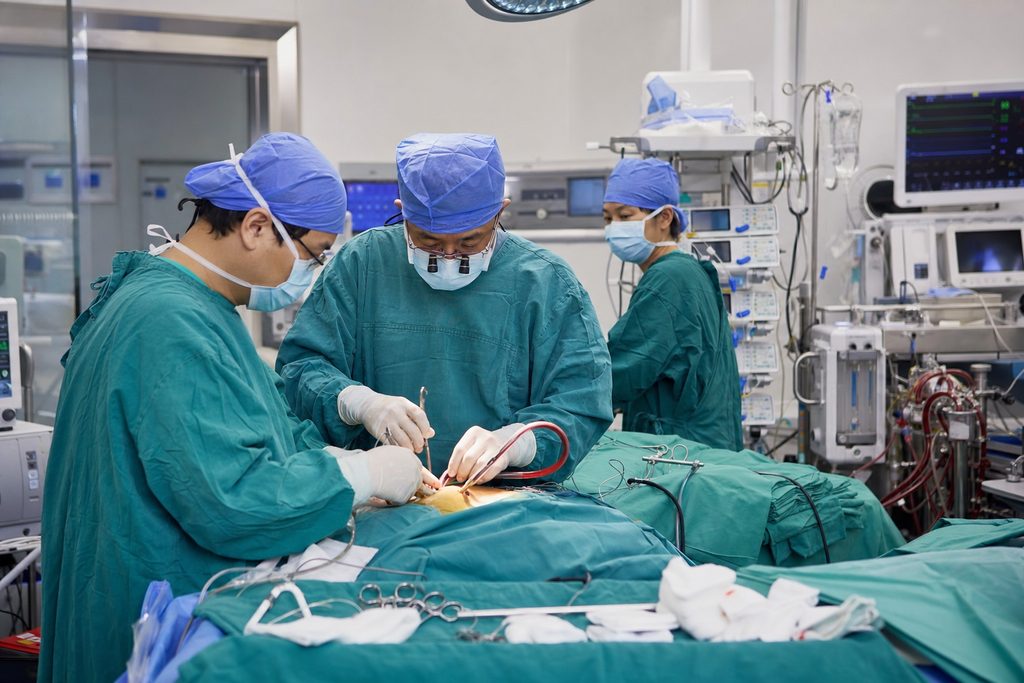
When 47-year-old Daniel from Manchester was told he needed a cardiac ablation, his first question wasn’t about the surgeon’s name. It was about the machine. He had read about pulsed-field ablation systems and wanted to know if the hospital in Shanghai he was considering actually had one. Not a similar one. Not an older model. The specific platform his cardiologist back home had mentioned. Daniel spent three weeks emailing hospital general inquiry addresses. He got two auto-replies and one response in Mandarin that Google Translate rendered as “please come to outpatient clinic first.” He almost gave up on the whole idea.
This is the reality of cross-border medical care. You can find a hospital with a strong reputation, a top-ranked department, and a surgeon with decades of experience. But if you cannot confirm the facility has the specific imaging platform, robotic system, or treatment device your case requires, none of that matters. Knowing how to verify hospital has the equipment I need in China is not a bureaucratic detail. It is the difference between a successful treatment trip and an expensive mistake.
Key Takeaways
- China’s top-tier hospitals invest heavily in equipment, with flagship facilities operating multiple 3.0T MRI units and dual-source CT scanners that rival or exceed Western benchmarks.
- Hospital websites in China are often outdated or incomplete for equipment listings — direct verification through a coordinator or the hospital’s international department is essential.
- Public hospital general inquiry channels rarely answer English-language equipment questions within a useful timeframe.
- Written confirmation of a specific device model, software version, and clinical availability should happen before you pay for flights, visas, or deposits.
The Problem: Equipment Lists Are Not Always Public
Let’s be direct: do Chinese hospitals have the latest MRI machines? Yes. The flagship institutions in Beijing, Shanghai, and Guangzhou operate fleets of 3.0T MRI units. Some have moved to 5.0T research systems and photon-counting CT. Fuwai Hospital in Beijing, which performs over 14,000 cardiac surgeries annually, operates multiple hybrid operating rooms with intraoperative imaging. Zhongshan Hospital in Shanghai runs one of the largest endoscopy centers in Asia. The equipment is there.
But “China has it” is not the same as “your hospital has it.” A hospital may have a robotic surgery system in its urology department but not in gynecology. A PET-CT scanner may be shared across three campuses with a two-week scheduling backlog. The question is not whether China has the technology. The question is whether the specific hospital, specific department, and specific clinical team you are considering has the right machine for your specific condition.
Volume Drives Equipment Investment
Chinese top-tier hospitals see patient volumes that are hard to comprehend from a Western perspective. A single large public hospital in Shanghai may see 10,000 outpatient visits in one day. That scale creates a financial logic for equipment investment. If a hospital performs 3,000 prostatectomies a year, it can justify purchasing two or three da Vinci robotic systems. If a hospital does 5,000 cardiac ablations annually, it will have multiple electrophysiology labs with the latest mapping systems.
This volume also means equipment is used constantly, not sitting idle. Technicians and clinicians develop deep familiarity with the machines. That operational experience matters for complex cases.
Cost Structure Allows Rapid Upgrades
One reason Chinese hospitals can offer cardiac bypass surgery at $12,000 to $20,000 versus $120,000 or more in the United States is structural. Labor costs are lower. Hospital construction costs are lower. And equipment, while expensive, is amortized across a much larger patient base. This means top hospitals upgrade on shorter cycles. A machine that would be considered “current generation” in a Western hospital for seven years might be replaced in five in Shanghai. For patients, that means access to newer technology at a fraction of the cost.
How to Check if a Hospital in Beijing Has Robotic Surgery Equipment
This is where most international patients get stuck. You cannot simply call the hospital switchboard and ask. The person answering speaks Mandarin and has no idea what a “da Vinci Xi” is. So what actually works?
Start with the hospital’s official Chinese website. Use a browser with auto-translate. Look for department pages — specifically the surgical department relevant to your case. Chinese hospital department pages often list equipment in a section called “设备介绍” (equipment introduction). This is more current than the English version. But even this has limits. The page may not list model numbers or software versions.
Next, look for academic publications from that department. Chinese surgeons publish extensively in international journals. A paper from the urology department at a Beijing hospital that describes robotic-assisted procedures will typically name the specific system used. If the paper is from 2024 and names a da Vinci Xi or a国产 system like the KangDuo, that tells you the machine is there and in clinical use. Search PubMed with the hospital name and the procedure type.
Third, contact the hospital’s international medical department directly. Most top-tier hospitals have one. Some respond to English emails within a week. Others do not. When you write, be specific: “I am scheduled for a radical prostatectomy. I need to confirm whether your urology department uses the da Vinci Xi system, and whether it is available for international patients.” Vague questions get vague answers.
And here is the honest part: this process often takes multiple attempts. Hospitals are busy. International departments are small. This is where a coordination service earns its value — we handle these verification requests daily and know which contacts to reach and how to phrase the question to get a definitive answer.
List of Medical Equipment Available at Shanghai Hospitals: What You Can Actually Confirm
Shanghai is home to 18 hospitals on the Fudan Top 100 list — the second-highest concentration in China after Beijing’s 21. For international patients, Shanghai’s equipment landscape breaks into several categories. Here is what you can realistically confirm before traveling.
| Equipment Type | What to Look For | Typical Availability in Top Shanghai Hospitals | Verification Difficulty |
|---|---|---|---|
| 3.0T MRI | Multiple units, cardiac and neuro coils | Standard at Fudan-affiliated and Jiao Tong-affiliated hospitals | Low — usually listed on department pages |
| PET-CT | Digital detector, whole-body imaging | Available at major oncology centers; scheduling may take 1-2 weeks | Medium — confirm scanner generation |
| Robotic Surgery (da Vinci, KangDuo) | Specific model, department-specific availability | Urology, gynecology, thoracic, general surgery at top hospitals | High — must confirm by department |
| Linear Accelerator (Radiotherapy) | IMRT, VMAT, SBRT capability | Standard at cancer centers; newer models at flagship hospitals | Medium — ask about specific treatment techniques |
| Cardiac Catheterization Lab | 3D mapping, rotational angiography | Multiple labs at cardiac centers like Zhongshan | Low — cardiac centers publicize this |
Does this hospital in China have a PET CT scanner? If it is a top-100 hospital with an oncology department, almost certainly yes. But “has a PET-CT” is not enough. You need to know the scanner’s generation, the radiotracer availability, and the scheduling window. A hospital may have one PET-CT serving 5,000 beds. That means a two-week wait. If your treatment timeline is tight, that matters.
Can I Confirm the Hospital Has the Machine Before Booking Surgery Abroad?
Yes. But you need a process. Here is the one we recommend, built from years of handling these requests for patients from the US, UK, Middle East, and Southeast Asia.
First, define exactly what you need. Not “an MRI” — a 3.0T MRI with cardiac imaging capability. Not “robotic surgery” — a da Vinci Xi with a dual-console setup, or a specific Chinese system. Write down the machine name, the model, and the clinical reason you need it. If your home physician specified a particular technology, get that in writing.
Second, identify two or three candidate hospitals. Use a resource like our top hospitals database to find institutions ranked for your specialty. For cardiac surgery, that might mean Fuwai or Zhongshan. For oncology, Fudan University Shanghai Cancer Center or Peking University Cancer Hospital. For orthopedics, Jishuitan Hospital in Beijing or Shanghai Sixth People’s Hospital.
Third, verify through multiple channels. Check the Chinese department page. Search PubMed for recent papers from that department naming the equipment. Contact the international department. If you are working with a coordinator, have them confirm directly with the department’s equipment administrator — not just the front desk.
Fourth, get it in writing. An email from the hospital’s international department stating “the urology department has two da Vinci Xi systems available for international patient procedures” is worth more than a phone conversation. If the hospital will not put it in writing, that is information too.
Red flag: If a hospital or agent tells you “we have everything” without asking what specifically you need, slow down. A legitimate verification process starts with your clinical requirements, not with a blanket reassurance.
Practical Considerations: Documentation, Timing, and Language Barriers
Equipment verification is one part of a larger preparation process. Here are the practical realities you should plan for.
Medical records first. Before any hospital will confirm equipment suitability, they will want to see your case. That means imaging files (DICOM format preferred), pathology reports, and a summary letter from your treating physician. Without records, the hospital cannot tell you whether their equipment is appropriate for your specific situation. A written second opinion from a Chinese specialist costs $300 to $500 and typically includes an assessment of whether their facility has the necessary technology.
Visa timing. Medical travel to China uses the S2 visa, which is for short-term private affairs including medical treatment. The hospital’s international department or your coordination service will provide an invitation letter and treatment confirmation documents. Processing typically takes one to two weeks, but confirm with your local Chinese embassy or consulate as requirements change. If your treatment requires a stay beyond 180 days, the S1 visa applies. Do not apply for an M visa — that is for commercial and trade activities, not medical care.
Language reality. Top-tier Chinese public hospitals are not English-friendly environments. The international departments are, but once you move into the main hospital for imaging or procedures, signage, forms, and most staff communication happen in Mandarin. A bilingual medical companion — available from $300 per day — handles registration, navigation, interpretation, and payment logistics. This is not a luxury add-on for most patients. It is the difference between a smooth process and a disorienting one.
Payment structure. Public hospitals in China generally require prepayment or deposit before admission. Insurance is typically reimbursement-based, meaning you pay upfront and claim later. Private international hospitals like United Family or Jiahui offer direct billing with major insurers, but their equipment range is narrower than the big public academic centers. If your case requires a specific advanced machine, you will likely be at a public hospital where the payment model is pay-first.
Frequently Asked Questions
How long does equipment verification actually take?
For a straightforward request — confirming a 3.0T MRI or a standard linear accelerator — expect three to seven business days if you have the right contact. For more specific requests, like confirming a particular software version on a robotic system or the availability of a specialized coil for cardiac imaging, allow two to three weeks. The bottleneck is usually internal communication within the hospital, not the actual answer.
What if the hospital won’t confirm the equipment in writing?
Some hospitals will only confirm equipment during an in-person consultation. This is frustrating, but it is their policy. In these cases, a video consultation with the relevant department — typically $100 to $300 for a standard international department session, or $500 to $800 for a top specialist — is the workaround. The specialist can confirm during the call what equipment they use for your procedure. Record the consultation or take detailed notes.
Is newer equipment always better?
Not necessarily. A hospital with a five-year-old 3.0T MRI and an experienced neuroradiology team may produce better diagnostic results than a hospital with a brand-new scanner and less experienced readers. Equipment is one factor. Clinical volume, technician experience, and interpretation expertise matter equally. Ask about all of them.
Can I bring my own imaging and skip the hospital’s scanner?
Sometimes, but not always. Chinese hospitals often require their own imaging for surgical planning, particularly for procedures where intraoperative navigation depends on specific scan protocols. Bring your existing images — they are valuable for the initial consultation — but expect that the hospital may repeat key scans on their own equipment.
What happens if the equipment breaks down before my surgery?
This is rare but not impossible. Large hospitals typically have service contracts with manufacturers that guarantee rapid response. For critical equipment, top hospitals often have redundancy — multiple MRI units, multiple cath labs. Ask about backup capacity when you verify equipment. A hospital with one PET-CT scanner is in a different risk position than one with three.
Your Next Step
Verifying equipment is the kind of task that separates a well-planned medical trip from a gamble. It takes time, persistence, and the right contacts. Our team at China Medical Services handles these verification requests as part of our coordination work — we are not a hospital and we do not provide diagnoses, but we do know how to get definitive answers from Chinese medical institutions. If you are considering treatment in China and need to confirm a specific machine, start with a free consultation. Tell us what you need, and we will tell you what is actually available.
For more medical information and treatment options in China, visit chinamedservices.com (China Medical Services).
