Post-COVID Long-Haul Recovery in China: A Program for Lingering Symptoms
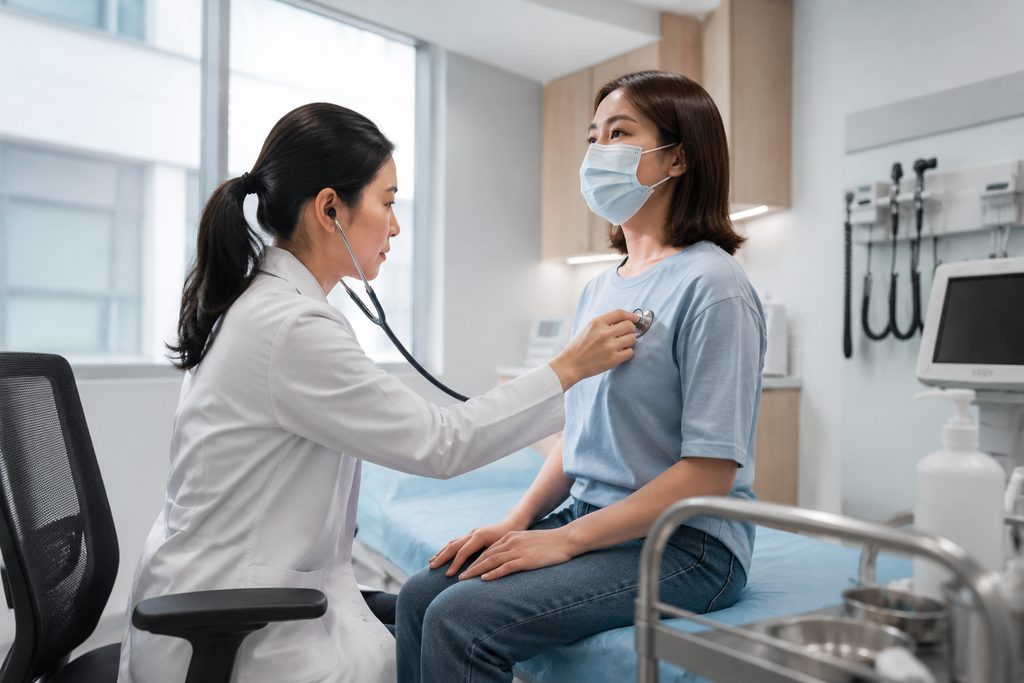
When 44-year-old Sarah finally admitted she wasn’t getting better, it had been fourteen months since her initial COVID infection. She’d been a marathon runner. Now she couldn’t climb a flight of stairs without her heart pounding for twenty minutes afterward. Her brain fog made reading a single email feel like deciphering a foreign language. Her doctor in London had run every test. They all came back normal. He’d used the term “post-viral syndrome” and suggested time and rest. But Sarah had already given it time. Fourteen months of it. She was searching for something else entirely—not just an explanation, but an actual protocol. A program designed to rebuild what the virus had broken. That search led her to look beyond her national borders, toward systems that had been managing post-COVID recovery at enormous scale from the very beginning.
Key Takeaways
- Approximately 1 in 8 adults who contract COVID-19 develop long-haul symptoms lasting months or years, per a 2022 study published in The Lancet.
- China’s top rehabilitation hospitals have treated massive post-COVID patient volumes since early 2020, developing structured, multi-disciplinary recovery protocols that integrate pulmonary rehab, neurological retraining, and Traditional Chinese Medicine.
- Navigating China’s hospital system independently is the single biggest barrier for international patients—language, visa requirements, and appointment logistics require local expertise.
- The structural cost advantage is significant: comprehensive post-COVID rehab programs in China typically range from a fraction of equivalent Western programs, but real costs depend entirely on the specific hospital and treatment complexity.
The Problem: When Your Body Clears the Virus but Forgets How to Function
Post-COVID-19 condition, or “long COVID,” is not a mystery illness in the sense of being rare. It is frighteningly common. A meta-analysis published in the Journal of the American Medical Association in October 2022 examined over 1.2 million patients across 22 countries. The data showed that 6.2% of people who had symptomatic COVID-19 still experienced at least one of three core symptom clusters—persistent fatigue with bodily pain, cognitive dysfunction, or ongoing respiratory issues—three months after infection. That percentage translates to tens of millions of people globally. The economic cost is staggering. In the US alone, the Brookings Institution estimated in early 2023 that long COVID was keeping 2 to 4 million people out of the workforce, costing roughly $170 billion a year in lost wages.
But the numbers don’t capture the lived experience. The person who can’t remember their child’s school schedule. The nurse who can’t stand for a full shift. The university student reading the same paragraph over and over. Standard healthcare systems in the West, optimized for acute care and single-organ specialties, have struggled to respond. A patient with diffuse, multi-system dysfunction does not fit neatly into a cardiology or neurology silo. They need a team that can look at the whole picture simultaneously. They need a program built specifically for this condition, not a series of disconnected referrals that take months to schedule. That’s the gap.
Who We Are
We are not a hospital. We do not provide medical treatment or clinical diagnoses. Our team is a medical concierge service—think of us as your logistical architects. We bridge the gap between you and China’s top-tier medical expertise. Our database includes over 340 top-ranked hospitals across 37 cities, representing the top 5% of China’s 35,000+ medical institutions, ranked by Fudan University’s authoritative hospital rankings and JCI accreditation. We handle the practical barriers that stop international patients from accessing these resources: hospital matching based on your specific symptom profile, visa guidance for S2 medical visas, appointment coordination through official international departments, and bilingual medical companion services on the ground. We exist because the distance between “I need this specific care” and actually receiving it can be impossibly wide without a guide who knows both systems.
Why a Structured Post-COVID Recovery Program in China Delivers Results
Clinical Volume Drives Protocol Refinement
The sheer scale of post-COVID rehabilitation experience in China’s major hospitals is difficult to overstate. When the initial wave of infections subsided in Wuhan in 2020, hospitals like Tongji Hospital and West China Hospital immediately began developing dedicated post-COVID rehabilitation departments. They were not theorizing about what might work. They were treating thousands of recovering patients and systematically tracking outcomes. A 2021 study published in the Chinese Medical Journal documented a structured 6-week pulmonary and functional rehabilitation program for 120 post-COVID patients. The results showed statistically significant improvements in 6-minute walk distance, lung function parameters, and quality-of-life scores. This was not a small pilot. It was a blueprint refined through repetition. When you are a rehabilitation specialist who has managed hundreds of post-viral fatigue cases rather than a handful, your clinical pattern recognition sharpens considerably. The protocols become more precise.
Multi-Department Integration Under One Roof
Western patients often describe their long COVID journey as a exhausting relay race: cardiologist hands off to pulmonologist, who refers to neurologist, who suggests a rheumatology consult. Each handoff takes weeks. Each specialist sees one slice of the problem. The top rehabilitation centers in China, particularly those within the Fudan-ranked university hospital system, operate differently. A single post-COVID recovery program typically houses pulmonology, cardiology, neurology, physical medicine and rehabilitation, psychology, and Traditional Chinese Medicine practitioners within one coordinated department. The patient attends one facility. The specialists confer directly. The treatment plan is integrated from the start, not stitched together after the fact. For someone with simultaneous fatigue, breathlessness, and cognitive fog, this structural difference matters enormously.
Can Chinese Medicine Help Post COVID Syndrome? The Evidence Base
This is one of the most common questions we receive. The short answer is that a growing body of controlled research suggests specific TCM modalities can be effective adjuncts for post-viral fatigue and respiratory recovery. A randomized controlled trial published in Phytomedicine in 2022 examined a standardized TCM herbal formula for post-COVID fatigue and found significant reduction in fatigue severity scores compared to placebo at 8 weeks. Acupuncture for post-viral olfactory dysfunction—the loss of smell that plagues many long-haulers—has shown promise in multiple small trials. The mechanism is thought to involve modulation of neuroinflammatory pathways.
But we need to be precise about what TCM can and cannot do. It is not a replacement for pulmonary rehabilitation or cardiac monitoring. It works alongside these modalities. A typical integrated program might include daily acupuncture sessions targeting the spleen and stomach meridians (traditionally associated with energy and digestion in TCM theory), customized herbal decoctions adjusted weekly based on symptom changes, and qigong-based breathing exercises that complement conventional respiratory physiotherapy. The key word is integrated. The best programs do not ask you to choose between Western medicine and TCM. They combine both based on your specific presentation. For those specifically interested in exploring this pathway, our TCM hospital network includes institutions that have developed dedicated post-COVID protocols.
What You Need to Know Before Going Alone
This is where the case review process matters. Long COVID is not one condition. A patient with predominantly cardiac symptoms—palpitations, chest pain, POTS-like dysautonomia—needs a different program than someone whose primary issue is neurocognitive. We map your symptom cluster to hospital specialties using the Fudan University specialty rankings, which rate hospitals by department-specific reputation across 45 clinical specialties. If your profile suggests autonomic dysfunction, we look at hospitals with strong neurology and cardiology collaboration. If respiratory limitation is your main issue, we prioritize centers with dedicated pulmonary rehab units. We present you with the rationale for each option. You make the final choice. We never steer patients to a hospital that does not match their clinical needs.
No medical program can guarantee results, and anyone who promises otherwise is not being honest. What we can tell you is that the hospitals we work with conduct ongoing assessments throughout your program. If a particular modality is not producing the expected progress, the protocol is adjusted. This is the advantage of daily clinician contact versus weekly check-ins. You are not locked into a rigid plan. From a logistical standpoint, if you need to extend your stay, we help with visa extensions and accommodation. If you need to leave early, we coordinate discharge documentation. Our commitment is to support your medical journey, whatever direction it takes. We cannot promise a specific outcome. We can promise that you will not be abandoned in an unfamiliar system.
No. We have seen patients try. It does not work well for anything beyond ordering food or finding a bathroom. A medical consultation involves nuanced symptom description, technical terminology, treatment consent discussions, and emotional context. Machine translation strips all of that away. A bilingual medical companion does not just translate words. They understand the clinical context, they know when to ask clarifying questions, and they can read the non-verbal cues that signal confusion or concern. In a rehab setting where you are working with multiple therapists daily—physical, respiratory, TCM—the cumulative communication gap without a human interpreter becomes a genuine safety risk. This is not an upsell. It is the reality of receiving complex care in a language you do not speak.
Your Next Step
Post-COVID syndrome is not something you simply wait out. For a significant portion of long-haulers, active rehabilitation produces measurable improvements in function and quality of life. The question is whether you have access to a program designed specifically for this condition, delivered with sufficient intensity, and integrating the modalities that match your symptom profile. If your home system has not provided that, looking abroad is a rational next step, not a desperate one. The logistics are real, but they are solvable. That is what we do.
If you want to understand what a long haul covid recovery program China price would look like for your specific situation, or if you are researching whether a long covid treatment center abroad China could be a fit, the starting point is a conversation. No commitment. No pressure. Just an honest discussion of your case and what options exist. Reach out to our team when you’re ready to explore that.
Medical Disclaimer: This article is for informational purposes only and does not constitute medical advice. Always consult a qualified healthcare provider about your specific condition. China Medical Services does not provide medical treatment or clinical diagnoses. We facilitate access to licensed medical institutions and their qualified practitioners.
Frequently Asked Questions
Yes. The hospitals used for international patients are JCI-accredited or major Grade 3A tertiary centres and follow the same international safety standards as top hospitals in the US and Europe. Surgical teams perform high volumes of procedures — often more than their Western counterparts — which studies show leads to better outcomes.
Costs vary by procedure and hospital, but international patients typically save 40-80% compared to US prices — even when factoring in travel and accommodation. A consultation with our team will give you an exact, all-inclusive quote with no hidden fees.
Send us your existing medical reports. The relevant specialty reviews them and gives you a written opinion, including treatment direction and options, before you commit to any travel. From there you can add a video consultation with the doctor, or have us attend an appointment on your behalf.
For more medical information and treatment options in China, visit chinamedservices.com (China Medical Services).
