Gastroenterology Hospitals in China: Costs, Rankings, and How to Get Care
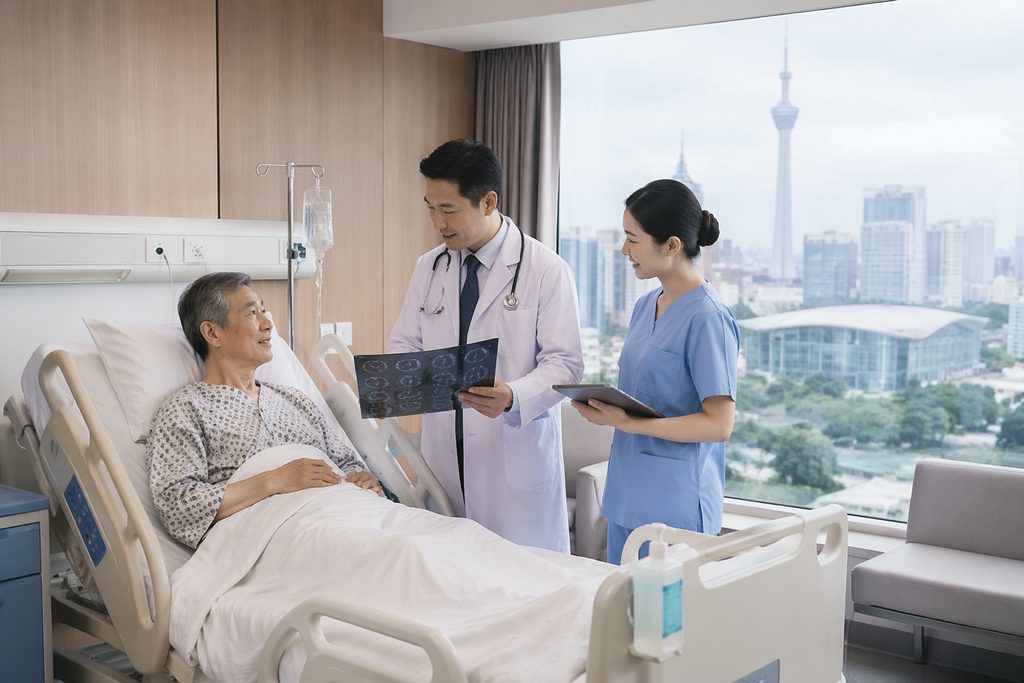
Gastroenterology Hospitals in China: Costs, Rankings, and How to Get Care
Roughly 1 in 4 international patients who contact our team about treatment in China is seeking digestive care — and the first question is almost always about money. So here is the short answer on gastroenterology hospital cost in China: a diagnostic endoscopy typically runs $150–$500, a complex liver resection $8,000–$20,000, and a full workup for unexplained abdominal symptoms $800–$2,500. Those figures sit at roughly one-fifth to one-tenth of U.S. prices for the same procedures.
The caveat matters, though. Price depends on which tier of hospital you enter, whether you go through the standard outpatient channel or the international department, and how complex your case turns out to be. A quote is never final until a specialist has actually seen your records.
What Gastroenterology Hospitals in China Actually Offer
China’s digestive-disease care is concentrated in a relatively small number of large public hospitals. Our database covers 340+ top-ranked hospitals across 37 cities — the top 5% of China’s 35,000+ hospitals, ranked by the Fudan Hospital Ranking and JCI accreditation. Within gastroenterology specifically, the strongest programs cluster in Beijing, Shanghai, Guangzhou, and Chengdu.
What does “strongest” mean in practice? Volume, mostly. These centers perform thousands of endoscopic procedures annually, run dedicated hepatology and inflammatory bowel disease (IBD) units, and handle the kind of complex pancreatic and biliary cases that smaller hospitals refer out. Shanghai’s Ruijin Hospital, for example, has one of the busiest digestive disease centers in the country. Beijing’s Peking Union Medical College Hospital is where many Chinese physicians themselves go when a diagnosis is unclear.
The practical takeaway: China’s advantage in gastroenterology is not a single miracle technique. It is high procedure volume, fast access to imaging and endoscopy, and a cost structure that makes comprehensive workups affordable.
Who This Is Right For — and Who It Isn’t
Medical travel is not for everyone, and we tell people so directly.
Usually a good fit:
- Patients with a confirmed or suspected diagnosis who face a long wait at home for endoscopy, imaging, or surgery
- Anyone quoted a price at home that would cause real financial harm
- Patients seeking a second opinion on a liver, pancreatic, or IBD diagnosis before committing to a major operation
- People whose condition is stable enough to fly and who can spend 1–3 weeks abroad
Usually not a good fit:
- Anyone with acute gastrointestinal bleeding, acute liver failure, or another emergency — go to the nearest emergency room, not an airport
- Patients too frail for long-haul travel without a medical escort
- Those expecting a Western-style private-room experience at public-hospital prices
- Anyone whose follow-up care at home cannot be arranged before they leave
That last point deserves emphasis. A liver resection in China means follow-up scans and bloodwork for years afterward. If your local gastroenterologist will not coordinate, the savings may not be worth it.
The Options, Compared
| Option | Typical Cost (USD) | Wait Time | English Support |
|---|---|---|---|
| U.S. academic medical center | $3,000–$8,000 (endoscopy); $60,000–$150,000 (major surgery) | 2–8 weeks for routine endoscopy | Native |
| China — public hospital, standard channel | $150–$500 (endoscopy); $8,000–$20,000 (major surgery) | Days to 2 weeks | Limited; requires bilingual support |
| China — international/VIP department | Roughly 1.5–2× standard channel pricing | Days, with pre-arranged appointment | Yes, English-speaking staff |
| China — private international hospital | 2–4× public pricing; direct insurance billing common | Days | Yes; Western-style service model |
| China — TCM hospital (chronic digestive conditions) | $50–$150 per consultation; herbal courses vary | Days | Varies; interpreter often needed |
Which column suits you? If cost is the deciding factor and you can tolerate a busy public hospital environment with an interpreter beside you, the standard channel delivers the same surgeons at the lowest price. If you want an English-speaking physician, a private room, and insurance handled directly, the private international tier costs more but removes most friction. Patients managing chronic conditions like IBS or functional dyspepsia often combine a public-hospital diagnosis with a Traditional Chinese Medicine course afterward — see our TCM hospital directory for that pathway.
Finding the Best Gastroenterology Hospital in Beijing
Beijing deserves its own section because it concentrates more top-ranked hospitals than any other Chinese city — 21 of the Fudan Top 100, more than Shanghai’s 18 or Guangzhou’s 10. For digestive disease, three names come up repeatedly in referrals: Peking Union Medical College Hospital, Beijing Friendship Hospital (known for its digestive disease center), and the Chinese PLA General Hospital.
How should you choose between them? Start with the subspecialty, not the brand. Hepatology, IBD, pancreatic surgery, and motility disorders are different problems handled by different teams. The Fudan specialty reputation rankings list the top 10 hospitals in each of 45 specialties, and gastroenterology is one of them. Our department rankings page maps those results directly.
One honest warning about Beijing: public hospital outpatient registration cannot be booked from overseas in advance. You queue on the day, in person. Surgery is scheduled only after an in-person consultation. If you need a confirmed appointment before you fly, that means going through a hospital’s international department or a private international hospital — and paying the premium that comes with it.
Is Stomach Surgery Safe in China?
This question comes up constantly, and it deserves a straight answer rather than a sales pitch.
Safety in surgery tracks three things: the surgeon’s volume, the hospital’s infrastructure, and your own pre-operative condition. China’s top-tier hospitals perform high volumes of gastric and colorectal surgery — far more than most Western centers of comparable reputation. High volume correlates with better outcomes in published surgical literature, particularly for complex resections.
What we cannot tell you is that any specific operation will go well. No one can. What we can tell you is that the major Chinese centers follow international protocols for surgical safety, anesthesia, and post-operative care, and that many hold JCI accreditation — the same standard applied to hospitals in the United States and Europe.
Be skeptical of any service that promises a specific outcome or guarantees a particular surgeon. Legitimate coordination means arranging access and communication — not selling certainty.
What It Costs, and What Drives the Variance
Here is a realistic breakdown for common gastroenterology procedures at top-tier Chinese public hospitals. All figures are ranges, and all vary by hospital and case complexity.
- Diagnostic endoscopy (gastroscopy or colonoscopy): $150–$500
- Endoscopic procedures with intervention (polypectomy, ERCP): $800–$3,500
- Abdominal imaging (CT, MRI, ultrasound): $100–$600 per study
- Laparoscopic cholecystectomy: $3,000–$6,000
- Gastric or colorectal resection: $8,000–$20,000
- Liver resection: $10,000–$25,000
Four things move these numbers: the hospital tier, whether you use the international department, the length of your hospital stay, and whether complications arise. Public hospitals require prepayment; insurance reimbursement happens afterward, in your home country, according to your policy’s terms. Private international hospitals often bill insurers directly.
For comparison, a liver resection at a U.S. academic center commonly exceeds $100,000 before insurance negotiation. That gap is the single biggest reason patients contact us.
Practical Considerations: Visas, Records, and Language
Visa. Foreign patients traveling to China for medical treatment use the S2 visa, annotated for medical purposes. Stays beyond 180 days require the S1 category. Accompanying family members apply for S2 as well. Note that the M visa is strictly for commercial and trade activity — it is not a medical visa, despite what some outdated guides claim. Requirements change, so confirm current documentation with your nearest Chinese embassy or consulate before applying.
Records. Bring everything: imaging on disc, pathology slides and reports, lab results, operative notes, medication lists. Chinese specialists work from primary documents, not summaries. If your records are in English, translation into Chinese is usually arranged by the hospital’s international office or your coordinator.
Language. This is the part patients underestimate most. A top Chinese hospital may see 10,000+ outpatients in a single day. Signage, registration systems, and most staff operate in Chinese. Navigating registration, payment, pharmacy, and pre-operative testing without language support is genuinely difficult — not impossible, but slow and stressful.
Payment. Public hospitals accept international credit cards at international departments, though limits and fees vary. Bring a backup payment method and confirm accepted cards with the hospital in advance.
Frequently Asked Questions
Standard outpatient endoscopy at a public Shanghai hospital cannot be reserved from abroad. You register in person, on the day, and the procedure is typically scheduled within days. If you need a confirmed date before traveling, the hospital’s international department or a private international hospital can pre-arrange it — at roughly 1.5–2× the standard price. Coordination services can handle registration and the medical card on your behalf.
We want to be careful here, because liver transplantation is a highly regulated field with specific legal frameworks, and availability depends entirely on the hospital’s own evaluation and allocation rules. Recovery timelines vary enormously by patient — many transplant recipients spend 2–4 weeks in hospital and months in structured follow-up. Anyone quoting you a fixed recovery period, or implying guaranteed organ access, is not giving you reliable information.
Packaged deals that bundle flights, hotels, and treatment into one price are usually built on the cheapest available hospital, not the best one for your condition. A better approach is staged: send your records for a written second opinion first, then decide whether to travel. That sequence avoids paying for a trip you may not need.
Yes. Written second opinions from top-hospital specialists and video consultations are both available remotely, typically within one to two weeks of receiving your records. This is often the most sensible first step — it clarifies whether a procedure is even necessary before you commit to flights and visas.
Your Next Step
The core message is simple: China’s leading gastroenterology hospitals offer fast access and genuine cost savings, but only if you match the right subspecialty team to your specific diagnosis — and only if you plan for the language and logistics barriers honestly. We are China Medical Services, a coordination team, not a hospital. We do not diagnose, and we do not promise outcomes. What we do is review your records, connect you with the appropriate specialty team at a top-ranked hospital, and handle the practical side once you decide to travel. If you would like to understand your options before making any commitment, you can start with a free consultation — no pressure, and no obligation to proceed.
This article is for general information only and is not medical advice. Treatment decisions should always be made with a qualified physician who has reviewed your individual case.
For more medical information and treatment options in China, visit chinamedservices.com (China Medical Services).
