China Hospital for Tourists: How We Help You Find the Best Care
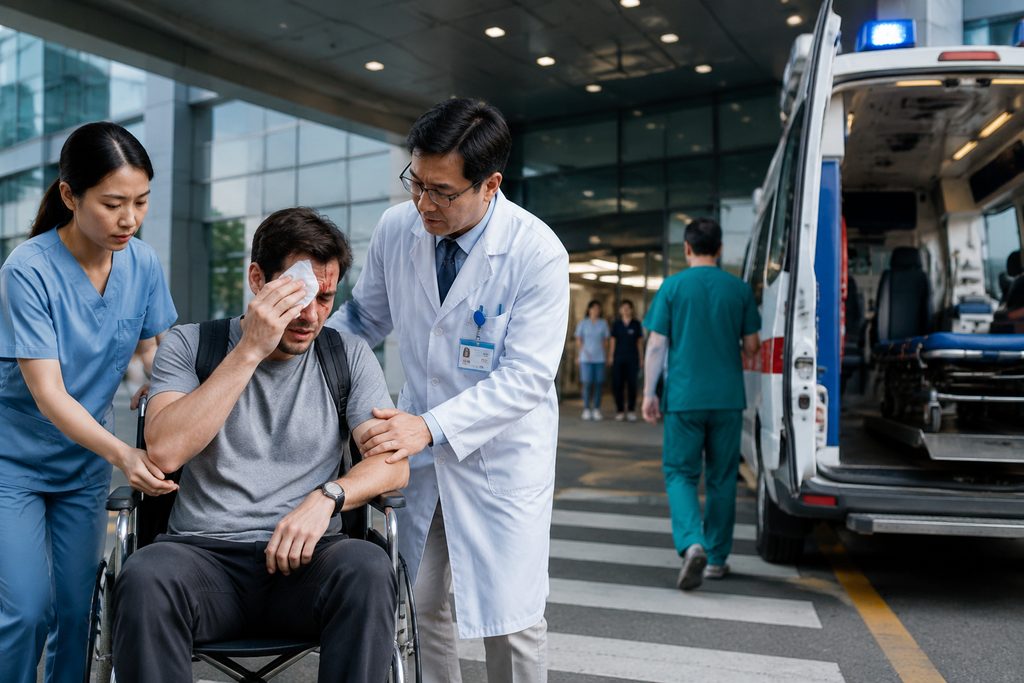
How This Actually Works, Step by Step
According to data from China’s National Health Commission, the country’s hospitals handled more than 8 billion patient visits in a single recent year. That scale is staggering. It’s also exactly why navigating the system alone can feel impossible for a foreigner who doesn’t speak Mandarin.
Finding the best hospital in China for international patients isn’t about luck. It’s about knowing the sequence. Here’s how our team walks a patient from first inquiry to a confirmed appointment.
Step one: you send us what you already have. That means your existing examination reports, imaging files, lab results, and a short note about your symptoms and goals. No need to translate anything. We handle that.
Step two: we route your file to the right specialty. A cardiac case goes to a cardiac center. A complex oncology case goes to a hospital with a strong tumor board. We match your condition against our database of 340+ top-ranked hospitals across 37 cities.
Step three: a written second opinion comes back. The Chinese specialty team reviews your records and returns a written analysis with treatment suggestions and direction. This usually takes three to seven business days, depending on how complete your file is.
Step four: you decide whether to go further. Some patients stop here. Others request a video consultation to speak directly with the medical team. A smaller group moves toward actual treatment in China.
Step five: if you travel, we coordinate the ground game. Appointment registration, hospital medical card creation, bilingual accompaniment, visa guidance. Every step has a person attached to it.
That’s the whole arc. Nothing mysterious. Just a sequence that most people can’t execute alone because of language, distance, and unfamiliar rules.
Why the Best Hospital in China for International Patients Isn’t Always the Most Famous One
Everyone has heard of Peking Union Medical College Hospital. It’s genuinely excellent, and it sits in the top tier of the Fudan rankings. But fame and fit aren’t the same thing.
China’s Fudan Hospital Rankings divide the top 100 general hospitals into five tiers, from A++++ down to A. There are no individual rankings within the general list. For specific specialties, though, there are clear top-10 lists across 45 disciplines. A hospital ranked among China’s top 10 for oncology may not appear at all in the top 10 for cardiac surgery.
So the real question is: which hospital is best for your condition?
Consider a few examples from our database:
- Fuwai Hospital in Beijing performs more than 14,000 cardiac surgeries annually, the highest volume of any heart center globally.
- Zhongshan Hospital in Shanghai is a leader in cardiovascular and liver-related care.
- West China Hospital in Chengdu handles some of the most complex cases in western China.
For patients who prioritize English-speaking staff, direct insurance billing, and a Western-style experience, private international hospitals like United Family, Jiahui, and Parkway offer a different model. They cost more. They also remove most of the friction.
You can browse hospitals by city and specialty on our top-ranked hospitals page, or explore specific departments like oncology and cardiac surgery through our specialty directory.
A Realistic Timeline
Patients often ask how long the whole process takes. The honest answer: it depends on your condition, your documents, and how quickly you make decisions. Here’s a realistic breakdown.
| Stage | Typical Duration | What Slows It Down |
|---|---|---|
| Document collection and translation | 3–7 days | Incomplete imaging files, missing pathology reports |
| Written second opinion | 3–10 business days | Complex cases requiring multiple specialists |
| Video consultation scheduling | 5–14 days | Time zone coordination, specialist availability |
| S2 visa application | 2–4 weeks | Embassy processing times, supporting hospital documents |
| Appointment and travel logistics | 1–3 weeks | Hospital lead time, flight availability, peak seasons |
| In-person consultation and admission | 1–5 days after arrival | Additional tests required before surgical planning |
Total realistic window from first contact to arrival in China: roughly four to ten weeks for non-urgent cases. Urgent cases can move faster, but not overnight. Public hospital rules require an in-person consultation before any surgery can be scheduled. That’s not something we can bypass, and we wouldn’t pretend otherwise.
What Can Go Wrong — and What Happens Then
This is the part most agencies skip. We won’t.
Your records are incomplete. This is the single most common delay. If your imaging is on a CD that can’t be read, or your pathology slides weren’t preserved, the specialist can’t give a meaningful opinion. We’ll tell you exactly what’s missing and how to get it.
The specialist recommends a different approach than you expected. Sometimes the Chinese team concludes that your case isn’t a good candidate for the procedure you had in mind. That’s valuable information. It can save you a trip and thousands of dollars.
The appointment can’t be confirmed for the exact date you wanted. Public hospital registration doesn’t work like booking a hotel. If we can’t secure the appointment you requested, our coordination fee is refunded in full. That’s our policy.
Your visa is delayed. We provide the supporting documents hospitals issue for S2 visa applications. But embassy timelines are outside anyone’s control. We build buffer time into every plan.
Complications arise after treatment. No responsible provider guarantees outcomes. What we can do is ensure you have follow-up documentation in English that your home physician can act on.
How Much Does Surgery Cost in China for Foreigners?
Cost is usually the first question. And the answer surprises people.
For major procedures at top-tier public hospitals, costs typically run one-fifth to one-tenth of U.S. prices. A coronary artery bypass graft, for example, generally ranges from $12,000 to $20,000 at a leading Chinese public hospital. The same procedure in the United States frequently exceeds $120,000.
But here’s what most articles don’t explain: China hospital price for foreigners vs locals is not identical. Foreign patients typically access care through international departments or VIP channels. These provide senior specialists, English-language support, and shorter waits. The trade-off is cost — roughly 1.5 to 2 times the standard public channel.
Private international hospitals sit at a different price point again. You’re paying for convenience, direct insurance billing, and a familiar care environment.
Our service pricing is separate from hospital charges and follows a transparent, staged model:
- Written second opinion from a top hospital specialist: $300–500
- Video consultation with a standard international department: $100–300
- Top-specialist video consultation: $500–800
- Multidisciplinary team (MDT) consultation: $1,500–2,000
- Bilingual medical companion: from $300 per day
- Hospital appointment coordination: from $300
Any consultation fee is credited in full toward on-the-ground coordination if you travel to China within 90 days. It’s a one-time credit applied to the coordination fee only, never to hospital treatment charges.
Final hospital pricing always varies by hospital and case complexity. We give ranges because that’s what honest estimates look like before a specialist has examined you.
Is It Safe to Get Medical Treatment in China?
This question deserves a direct answer, not a sales pitch.
China’s top hospitals are accredited, heavily regulated, and perform procedure volumes that most Western centers can’t match. Fuwai’s 14,000+ annual cardiac surgeries mean its teams have seen nearly every variation of every complication. Volume builds expertise.
Many private international hospitals carry JCI accreditation, the same gold standard used by leading hospitals in the U.S. and Europe.
That said, safety isn’t only about surgical skill. It’s about communication. If you can’t explain your allergy history, read your consent form, or ask why a medication changed, you’re exposed to preventable risk. This is the core reason bilingual medical accompaniment exists. Not as a luxury. As a safety layer.
So: is it safe to get medical treatment in China? At a top-ranked hospital with proper language support, the clinical standards are high. Without that support, the system’s sheer scale becomes a liability.
Practical Considerations: Records, Visas, Payment, and Follow-Up
Medical records. Bring everything. Imaging on readable media, pathology slides if available, a medication list, and any prior surgical reports. Digital copies are fine for the second-opinion stage.
Visa category. Foreign patients traveling to China for medical treatment use the S2 visa, which covers short-stay medical treatment and private affairs. Stays exceeding 180 days require the S1 category. Accompanying family members also apply for S2. Requirements change, so always confirm current rules with the nearest Chinese embassy or consulate. The M visa is for commercial and trade activities and has nothing to do with medical treatment.
Payment. Public hospitals generally require prepayment, with insurance reimbursement handled afterward in your home country. Private international hospitals often bill insurers directly.
Language. If you’re wondering how to find an English-speaking doctor in China, the honest answer is that it’s easier at international departments and private hospitals. At standard public channels, you’ll need a bilingual companion.
Follow-up at home. Ask for discharge summaries, operative notes, and imaging in English before you leave. Your home physician will need them.
Frequently Asked Questions
You can book medical tourism package China arrangements that bundle consultation, appointment coordination, and bilingual support. What no package can include is a guaranteed surgery date or outcome. Public hospitals require an in-person consultation first. We structure services in stages so you commit only as your confidence grows.
Foreign patients usually access care through international or VIP channels, which cost roughly 1.5 to 2 times the standard public rate. Even so, major surgery often costs one-fifth to one-tenth of U.S. prices. Exact figures vary by hospital and case complexity.
Not if you have support. At international departments and private hospitals, English-speaking staff are common. At standard public channels, a bilingual medical companion handles registration, payment, navigation, and translation throughout your visit.
That’s a legitimate outcome, and it’s better to learn it before you travel. A written second opinion that rules out a procedure saves you the cost and risk of an unnecessary trip. We’ll explain the reasoning and discuss alternatives.
At top-ranked hospitals with proper language support, clinical standards are high. The main risk isn’t surgical quality — it’s communication gaps. Bilingual accompaniment exists specifically to close those gaps.
Your Next Step
The Chinese healthcare system is vast, and its rules aren’t designed around foreign patients. But the expertise inside it is real, and the cost difference is substantial. The key is entering through the right door with the right support.
Our team at China Medical Services connects international patients with top-ranked Chinese hospitals. We don’t provide medical care, and we don’t promise outcomes. We handle the logistics, translation, coordination, and accompaniment that make quality care accessible.
If you’d like to understand your options, start with a free consultation. Send us what you have. We’ll tell you honestly what’s possible.
This article is for informational purposes only and does not constitute medical advice. Always consult a qualified healthcare provider regarding your individual condition and treatment options.
For more medical information and treatment options in China, visit chinamedservices.com (China Medical Services).
