Beijing Ditan Hospital: International Guide for Foreign Patients
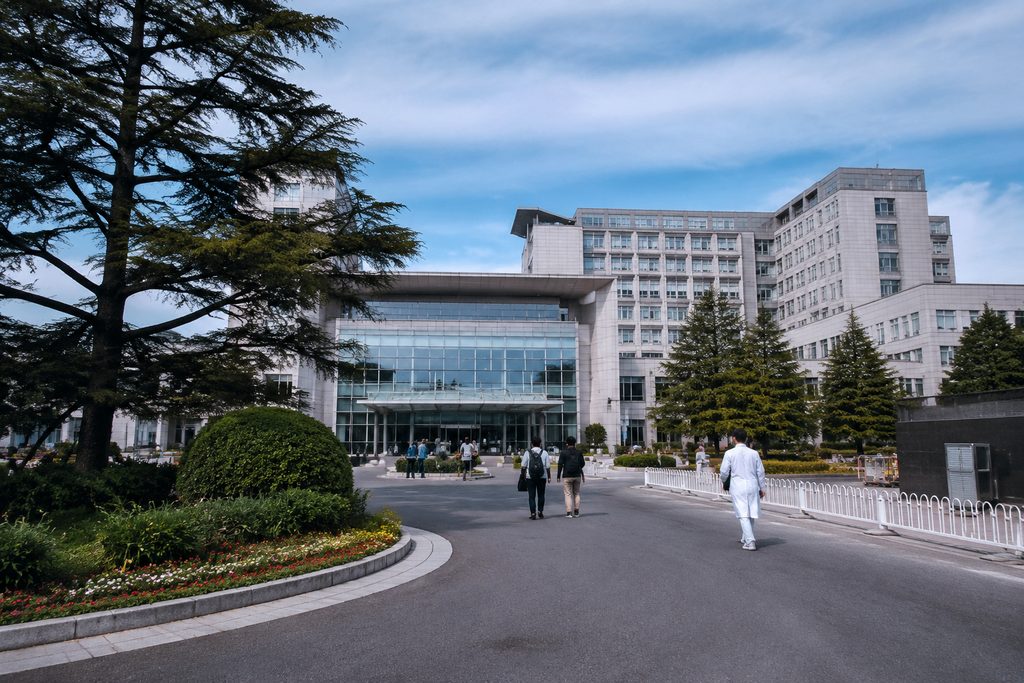
Key Takeaways
- Beijing Ditan Hospital is one of China’s most specialized centers for infectious disease, with deep expertise in liver conditions, HIV care, and fever-related illness.
- It sits inside a network of more than 340 top-ranked Chinese hospitals across 37 cities that our team works with daily.
- Public outpatient registration is not bookable from overseas in the ordinary queue. International departments and VIP channels are the practical route for foreigners.
- No one can promise you a specific doctor or a specific surgery date. Anyone who does is not being straight with you.
In Canada, the median wait for specialist treatment runs into months. In Beijing, a hospital like Ditan can process thousands of outpatient visits in a single day. That gap is the reason so many international patients now look east — and the reason this Beijing Ditan Hospital international patient guide exists.
Ditan is not a household name the way Peking Union or Fuwai is. But if your problem is hepatitis B, liver fibrosis, an unusual fever, or an infectious disease that your home doctors have struggled to pin down, Ditan is a name worth knowing. It has spent decades as one of China’s designated referral centers for communicable disease, and it draws patients from across the country and increasingly from abroad.
What follows is a practical, honest walkthrough. What Ditan is good at, what it costs, whether it is safe for foreigners, and how the appointment process actually works — including the parts that frustrate people.
The Problem: When Your Own System Runs Out of Answers
Roughly 296 million people worldwide live with chronic hepatitis B, according to World Health Organization estimates. A large share of them are in the Asia-Pacific region, and China carries a substantial portion of that burden. For a patient in Europe or North America with a complex liver or infectious disease case, the referral pathway can stall. Subspecialists are scarce. Waitlists stretch. And a condition like drug-resistant tuberculosis or a rare tropical infection may simply fall outside the local team’s routine experience.
That is the gap Ditan fills. The hospital’s clinical volume in hepatology and infectious disease is not something a mid-sized Western hospital can match, simply because the case mix is different. Volume matters in medicine. A team that sees 200 cases of a rare liver presentation a year develops pattern recognition that a team seeing five cases does not.
There is a second problem, and it is logistical rather than clinical. Chinese public hospitals do not work like Western ones. You cannot log onto a portal six weeks ahead and reserve a slot with a named specialist. Same-day registration, in-person triage, and a queue system are the norm. For a foreign patient who does not speak Mandarin, that system can feel impenetrable. It is not hostile — it is just built for a domestic population of enormous size.
Why Beijing Ditan Hospital Draws International Patients
Ditan’s reputation rests on a few specific strengths rather than general prestige. Understanding them helps you decide whether it is the right hospital for your case.
Specialization You Rarely Find Elsewhere
Most large Chinese hospitals are general. Ditan is not. Its core identity is infectious disease and liver medicine, with associated programs in critical care, respiratory illness, and fever of unknown origin. For a patient whose diagnosis is unclear after multiple workups at home, that concentration of expertise is the whole point. A general hospital may have one infectious disease consultant. Ditan has entire departments.
Scale and Diagnostic Speed
China’s top hospitals operate at a scale Western patients find hard to picture. Advanced imaging, viral load testing, fibroscan, and liver biopsy pathways can run in parallel rather than sequentially. That means a diagnostic workup that might take six weeks of scattered appointments at home can sometimes be compressed into a handful of days. Not always — but often enough that it changes the calculus for people paying out of pocket for travel.
Cost Structure That Reflects Local Economics
Chinese public hospital pricing is set administratively, not by market rate. A specialist consultation at a top public hospital commonly runs the equivalent of $15 to $50. Advanced imaging is a fraction of U.S. list prices. Laboratory panels are inexpensive by Western standards. This is not because quality is lower — it is because physician salaries, drug pricing, and hospital overhead are structured differently. You can browse how this plays out across specialties on our department-by-department hospital rankings.
For a full picture of how Chinese hospitals are tiered and ranked, including the Fudan rankings that group the top 100 hospitals into letter grades rather than numbered positions, see our guide to China’s top-ranked hospitals by city.
Beijing Ditan Hospital Cost for International Patients
Cost is the question every international patient asks first, and it deserves a straight answer. The honest version: Ditan does not publish a fixed international price list, and no responsible party will quote you a total before your case is reviewed. What we can give you are realistic ranges based on the structure of Chinese public hospital pricing.
| Service | Typical Range in China (USD) | Notes |
|---|---|---|
| Specialist outpatient consultation | $15 – $50 | International/VIP channel costs more |
| Comprehensive blood panel | $30 – $120 | Depends on marker count |
| Liver function + viral load testing | $80 – $250 | Hepatitis B/C quantification |
| Abdominal ultrasound | $40 – $120 | Widely available |
| CT scan (single region) | $150 – $400 | Contrast adds cost |
| MRI (single region) | $250 – $600 | Varies by protocol |
| Liver biopsy (procedure + pathology) | $600 – $1,500 | Includes lab analysis |
| Inpatient bed per day | $50 – $200 | Standard vs. VIP ward |
These figures are indicative and vary by hospital and case complexity. They also exclude the international department premium, which typically runs 1.5 to 2 times standard pricing in exchange for English-speaking staff and faster scheduling. For a broader comparison across procedures, our team maintains a running breakdown of private and international hospital options in China, which often suit patients who want direct insurance billing.
Is Beijing Ditan Hospital Safe for Foreigners?
This question usually hides a second one: will I be treated well, or will I be an afterthought? The answer depends on which channel you enter through.
China’s major public hospitals are accredited domestically as Grade 3A — the highest tier in the national hospital classification system. That designation reflects infrastructure, staffing ratios, and clinical capability standards. Many top hospitals also pursue JCI accreditation, the international gold standard. Whether Ditan holds current JCI accreditation at any given moment is something our team verifies case by case, because accreditation status changes and we will not state it as fact without checking.
What we can say plainly: Chinese public hospitals are safe in the clinical sense. Sterile technique, blood safety, and pharmaceutical standards are regulated and enforced. The real friction is communication, not safety. A foreign patient navigating the standard outpatient queue without Mandarin will struggle — not because anyone is unkind, but because the system assumes fluency.
That is why the international department matters. It exists specifically to serve patients who need English or another language, and it handles the administrative burden on your behalf. The trade-off is cost. If you want the standard public price, you accept the standard public process.
How to Book an Appointment at Beijing Ditan Hospital
Here is where expectations need calibrating, because the process is genuinely different from what most foreign patients assume.
Standard public outpatient slots cannot be reserved from overseas in advance. Registration happens on the day, in person, often starting early morning. You take a number, you wait, you are seen. For a first visit, that is the reality.
The alternative is the international or VIP channel, which does allow advance coordination. This is where an intermediary can help — not by buying you priority, but by handling the paperwork, translating your records, and coordinating with the hospital’s official international office so that your arrival is not a cold start.
A workable sequence for most international patients looks like this:
- Send your existing examination reports, imaging, and lab results for review
- Receive a written second opinion from the relevant specialty, with treatment direction
- Optionally hold a video consultation to discuss findings directly with the medical team
- If travel makes sense, coordinate a hospital appointment through the international channel
- Arrive with a bilingual companion who handles registration, payment, and interpretation
That staged approach exists for a reason. It lets you confirm the trip is worth making before you spend money on flights and hotels. For patients who want to start with a document review rather than travel, our team can arrange a written second opinion from a top-tier hospital specialist, typically in the $300–$500 range, or a video consultation from $100–$300 depending on the hospital tier.
Practical Considerations Before You Commit
Visa category. Medical travel to China uses the S2 visa, which covers short-stay private affairs including medical treatment. Stays beyond 180 days fall under S1. Accompanying family members apply under S2 as well. The M visa is for commercial and trade activity and has nothing to do with medical treatment — if anyone tells you otherwise, they are wrong. Requirements shift, so confirm current specifics with your nearest Chinese embassy or consulate and bring supporting hospital documentation.
Payment. Chinese public hospitals require prepayment. International cards are accepted at many but not all counters, and daily transaction limits can bite. Bring a backup payment method and expect to settle bills before discharge. Insurance is typically reimbursed after the fact rather than billed directly, unless you are at a private international facility with direct-billing agreements.
Records. Bring your full history — imaging on disc, pathology slides if relevant, and translated summaries. Chinese specialists work fast, and incomplete records slow everything down.
Language. This is the single biggest practical barrier. Bilingual medical companion support in China runs from $300 per day for a half or full day of registration, queuing, payment, wayfinding, and interpretation. It is not a luxury add-on for most foreign patients. It is the difference between a smooth visit and a lost afternoon.
Follow-up. Plan how you will continue care at home. Ask for written summaries and imaging copies before you leave. Chinese hospitals will provide them, but you have to request them.
If your case is complex, consider a multidisciplinary team consultation before traveling. These run $1,500–$2,000 and bring several specialties into one discussion — useful when your diagnosis is still unclear.
Frequently Asked Questions
Not through the standard public queue — those slots are same-day and in person. Advance coordination is possible through the hospital’s international department or VIP channel, which is the route most foreign patients use. Expect to submit your records first so the hospital can assess whether your case fits their specialties.
Public hospitals in China generally require upfront payment, with reimbursement handled by your insurer afterward. Direct billing is more common at private international hospitals. Check your policy’s overseas treatment terms carefully, and keep every receipt and itemized bill — insurers typically require them.
That is exactly why the staged approach matters. A written second opinion or video consultation happens before you travel, so you learn early whether Ditan is the right fit or whether another hospital in our network of 340+ top-ranked facilities across 37 cities is better suited. If the answer is a different hospital, you have lost nothing but a few days.
No. International and VIP channels use the same clinical teams. What differs is the administrative wrapper — English support, faster scheduling, and a higher price. You are not buying a different tier of physician.
For a diagnostic workup, one to two weeks is typical. If treatment or a procedure is involved, plan longer and build in buffer. Ask for an estimated timeline after your records are reviewed, not before.
Your Next Step
The core message is simple: Beijing Ditan Hospital is a genuinely specialized center for infectious disease and liver medicine, and it can be a strong option for international patients — provided you understand that the Chinese system works differently and plan accordingly. The staged path, from records review to video consultation to travel, exists to protect you from an expensive trip that goes nowhere.
We are China Medical Services. We are not a hospital and we do not diagnose or treat anyone. What we do is translate your records, coordinate appointments through official hospital channels, arrange bilingual companions on the ground, and help with visa and logistics questions. If you would like to start with a records review and find out whether Ditan — or another hospital — fits your case, you can request a free consultation here. No pressure, no obligation, just a clear next step.
This article is for general information only and does not constitute medical advice. Treatment decisions should always be made with a qualified physician who has reviewed your individual case.
For more medical information and treatment options in China, visit chinamedservices.com (China Medical Services).
