Physiotherapy Cost in China: What Foreign Patients Actually Pay in 2026
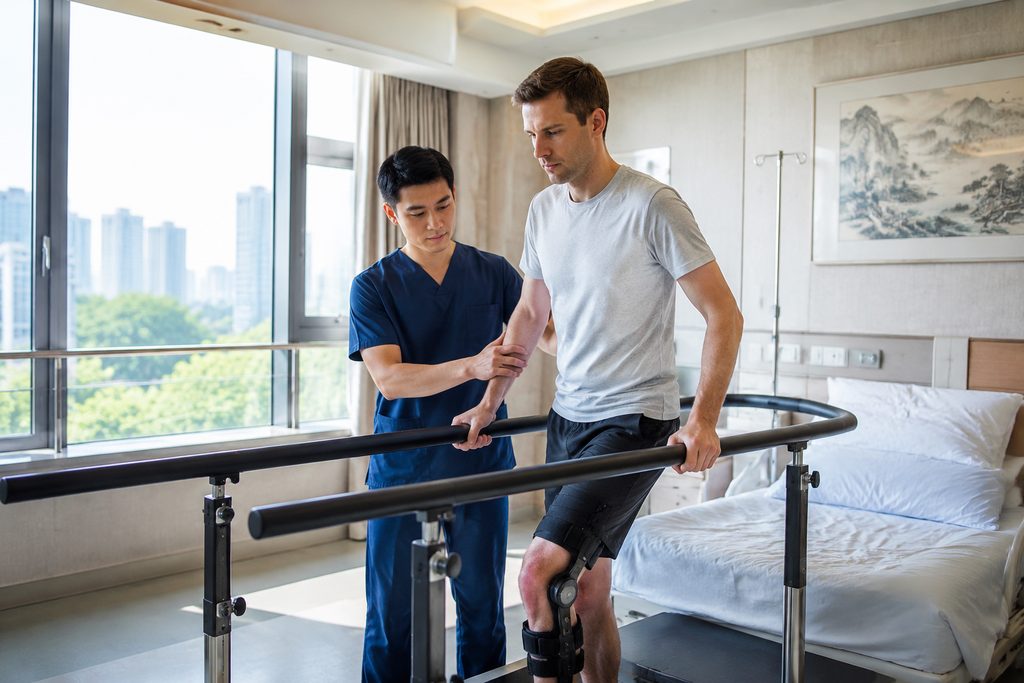
Physiotherapy Cost in China: What Foreign Patients Actually Pay in 2026
Physiotherapy cost China patients pay at a top-tier public hospital generally runs $15 to $45 per session, while private international clinics charge $80 to $200 for the same hour of hands-on treatment. That gap — roughly five to ten times cheaper than typical U.S. outpatient rehab — is the single biggest reason foreign patients start searching for rehab options here. But the price tag is only half the story.
The other half involves appointment rules, language barriers, and a public hospital system that was never designed around walk-in foreigners. Understanding both halves is what separates a smooth recovery plan from a frustrating one.
Physiotherapy Cost in China: The Short Answer
A standard 45-to-60-minute session of manual therapy, therapeutic exercise, or electrotherapy at a major public hospital costs between $15 and $45. Packages of 10 sessions often land between $120 and $400. Private JCI-accredited international clinics charge $80 to $200 per session, with some premium packages exceeding $1,500 for intensive multi-week programs.
What drives the range? Three things: the tier of hospital, the city, and the complexity of your case. A post-stroke neuro-rehab program at a top rehabilitation hospital in Beijing costs more than a simple sports-injury session at a provincial facility. And a foreigner without Chinese language skills will almost always need a bilingual companion, which adds a separate daily service cost.
Who This Is Right For — and Who It Isn’t
China’s rehabilitation sector has expanded fast. The country now has dedicated rehabilitation hospitals and physiotherapy departments inside most of its 35,000+ medical facilities. But not every patient benefits equally from traveling here for it.
Good candidates typically include:
- Patients recovering from orthopedic surgery — knee or hip replacement, ACL repair, spinal procedures — who need intensive daily therapy
- People with neurological conditions such as stroke or spinal cord injury seeking high-frequency inpatient rehab
- Foreigners already living or working in China who want affordable ongoing treatment
- Patients combining physiotherapy with traditional Chinese medicine, including acupuncture and tuina, at a TCM hospital
- Anyone whose home country has long waitlists for outpatient rehab
Who should think twice:
- Patients with acute, unstable conditions requiring emergency intervention — that is a different pathway entirely
- Anyone expecting a Western-style private room and English-speaking therapist at public hospital prices
- People who cannot commit to a multi-week program; physiotherapy works through consistency, not single sessions
- Patients whose insurance only reimburses at home and who cannot pay out of pocket upfront
Being honest about that second list matters. China is not the right answer for every rehab need.
The Options, Compared
Here is how the main pathways stack up for a foreign patient. Prices are per session unless noted, and all figures vary by hospital and case complexity.
| Option | Typical Cost per Session | English Support | Booking Difficulty | Best For |
|---|---|---|---|---|
| Public hospital physiotherapy department | $15–$45 | Limited; interpreter usually needed | High — same-day queue, no overseas pre-booking | Budget-conscious, long-stay patients |
| Public hospital international / VIP wing | $50–$120 | Yes, English-speaking staff | Moderate — can be coordinated in advance | Patients wanting expert care with language support |
| Private international clinic (JCI-accredited) | $80–$200 | Full English service | Low — online booking available | Short visits, direct insurance billing |
| TCM hospital (acupuncture + tuina) | $20–$70 | Varies; interpreter often needed | Moderate | Chronic pain, recovery alongside Western therapy |
| Inpatient rehab program (per day) | $150–$500 | Depends on hospital tier | Requires in-person assessment first | Post-surgical and neuro rehabilitation |
Which column fits you? If cost is the deciding factor and you have weeks to spend, the public department wins. If your trip is short and your schedule is tight, a private clinic justifies its premium. And if you want the best of both — expert public-hospital therapists plus coordination — the VIP wing is usually the sweet spot.
Why Public Hospital Prices Stay Low — and What That Means for You
China’s public hospitals are subsidized and operate at enormous scale. A single tertiary hospital may see more than 10,000 outpatients in a day. Physiotherapy departments run on volume, and the government sets fee schedules that keep basic treatment cheap.
That scale cuts both ways. You get world-class facilities at a fraction of Western prices. You also get crowds, queues, and a registration process conducted almost entirely in Chinese. Foreign patients cannot pre-book a standard public outpatient slot from overseas. You register on the day, in person, and surgical or intensive programs require an in-person consultation before anything is scheduled.
This is exactly why the international wing exists. It offers the same hospital, the same senior specialists, and English-language service — at roughly 1.5 to 2 times the standard fee. For most foreign patients, that premium is worth paying.
What It Costs: Breaking Down the Real Budget
Treatment fees are only one line item. Here is what a realistic two-week physiotherapy trip looks like, using mid-range estimates.
- Sessions: 10 sessions at a public international wing, $50–$120 each — $500–$1,200
- Initial assessment: often $30–$100, sometimes bundled
- Imaging if needed: X-ray from $15, MRI from $80–$250
- Bilingual medical companion: from $300 per day for registration, queueing, payment, and translation
- Accommodation: $40–$150 per night depending on city and standard
- Visa and flights: varies by country
Rehab treatment packages China hospitals offer sometimes bundle assessment, a set number of sessions, and a discharge report — ask specifically, because bundles are not always advertised. A 10-session package at a public hospital might total $120–$400 for the treatment portion alone. Add coordination and living costs, and a two-week trip realistically lands between $2,500 and $6,000 all-in.
Compare that to the United States, where outpatient physiotherapy averages $75–$150 per session before insurance, and the savings are obvious. But savings only materialize if the logistics work.
Booking a Physiotherapy Appointment in China as a Foreigner
Here is where expectations need adjusting. You cannot simply open a website and reserve a 3 p.m. slot at a top public hospital. The standard pathway is: arrive, register with your passport, pay, wait, then see the therapist. For anything beyond routine sessions — inpatient rehab, post-surgical programs — an in-person consultation comes first.
Private international clinics work differently. Many allow online booking, accept international insurance directly, and operate in English. If your priority is convenience over cost, start there.
For public hospitals, the practical route is coordination through the hospital’s international department. That is where a service like ours comes in — but more on that at the end.
Practical Considerations for Foreign Patients
Visa category. Medical treatment in China falls under the S2 visa, which covers short-stay private affairs including medical treatment. Stays beyond 180 days require the S1. Accompanying family members also apply for S2. Do not use the M visa — that is strictly for commercial and trade activities and has nothing to do with medical care. Requirements shift, so always confirm current rules with your nearest Chinese embassy or consulate and bring supporting hospital documents.
Payment. Public hospitals require upfront payment; insurance is typically reimbursed afterward. Private international hospitals often bill insurers directly. Bring a card that works internationally and expect to pay per session or per package.
Language. This is the barrier most patients underestimate. Signage, registration, payment, and therapist instructions are overwhelmingly in Chinese. A bilingual medical companion handles queueing, registration, payment, wayfinding, and translation — and in a hospital seeing 10,000 patients a day, that support is not a luxury.
Records. Bring imaging, surgical notes, and medication lists, ideally translated. Chinese therapists work fast and need your history in a usable form. A written second opinion from a Chinese specialist before you travel can also clarify whether physiotherapy here is even the right call.
Follow-up at home. Ask for a written discharge plan with exercises you can continue after returning. Physiotherapy gains fade without maintenance.
Frequently Asked Questions
Public hospital sessions run $15–$45; international wings $50–$120; private clinics $80–$200. U.S. outpatient physiotherapy typically averages $75–$150 per session before insurance. So the savings are real, but they shrink if you choose private clinics and add travel costs.
The clinical quality at major hospitals is strong — many are ranked among China’s top facilities, and rehabilitation departments at tertiary hospitals are well equipped. The challenge is access, not quality. Without Chinese language skills, you will almost certainly need coordination and interpretation support to navigate registration, scheduling, and treatment.
At private international clinics, usually yes. At public hospitals, generally no — standard outpatient registration happens in person on the day. International wings can sometimes be coordinated in advance through the hospital’s international department. Always confirm before booking flights.
Some international policies reimburse treatment at Chinese hospitals, but most public hospitals require you to pay upfront and claim afterward. Private JCI-accredited clinics more often offer direct billing. Check your policy’s overseas coverage terms before traveling.
Top-tier hospitals have full emergency and specialist backup on site, which is a genuine advantage of receiving care inside a large medical center rather than a standalone clinic. Still, physiotherapy is not appropriate for unstable or acute conditions. Get a proper medical assessment first, and discuss any deterioration with your treating clinician immediately.
Your Next Step
The core message is simple: physiotherapy in China is affordable and clinically solid, but the savings depend on navigating a system built for local patients. Get the logistics right and the value is exceptional. Get them wrong and you spend your trip in queues instead of recovery.
We are China Medical Services — a coordination team, not a hospital. We do not diagnose or treat. We connect international patients with hospitals across 340+ top-ranked hospitals in 37 cities, arrange written second opinions and video consultations, and provide bilingual medical companions who handle registration, queueing, payment, and translation from arrival to discharge.
If you are weighing a rehab trip, start with a free consultation. We will review your situation, suggest realistic options, and give you a clear picture of costs — no pressure, no obligation. You can begin here: free consultation with our patient coordination team.
This article is for general information only and does not constitute medical advice. Treatment decisions should always be made with a qualified healthcare professional. Prices are estimates and vary by hospital and case complexity.
For more medical information and treatment options in China, visit chinamedservices.com (China Medical Services).
