Hangzhou First People’s Hospital: Guide for International Patients
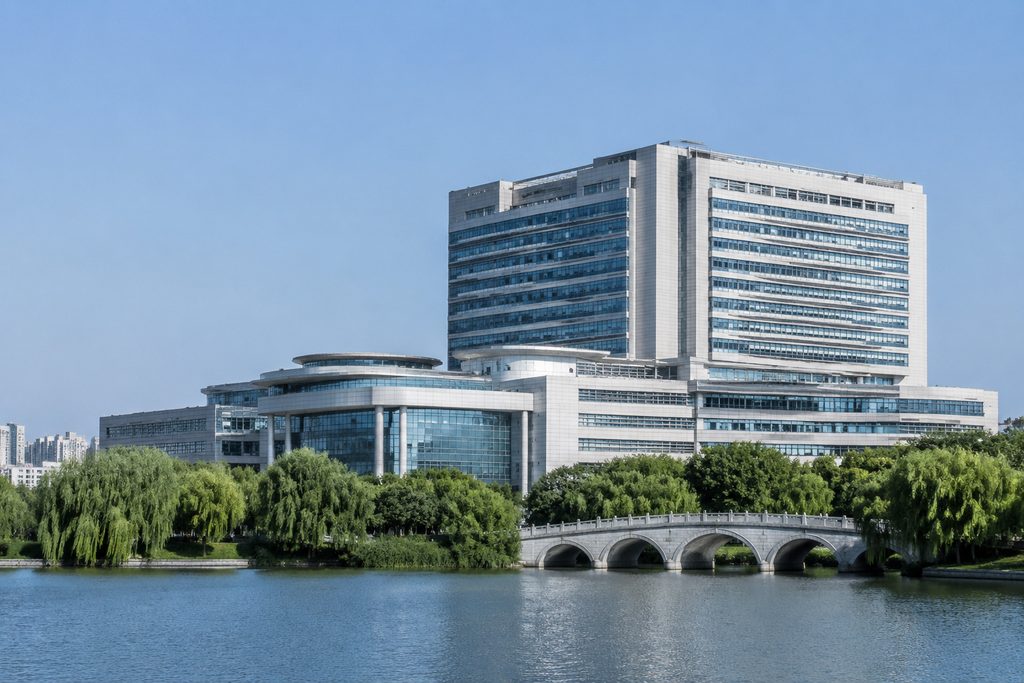
Hangzhou First People’s Hospital: A Practical Guide for International Patients
You have probably heard that getting care in China means long queues, no English, and a system that quietly shuts foreigners out. For a hospital like Hangzhou First People’s Hospital international patients do face real friction — but the picture is more workable than the rumor suggests, provided you understand one thing up front: Chinese public hospitals are not built around overseas booking. They are built around volume. Once you accept that, the path becomes predictable.
Hangzhou First People’s Hospital (affiliated with Zhejiang University School of Medicine) sits in one of China’s most livable cities, roughly 45 minutes by high-speed rail from Shanghai. It is a large tertiary hospital — a “Grade 3A” institution in China’s classification, which is the tier reserved for the country’s most capable referral centers. For a foreigner, the practical question is not “is it famous?” It is “can I actually get in, get understood, and get treated without wasting a week?”
This guide answers that. We coordinate hospital access for international patients across China Medical Services, and we will be honest about what is smooth and what is genuinely awkward.
How This Actually Works, Step by Step
Here is the real sequence, not the brochure version.
Step 1 — You gather records. Discharge summaries, imaging (DICOM files or discs, not just printed reports), lab results, pathology slides if relevant, and a current medication list. Everything in Chinese or English. If your records are in another language, they need certified translation. This step takes longer than people expect — often 1 to 3 weeks.
Step 2 — A specialty reviews them. At a public hospital, this happens through the international department or the VIP/special-needs channel, not the ordinary outpatient desk. A written second opinion typically comes back in 3 to 7 business days. A video consultation can usually be arranged within about a week.
Step 3 — You get a direction, not a guarantee. The response will say whether your case is something the hospital handles, what workup is still missing, and roughly what a treatment plan would involve. It will not promise a specific surgeon or a specific surgery date. No credible Chinese hospital will do that before an in-person examination.
Step 4 — You decide whether to travel. If the plan is feasible and you agree, the next stage is visa documents, appointment coordination, and arrival logistics. If it is not feasible, you have saved yourself a flight.
Step 5 — You arrive, you are seen in person. For surgery, an in-person consultation is mandatory before scheduling. This is a firm rule at essentially every public hospital in China, and it exists for good clinical reasons.
Is Hangzhou First People’s Hospital Good for Foreigners?
The honest answer: it is a strong clinical institution with a limited but functional international-facing service. It is not a Western-style international hospital where everyone speaks English and you pay at the end. It is a Chinese public hospital with an international department bolted on.
What that means in practice:
- Clinical depth: strong in cardiology, gastroenterology, ophthalmology, organ-related specialties, and emergency medicine. It handles serious volume — this is a hospital where the teams see rare presentations routinely.
- English: available in the international department and among many senior physicians, but not reliable in the general outpatient halls, the pharmacy window, or the cashier queue.
- Scale: daily outpatient volumes at hospitals of this size run into the thousands. Wayfinding is genuinely difficult if you cannot read Chinese signage.
- Payment: public hospitals generally require prepayment, with insurance reimbursement handled afterward on your side.
So “good for foreigners” depends on whether you arrive with support. Walk in cold and you will spend a day finding the right building. Arrive with a coordinated appointment and a bilingual companion and the experience is closer to a busy European teaching hospital.
A Realistic Timeline
These ranges assume no emergency. Urgent cases move faster, but through the emergency department, not the international channel.
| Stage | Typical Duration | What Slows It Down |
|---|---|---|
| Record collection and translation | 1–3 weeks | Missing imaging files; records in a third language |
| Written second opinion | 3–7 business days | Incomplete pathology or imaging |
| Video consultation scheduling | 5–10 days | Time-zone matching with the specialty team |
| S2 visa application | 1–3 weeks | Consulate workload; incomplete hospital invitation documents |
| Outpatient appointment slot | 3–14 days | Department demand; senior physician availability |
| In-person consultation to admission | 1–7 days | Additional tests required before a plan is confirmed |
| Pre-operative workup | 2–5 days | Cardiac clearance, blood matching, anesthesia review |
| Post-discharge follow-up window | 2–6 weeks in China | Wound checks, stitch removal, imaging review |
Total from first contact to surgery, for a non-urgent surgical case: commonly 4 to 10 weeks. Anyone promising you two weeks end-to-end is either describing an emergency or overselling.
What Can Go Wrong — and What Happens Then
Things break. Here is what actually breaks, and what the recourse looks like.
The appointment you wanted is not available. Senior physicians at major hospitals have capped clinic slots, and they fill. If a specific physician cannot be booked, a coordinated appointment service should refund the coordination fee rather than substitute someone silently. Confirm that policy in writing before you pay.
Your records are judged insufficient. This is the most common failure. The specialist reviews your file and says: I need a repeat MRI, or a biopsy I can examine myself. That is not obstruction — it is standard. The fix is to complete the workup, sometimes in China, which adds days.
The plan changes after in-person examination. Imaging and examination sometimes disagree. A case that looked surgical remotely may become medical management, or vice versa. Budget for the possibility that you fly and the recommendation shifts.
The visa is delayed. S2 applications require supporting documents from the Chinese side, and consulates vary in processing time. Never book non-refundable flights before the visa is in hand.
Language failure at a critical moment. Consent discussions, pharmacy instructions, and discharge planning are exactly where comprehension matters most — and exactly where English support is thinnest. This is the single strongest argument for a bilingual companion.
What Does Treatment at Hangzhou First People’s Hospital Cost?
Cost is where China genuinely competes, and where you should be skeptical of any single number. Prices vary by department, by procedure complexity, by whether you use the standard channel or the international/VIP channel, and by how long you stay.
For context on the broader gap: a coronary artery bypass graft at a top Chinese public hospital commonly runs $12,000–20,000, against $120,000+ in the United States. That ratio — roughly one-fifth to one-tenth — holds across many major surgical categories.
| Service | Reference Price (USD) | Notes |
|---|---|---|
| Written second opinion (top hospital specialist) | $300–500 | Written analysis only — for reference, not a prescription |
| Video consultation (public international dept. or private) | $100–300 | Requires records submitted in advance |
| Top-specialist video consultation | $500–800 | Senior physician, extended session |
| Multidisciplinary team (MDT) video consultation | $1,500–2,000 | Multiple specialties in one session |
| In-person top-specialist consultation coordination | $800–1,200 | Coordination service fee, separate from hospital charges |
| Hospital appointment coordination | from $300 | Full refund if the listed appointment cannot be secured |
| Bilingual medical companion | from $300/day | Half-day (4 hrs) or full-day (8 hrs); registration, queueing, payment, translation |
| Airport transfer | $200 round-trip | Both directions |
| VIP end-to-end coordination | $5,000–8,000 | Full journey management |
Two things worth stating plainly. First, all figures are coordination and consultation service fees — hospital treatment charges are billed separately by the hospital and vary by hospital and case complexity. Second, consultation fees paid to us are credited in full toward on-the-ground coordination if you proceed within 90 days. That is a one-time credit applied to the coordination fee only, never to hospital charges.
To compare departments and hospital rankings by specialty, our specialty rankings by department page lists top-ranked centers across 45 clinical fields.
How to Book an Appointment at Hangzhou First People’s Hospital
This is the part most guides get wrong, so let us be precise.
You cannot book an ordinary public outpatient slot from overseas. Standard registration in Chinese public hospitals happens on the day, in person or through the domestic app system, which requires a Chinese ID or residence documentation. Foreigners without that cannot self-serve the standard channel.
The workable routes are:
- The hospital’s international department or VIP/special-needs channel. This is designed for exactly this situation. Expect senior physicians, English-capable staff, and pricing roughly 1.5 to 2 times the standard channel.
- Coordination through a service that holds a working relationship with the hospital’s international office. This is case management — records translation, appointment coordination through the official channel, and a bilingual companion on the day. It is not payment for queue-jumping, and it should never be described that way.
- Private international hospitals in Hangzhou, if what you need is an English-first experience with direct insurance billing. Different trade-off: higher cost, narrower specialty depth for complex disease.
For a broader view of how hospital selection works across the country, our guide to top-ranked hospitals in China groups the Fudan Top 100 by city, and the Hangzhou city page covers local options in more detail.
Does Hangzhou First People’s Hospital Accept International Insurance?
Generally, public hospitals in China do not bill international insurers directly. You pay at the hospital, collect itemized invoices and medical records, and submit a claim to your insurer afterward. Whether your policy reimburses depends entirely on your plan — many Western policies cover emergency treatment abroad but exclude planned procedures, and some exclude China entirely.
Private international hospitals in Hangzhou more often offer direct billing with selected insurers. If direct billing matters to you, that is a reason to consider the private route even at higher cost.
Before committing to anything, get three things in writing from your insurer: whether planned treatment in China is covered, what documentation they require for reimbursement, and whether pre-authorization is needed. Doing this after treatment is how people lose claims.
Practical Considerations: Records, Visas, Payment, and Follow-Up
Visa category. Medical travel to China uses the S2 visa, issued for short-stay private affairs including medical treatment, with the purpose noted in the visa. Stays exceeding 180 days require the S1 category. Accompanying family members apply under S2 as well. Requirements change — always confirm current documentation with the Chinese embassy or consulate in your country. Note that the M visa is a commercial and trade category and has nothing to do with medical treatment.
Payment. Public hospitals require prepayment or deposit before major procedures. Bring a card that works internationally, and confirm with your bank that China transactions are not blocked. Alipay and WeChat Pay now link to foreign cards, which helps for smaller payments.
Language. Assume English is not available outside the international department. Bring printed copies of your key diagnoses in Chinese if you can obtain them.
Follow-up at home. Ask for a complete discharge summary, operative report, implant details if applicable, and imaging on disc before you leave. Your home physician will need all of it, and requesting it later from abroad is painful.
Frequently Asked Questions
You can register on the day at the standard outpatient desk, but you will queue, you will likely face a language barrier, and complex cases will not be resolved in one visit. For anything beyond a simple consultation, the international department or a coordinated appointment is far more practical.
For an international department slot, typically 3 to 14 days from confirmed records. Senior specialists with limited clinic hours can take longer. Surgery adds a mandatory in-person consultation first, so plan on weeks, not days.
Packages vary enormously in quality. What matters is whether the provider coordinates through the hospital’s official international channel, whether they are transparent that appointment success is not guaranteed, and whether their fees are refundable if the appointment does not materialize. Be cautious with anyone bundling treatment outcomes into a price.
You will be told during the remote review stage, before you travel. That is the point of doing a written second opinion first. If the answer is no, you have spent a few hundred dollars instead of a few thousand on flights and hotels.
For a simple follow-up, no. For a first visit involving registration, tests, payment, and a specialist consultation, yes — the process involves five or six separate counters and almost no English signage. That is what a bilingual medical companion is for.
Your Next Step
The core message is simple: Hangzhou First People’s Hospital is a capable tertiary center, but access for foreigners runs through the international channel, and it works best when someone prepares your records and walks the process with you. Do the remote review before you book a flight. That single decision prevents most of the expensive mistakes.
We are China Medical Services — a coordination team, not a hospital and not a physician group. We arrange written second opinions, video consultations, appointment coordination, and bilingual accompaniment. We do not diagnose, we do not promise outcomes, and we do not sell priority access. If you want to know whether your case is a fit for Hangzhou, start with a conversation: request a free consultation and we will tell you honestly what is realistic.
This article is for general information only and does not constitute medical advice. Treatment decisions should be made with a qualified physician who has examined you. Prices are indicative and vary by hospital and case complexity.
For more medical information and treatment options in China, visit chinamedservices.com (China Medical Services).
