Women’s Checkup in China for Foreigners: Costs, Top Hospitals, and How to Book
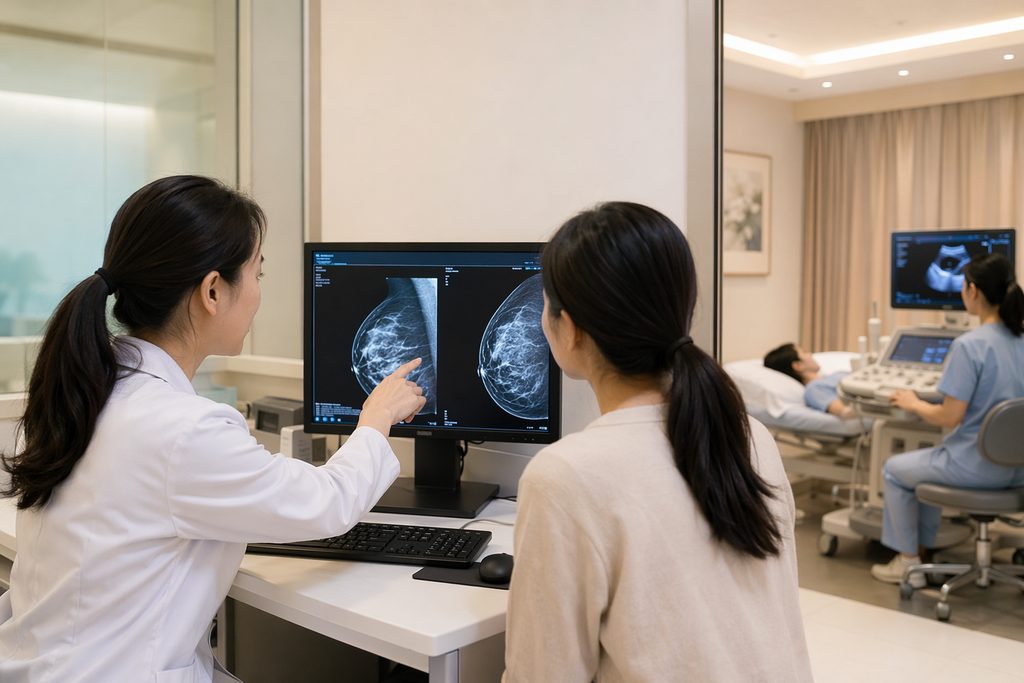
When 46-year-old Sarah from Portland started comparing screening options, her first quote back home was $3,400 for a package her insurance would only partly cover. Her sister, working in Shanghai, mentioned that a comparable women’s checkup in China for foreigners often runs a fraction of that — with same-week scheduling. Sarah’s reaction was the same as most people’s: that sounds too good to be true. So she started digging, and what she found was a system that is genuinely different, genuinely affordable, and genuinely confusing to navigate from abroad. That last part is the real problem.
Key Takeaways
- Comprehensive women’s screening packages at top-tier Chinese hospitals typically range from about $300 to $1,500 depending on imaging depth, lab panels, and whether you choose a public international department or a private international hospital.
- China’s best facilities run enormous annual screening volumes — some flagship hospitals process thousands of health-check patients weekly — which is a large part of why per-test pricing stays low.
- The honest barrier: public hospital general outpatient clinics generally cannot be pre-booked from overseas, and signage, registration systems, and queueing are built around Chinese-language users.
- Understanding the S2 visa category, the difference between public international departments and private hospitals, and what a report actually contains matters more than chasing the cheapest package.
The Problem: Screening Costs and Wait Times at Home
In the United States, a comprehensive women’s health screening — mammography, pelvic ultrasound, cervical cytology, blood panels, thyroid and bone density work — can easily land between $1,500 and $4,000 when billed without full insurance coverage. A 2023 survey by the Kaiser Family Foundation found that roughly one in four adults with employer coverage reported difficulty affording care even when insured. Deductibles do the rest of the damage.
Wait times add a second layer. In parts of Canada and the UK, routine diagnostic imaging appointments can stretch weeks or months. For a woman who has just found a breast lump, or who has a strong family history of ovarian cancer, “we’ll see you in ten weeks” is not an answer. It is a source of sleepless nights.
And there is a third, quieter problem: fragmentation. A mammogram here, a hormone panel there, a bone density scan somewhere else, each with its own appointment, its own copay, its own report that nobody assembles into one picture. Women often end up holding eight PDFs and no clear conclusion.
Why China Delivers Results for Women’s Screening
China’s top hospitals are not a budget alternative to Western medicine. They are a parallel system with different economics and different scale. Here is what that means in practice.
Volume That Drives Both Price and Proficiency
Fuwai Hospital in Beijing performs more than 14,000 cardiac surgeries a year — the highest volume of any heart hospital in the world. That same pattern of concentrated volume applies across specialties. When a radiology department reads thousands of mammograms and ultrasounds per month, per-exam costs fall and reader experience compounds. Our database covers more than 340 top-ranked hospitals across 37 cities, drawn from institutions ranked in the top 5% of China’s 35,000+ hospitals by the Fudan University rankings and JCI accreditation.
Imaging and Lab Capacity Without the Bottleneck
Walk into the health examination center of a major Shanghai or Beijing hospital and you will see an operation built for throughput. Blood draws, ultrasound, ECG, and imaging are typically sequenced in a single half-day visit rather than spread across weeks. Same-day or next-day scheduling is common for screening packages. Try arranging that in most Western metropolitan hospitals on short notice.
Cost Structure, Explained Honestly
Lower prices do not come from cutting corners on equipment. Most flagship Chinese hospitals run the same Siemens, GE, and Philips imaging platforms you would see in a US academic center. The gap comes from labor economics, administrative overhead, and volume. A radiologist’s salary in China is a fraction of a US counterpart’s, and hospital administration is leaner. That is the whole story. It is not a quality discount — it is a cost-structure difference.
| Screening Component | Typical China Range (USD) | Typical US Range (USD) |
|---|---|---|
| Basic women’s package (blood, urine, ECG, ultrasound) | $300 – $600 | $900 – $1,800 |
| Add mammography / breast ultrasound | $80 – $250 | $250 – $600 |
| Add pelvic ultrasound + cervical cytology (TCT/HPV) | $100 – $300 | $300 – $700 |
| Add thyroid panel + hormone panel | $80 – $200 | $200 – $500 |
| Add bone density (DEXA) | $60 – $150 | $150 – $400 |
| Add low-dose chest CT or cardiac screening | $150 – $500 | $400 – $1,200 |
| Comprehensive executive package | $700 – $1,500 | $2,500 – $4,500 |
Prices vary by hospital and case complexity. Private international hospitals such as United Family, Jiahui, Parkway, and Raffles sit at the higher end of these ranges and add English-speaking staff, direct insurance billing, and Western-style appointment flow. Public hospital international departments sit in the middle. Standard public health-check centers are the cheapest but the least foreigner-friendly.
How Much Does a Women’s Health Checkup Cost in Beijing vs. Shanghai?
Beijing and Shanghai are the two largest medical hubs in the country, and their pricing reflects it. Beijing hosts 21 of the Fudan Top 100 hospitals; Shanghai hosts 18. Both cities have mature international patient services.
In Beijing, a mid-tier comprehensive package at a public hospital international department typically runs $500 – $1,000. At a private international hospital, expect $900 – $1,800. In Shanghai, the numbers are broadly similar, with private facilities occasionally pricing slightly higher due to expatriate demand. Guangzhou, Chengdu, Hangzhou, and Shenzhen generally come in 10 – 20% below Beijing and Shanghai for equivalent packages.
What moves the price most is not the city. It is imaging depth. Adding a low-dose chest CT or a full cardiac workup can double a package. Ask for an itemized list before you commit.
What Constitutes a Real Women’s Screening Package
Package names vary wildly between hospitals, and “executive checkup” means different things at different facilities. Here is what a genuinely comprehensive women’s package should contain, and where the gaps usually hide.
- Laboratory: complete blood count, liver and kidney function, fasting glucose, lipid panel, thyroid function. A hormone panel (FSH, LH, estradiol, progesterone) is often an add-on, not standard.
- Imaging: breast ultrasound or mammography, pelvic ultrasound, thyroid ultrasound, abdominal ultrasound. In China, ultrasound is used more liberally than in the US, which is generally a plus for early detection.
- Cancer screening: cervical cytology (TCT) plus HPV testing. Colonoscopy and gastroscopy are usually separate procedures requiring sedation and a prep day.
- Cardiac and bone: ECG is standard; echocardiography, stress testing, and DEXA bone density are usually optional.
- The report: this is where quality diverges. Top hospitals produce a consolidated report with physician interpretation, often available in English on request. Smaller centers may hand you raw values with no narrative.
If you are specifically comparing specialties and hospital strengths, our department-by-department Top 10 rankings are a useful starting point for narrowing options.
Is a Full Body Checkup in China Safe for Foreigners?
Yes, with two honest caveats. The first is language. Outside international departments and private hospitals, almost nothing is in English — not the registration kiosks, not the corridor signs, not the report. A woman navigating a 10,000-patient-per-day hospital alone will struggle, and that is not an exaggeration of the scale.
The second caveat is incidental findings. Comprehensive screening finds things — a thyroid nodule, a benign cyst, an elevated marker. In a system you do not understand, an unexpected result can trigger panic and a cascade of follow-up you did not plan for. Having someone who can explain what the finding means, and what the recommended next step actually is, changes the entire experience.
Safety itself is not in question. China’s top hospitals operate to international standards, and JCI-accredited private facilities are audited against the same criteria as Western hospitals. Sterilization protocols, contrast agent handling, and radiation dosing follow established guidelines.
How to Book a Women’s Checkup in China as a Foreigner
This is the part most guides skip, so here is the sequence that actually works.
Step one — decide your tier. Private international hospital (easiest, most expensive), public hospital international department (middle ground, English support usually available), or standard public health-check center (cheapest, minimal English).
Step two — confirm the visa. Medical travel to China uses the S2 visa, which covers short-stay visits for medical treatment and private affairs, with accompanying family members applying under the same category. For stays exceeding 180 days, S1 applies. Note that the M visa is for commercial and trade activities only and has nothing to do with medical treatment — a surprisingly common mix-up. Requirements shift, so verify current rules with the nearest Chinese embassy or consulate and prepare supporting hospital documentation.
Step three — book through the right channel. Public hospital general outpatient clinics generally cannot be reserved from overseas; you queue on the day. To lock in a specific date and a specific package in advance, you go through the hospital’s international or VIP department. That channel costs roughly 1.5 to 2 times the standard rate and includes English-speaking staff.
Step four — prepare records. Bring prior mammograms, ultrasound reports, and lab results if you have them. Comparison over time is more valuable than any single snapshot.
Step five — plan the visit. Most comprehensive packages are completed in a single morning. Fasting is required for blood work. Reports typically arrive within 2 to 5 business days, and English translation may take longer.
If you want to browse facilities by city before deciding, our Fudan-ranked hospital directory groups options geographically, and the private international hospital list covers the JCI-accredited, insurance-billing facilities.
Practical Considerations Before You Travel
Payment. Public hospitals require upfront payment — cash, UnionPay, or increasingly Alipay and WeChat Pay linked to an international card. Foreign credit cards are accepted at private international hospitals and at some public international departments, but not universally. Insurance is typically reimbursed after the fact at public facilities; private international hospitals often bill insurers directly.
Records and follow-up. Request your full report plus original imaging files (DICOM format) on a USB drive or via download link. You will want these when you return home. A Chinese screening report is not automatically accepted by your home physician, but the underlying data is standard and readable anywhere.
Timing. Avoid the week around Chinese New Year and the first week of October, when hospitals run holiday schedules and screening centers book out. Spring and autumn are the calmest windows.
Language. If you are going the public-hospital route and do not speak Mandarin, arrange interpretation in advance. Our bilingual medical companion service covers registration, queueing, payment, wayfinding, and translation — from $300 per day for a half or full day. It is labor and coordination, not a shortcut to a specific doctor or date.
Frequently Asked Questions
Yes. Short-stay medical travel falls under the S2 visa category, with accompanying family members applying the same way. Stays beyond 180 days use S1. The M visa is strictly for commercial and trade activity and does not cover medical treatment. Always confirm current requirements with your nearest Chinese embassy or consulate, since documentation rules are updated periodically.
Through a hospital’s international or VIP department, generally yes — that is the channel built for advance scheduling. Standard public general outpatient clinics usually cannot be pre-booked from overseas. Expect the international channel to cost roughly 1.5 to 2 times the standard rate, which reflects English-language service and reserved appointment slots rather than any clinical difference.
This happens more often than people expect, and it is not a reason to avoid screening. The key is having a clear path: a physician who explains the finding, a recommendation for the appropriate next step, and access to a specialist if needed. Top hospitals can usually arrange follow-up imaging or a specialist consultation within days. If you are still in the planning stage, a written second opinion from a Chinese specialist — typically $300 to $500 — lets you have your existing reports reviewed before you decide whether to travel at all.
Most will accept the imaging and laboratory data, since the equipment and reference ranges are internationally comparable. The narrative report may need translation. Request the full report, the original imaging files, and an English version if available. Many patients find that having a consolidated report from a single visit is more useful to their home physician than the fragmented records they had before.
On paper, yes — sometimes 30 to 50% less than an international department. In practice, the savings come with real friction: no English support, no advance booking, no consolidated English report, and a queue system that assumes you read Chinese. If you are comfortable with the language and the logistics, it is a legitimate option. If you are not, the international department premium buys you a smoother experience, not better medicine.
Your Next Step
A women’s checkup in China can be faster, cheaper, and more consolidated than what most Western patients are used to — but only if you pick the right tier of hospital and understand the visa and booking rules before you fly. China Medical Services is a coordination service, not a hospital; we do not diagnose or treat, and we cannot guarantee a specific doctor or appointment date. What we do is help you compare hospitals, understand costs, prepare documentation, and navigate the visit with bilingual support. If you would like a free initial consultation to see whether this route fits your situation, you can start here — no obligation, just a conversation about your options.
This article is for general information only and does not constitute medical advice. Screening recommendations vary by age, history, and risk factors. Consult a qualified physician about your individual care.
For more medical information and treatment options in China, visit chinamedservices.com (China Medical Services).
