Metabolic Screening in China: Costs, Top Hospitals & Full Guide
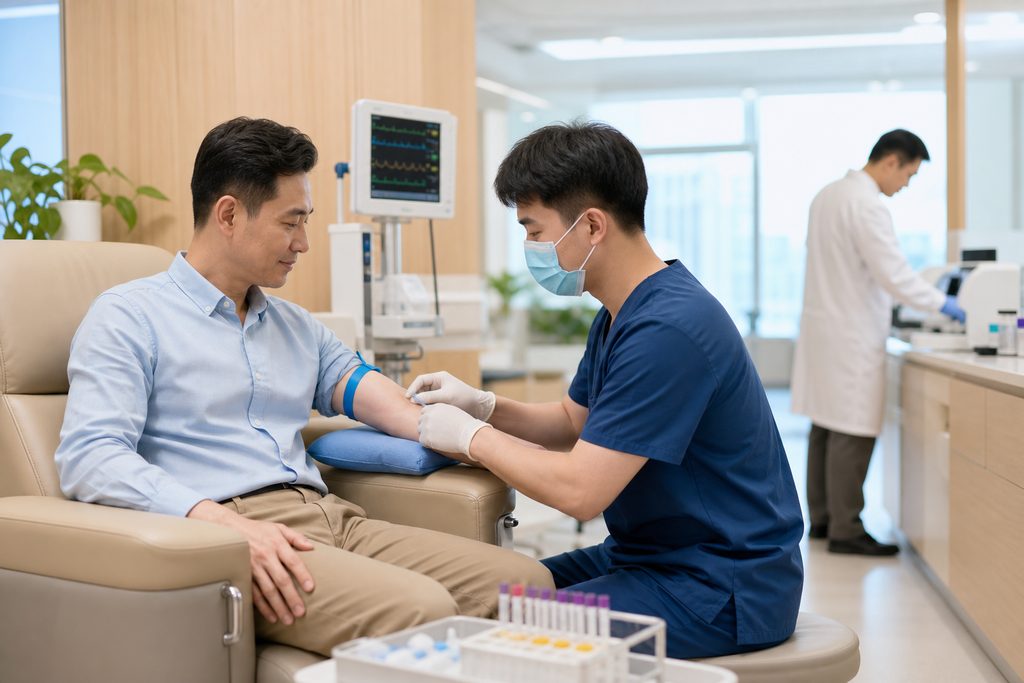
What if a single blood draw in Shanghai could flag the heart risk your doctor back home missed for three years?
That is the quiet promise behind metabolic screening — and the reason thousands of international patients now price it in China. The metabolic screening cost in China typically runs $300 to $2,500, against $800 to $6,000 for comparable panels in the United States or Western Europe. Same biomarkers. Same lab standards. A fraction of the invoice.
But cost is the easy part. The harder questions are what a metabolic panel actually measures, which Chinese hospitals deliver reliable results, and how a foreigner with no Mandarin and no local ID card gets through the door. This guide answers all three.
What Is Metabolic Screening? The Short Answer
Metabolic screening is a set of blood and urine tests that map how your body processes energy, fats, proteins, and waste. A basic panel covers glucose, electrolytes, kidney and liver markers, and often a lipid profile. A comprehensive metabolic screening package adds HbA1c, insulin resistance markers, thyroid function, vitamin D, inflammatory markers like hs-CRP, and sometimes advanced lipid subfractions or homocysteine.
The result is not a diagnosis. It is a risk map. It tells you where your metabolism is drifting before symptoms appear — which is precisely when intervention is cheapest and most effective.
Here is the caveat that makes this more complicated than a price tag. A $300 panel and a $2,500 panel are not the same product. Depth varies enormously between hospitals, and so does the quality of the physician interpretation that follows. A cheap panel nobody explains is worth less than a mid-priced one with a specialist sitting across from you.
Who This Is Right For — and Who It Isn’t
Metabolic screening suits people who want data before problems become irreversible. Think of a 45-year-old with a family history of type 2 diabetes, a borderline fasting glucose reading from last year, and a primary care doctor who said “let’s watch it.” Or an executive whose last physical was three years ago. Or someone managing early fatty liver, prediabetes, or unexplained fatigue.
Typically a good fit:
- Adults over 35 with no recent comprehensive bloodwork
- Family history of diabetes, heart disease, or metabolic syndrome
- Prediabetes or borderline cholesterol readings already flagged
- Patients combining screening with a broader health check in China
- Anyone whose home country quotes four figures for the same panel
Probably not the right move:
- Anyone with acute symptoms — chest pain, severe fatigue, sudden weight loss. See a doctor now, not on a plane.
- Patients seeking a diagnosis for an active illness. Screening is for risk, not for confirming disease.
- People who cannot travel or who need results within 48 hours. Chinese hospital reporting takes time, especially with translation.
- Anyone expecting a Chinese result to be automatically accepted by their home insurer or employer without review.
Being honest about the last point matters. A metabolic panel done in Beijing is valid data. Whether your German insurer reimburses it is a separate administrative question entirely.
Metabolic Screening Packages in China: What Each Tier Includes
Chinese hospitals structure screening in tiers, from a basic employment-style panel to executive packages that bundle imaging. Here is how the genuine alternatives compare.
| Package Tier | Typical Markers Included | Price Range (USD) | Best For |
|---|---|---|---|
| Basic metabolic panel | Glucose, electrolytes, BUN, creatinine, liver enzymes | $80–$200 | Quick baseline, younger adults |
| Standard metabolic package | Above plus lipid profile, HbA1c, urinalysis, CBC | $300–$600 | Most adults over 35 |
| Comprehensive metabolic screening | Above plus insulin, thyroid panel, vitamin D, hs-CRP, homocysteine | $600–$1,200 | Family history, prediabetes |
| Executive package (private international hospital) | Comprehensive labs plus ultrasound, ECG, physician consult, English report | $1,200–$2,500 | Full annual check, English-first |
| Same panel in the United States | Comparable comprehensive markers, often without imaging | $800–$6,000 | Reference comparison |
Prices vary by hospital and case complexity, and this table reflects ranges rather than fixed quotes. Which tier fits you depends on age, family history, and whether you want imaging bundled in. A 38-year-old with clean history rarely needs the executive package. A 55-year-old with a diabetic parent usually should not settle for the basic panel.
Is Metabolic Screening Safe in China? And Where to Go
This is the question that stops people mid-search. Is metabolic screening safe in China? For blood and urine testing, yes — the safety profile is essentially identical to any developed country. There is no invasive procedure. A phlebotomist draws blood, a certified laboratory runs the assays, and a physician reviews the results. China’s top-tier hospitals run laboratories accredited to international standards, and many private international hospitals hold JCI accreditation.
The real variable is not safety. It is interpretation and communication.
For the best hospital for metabolic screening in Shanghai, patients typically weigh two paths. Public tertiary hospitals — the “Grade 3A” institutions — offer world-class laboratories at low cost, but their general outpatient departments run at enormous volume. A single hospital can see more than 10,000 outpatient visits in a day. English-speaking staff exist, but they are not waiting at every counter.
Private international hospitals solve the language problem. Facilities such as United Family, Jiahui, Parkway, and Raffles operate with English-speaking physicians, direct insurance billing, and Western-style appointment flow. You pay for that convenience — often 1.5 to 2 times the public-channel price.
There is a third path that most foreign patients do not know exists: the international or VIP department inside a major public hospital. You get senior specialists and English service without leaving the public system. It sits between the two extremes on price.
For a deeper look at how these institutions are ranked and organized, our guide to China’s top-ranked hospitals by city breaks the landscape down geographically. And if English-first care is your priority, the private international hospital directory covers accreditation and insurance details.
Metabolic Screening Cost in China: What Drives the Number
Four factors move the price.
Panel depth. A basic panel and a comprehensive one can differ by a factor of six. Every added marker — insulin, apolipoprotein B, lipoprotein(a) — adds cost.
Hospital tier. Public general channel is cheapest. Public international department sits in the middle. Private international hospital is highest. The gap between the cheapest and most expensive option for the same comprehensive panel can exceed $1,500.
Language and reporting. An English-language report with physician commentary costs more than a Chinese-only printout. If you need certified translation for your home doctor, budget for it separately.
Bundled services. Executive packages fold in ultrasound, ECG, and consultation. Bought separately, those add up fast. Bundled, they are usually discounted.
What is typically not included: flights, hotel, airport transfers, and the cost of a follow-up consultation if results require one. Those are separate line items, and any quote that hides them is not a real quote.
Practical Considerations: Booking, Visa, and Payment
Can you simply book metabolic screening in China from abroad? For private international hospitals, often yes — they accept direct appointments, sometimes online. For public hospitals, the general outpatient channel generally cannot be reserved in advance from overseas. You register on the day, in person, and queue.
Visa. Foreigners traveling to China for medical purposes typically use the S2 visa, which covers short-stay medical treatment and private affairs, with accompanying family members applying under the same category. Requirements shift, so confirm current rules with your nearest Chinese embassy or consulate and bring supporting hospital documentation. Note that the M visa is for commercial and trade activity and is not the medical-travel category.
Payment. Public hospitals generally require prepayment, with insurance reimbursement handled afterward in your home country. Private international hospitals frequently bill insurers directly. Bring a card that works internationally and confirm accepted payment methods in advance.
Records. Bring prior lab results, medication lists, and any relevant imaging. Chinese physicians interpret better with context, and comparison against your old numbers is where screening becomes genuinely useful.
Follow-up. Plan how results reach your home doctor. Ask for a bilingual report at the time of testing, not three weeks later by email.
Frequently Asked Questions
At public hospitals, general outpatient registration is typically same-day and in person — no advance booking from overseas. Private international hospitals usually accept advance appointments. If a confirmed slot before your flight matters to you, choose the private or international-department route.
Sometimes, but never assume it. Many policies exclude routine screening entirely, and those that cover it usually require pre-authorization. Call your insurer before you book and ask specifically about overseas preventive testing. Keep every receipt and the itemized report.
Screening flags risk; it does not confirm disease. An abnormal marker usually leads to a follow-up consultation and possibly repeat testing. If you are still in China, a hospital international department can arrange that quickly. If you have already returned home, take the bilingual report to your own physician — do not attempt to interpret it alone.
Basic panels often return within one to two working days. Comprehensive packages with specialized assays can take three to five. Add time for English translation if you need it. Ask for the expected turnaround in writing when you book.
Your Next Step
Metabolic screening in China delivers real data at a fraction of Western pricing — provided you choose the right tier, the right hospital, and a channel that actually lets you book before you fly. The test itself is simple. The logistics around it are where people get stuck.
We are China Medical Services, a coordination service rather than a hospital. We do not diagnose, treat, or interpret your labs. What we do is match your needs to the appropriate institution, help arrange appointments through official international departments, provide bilingual accompaniment for registration and testing, and guide you through the S2 visa paperwork. You can start with a free consultation through our patient support page — no commitment, just a conversation about what fits your situation.
Your metabolism has been sending signals for years. Getting a clear read on them is a reasonable place to start.
This article is for general information only and is not medical advice. Screening decisions should be made with a qualified physician who knows your history. Prices are indicative ranges and vary by hospital and case complexity.
For more medical information and treatment options in China, visit chinamedservices.com (China Medical Services).
