Porcelain Veneers in China: What to Know Before You Fly
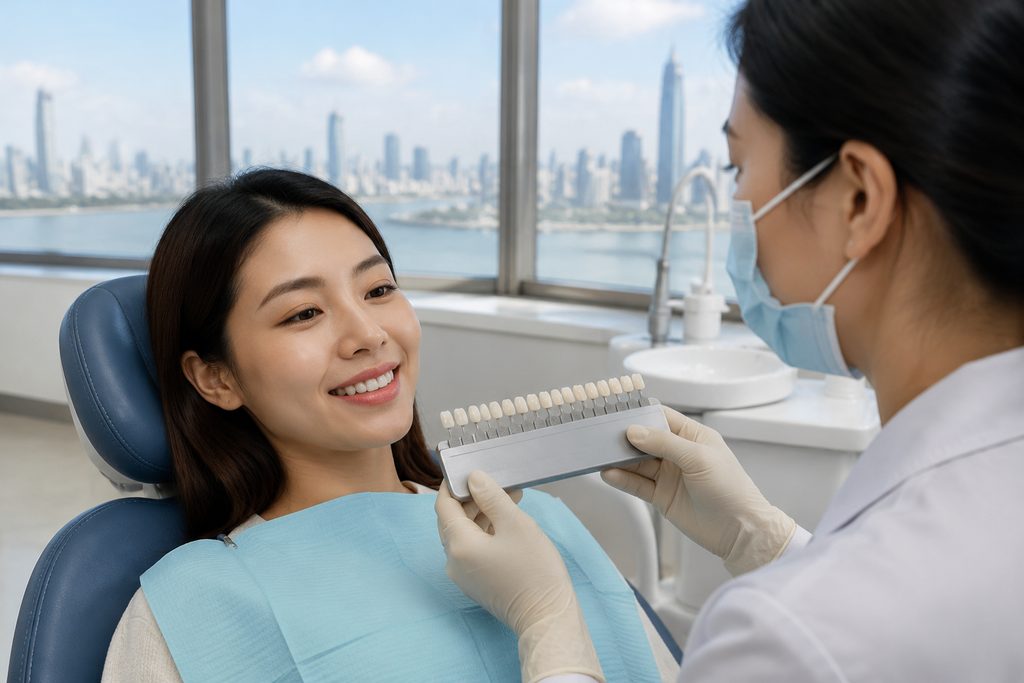
Porcelain Veneers in China: What to Know Before You Fly
A porcelain veneer is a thin shell of ceramic, roughly the thickness of a contact lens, bonded to the front of a tooth to change its color, shape, or alignment. That is the whole idea. No drilling into the root, no implant, no bone work — just a custom-made facing that a technician builds from a digital scan of your mouth. When people search for the porcelain veneers cost China clinics quote, they are usually comparing one number against another: what a dentist in London, Los Angeles, or Dubai charges per tooth versus what a top Chinese dental hospital charges. The gap is real, and it is large. But cost is the easy part. The harder questions involve who is holding the drill, what ceramic they use, and what happens if a veneer chips three years after you fly home.
This guide walks through the full picture — pricing, clinic selection, safety, longevity, and the logistics nobody mentions until you are already booking flights.
How This Actually Works, Step by Step
The ceramic and the bonding materials are frequently the same brands used in Western labs — several major manufacturers supply both markets. What differs is the operator and the lab. A veneer is only as good as the margin fit and the bite balance. That is why clinic selection matters more than price shopping.
Minor issues — a slight bite adjustment, a small polish — can be handled by any competent local dentist using your records. More serious failures, such as a debonded veneer, need replacement, and you will likely pay locally for that. This is the honest trade-off of traveling for dental work, and it is worth factoring into your decision alongside the savings.
For a standard case, plan ten to fourteen days. That covers the preparation visit, the lab turnaround, the bonding appointment, and a follow-up check. Complex full-arch cases or cases requiring gum treatment first can extend this by a week or more.
Your Next Step
The savings on porcelain veneers in China are genuine — often 60 to 80 percent below Western private practice rates — but the value only holds if the clinic, the materials, and the follow-up plan are right for your case. That decision deserves more than a price comparison.
China Medical Services helps international patients navigate Chinese hospitals: matching your case to the right department, coordinating appointments through official hospital channels, and providing bilingual support on the ground. We are not a dental provider and we do not perform treatment or promise clinical outcomes. What we do is remove the logistics barrier so you can make a clear decision. If you would like to talk through your situation, start with a free consultation — no pressure, no obligation.
Whatever you decide, get your records in order and ask hard questions before you book. A good smile is worth the diligence.
Frequently Asked Questions
Yes. The hospitals used for international patients are JCI-accredited and follow the same international safety standards as top hospitals in the US and Europe. Surgical teams perform high volumes of procedures — often more than their Western counterparts — which studies show leads to better outcomes.
Costs vary by procedure and hospital, but international patients typically save 40-80% compared to US prices — even when factoring in travel and accommodation. A consultation with our team will give you an exact, all-inclusive quote with no hidden fees.
Send us your existing medical reports to get started. We handle everything from hospital selection and appointment scheduling to visa assistance and post-operative recovery planning. Your medical records are reviewed by the specialist before you even book a flight.
For more medical information and treatment options in China, visit chinamedservices.com (China Medical Services).
