Frailty Checkup in China: A Guide for Older Adults Seeking Care
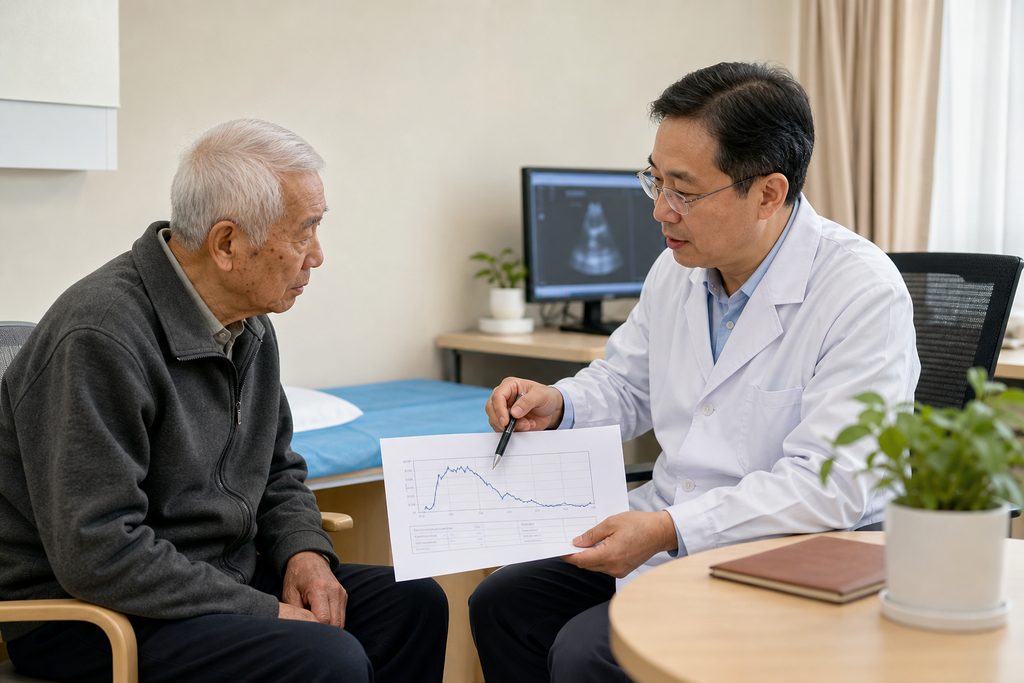
Frailty Checkup in China: A Guide for Older Adults Seeking Care
While a specialist geriatric assessment in the United States can take three to six months to schedule and cost $1,500 or more out of pocket, a comprehensive frailty checkup at a top-ranked Chinese hospital can often be arranged within two to four weeks — at a fraction of that price. For families watching a parent slow down, lose weight, or struggle with stairs, that gap matters. And understanding the frailty checkup cost China hospitals charge is only the beginning of the conversation.
This guide is for adult children and older patients who have started searching for something more than a standard annual physical. It explains what a frailty checkup actually measures, why China’s large geriatric departments have become a realistic option, and how to plan the trip without wasting money or time.
How This Actually Works, Step by Step
Most international patients do not fly to China first and figure things out later. The sequence usually starts at home, with documents.
Step one: you gather the patient’s recent medical records. Blood work, medication lists, imaging reports, discharge summaries, and any cognitive testing results. These get translated into Chinese by a medical translation service — not a general translation app. The distinction matters. A geriatrician reading “mild cognitive impairment” needs the exact clinical phrasing, not a loose equivalent.
Step two: the translated file goes to the international department of a shortlisted hospital, or to a coordination service that handles that submission on your behalf. A geriatric specialist reviews the records and decides whether the case is appropriate for an outpatient assessment, a multi-day package, or something else entirely.
Step three: you receive a written summary. This is where a written second opinion often comes in useful. The specialist outlines what tests they would run, how many days the patient needs to be in China, and a realistic cost range. No commitment yet.
Step four: if the plan makes sense, you move to scheduling. The hospital issues an invitation letter, which you attach to the visa application. Appointment dates get locked in. A bilingual companion is assigned if you have requested one.
Step five: arrival, assessment, results. The full workup typically runs across two to four days, depending on how many specialists are involved.
What Is a Frailty Checkup and Who Needs It?
A frailty checkup is not a generic “executive physical” with a nicer name. It is a structured evaluation of how well an older adult’s body systems are holding up under stress — and how likely they are to recover from surgery, illness, or a fall.
Clinicians typically assess five domains: gait speed and mobility, grip strength, unintentional weight loss, exhaustion, and low physical activity. These five markers form the basis of the widely used Fried frailty phenotype. Someone who meets three or more criteria is classified as frail. One or two, and they are “pre-frail.”
Who actually needs this? Three groups come up again and again.
- Adults over 70 who have had an unexplained fall in the past year
- Patients facing major surgery who need a preoperative risk picture
- Older adults whose family has noticed weight loss, withdrawal, or a sharp drop in stamina
A standard physical rarely catches these patterns. A comprehensive geriatric assessment does. That is the difference between “your bloodwork looks fine” and “your gait speed has dropped 30% since last year, and here is what we do about it.”
Where to Go: Finding the Best Geriatric Assessment Clinic Shanghai and Beyond
China’s strongest geriatric programs cluster in a handful of cities. Beijing and Shanghai lead, followed by Guangzhou, Chengdu, and Hangzhou. The Fudan-ranked top 100 hospitals are spread across 23 cities, and geriatrics is a well-established specialty at many of them.
If your search has centered on finding the best geriatric assessment clinic Shanghai offers, the international departments at major university hospitals are the usual starting point. These departments handle foreign patients routinely, provide English-speaking coordinators, and can assemble a multi-specialty team — geriatrics, cardiology, neurology, rehabilitation — under one roof.
Private international hospitals in Shanghai and Beijing offer a different trade-off. Shorter waits, Western-style service, direct insurance billing in some cases. The trade-off is cost, which typically runs 1.5 to 2 times the public international department rate.
For families who want to book frailty screening package Beijing options, the process is similar. You contact the hospital’s international office or a coordination service, submit records, and request a geriatric assessment package. Packages usually bundle consultations, blood work, imaging, cognitive screening, and a written report.
Traditional Chinese medicine hospitals are worth considering as a complement, not a replacement. Acupuncture and herbal formulas have a role in managing chronic pain, sleep, and appetite in older adults. They do not substitute for a diagnostic workup. You can explore that side through our TCM hospital directory.
A Realistic Timeline
Here is how the schedule usually unfolds for a patient coming from North America or Europe. Ranges reflect real variation by hospital, season, and case complexity.
| Stage | Typical Duration | What Happens |
|---|---|---|
| Record collection and translation | 5–10 days | You gather reports; translation service converts them to Chinese |
| Specialist review | 3–7 days | Geriatrician reviews file, confirms assessment plan |
| Written opinion returned | 2–5 days after review | You receive proposed tests, duration, and cost range |
| Appointment confirmation | 1–3 weeks | Hospital issues invitation letter; dates locked |
| Visa application (S2) | 4–10 business days | Submit with hospital letter and supporting documents |
| Travel and assessment | 2–4 days on site | Consultations, tests, imaging, cognitive screening |
| Results and care plan | 1–3 days after final test | Written report with findings and recommendations |
Add buffer. Visa processing times shift with embassy workload. Hospital appointment slots fill faster around major holidays. A realistic door-to-door window from first email to results in hand is four to eight weeks.
What Can Go Wrong — and What Happens Then
Honest failure modes, because you deserve them before you book a flight.
The records are incomplete. This is the most common problem. You arrive with a folder of PDFs, but the cognitive testing from two years ago is missing, or the medication list is outdated. The assessment gets shortened or rescheduled. Fix: send everything at least three weeks ahead, and let the reviewing specialist tell you what is missing.
The visa is delayed. S2 applications are usually straightforward with a proper hospital invitation letter, but processing times vary by consulate. If your appointment is in three weeks and the visa has not arrived, you reschedule. Hospitals generally accommodate this, but you may lose a deposit on flights.
The patient is frailer than the records suggested. Sometimes the assessment reveals that the patient cannot tolerate a full day of testing. The team splits the workup across more days, or narrows it to the most urgent questions. This is not a failure — it is the assessment working as intended.
Language friction outside the hospital. The international department speaks English. The taxi driver, the pharmacy, the restaurant do not. This is where a bilingual medical companion earns their fee. Our companion service covers queuing, registration, payment, wayfinding, and translation — from $300 per day.
How to Evaluate a Provider — and What the Numbers Mean
Yes, through the hospital’s international department or a coordination service. You will still need translated records and a confirmed appointment. What you cannot do is walk into a standard outpatient clinic and expect to be seen — public hospital registration works differently, and same-day access for foreign patients is not realistic. Plan ahead, and use the international channel.
Expect roughly $800 to $6,000 depending on hospital tier and how many tests are included. Comparable assessments in the US often exceed $5,000 without insurance. The gap widens for packages that include cardiac imaging or advanced cognitive testing. Final pricing always depends on the individual case and the hospital’s current fee schedule.
It depends on the stage. Mild cognitive impairment is manageable with a companion present. Moderate to severe dementia makes international travel difficult and potentially distressing. In those cases, a written second opinion based on existing records may deliver most of the value without the journey.
Your Next Step
A frailty checkup is one of the few medical evaluations that can genuinely change the trajectory of an older adult’s care — not by finding a dramatic diagnosis, but by measuring what everyone else has overlooked. China’s top hospitals offer this assessment at a cost and speed that most Western systems cannot match, provided you plan the logistics properly.
China Medical Services connects international patients with 340+ top-ranked hospitals across 37 cities. We do not provide medical care, and we do not promise specific doctors or outcomes. What we handle is the coordination: record review, appointment scheduling, visa guidance, and bilingual accompaniment. If you would like to understand what a frailty assessment would involve for your family member, start with a free consultation — no pressure, no commitment.
This article is for informational purposes only and does not constitute medical advice. Always consult a qualified healthcare provider about individual medical decisions.
Frequently Asked Questions
Yes. The hospitals used for international patients are JCI-accredited and follow the same international safety standards as top hospitals in the US and Europe. Surgical teams perform high volumes of procedures — often more than their Western counterparts — which studies show leads to better outcomes.
Costs vary by procedure and hospital, but international patients typically save 40-80% compared to US prices — even when factoring in travel and accommodation. A consultation with our team will give you an exact, all-inclusive quote with no hidden fees.
Send us your existing medical reports to get started. We handle everything from hospital selection and appointment scheduling to visa assistance and post-operative recovery planning. Your medical records are reviewed by the specialist before you even book a flight.
For more medical information and treatment options in China, visit chinamedservices.com (China Medical Services).
