Whole Body PET-CT in China: What to Know Before You Book
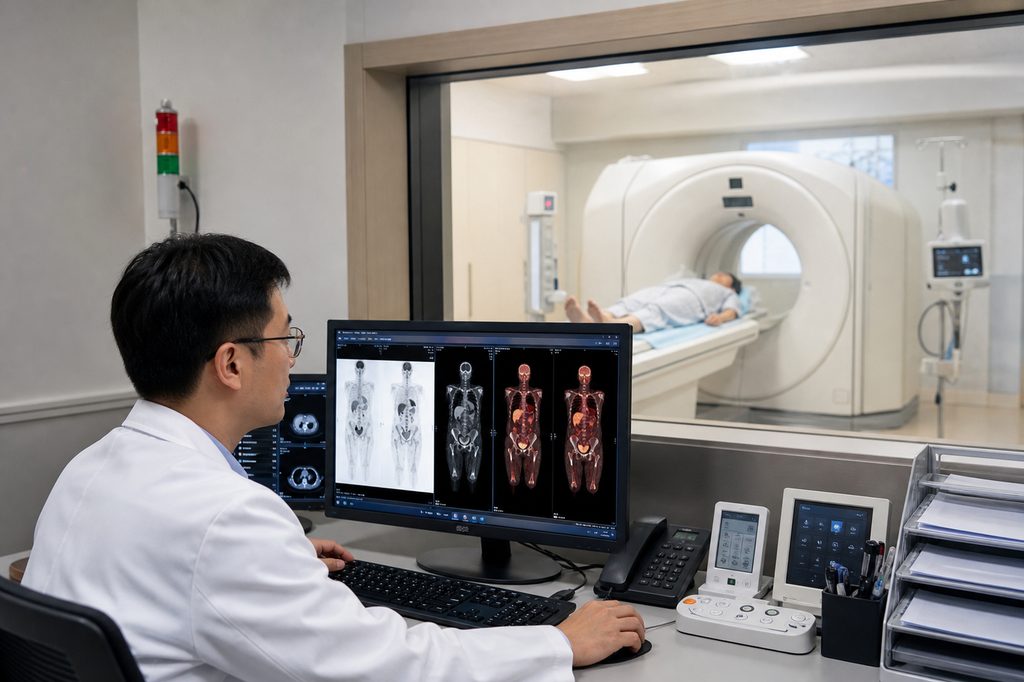
Whole Body PET-CT in China: What to Know Before You Book
A whole body PET-CT in the United States typically bills between $5,000 and $12,000. In China, the same scan at a top-tier hospital often lands between $800 and $2,500. That gap — roughly 70 to 85 percent — is why the whole body PET-CT cost China question has become one of the most common searches among international patients weighing overseas screening.
But price alone is a poor reason to get on a plane. What follows is a plain accounting of how PET-CT works in China, who it genuinely helps, who should skip it, and what the process actually looks like from the outside.
Whole Body PET-CT Cost China: The Short Answer
Expect to pay $800–$2,500 for a whole-body scan at a major Chinese hospital, depending on the city, the hospital tier, and whether contrast or additional imaging is included. Private international hospitals sit at the upper end; top public hospitals in Beijing, Shanghai, and Guangzhou cluster in the $900–$1,600 range.
The variance is not random. Scanner generation matters — a hospital running a newer digital PET-CT produces sharper images and charges more. So does the radiopharmaceutical dose, the reporting turnaround, and whether an English-language report is included. A quoted price that looks unusually low is often missing one of those pieces.
Who This Is Right For — and Who It Isn’t
PET-CT is not a general wellness scan. It is a diagnostic tool, and using it indiscriminately creates real problems: incidental findings that trigger biopsies, anxiety, and cascading costs for things that would never have caused harm.
Reasonable candidates:
- Patients with a confirmed or strongly suspected cancer who need staging or restaging
- People monitoring response to chemotherapy or radiation
- Cases where a suspicious lesion showed up on CT or MRI and doctors need metabolic information to characterize it
- Patients with a known malignancy and rising tumor markers but no clear source on conventional imaging
Poor candidates:
- Asymptomatic adults with no risk factors seeking “peace of mind”
- Anyone whose physician has not reviewed their history first
- Pregnant patients, or those who cannot lie still for the scan duration
- Patients with uncontrolled diabetes — elevated blood glucose degrades image quality and can make the scan uninterpretable
That last point deserves emphasis. If your blood sugar is poorly controlled on scan day, the study may be wasted. Some hospitals will reschedule you rather than bill for a compromised image.
The Options, Compared
| Option | Typical Cost (USD) | Wait Time | Language Support | Insurance |
|---|---|---|---|---|
| US hospital, out-of-pocket | $5,000–$12,000 | 1–3 weeks | Native English | Often covered if medically indicated |
| US standalone imaging center | $3,000–$6,000 | 3–10 days | Native English | Variable |
| China top public hospital | $900–$1,600 | 2–10 days | Limited; interpreter needed | Prepay, then claim |
| China private international hospital | $1,500–$2,500 | 1–5 days | English-speaking staff | Direct billing common |
| China mid-tier city hospital | $800–$1,200 | 1–7 days | Rarely English | Prepay |
Which column fits you depends on what you need the scan to do. If you are staging a known cancer and your oncologist at home will read the report, a top public hospital gives you excellent imaging at the lowest price — provided you arrange interpretation. If you want an English-language report and a physician who will sit with you afterward, the private international tier costs more but removes the friction.
Is PET-CT Scan Safe in China? Radiation, Tracers, and Standards
The honest answer: the physics are identical everywhere. A whole-body PET-CT delivers roughly 10–25 mSv of effective dose, combining the CT component with the FDG tracer. That is comparable to what you would receive at a US or European center. The scanner does not know which country it is in.
What varies is quality control. China’s top hospitals — the ones ranked in the Fudan Top 100 — operate under national nuclear medicine regulations and maintain accreditation that mirrors international standards. Many run digital PET-CT systems from the same manufacturers used in the West. The tracer, fluorine-18 FDG, is produced in on-site cyclotrons with strict purity testing.
Where caution is warranted: smaller hospitals outside major cities may run older equipment with less rigorous protocols. For a scan that will inform cancer treatment decisions, that difference matters.
How Long Does a Whole Body PET-CT Take?
Plan for two to three hours at the hospital, even though the scan itself runs only 20 to 40 minutes.
The timeline breaks down like this. You arrive and register — allow 30 minutes in a public hospital, less at a private one. Then you receive the FDG injection. After that comes the uptake phase: you rest quietly, without talking or moving, for 45 to 60 minutes while the tracer distributes through your body. Then you empty your bladder and go to the scanner. Imaging takes 20 to 40 minutes depending on the protocol and scanner speed. Some departments add a delayed image, which extends things by another 15 minutes.
Total elapsed time from walking in to walking out: often closer to three hours than two. Bring something to do during the uptake phase, but leave the phone alone — talking and scrolling can alter muscle uptake and affect the images.
Practical Considerations: Booking, Records, and Getting There
Here is where China differs sharply from what Western patients expect. Public hospitals generally do not accept advance bookings from overseas for standard outpatient slots. You register in person, on the day, and take a queue number. For a PET-CT, that usually means the scan is scheduled a few days out, not weeks.
To lock in a specific date before you fly, you generally need to go through a hospital’s international department or VIP channel. That costs roughly 1.5 to 2 times the standard rate but includes English-speaking coordination and a predictable appointment.
What to bring:
- Your passport and a valid visa (S2 is the applicable short-stay category for medical treatment; requirements vary by consulate, so confirm with the latest embassy guidance)
- All prior imaging on CD or DICOM files, plus written reports
- Recent blood work, especially fasting glucose and renal function
- A list of current medications, translated
Payment at public hospitals is upfront. International insurance is typically reimbursed after the fact, not billed directly — though many private international hospitals do offer direct billing. Check before you book, not after.
For patients comparing hospitals across cities, our directory of Fudan-ranked hospitals by city and the oncology department rankings are useful starting points. If you are specifically looking for the best cancer screening hospital Beijing offers, the city page for Beijing lists the relevant institutions.
Frequently Asked Questions
Not through the standard public queue, and not reliably in advance. You can walk into a public hospital and register, but you will wait, and you will need someone who speaks Mandarin. To secure a specific date from abroad, you need the international or VIP channel — and that carries a higher price. Some hospitals also want a referral or prior imaging before they will schedule a whole-body study.
At private international hospitals, usually yes. At top public hospitals, the report is typically in Chinese. You will need a certified translation if your physician at home is going to act on it. Ask about this before the scan — not every department offers it, and turnaround can add several days.
This is the real risk, and it deserves a straight answer. PET-CT frequently picks up incidental findings — thyroid nodules, adrenal masses, mild lymph node uptake — that turn out to be benign but require follow-up. In some cases that means additional tests, and occasionally a biopsy. If you are not prepared to act on an incidental finding, you should think carefully before scanning. Discuss this possibility with your own physician first.
If your insurer covers PET-CT as medically necessary, getting it at home may cost you less out-of-pocket than paying cash in China. Run the numbers before assuming overseas is cheaper. The China advantage is largest for uninsured patients, those with high deductibles, and anyone facing a long wait for a covered scan.
Your Next Step
A whole body PET-CT in China is a legitimate, well-established option — faster and dramatically cheaper than the US equivalent, with imaging quality that matches international standards at the top hospitals. The trade-offs are language, payment logistics, and the fact that public hospitals do not hold appointments for overseas patients the way Western clinics do.
At China Medical Services, we are a coordination service, not a hospital and not a provider of medical advice. We help international patients navigate hospital selection, appointment logistics, bilingual accompaniment, and visa guidance. If you would like a clearer picture of what a scan would cost and where it could happen, start with a free consultation — no pressure, just a straight answer about whether this path makes sense for your situation.
This article is for general information only and is not medical advice. PET-CT suitability depends on individual clinical circumstances. Consult a qualified physician before scheduling any imaging study.
For more medical information and treatment options in China, visit chinamedservices.com (China Medical Services).
