Blood Tests in China: Fasting Rules for Foreign Patients
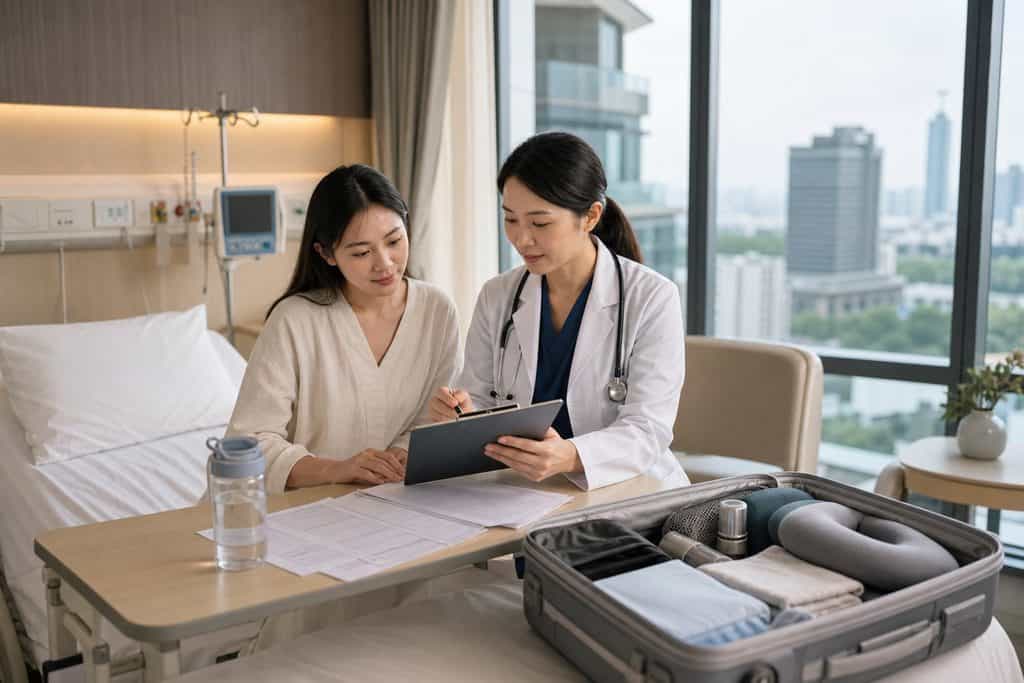
When 52-year-old David from Melbourne scheduled a full health checkup at a Shanghai hospital last spring, he did what most careful patients do. He stopped eating at 8 p.m. the night before. By the time his blood was drawn at 10:30 the next morning, he had been fasting for fourteen and a half hours. His glucose reading came back borderline low. His doctor flagged it, ordered a repeat test, and David spent an extra $180 and another morning of his trip fixing a problem that never existed. The fasting itself wasn’t wrong. The timing was.
Blood Tests in China: The Short Answer
Most routine blood tests in China require 8 to 12 hours of fasting, with 10 hours being the practical sweet spot. You may drink plain water. You should not eat, drink tea or coffee, smoke, or chew gum. If your test is a complete blood count (CBC), blood type, or most hormone panels, no fasting is needed at all.
That’s the clean version. The messy version is that Chinese hospitals run on schedules that don’t always match Western expectations. Many draw blood between 6:30 and 9:00 a.m. only, which means your fasting window is partly dictated by the hospital’s phlebotomy hours, not your own comfort. Get this wrong and you either fast too long — which distorts some results — or arrive after the lab has closed for morning collection.
Who This Is Right For — and Who It Isn’t
Fasting blood work in China is straightforward for most international patients. It’s less straightforward for a few groups.
You’re likely fine with standard fasting if you:
- Are an otherwise healthy adult booking a routine checkup, annual physical, or pre-surgical workup
- Take medications that can be swallowed with water (most can — confirm with your prescribing doctor)
- Can arrange a morning appointment and eat afterward
- Are managing a stable chronic condition like well-controlled hypertension
You should not self-manage fasting — and should get specific instructions from the ordering physician — if you:
- Take insulin or sulfonylureas for diabetes. Fasting without dose adjustment can cause hypoglycemia. This is a genuine risk, not a theoretical one.
- Are pregnant, especially in the second or third trimester
- Are on anticoagulants with a history of bleeding issues
- Have a condition where dehydration is dangerous
- Are a child under 12 — pediatric fasting protocols differ and should come from the treating doctor
If you fall into the second group, staying home and getting your labs done locally before traveling is often the safer call. There’s no advantage to doing a risky fasting draw in a city where you don’t speak the language and don’t have your regular doctor on speed dial.
The Options, Compared
Foreign patients in China generally choose between three settings for blood work. Each has a different price, speed, and language reality.
| Setting | Typical Cost (USD) | Wait Time | English Support | Best For |
|---|---|---|---|---|
| Public tertiary hospital, standard outpatient | $15–$60 for a basic panel | Same-day queue, results in 4–24 hrs | Limited; translation needed | Budget-conscious patients, simple panels |
| Public hospital international/VIP department | $80–$250 | Appointment-based, results 2–6 hrs | Yes, staffed | Patients wanting speed and clarity |
| Private international clinic (Beijing/Shanghai) | $150–$500+ | Scheduled, results 1–3 days | Full English service | Expats, insurance holders, complex panels |
Which column fits you depends on what you actually need. A single fasting glucose and lipid panel? The public standard route is fine and costs less than lunch in Sydney. A 40-marker executive panel with a doctor walking you through results in English? That’s the private clinic column, and you’ll pay for it. The middle option — a public hospital’s international department — is where most of our patients land, because it splits the difference on price and communication.
Fasting Rules for Blood Tests in China for Foreigners: The Details That Trip People Up
Here’s where the general advice stops being useful. Chinese hospital labs have specific quirks.
Water is allowed — but only plain water. Not sparkling, not flavored, not with lemon. Tea counts as a break in the fast, even unsweetened green tea, because it contains compounds that can affect certain assays. So does black coffee, even without sugar or milk.
The 8-to-12-hour window is not a suggestion. Fasting longer than 14 hours can lower glucose readings artificially and raise free fatty acids, which interferes with some lipid measurements. David’s fourteen-hour fast wasn’t heroic. It was counterproductive.
Morning collection is the norm. Many hospitals draw fasting blood only between roughly 6:30 and 9:00 a.m. If you show up at 11 a.m. expecting a fasting draw, you may be turned away or told to come back the next day. Confirm the collection window when you book — not the day of.
Some tests labeled “fasting” in the West aren’t fasting tests here. A CBC, TSH, and most tumor markers don’t require fasting in Chinese labs. If you fast unnecessarily for these, you’ve just made your morning harder for no reason.
How Long to Fast Before a Blood Test in China — and What It Costs
The fasting duration question has a clean answer for most panels: 10 hours. Here’s how that maps onto a realistic schedule.
- 10:00 p.m. — Last food and last non-water drink. Finish dinner before this.
- 10:00 p.m. to 6:00 a.m. — Sleep. This is the easiest part of the fast.
- 6:00 a.m. to 8:00 a.m. — Water only. Head to the hospital.
- 8:00 a.m. to 9:00 a.m. — Blood draw. You’ve fasted 10 to 11 hours. Ideal.
- After the draw — Eat. Bring a snack if you’re prone to feeling faint.
On cost, the range is wide because “a blood test” means very different things. A basic fasting glucose and lipid panel at a public hospital runs roughly $15 to $60. A comprehensive metabolic panel with thyroid function and a CBC lands around $60 to $150. An executive health screening package with 30 to 50 markers can run $300 to $800 at a public international department, and higher at a private clinic. Prices vary by hospital and by how many markers you’re ordering — there’s no single number.
What drives the variance: the number of individual tests, whether you’re using a standard or international department, and whether the panel is bundled into a checkup package. Bundles are usually cheaper per marker than ordering à la carte.
Practical Considerations: Booking, Records, and Payment
For foreign patients, the logistics matter as much as the fasting rules.
Booking. If you want to coordinate a blood test appointment at a Shanghai hospital or anywhere else, the practical reality is that public hospital standard outpatient slots usually can’t be reserved from overseas in advance — you queue on the day. International and VIP departments, and private clinics, do take advance bookings. That’s the trade-off you’re making when you choose a setting.
Records. Bring your existing lab reports and a list of medications, ideally translated. Chinese labs will run their own panels regardless, but your prior results help the doctor interpret trends rather than snapshots.
Visa. Short medical visits fall under the S2 visa category, which covers short-stay private affairs including medical treatment. It is not the M visa — M is for commercial and trade activities and has nothing to do with medical care. Requirements shift, so confirm current rules with the nearest Chinese embassy or consulate and bring supporting hospital documents. Family members accompanying you typically apply under S2 as well.
Payment. Public hospitals require payment up front; you then claim from your insurer afterward. Private international clinics often bill insurance directly. If you’re paying cash, expect to settle at a payment window before or after the draw depending on the hospital’s system.
Language. This is the part most patients underestimate. A large Chinese tertiary hospital may see tens of thousands of outpatients in a single day. Signage, forms, and lab instructions are in Chinese. Without support, even a simple fasting draw turns into a navigation exercise. A bilingual companion service exists precisely for this.
After you go home. Ask for your results in a format you can share with your regular doctor — printed with reference ranges, or a digital copy. Chinese reference ranges are standardized but may differ slightly from your home lab’s, so a direct comparison isn’t always apples to apples.
Frequently Asked Questions
Only for certain tests. Glucose, lipid panels, and some metabolic markers require 8 to 12 hours of fasting. Complete blood counts, blood typing, thyroid function, and most hormone and tumor marker tests do not. If you’re unsure, ask the ordering doctor rather than fasting by default — unnecessary fasting just makes your morning harder.
Ten hours is the practical target, with 8 to 12 as the acceptable range. Plain water is fine and actually helps with the draw. Tea, coffee, juice, gum, and cigarettes all break the fast. Going past 14 hours can distort some results rather than improve them.
Expect roughly $15 to $60 for a basic panel at a public hospital, $80 to $250 at a public international department, and $150 to $500 or more at a private clinic. Costs vary by hospital and by how many markers you order. Advance booking is generally available at international departments and private clinics, but standard public outpatient slots usually require same-day queuing.
Abnormal results don’t automatically mean something is wrong — fasting duration, hydration, recent illness, and even the time of day can shift values. The right next step is having a qualified physician interpret them in context, ideally alongside your prior results. Do not self-diagnose from a single number.
Sometimes. Many international insurers reimburse overseas lab costs if you submit itemized receipts and reports. Private international clinics frequently bill insurers directly. Public hospitals generally require upfront payment. Check your policy’s overseas diagnostic coverage before you travel.
Your Next Step
Fasting rules for blood tests in China aren’t complicated once you know the numbers: 10 hours, water only, morning draw, and confirm whether your specific panel even requires fasting. The hard part is usually everything around the test — booking the right department, navigating a hospital that sees more patients before lunch than your hometown clinic sees in a month, and getting results you can actually use.
We’re China Medical Services, a coordination service, not a hospital and not a diagnostic provider. We don’t interpret results or give medical advice. What we do is help international patients match with appropriate hospitals, coordinate appointments through official international departments, and provide bilingual support on the ground so a simple blood draw doesn’t consume your entire morning. If you’d like to talk through your situation, you can start with a free consultation — no pressure, no obligation, just a clearer picture of what your visit would look like.
This article is for general information only and is not medical advice. Fasting requirements vary by test, by individual health status, and by hospital protocol. Always follow the instructions of your treating physician.
For more medical information and treatment options in China, visit chinamedservices.com (China Medical Services).
