Inlays and Onlays in China: The Basics, Costs, and Safety
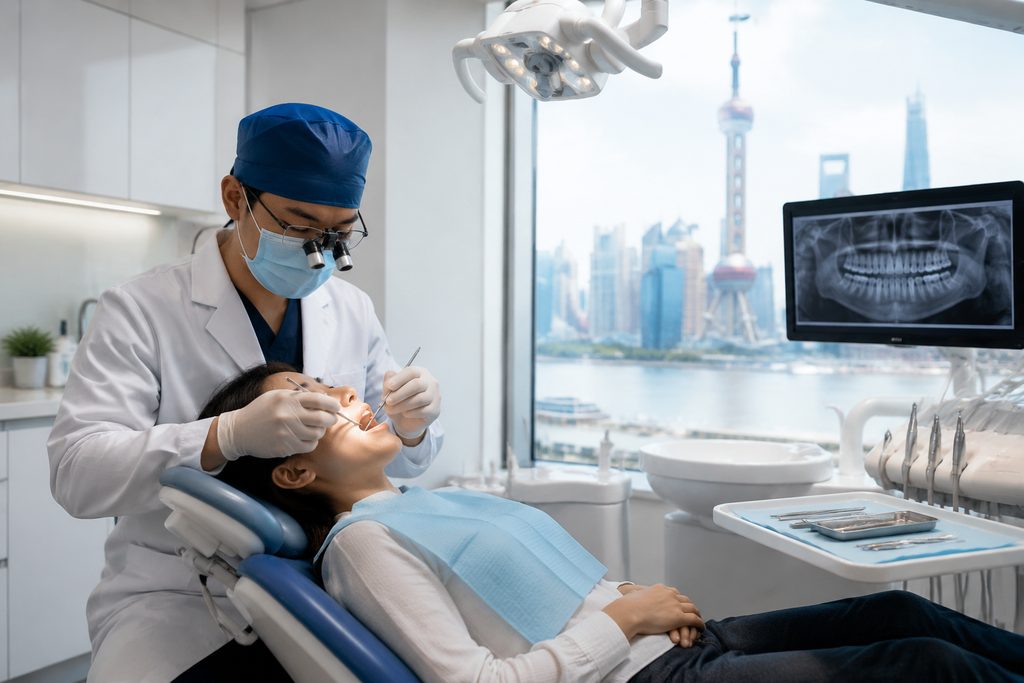
You have probably heard that dental work abroad means gambling with your teeth. The reality, at least in China’s top-tier hospitals and international dental clinics, runs in the opposite direction. Inlays and onlays cost China patients anywhere from $150 to $600 per tooth at a private international clinic — a fraction of the $800 to $2,500 you would pay in the United States for the same ceramic restoration. That gap is real, and it is the reason thousands of foreign patients now plan dental trips to Beijing, Shanghai, and Guangzhou every year.
But here is the caveat that most dental tourism articles skip. A cheap crown or onlay is only a bargain if the lab work is precise and the dentist is properly credentialed. China has world-class dental schools and some genuinely excellent prosthodontists. It also has plenty of clinics that cut corners on materials. Knowing which is which is the whole game.
What Inlays and Onlays Actually Are
Before we talk about price, let’s be clear about the procedure itself, because the terminology confuses a lot of people.
An inlay is a custom-made filling that sits inside the chewing surface of a back tooth, bonded into the cavity left after decay is removed. An onlay is larger — it covers one or more of the tooth’s cusps, essentially rebuilding the biting surface. Both are made in a dental lab from ceramic, composite resin, or gold, and both are cemented into place as a single solid piece.
The alternative is a full crown, which caps the entire tooth. Crowns remove more healthy enamel. Inlays and onlays preserve more of the natural tooth structure, which is why dentists increasingly prefer them when the damage is moderate rather than catastrophic.
Who This Is Right For — and Who It Isn’t
Dental tourism is not for everyone, and we would rather tell you that upfront than waste your time.
You are likely a good candidate if:
- You need one to four inlays or onlays and have recent X-rays or a CBCT scan
- Your case is straightforward — no active infection, no complex bone grafting, no full-mouth reconstruction
- You can stay in China for 7 to 14 days, since most ceramic restorations require a second visit for fitting
- You are comfortable navigating a large city with a bilingual coordinator or an English-speaking clinic
You should probably stay home if:
- You have an acute dental abscess or severe gum disease that needs urgent care now
- Your case requires multiple specialists and long-term follow-up you cannot arrange remotely
- You are looking for the absolute cheapest option — the lowest-priced clinics carry the highest risk of poor lab work
- You cannot travel for medical reasons
The Options, Compared
Here is how inlays and onlays stack up against the alternatives, both in procedure type and in country of treatment.
| Option | Typical Cost (USD) | Tooth Structure Preserved | Visits Required | Best For |
|---|---|---|---|---|
| Composite filling (US) | $200–$450 | High | 1 | Small cavities |
| Ceramic inlay (US) | $800–$1,800 | High | 2 | Moderate decay, back teeth |
| Ceramic onlay (US) | $900–$2,500 | Medium-High | 2 | Decay involving cusps |
| Ceramic inlay/onlay (China, top international clinic) | $150–$600 | High | 2 | Same indications, lower cost |
| Full crown (US) | $1,000–$3,500 | Low | 2 | Severe damage |
| Full crown (China, top international clinic) | $300–$900 | Low | 2 | Severe damage, budget option |
If you have a small cavity, a filling is fine and cheaper everywhere. If the damage reaches the cusps, an onlay beats a crown on tooth preservation — and the China column becomes very attractive on price. The reader who benefits most from traveling is someone needing two or more restorations, where the savings easily cover flights and hotels.
Are Inlays and Onlays Safe in China?
This is the question that keeps people up at night, and it deserves a straight answer.
Safety in Chinese dentistry depends almost entirely on which clinic you choose, not on the country itself. China’s top dental hospitals — the stomatology departments at Peking University, Sichuan University’s West China School of Stomatology, and Shanghai Jiao Tong University — train dentists to international standards and use the same German, Swiss, and Japanese ceramic systems you would find in a Zurich or Boston practice. Many of these institutions are accredited by international bodies, and their prosthodontists publish in the same journals their Western peers read.
The private international clinic tier — think Jiahui, United Family, and similar JCI-accredited facilities — offers English-speaking staff, digital intraoral scanning instead of messy impression trays, and direct insurance billing for some plans. That is the tier most foreign patients use, and it is where the $150–$600 range above comes from.
How Long Do Inlays and Onlays Last?
With good oral hygiene and regular checkups, ceramic inlays and onlays commonly last 10 to 15 years, and many survive well past 20. Some clinical studies report survival rates above 90 percent at the 10-year mark for ceramic onlays placed by experienced clinicians.
What shortens that lifespan? Bruxism (teeth grinding), poor bonding technique, and a mismatched bite. If you grind your teeth at night, tell your dentist — a night guard is a small investment that protects a much larger one. And if the restoration feels “high” when you bite down, say so before you leave the chair. Bite adjustment takes five minutes and prevents months of trouble.
What It Costs: The Full Picture
The inlays and onlays cost in China varies widely by city and clinic tier. Here is what drives the number.
A single ceramic inlay at a private international clinic in Shanghai typically runs $200–$450. Onlays, which are larger and require more lab work, sit at the higher end, $300–$600. At a public hospital‘s VIP or international department, prices can be lower — sometimes $150–$350 — but English service may be limited and appointment logistics harder to arrange from abroad. For a broader sense of how Chinese hospital pricing compares across specialties, our overview of top-ranked hospitals in China is a useful starting point.
Your total trip cost also includes flights ($600–$1,400 round-trip from Europe or North America), 7–10 nights of hotel ($70–$200 per night in a major city), and meals. Even so, a patient needing three onlays could spend roughly $1,200 on dentistry in China versus $4,500–$7,500 in the US, leaving plenty of room for travel and still coming out ahead.
What is not included in quoted prices: X-rays taken elsewhere, root canal treatment if the decay reached the pulp, and any follow-up adjustments after you fly home. Ask for an itemized written estimate before you commit.
Practical Considerations: Records, Visas, and Payments
Bring your recent dental X-rays or a CBCT scan in digital format. Without them, the clinic will re-image you on arrival, which adds cost and time. A panoramic X-ray from the past 12 months is usually sufficient for simple cases.
On the visa question, this matters and people get it wrong constantly. Medical travel to China uses the S2 visa, which covers short-term medical treatment and private affairs; stays beyond 180 days require the S1. Accompanying family members apply under S2 as well. The M visa is for commercial and trade activity and has nothing to do with medical care — anyone telling you otherwise is misinformed. Requirements change, so confirm current documentation with your nearest Chinese embassy or consulate, and expect to submit an invitation or appointment letter from the treating hospital.
Payment at public hospitals is typically upfront, with insurance reimbursement handled afterward in your home country. Private international clinics often accept international credit cards and may bill your insurer directly if they have a partnership. Keep every receipt and a copy of your treatment record — your home dentist will need them for follow-up.
If you want help comparing clinics, understanding what a fair quote looks like, or arranging a bilingual companion to sit with you through the appointment, our team at China Medical Services handles exactly that kind of coordination.
Frequently Asked Questions
Yes, substantially. Ceramic inlays and onlays in China’s private international clinics typically cost 60–80 percent less than comparable US treatment, even after factoring in flights and accommodation for multi-tooth cases. A single tooth may not justify the trip; two or more usually does.
At private international clinics, yes — most accept advance appointments by email or through a coordinator, and some offer video consultations first. At public hospitals, the standard rule is that you register in person on the day, though international departments can sometimes arrange priority scheduling. Plan for a consultation visit before any restoration work begins.
This is the honest limitation of dental tourism. Most clinics will not cover re-treatment abroad, and your home dentist may be reluctant to adjust another practitioner’s work. That is why choosing an experienced prosthodontist and verifying the lab matters more than saving the last $100. Some clinics offer a limited warranty on their restorations — ask about it in writing before treatment.
At JCI-accredited international clinics in major cities, generally yes. At public hospitals, English-speaking staff are less common outside VIP and international departments, which is why many foreign patients use a bilingual medical companion for appointments, payment, and follow-up instructions.
Your Next Step
Inlays and onlays are a conservative, durable way to restore damaged back teeth, and China’s top dental institutions deliver them at a fraction of Western prices — provided you choose the right clinic and verify the lab. That single decision determines whether you save money or lose it.
We are China Medical Services, a coordination service, not a hospital and not a dental provider. We do not diagnose or treat anyone. What we do is help international patients compare credible clinics, prepare records, arrange bilingual accompaniment, and understand the paperwork before they travel. If you would like a free consultation to talk through your case and see whether a dental trip makes sense for you, we are happy to help.
For more medical information and treatment options in China, visit chinamedservices.com (China Medical Services).
