Liver MRI in China: How to Arrange It and What It Really Costs
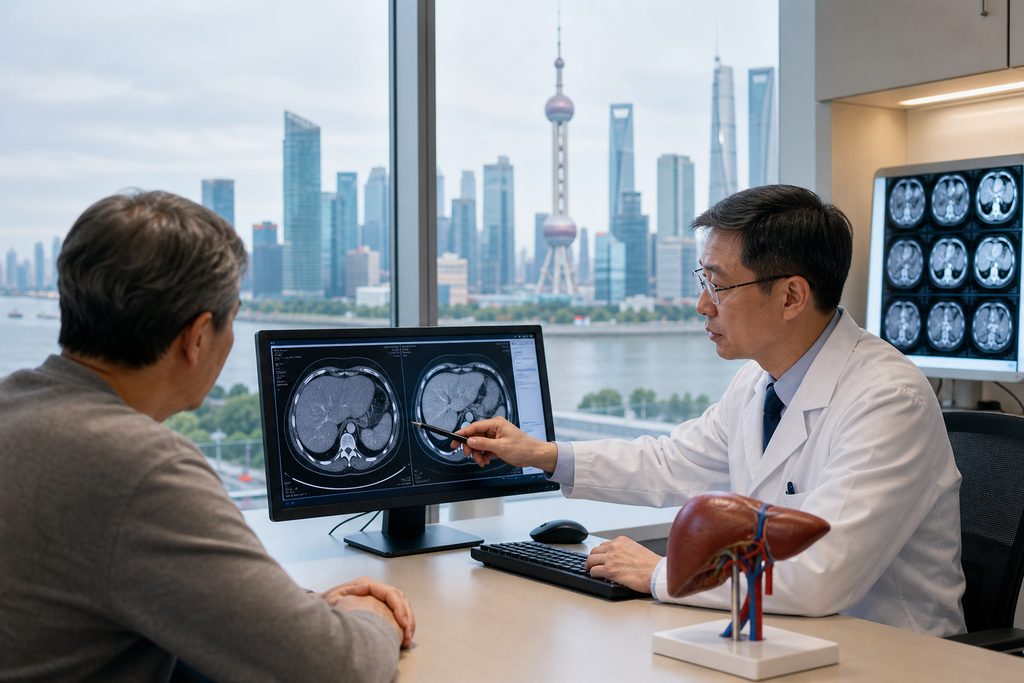
Liver MRI in China: How to Arrange It
You have probably been told that arranging advanced imaging abroad is a bureaucratic nightmare. That you will need a local address, a Chinese phone number, a referral letter nobody will read, and weeks of patience. The reality is more uneven than that — and considerably better than the rumor, provided you understand one thing from the start: in China, the imaging machine is rarely the bottleneck. The scheduling system is. Our team has walked international patients through this exact process hundreds of times, and the single most useful fact we can give you is that a liver MRI cost China hospitals quote is often a fraction of what you would pay in the United States — but only if you reach the right department through the right door.
This guide explains how to arrange a liver MRI in China, what it costs, where to go, and what can derail the plan.
How This Actually Works, Step by Step
Here is the real sequence, stripped of marketing language.
Step one: you send us your existing records. Not a summary — the actual files. Your prior imaging (CT, ultrasound, or an earlier MRI) in DICOM format if you have it, plus the radiology reports, blood work including liver function panels, and any pathology reports if a biopsy has been done. If you have hepatitis B or C, bring the viral load results. If there is a suspected tumor, the alpha-fetoprotein level matters. These documents determine which hospital and which specialist we approach.
Step two: translation and structuring. Chinese radiology departments read English reports routinely at the top-tier hospitals, but the intake paperwork is in Chinese. Our team translates and formats your history into the structure the hospital’s international office expects. This takes two to four business days for a typical liver case.
Step three: we approach the hospital’s international or VIP department. This is the part most patients get wrong. At a Chinese public hospital, you cannot book an MRI from overseas through the ordinary outpatient channel. Ordinary registration happens on the day, in person, in a queue. The international department, by contrast, can accept foreign patients, quote a price, and hold a slot. That is the door we use.
Step four: the hospital reviews and confirms. A hepatobiliary or radiology specialist looks at your records and decides whether an MRI is the right study, which protocol is needed (plain, contrast-enhanced, or a liver-specific contrast agent such as gadoxetic acid), and how long the slot should be. You receive a written plan and a price.
Step five: scheduling. Once you accept, we coordinate the appointment date. Then you travel, register at the international department with your passport, complete the scan, and receive the images and report — usually within 24 to 72 hours for a standard report, longer if a multidisciplinary review is requested.
What a Liver MRI Costs in China — and Why the Range Is So Wide
The question “how much does a liver MRI cost in China” has an honest answer that begins with a range and ends with a caveat. At a top-tier public hospital’s international department, a liver MRI with contrast typically falls in the range of $400 to $900. A plain MRI without contrast sits lower. A liver-specific contrast agent, dynamic sequences, and MRCP (magnetic resonance cholangiopancreatography) push the figure toward the upper end.
Compare that with the United States, where a liver MRI with and without contrast commonly bills between $1,500 and $5,000 before insurance adjustments, and the gap is obvious. Even private international hospitals in China — the ones with English-speaking staff, JCI accreditation, and direct insurance billing — usually land between $800 and $1,800 for the same study.
| Setting | Typical Liver MRI Range (USD) | Notes |
|---|---|---|
| Top-tier public hospital, international department | $400–$900 | Contrast and protocol dependent; report in 1–3 days |
| Private international hospital | $800–$1,800 | English staff, JCI accreditation, direct insurance billing |
| United States (reference) | $1,500–$5,000 | Pre-insurance; varies enormously by state and facility |
| United Kingdom private (reference) | £700–£1,500 | Self-pay rates at private imaging centers |
Prices vary by hospital and case complexity. A patient with a straightforward hemangioma follow-up needs fifteen minutes of scanner time. A patient with a suspected hepatocellular carcinoma needing dynamic arterial-phase imaging and a hepatocyte-specific contrast agent needs a longer slot and a more expensive drug. Anyone quoting you a single flat number before seeing your records is guessing.
One more cost most people forget: the contrast agent itself can be billed separately, and so can the radiologist’s interpretation. Ask for an itemized quote, not a package price.
A Realistic Timeline
Here is what the calendar actually looks like for a patient traveling from abroad for a liver MRI. Ranges, not best-case numbers.
| Stage | Realistic Duration | What Slows It Down |
|---|---|---|
| Records gathering and translation | 2–5 business days | Missing DICOM files; reports only in a non-English language |
| Hospital review and quote | 3–7 business days | Specialist availability; requests for additional blood work |
| Appointment slot confirmation | 3–14 days | MRI scanner capacity at the specific hospital |
| S2 visa application | 1–3 weeks | Consulate processing times; incomplete hospital invitation documents |
| Travel and scan day | 1–2 days on the ground | Fasting requirements; contrast allergy screening |
| Report delivery | 24–72 hours | Requests for multidisciplinary review |
| Follow-up consultation | Same trip or remote | Specialist clinic schedule |
Total from first contact to report in hand: roughly three to six weeks if a visa is required, and as little as ten days if you are already in China or visa-exempt for your nationality. The visa is usually the longest single item, and it is the one patients underestimate most.
What Can Go Wrong — and What Happens Then
We would rather you hear the failure modes from us than discover them at a registration desk.
The hospital declines to schedule. This happens when records are incomplete or when the department decides the case belongs with a different specialty. Recourse: we re-route you to another hospital in our network of 340+ top-ranked institutions across 37 cities. No coordination fee is retained if we cannot secure the appointment shown in your order.
The scan reveals something unexpected. A liver MRI occasionally finds a lesion that requires biopsy, or a finding that changes the whole plan. This is not a failure of the process — it is the process working. But it means your trip may extend, and you should budget flexibility rather than a rigid return flight.
Contrast agent reaction. Severe reactions to gadolinium-based contrast are rare but real, and they are the reason every reputable facility screens for renal function first. If your kidney function is impaired, the radiologist may switch to a non-contrast protocol or a different agent. You cannot negotiate your way around this, and you should not want to.
The report is ambiguous. Some liver findings genuinely sit in a gray zone. The answer is a multidisciplinary review, not a second opinion shopping spree. Ask the hospital for an MDT session rather than paying three separate specialists to disagree.
Choosing the Right Hospital: Beijing, Shanghai, or Somewhere Else
If you are searching for the best hospital for liver MRI in Shanghai, you are asking a slightly wrong question. For a diagnostic scan, the machine and the radiologist matter more than the city. A 3.0T MRI scanner with a liver-specific protocol at a mid-tier hospital will outperform a rushed slot on a better machine at a famous one.
That said, geography does shape the experience. Shanghai and Beijing concentrate the largest number of Fudan-ranked hospitals — Beijing has 21 of the Fudan Top 100, Shanghai 18. Both have deep hepatobiliary expertise and international departments accustomed to foreign patients. Guangzhou follows with 10. If your case is complex — a suspected malignancy, a pre-transplant workup, or a post-surgical complication — the concentration of subspecialists in Beijing or Shanghai is worth the extra travel.
To book liver MRI in Beijing, you will typically be routed through the international department of a major teaching hospital or a private facility such as those listed on our private international hospitals page. For hepatology and hepatobiliary surgery specifically, our department rankings list the top-tier programs by specialty. If your case involves a known or suspected liver tumor, start with a hospital that has both strong radiology and a hepatobiliary surgery team — you do not want to repeat the scan because the first facility cannot act on what it finds.
Also worth knowing: some patients search for a “medical tourism liver MRI China package.” Be careful with that phrase. Legitimate hospitals do not sell bundled tourism packages. They quote a scan. Anything marketed as an all-inclusive medical holiday deserves scrutiny.
Practical Considerations: Records, Visa, Payment, and Follow-Up
Visa category. For medical treatment in China, the applicable short-stay category is the S2 visa, issued for medical treatment and private affairs and subject to the latest embassy or consulate requirements and supporting hospital documents. Accompanying family members apply under the same category. The M visa is for commercial and trade activities and has nothing to do with medical treatment — if anyone tells you otherwise, they are wrong. Stays beyond 180 days fall under S1. Approval is never guaranteed, and requirements change, so confirm with your nearest Chinese embassy or consulate before applying.
Payment. Public hospitals require prepayment; you settle at the international department and claim from your insurer afterward. Private international hospitals frequently bill your insurance directly. Bring a card that works internationally, and confirm the payment method in writing before you travel.
Language. A top Chinese hospital can see more than ten thousand outpatients in a single day. Signage is in Chinese. Registration, payment, and queueing are in Chinese. If you do not speak Mandarin, a bilingual medical companion is not a luxury — it is the difference between a smooth morning and a lost one. Our companion service runs from $300 per day and covers registration, queueing, payment, wayfinding, and interpretation.
Follow-up at home. Ask for your images on disc in DICOM format and the report in English before you leave the hospital. Chasing records after you fly home is far harder than requesting them at the counter.
Insurance. Most Western insurers reimburse overseas diagnostic imaging if it is medically necessary and pre-authorized. Get the pre-authorization in writing first. A $600 scan that your insurer refuses is a $600 scan you paid for yourself.
For a broader view of how the whole system fits together, our main site lays out the hospital network, city guides, and service options in one place.
Frequently Asked Questions
Yes, at accredited hospitals. MRI itself uses no ionizing radiation, and the main safety consideration is the contrast agent, which requires a kidney function check beforehand. Top-tier Chinese hospitals follow international protocols for gadolinium use. The bigger practical risk is not the scan — it is arriving without complete records and having the study repeated.
Yes. The international department can schedule a scan based on your submitted records, and you travel only for the appointment itself. What you cannot do is walk into an ordinary public outpatient clinic from overseas and reserve a slot — that channel does not accept advance foreign bookings. This is exactly the gap our coordination service exists to close.
A standard radiology report takes 24 to 72 hours. If your case needs a multidisciplinary review because the findings are ambiguous, allow three to five additional days. Plan your return flight with a buffer rather than booking the day after the scan.
Not always, but it helps. A letter explaining the clinical question — surveillance, characterization of a lesion, pre-surgical planning — tells the Chinese radiologist which protocol to run. Without it, you may get a generic study that answers nothing and requires a repeat.
Your Next Step
Arranging a liver MRI in China is a scheduling problem, not a medical one, and it is solvable in a few weeks with the right records and the right door. The savings are real, the equipment is modern, and the main obstacle is navigation rather than capability.
We are China Medical Services. We match international patients with hospitals from a network of 340+ top-ranked institutions across 37 cities, coordinate appointments through official international departments, and provide bilingual support on the ground. We are not doctors and we do not give medical advice — every clinical decision belongs to you and your treating physicians.
If you would like to know what your specific case would cost and how quickly it could be scheduled, send us your reports and we will tell you plainly what is possible. Start with a free consultation through our patient services page — no obligation, and no pressure.
This article is for general information only and does not constitute medical advice. Imaging decisions, contrast use, and treatment planning must be made by qualified clinicians who have reviewed your individual case. Prices are indicative ranges and vary by hospital and case complexity.
For more medical information and treatment options in China, visit chinamedservices.com (China Medical Services).
