Hearing Test in China: Cost and How to Book for Foreigners
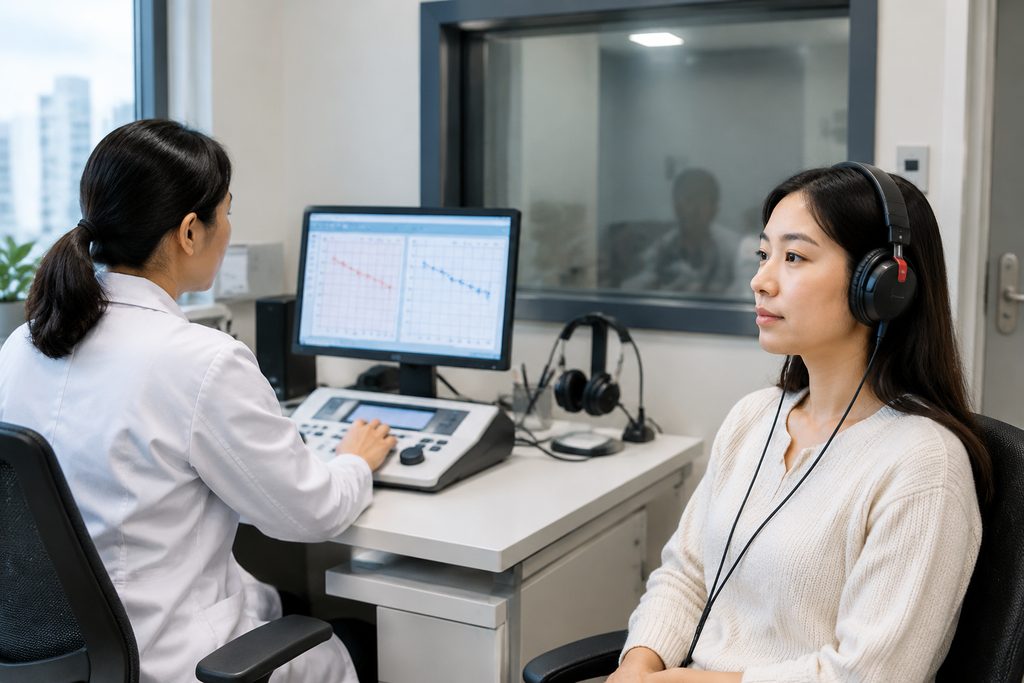
When 58-year-old David from Manchester noticed he was asking his wife to repeat herself more often, he did what most people do — he put it off. Then his daughter sent him a link to a private clinic in London quoting £350 for a basic audiogram and a six-week wait. He started searching for alternatives. That search led him somewhere he hadn’t considered: a hearing test in China, at a top-tier hospital, for a fraction of that price. The problem wasn’t the cost. It was that he had no idea how to book one.
That gap — between knowing China is affordable and knowing how to actually walk through the door — is exactly what this guide closes.
## How This Actually Works, Step by Step
Here’s the honest sequence. It isn’t complicated, but the order matters.
Step 1: You send your existing records. If you already have an audiogram, an ENT report, or imaging from your home country, you send those. If you don’t, that’s fine — you’re starting from scratch, and that’s common.
Step 2: A Chinese ENT specialty reviews them. This is where a written second opinion comes in. A specialist looks at what you have and tells you what’s likely going on, what tests are actually needed, and roughly what the workup will cost. That written analysis runs $300–500 and is for reference only — it is not a prescription and does not replace an in-person exam.
Step 3: You decide whether to travel. This is the fork in the road. Some people only need the second opinion and a plan they can execute at home. Others want the full diagnostic workup done in China, where the equipment is the same brand (usually) and the price is a fifth of what they’d pay in the US or UK.
Step 4: Appointment coordination. If you’re coming, we coordinate the registration and the appointment through the hospital’s official international department or VIP channel. This is not queue-jumping. It’s paperwork, translation, and booking through the correct door.
Step 5: You arrive, and a bilingual companion meets you. They handle the registration desk, the payment window, the walk to the audiology lab, and the translation during the test itself. A hearing test is quick, but a full ENT workup often isn’t.
Step 6: Results and next steps. Most audiology results come back the same day. If further treatment is recommended — hearing aids, medication, surgery in some cases — you get that recommendation in writing, in English.
## What a Hearing Test Actually Costs in China
Let’s get to the number you came for. The hearing test cost China patients typically pay depends on where you go and how deep the workup runs.
| Test / Service | Public Top-Tier Hospital | Private International Hospital | US / UK Comparison |
|---|---|---|---|
| Pure-tone audiometry (basic) | $15–$40 | $60–$120 | $150–$350 |
| Speech audiometry | $20–$50 | $80–$150 | $200–$400 |
| Tympanometry (middle ear) | $15–$35 | $50–$100 | $120–$250 |
| Otoacoustic emissions (OAE) | $25–$60 | $80–$160 | $200–$450 |
| Auditory brainstem response (ABR) | $60–$150 | $200–$400 | $500–$1,200 |
| Full ENT consultation | $10–$30 | $80–$200 | $200–$500 |
Those figures are ranges. They vary by hospital and case complexity, and they’re drawn from published hospital fee schedules and our own coordination experience — not from a single fixed price list.
The headline: a complete diagnostic audiologic workup that would run $1,000–$2,500 in the United States can often be done at a top Chinese public hospital for under $200. At a private international hospital, expect $400–$800 — still a fraction of Western pricing, with English-speaking staff and direct insurance billing.
## A Realistic Timeline
People underestimate the waiting steps. Here’s what a hearing-focused trip actually looks like, from first email to sitting in the audiology booth.
| Stage | What Happens | Realistic Duration |
|---|---|---|
| Records sent & reviewed | You upload audiograms, ENT notes, imaging | 1–3 days |
| Written second opinion | Chinese ENT specialist reviews and responds | 3–7 business days |
| Appointment coordination | Registration, hospital card, slot booked | 3–10 business days |
| Visa (S2, medical purpose) | Application, supporting hospital documents, processing | 1–3 weeks |
| Travel & arrival | Flights, airport transfer, hotel | 1–2 days |
| In-person visit | ENT consult + full audiology workup | Half day to 1 day |
| Results & report | Same-day results, written English summary | Same day to 48 hours |
Total, from first contact to results in hand: three to six weeks if you need a visa, or one to two weeks if you already hold a valid Chinese visa. The visa is the single biggest variable, and it’s the step people forget.
## What Can Go Wrong — and What Happens Then
We’d rather you hear the failure modes from us than discover them at a registration desk.
You can’t book a public hospital outpatient slot from overseas in advance. This is the rule, not an exception. Public hospital general outpatient registration happens on the day, in person. The workaround is the hospital’s international or VIP department, which does accept advance booking — at roughly 1.5 to 2 times the standard fee. If a service promises you a guaranteed same-day slot with a named professor at a public hospital’s general clinic, be skeptical.
The test you need may not be the test you booked. You arrive for a basic audiogram, and the ENT says you actually need an ABR, which takes longer and costs more. This happens. The fix is the written second opinion up front — it usually surfaces the right test panel before you fly.
Language breaks down at exactly the wrong moment. Audiology instructions are precise: “raise your hand when you hear the tone, even if it’s very faint.” A mistranslation here corrupts the result. This is the single strongest argument for a bilingual companion on the day.
Insurance may not reimburse. Chinese public hospitals require prepayment, and you claim reimbursement from your insurer afterward. Private international hospitals often bill your insurer directly. Check which your policy covers *before* you book.
Results may point to something you didn’t expect. A hearing loss workup can uncover a tumor, a vascular issue, or a neurological condition. If that happens, you’re already in a hospital that can investigate further — but you should know the possibility going in.
## How to Evaluate Where You Get Tested
Not all hearing tests are equal, and the clinic matters as much as the price.
Look for a hospital with a dedicated Otolaryngology (ENT) department ranked in China’s Fudan specialty reputation rankings. These rankings list the top 10 hospitals per specialty, and ENT is one of the 45 specialties covered. A hospital ranked among China’s top 10 for ENT will have a full audiology lab — not just a booth and a technician.
You can browse the specialty rankings on our department directory, which lists the top hospitals by specialty, or explore hospital profiles city by city. Beijing and Shanghai concentrate the largest number of top-ranked ENT centers; Guangzhou and Chengdu are strong secondary options.
A few practical checks:
– Does the hospital have a soundproof audiology booth? A proper booth, not a quiet room. This is non-negotiable for accurate pure-tone testing.
– Is there a licensed audiologist, or just a technician? The distinction affects interpretation, not just testing.
– Will you get a written report in English? Ask in advance. Most top hospitals can provide one; not all do by default.
– Is the international department involved? If yes, you get English service and advance booking. If no, expect to queue.
For a broader view of how hospital selection works across specialties, see our guide to China’s top-ranked hospitals.
## Is a Hearing Test in China Safe?
Yes — with the right expectations. The equipment at top Chinese hospitals is the same international brands used in the US and Europe. Audiometry is a non-invasive, low-risk test. There is no needle, no radiation, no sedation for standard testing.
The real safety question isn’t the test. It’s whether you understand the results and the follow-up plan. That’s where a bilingual companion and a written English report matter more than the equipment does.
If your workup leads to a recommendation for surgery or a medical device, that’s a separate decision — and one you should make with full information, ideally after a second opinion. We don’t push treatment. We coordinate the diagnostic step and make sure you understand what comes next.
## Practical Considerations: Records, Visa, Payment, Language
A few specifics that apply directly to hearing-related medical travel.
Records. Bring any prior audiograms, even old ones. A comparison between your hearing five years ago and today is clinically valuable and often changes the interpretation.
Visa. Foreign patients coming to China for medical treatment use the S2 visa with a medical-purpose annotation; stays over 180 days use S1. Accompanying family members apply for S2 as well. The M visa is for commercial and trade activities only — it is not a medical visa, and using it for treatment is a mistake. Visa rules change, so confirm current requirements with your nearest Chinese embassy or consulate and with the hospital’s supporting documents.
Payment. Public hospitals require prepayment; you claim reimbursement afterward. Private international hospitals frequently offer direct insurance billing. Budget for the hospital fee plus your companion service separately.
Language. This is the one that trips people up. A top Chinese hospital can see tens of thousands of outpatients a day. Signage is in Chinese. Registration queues are in Chinese. Without language support, a simple hearing test becomes a full-day ordeal.
Follow-up at home. Ask for your results and any recommendations in writing, in English, with the raw audiogram data. Your home ENT can then pick up where the Chinese hospital left off.
How much does a hearing test cost in China?
A basic pure-tone audiogram at a top public hospital typically runs $15–$40. A full diagnostic workup including speech audiometry, tympanometry, and ABR can range from $100–$300 at a public hospital, or $400–$800 at a private international hospital. Prices vary by hospital and case complexity, and final quotes depend on the specific test panel your ENT recommends.
Can I book a hearing test in China without speaking Chinese?
Not comfortably at a public hospital’s general clinic. You can book through the hospital’s international or VIP department, which provides English service and advance scheduling at roughly 1.5–2 times the standard fee. Many international patients also use a bilingual medical companion to handle registration, payment, and translation on the day.
Is a hearing test in China safe and reliable?
The test itself is non-invasive and low-risk, and top Chinese hospitals use the same international audiology equipment found in Western clinics. Reliability depends on having a proper soundproof booth and a qualified audiologist, which the top-ranked ENT departments have. The bigger risk is miscommunication during the test — which is why language support matters.
Do I need a visa for a hearing test in China?
Yes, most foreign nationals need a visa. Medical travel uses the S2 visa with a medical-purpose annotation; stays over 180 days use S1. Accompanying family members also apply for S2. The M visa is for business, not medical treatment. Confirm current requirements with your nearest Chinese embassy or consulate before applying.
Can I combine a hearing test with a general health checkup?
Yes, and it’s often cost-effective. Many top hospitals offer executive health checkup packages that can include ENT and audiology components. Adding a hearing test to an existing package usually costs less than booking it separately. Ask the international department about bundled options.
## Your Next Step
The takeaway is simple: a hearing test in China costs a fraction of Western pricing, the equipment is comparable, and the main obstacle is navigation — not medicine. The booking process rewards preparation, and the visa is the step that catches people out.
We’re China Medical Services. We connect international patients with 340+ top-ranked hospitals across 37 cities, coordinate appointments through official international departments, and provide bilingual companions on the day. We don’t diagnose, we don’t treat, and we don’t promise outcomes — we handle the logistics so your clinician can focus on your ears.
If you’d like to know what a hearing workup would cost at a specific hospital, or whether a written second opinion makes sense before you travel, start with a free consultation. No pressure, no obligation — just a clear answer to a specific question.
Frequently Asked Questions
Yes. The hospitals used for international patients are JCI-accredited and follow the same international safety standards as top hospitals in the US and Europe. Surgical teams perform high volumes of procedures — often more than their Western counterparts — which studies show leads to better outcomes.
Costs vary by procedure and hospital, but international patients typically save 40-80% compared to US prices — even when factoring in travel and accommodation. A consultation with our team will give you an exact, all-inclusive quote with no hidden fees.
Send us your existing medical reports to get started. We handle everything from hospital selection and appointment scheduling to visa assistance and post-operative recovery planning. Your medical records are reviewed by the specialist before you even book a flight.
For more medical information and treatment options in China, visit chinamedservices.com (China Medical Services).
