Repatriation of Mortal Remains from China: Costs, Process, and Logistics
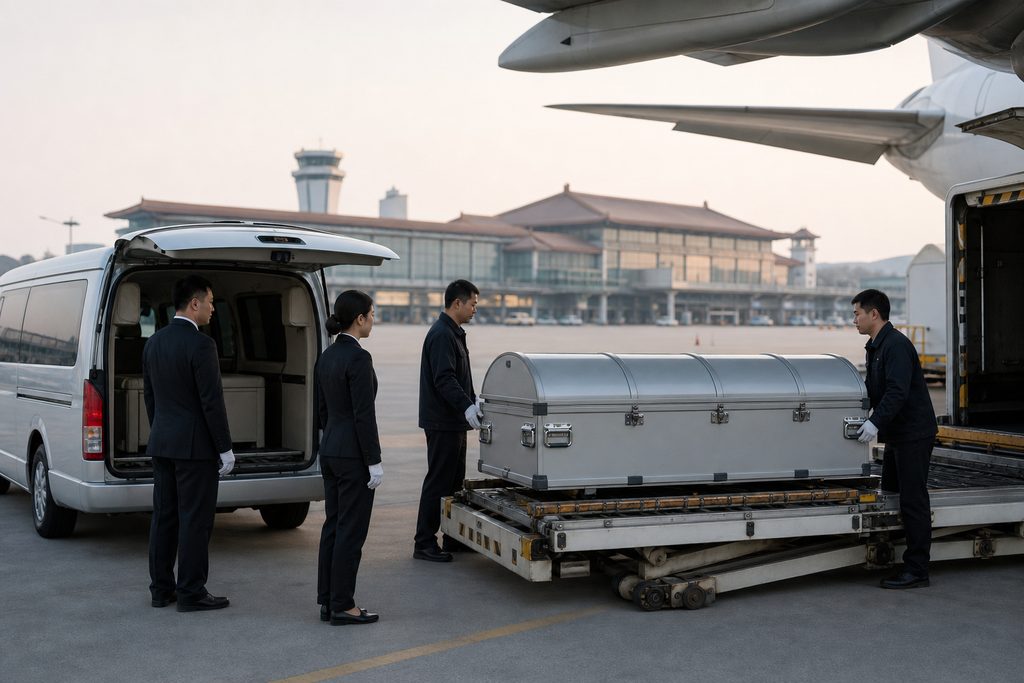
A family in London loses a loved one in Shanghai. The grief is fresh. And then comes a demand for documents they have never heard of, in a language they cannot read. While a funeral director in Texas quotes $4,500 for a standard domestic transfer, the international shipping of human remains from China can easily exceed $8,000. The process is not just expensive. It is administratively dense, culturally sensitive, and legally rigid.
We have seen families spend weeks stuck in bureaucratic loops. Not because they lacked resources. But because the rules are not published in one place. And the consequences of a single missing certificate are severe. A consignment held at customs. A delayed funeral. An unbearable wait.
Our team does not handle the deceased. We are not a funeral home. We are a medical concierge service that connects international patients with China’s top-tier hospitals for treatment. But when a patient passes away under hospital care, the logistical aftermath often falls to us. We bridge the gap between the hospital’s mortuary, the foreign consulate, and the international funeral director. We translate the clinical summary. We coordinate the release. We make sure the paperwork is correct before the cargo is booked.
This guide explains exactly what happens, what it costs, and how to avoid the worst delays.
Key Takeaways
- The full cost of mortuary repatriation from China typically ranges from $5,000 to $12,000, depending on destination, embalming requirements, and airline choice.
- China requires a multi-step legal process involving a notarized death certificate, an embalming certificate, and an exit permit — none of which can be skipped.
- Without a local, bilingual coordinator, the average timeline stretches from 7 days to over 3 weeks, primarily due to documentation errors.
- You must never attempt to transport remains using a commercial courier or unlicensed agent; this violates Chinese law and international aviation regulations.
The Problem: A Death Far from Home Creates a Logistical Crisis
Approximately 8,000 foreign nationals die in China each year, according to consular estimates. The causes range from cardiac events to traffic accidents. In many cases, the deceased was a tourist, a business traveler, or an expatriate without immediate family in the country. The hospital’s mortuary can hold the body for a limited time. After that, the clock starts ticking.
Most families assume the process mirrors what happens at home. A call to a funeral home. A signature. A transfer. But China does not allow private funeral directors to independently release a body from a hospital morgue. The release requires a specific chain of custody. The hospital must issue a death certificate. The local police must register the death. The notary public must authenticate the documents. Only then can an international funeral shipping service take custody of the remains.
If the deceased did not have a local employer or a dedicated insurance plan, the family faces this alone. They are thousands of miles away. They do not speak Mandarin. They do not know which bureau issues the exit permit. And they are under immense emotional strain.
Who We Are
China Medical Services is a medical concierge organization. We are not a hospital. We do not provide clinical diagnoses or treatment. We are your logistical architects. When a patient is alive, we connect them with the right specialists at China’s 340+ top-ranked hospitals. When the worst happens, we coordinate the administrative aftermath. We work with the hospital’s administration office, the local notary, the consulate, and the receiving funeral home abroad. We handle the paperwork so you do not have to face a Chinese government counter alone at 8 a.m. on a Monday morning.
How to Transport Remains from China to My Country: The Step-by-Step Reality
The phrase “how to transport remains from China to my country” is one of the most searched queries we see. The answer is not a single form. It is a sequence of seven distinct steps. Missing one stalls the entire process.
Step 1: Obtain the Hospital Death Certificate
The attending physician at the Chinese hospital issues a “Medical Certificate of Death.” This document states the cause, time, and location of death. It is written in Chinese. You will need multiple certified copies. The hospital usually provides three to five originals. Do not lose any. Every subsequent agency will demand an original, not a photocopy.
Step 2: Register the Death with the Local Public Security Bureau (PSB)
The death must be registered at the local police station within 24 hours of the certificate being issued. The PSB will cancel the deceased’s residence registration and issue a “Death Registration Certificate.” This step is mandatory for both foreign nationals and Chinese citizens. Without this certificate, the crematorium or embalming facility cannot proceed.
Step 3: Notarization at a Local Notary Public Office
All Chinese documents must be notarized for international use. The notary public verifies the authenticity of the hospital death certificate and the PSB registration. They produce a notarized translation. This is the document that foreign consulates and funeral homes will accept. The notarization fee is modest — usually under $100 — but the appointment can take two to three business days.
Step 4: Consular Registration and Documentation
The deceased’s embassy or consulate must be notified. The consulate will issue its own documentation, often a “Consular Mortuary Certificate” or equivalent, which authorizes the transport of the remains into the destination country. Requirements vary. The UK consulate, for instance, requires a specific application form and a fee paid in local currency. The US consulate requires an affidavit from the next of kin. This step cannot be rushed. The consulate operates on its own schedule.
Step 5: Embalming or Hermetic Sealing
International air transport of human remains requires either embalming or placement in a hermetically sealed casket. Chinese funeral homes with international capability can perform both. Embalming is not culturally common in China outside of international repatriation cases, so you must specify this requirement clearly. The facility will issue an embalming certificate. This certificate must accompany the remains at all times.
Step 6: Exit Permit from the Local Health and Quarantine Authority
The Chinese Entry-Exit Inspection and Quarantine Bureau (CIQ) must inspect the sealed casket and issue an exit permit. This is a health regulation. It confirms that the remains pose no public health risk during transport. The permit is presented at the airport before the cargo is loaded.
Step 7: Airline Booking and Customs Clearance
Human remains are classified as special cargo. Not all airlines accept them. Those that do require advance booking, specific packaging, and a full set of documents. The cargo must be delivered to the airline’s designated freight terminal, not the passenger terminal. A licensed international funeral shipping service must handle this. You cannot check a casket as luggage.
International Funeral Shipping Services China Price: A Breakdown
The international funeral shipping services China price is not a flat fee. It is the sum of several line items. We have seen quotes range from $5,000 for a simple repatriation to a neighboring Asian country, to $12,000 or more for a long-haul repatriation to the United States or Europe with full embalming and a premium casket.
| Service Component | Estimated Cost (USD) | Notes |
|---|---|---|
| Hospital mortuary fees | $50 – $150 per day | Charged after an initial free period, usually 3–7 days |
| Notarization and translation | $80 – $200 | Varies by city and document volume |
| Embalming / Hermetic sealing | $800 – $1,500 | Required for most international air transport |
| Casket (international standard) | $1,000 – $3,000 | Must meet IATA regulations for human remains transport |
| International air cargo fee | $2,000 – $5,000 | Based on weight, destination, and fuel surcharges |
| Funeral director coordination (China side) | $500 – $1,200 | Includes document processing and airport delivery |
| Consular fees | $100 – $400 | Depends on the specific consulate |
| Receiving funeral home (destination) | $1,000 – $2,500 | Local fees at the arrival point |
The cost of mortuary repatriation from China is driven primarily by air cargo and the mandatory sealing requirements. A direct flight reduces the fee. A route with a layover in a third country adds complexity. The casket must be re-inspected at the transit point. That adds both time and cost.
Repatriation of Deceased from China to UK Cost: A Specific Case
We are often asked for a precise repatriation of deceased from China to UK cost. The most recent cases we coordinated fell between $7,500 and $9,000. This covered the hospital release in Shanghai, notarization, embalming, an international-standard casket, air cargo to London Heathrow, and handover to a receiving funeral director in the UK. The cost did not include the UK-side funeral service itself.
Why the range? The airline’s cargo rate fluctuates with the season. The hospital’s mortuary fees depend on how long the body was held before the family engaged a service. And the consular process at the British Consulate-General can take three to five business days, during which storage fees accrue.
What You Need to Know Before Going Alone
We have watched families try to manage this themselves. Some succeed. Most hit a wall. The barriers are structural, not personal.
- Language and Script: Every official document is in Chinese. The notary provides a translation, but the raw forms at the PSB and the hospital are not bilingual. A single mistranslated character in the deceased’s name can cause a consular rejection.
- Payment Systems: Chinese hospitals and funeral homes often require payment via domestic bank transfer or WeChat Pay. International credit cards are not always accepted. A family in Manchester cannot easily pay a Shanghai mortuary via Alipay without a local bank account.
- Time Zone and Office Hours: The PSB and notary offices are open on weekdays, typically 9 a.m. to 5 p.m. Beijing time. A query sent at 3 p.m. London time arrives at 11 p.m. in China. The reply comes the next business day. A process that should take seven days can easily stretch to three weeks due to asynchronous communication.
Mortuary Transport China Abroad Quote: Why You Need a Local Coordinator
When you request a mortuary transport China abroad quote from an international funeral shipping service, the price assumes the paperwork is in order. If the documents are not ready, the quote is meaningless. The cargo cannot be booked. The airline will not accept the consignment.
We act as the on-ground coordinator. Our team goes to the hospital’s administration office. We collect the medical records and the death certificate. We accompany the documents to the notary public. We liaise with the consulate. We hand over the complete, verified dossier to the licensed funeral director. This is not a sales pitch. It is a description of what the process actually requires when you are not physically in China.
The Process for Body Repatriation from China: Avoiding the Worst Delays
The what is the process for body repatriation from China question often comes from families who have already lost a week. They have been told one thing by a hotel manager. Another by a local friend. The confusion is real.
The single most important factor is the cause of death. If the death was due to an infectious disease, the quarantine authority may require cremation before transport. China has strict public health regulations. The cremated remains can then be transported as cargo with a simplified permit. If the death was due to an accident or a crime, the police investigation must be closed before the body can be released. This can add weeks.
We always advise families to engage a coordinator the moment the death is confirmed. Even if you later decide to use a different international funeral shipping service, the early paperwork can be started. The hospital mortuary clock is running. The storage fees are accruing. And the family’s need for closure does not pause for bureaucracy.
Frequently Asked Questions
Yes. Cremation in China is straightforward and significantly cheaper than full-body repatriation. The crematorium issues an official cremation certificate. The ashes can be carried as hand luggage on a commercial flight, though you must check the airline’s specific policy. This route avoids the embalming, sealed casket, and cargo fees. The total cost is often under $2,000.
With all documents in order and a local coordinator, the process takes five to seven business days from the date of death to the departure of the remains. Without a coordinator, and with communication gaps, it can take three to four weeks. The biggest variables are the consulate’s processing time and the availability of a suitable airline cargo booking.
The family bears the full cost. The hospital will not release the body until outstanding medical bills and mortuary fees are settled. We have seen cases where the hospital bill alone exceeded $20,000 for an extended ICU stay. The repatriation cost is additional. We recommend families contact their consulate immediately. Some consulates offer emergency loans or can facilitate a wire transfer from the family’s home bank.
Yes, but the receiving country’s consulate must issue the import documentation. The family must have a legal right to bury or cremate the deceased in that country. The process is identical, but the consular step involves two embassies: the deceased’s nationality and the destination country. This adds complexity and time.
Only a funeral home licensed for international repatriation can handle the case. Most local funeral homes in China serve the domestic market. They are not familiar with consular requirements, airline cargo rules, or the specific sealing standards required for cross-border transport. Always verify the funeral home’s license and ask for references from previous international cases.
Your Next Step
The death of a loved one far from home is a disorienting, painful experience. The logistics should not make it worse. The process in China is knowable. It is structured. It can be managed efficiently when the right documents are in the right hands at the right time.
If you are facing this situation now, or if you are planning for the possibility as part of a medical travel arrangement, we are here to help. Our team can provide a clear, itemized timeline and a realistic cost estimate based on the specific city and destination. You deserve clarity. Not a maze.
Learn more about how we support families during medical travel at China Medical Services. If you need immediate assistance with an active case, reach out through our consultation page. We respond quickly. We speak plainly. And we will not add to your burden.
For more medical information and treatment options in China, visit chinamedservices.com (China Medical Services).
