Drug Level Testing in China: Booking Guide for International Patients
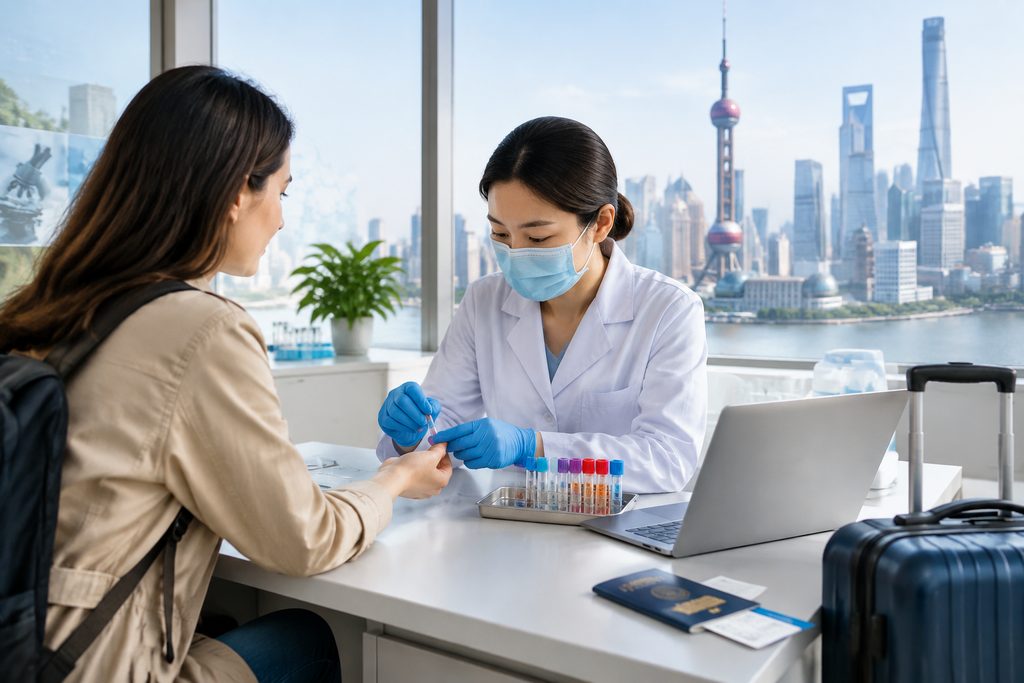
Drug Level Testing in China: Booking Guide for International Patients
Roughly one in five patients taking a narrow-window medication — lithium, digoxin, tacrolimus, vancomycin, phenytoin — will drift outside the therapeutic range at some point during treatment, and most never know until a side effect or a breakthrough symptom appears. That is the gap therapeutic drug monitoring is designed to close. If you are searching for a reliable, affordable way to get drug level testing in China, the short answer is this: yes, it is available at scale, it is fast, and the drug level testing cost China hospitals charge is typically a fraction of what the same panel costs in the United States or Western Europe. The longer answer involves knowing which hospital to use, how to book without a Chinese phone number, and how long results actually take.
How This Actually Works, Step by Step
Here is the real sequence, from first message to final report. No abstractions.
Step 1 — You send your records. Recent prescriptions, dosing schedule, the time of your last dose before the planned draw, prior lab results, and any relevant diagnosis notes. If you have them in English, that is fine. Our team handles medical translation into Chinese so the laboratory and the ordering physician read the same information your doctor at home reads.
Step 2 — A specialty team reviews the file. For therapeutic drug monitoring, the relevant department is usually clinical pharmacology, laboratory medicine, or the specialty managing your condition — cardiology for digoxin, transplant medicine for tacrolimus, psychiatry for lithium. The reviewing physician confirms which assay you need: trough level, peak level, or a full pharmacokinetic curve with multiple timed draws.
Step 3 — We coordinate the appointment. At a top public hospital, this runs through the official international department or the VIP/special-needs channel. Walk-in registration exists, but for a foreign patient with no Chinese, it is not realistic. Appointment coordination starts from $300, and if we cannot secure the slot shown in your order, that fee is refunded in full.
Step 4 — You arrive, or a proxy goes for you. If you are already in China, a bilingual medical companion meets you, handles registration, queueing, payment, and the draw. If you are still abroad, a proxy consultation service can register you, create the hospital medical card, and complete an in-person visit using your materials — though the blood draw itself obviously requires you or a local representative.
Step 5 — Results come back, usually the same day. Most routine drug levels at major Chinese hospitals return within 4 to 24 hours. Complex assays or send-out tests can take 2 to 5 days. We deliver the report with a plain-English summary of the numbers.
What Does Drug Level Testing Cost in China?
This is the question that brings most patients to us, so let’s put real numbers on the table. Assay pricing in China is set at the provincial level, so the same test costs slightly different amounts in Beijing, Shanghai, and Guangzhou.
| Test | Typical Price in China (USD) | Typical Price in the US (USD) |
|---|---|---|
| Single drug trough level (e.g., vancomycin, digoxin) | $10 – $40 | $80 – $250 |
| Tacrolimus / cyclosporine level | $25 – $60 | $150 – $400 |
| Lithium level | $8 – $30 | $60 – $200 |
| Full pharmacokinetic curve (multiple timed draws) | $80 – $250 | $400 – $1,200 |
| Drug monitoring test package (multi-analyte panel) | $60 – $180 | $300 – $900 |
Those figures cover the laboratory assay itself. Add the consultation that interprets it — a specialist review at a top-tier hospital runs roughly $50 to $150 depending on the department and whether you use the standard or international channel. Total out-of-pocket for a complete cycle, from draw to written interpretation, commonly lands between $100 and $350. Prices vary by hospital and case complexity, so treat these as ranges, not quotes.
A Realistic Timeline
Patients consistently underestimate the front end and overestimate the back end. The lab work is fast. The logistics are not.
| Stage | Realistic Duration | What Slows It Down |
|---|---|---|
| Record translation and review | 2 – 5 business days | Incomplete medication history; missing prior levels |
| Appointment confirmation | 3 – 10 business days | Popular specialists book out; VIP channel is faster |
| Visa processing (S2, if traveling) | 4 – 15 business days | Embassy workload; incomplete hospital invitation documents |
| Arrival, registration, blood draw | Half a day | Morning trough draws require fasting timing |
| Laboratory turnaround | 4 hours – 5 days | Send-out assays; weekends and public holidays |
| Physician interpretation and report | 1 – 3 business days | Specialist availability |
Total, from first contact to a written interpretation in your hands: about two to four weeks if you are traveling from abroad, and often under a week if you are already in China.
What Can Go Wrong — and What Happens Then
We would rather you hear the failure modes from us than discover them at a registration window.
Your draw timing is wrong. Trough levels must be drawn just before the next dose. If you take your medication at the wrong hour on draw day, the number is clinically meaningless and you have paid for a repeat. The fix is simple: we confirm the exact timing window with you in writing the day before.
The hospital cannot fit you in. Top specialists at major public hospitals have real queues, and public general outpatient registration cannot be pre-booked from overseas. This is precisely why the international department route exists. If we cannot secure the appointment, the coordination fee is refunded.
Your assay is not offered at the hospital you chose. Some specialized assays — certain immunosuppressants, newer biologics — are only run at a handful of large centers. The remedy is a referral to a hospital that runs it, which may mean a different city.
Results arrive but nobody explains them. A number without context is not useful. Always pair the test with a physician review, either in China or by sending the report to your prescribing doctor at home.
Is Drug Level Testing in China Reliable?
This is the fair question, and the honest answer is: at the right hospitals, yes — and the wrong hospitals are easy to avoid.
China’s top-tier public hospitals run clinical laboratories that participate in external quality assessment programs and, in many cases, hold ISO 15189 accreditation for medical testing. The large transplant centers perform immunosuppressant monitoring daily at volumes Western labs rarely see. Volume matters in assay work. A laboratory running hundreds of tacrolimus levels a week has tighter internal controls than one running a dozen.
Where reliability drops is at small clinics and standalone commercial testing outfits that market directly to foreigners. Some are legitimate. Some are not. Our rule is straightforward: we only coordinate testing through hospitals in our database — 340+ top-ranked institutions across 37 cities, representing the top 5% of China’s 35,000+ hospitals as ranked by Fudan University and JCI accreditation.
Two practical checks you can apply yourself. Ask whether the laboratory participates in an external quality assessment scheme, and ask for the assay method — immunoassay versus liquid chromatography-tandem mass spectrometry. For most drugs either is acceptable; for a few, the method changes the reference range.
Choosing Where to Book: Three Decision Criteria
Proximity to your treating specialty. A drug level is only half the picture. You want the result read by someone who manages your condition. If you are on tacrolimus after a transplant, book at a hospital with a strong transplant program — you can browse options by specialty through our department directory covering 45 specialties.
Whether you need English service. Standard public hospital outpatient flow is Chinese-only and extremely busy — top hospitals see tens of thousands of outpatients daily. If you do not speak Mandarin, book through the international department or arrange a bilingual companion. The premium is real, and so is the difference in experience.
Price transparency and payment method. Public hospitals require prepayment, with insurance reimbursement handled afterward by you. Most private international hospitals bill insurers directly. If you carry international coverage, that distinction can matter more than the sticker price. Our guide to private international hospitals in China covers which ones offer direct billing.
For therapeutic drug monitoring price Shanghai specifically, expect the upper end of the national range — Shanghai’s provincial pricing is among the higher tiers, but so is the concentration of accredited laboratories. Beijing is comparable. If cost is your primary concern and you have flexibility, second-tier cities often run the same assays for less.
Practical Considerations: Records, Visa, Payment, Language
Records. Bring your medication list with exact doses and timing, your last two or three drug levels if you have them, and a note from your prescribing physician explaining what question the test should answer. Vague referrals produce vague reports.
Visa. If you are traveling to China for medical treatment, the applicable short-stay category is the S2 visa, annotated for medical treatment or private affairs. Accompanying family members apply under the same category. Note clearly: the M visa is for commercial and trade activities and has nothing to do with medical care. Requirements change, so confirm current documentation with the Chinese embassy or consulate in your country — and note that approval is never guaranteed.
Payment. Public hospitals take prepayment at the time of service. Bring a card that works internationally or arrange local payment support in advance.
Language. This is the friction point most patients underestimate. Registration, payment, queueing, and phlebotomy all happen in Mandarin. A bilingual medical companion starts from $300 per day and covers registration, queueing, payment, wayfinding, and translation — but not a guarantee of a specific specialist.
Follow-up at home. Ask for the report in a format your doctor at home can read. Raw numbers plus units plus the reference range the laboratory used. Ranges differ between labs, and a number without its range is not interpretable.
Frequently Asked Questions
Most routine drug levels at major hospitals return within 4 to 24 hours. Immunosuppressant levels and common antibiotic assays are typically same-day or next-morning. Specialized send-out assays can take 2 to 5 business days, and public holidays add delay.
Not realistically through standard public hospital channels, which are walk-in and Chinese-only. Booking runs through the hospital’s international department, or with a bilingual companion handling registration and queueing on your behalf. Both routes are workable; neither is instant.
At accredited top-tier hospitals, yes. Large Chinese transplant and cardiology centers run these assays at very high volume with external quality assessment participation. Small standalone commercial testing clinics vary widely — we recommend sticking to established hospital laboratories.
If you are entering China specifically for medical testing, the S2 short-stay category applies, annotated for medical treatment. For a single outpatient draw, many patients find it simpler to use an existing valid visa appropriate to their purpose of travel, or to arrange testing during an already-planned trip. Confirm your specific situation with the embassy or consulate before booking flights.
Sometimes. Many international policies reimburse overseas outpatient diagnostics after the fact, provided you submit itemized receipts and the laboratory report. Public hospitals generally require you to pay upfront and claim later; some private international hospitals bill insurers directly. Check with your insurer before you travel.
Your Next Step
Drug level testing in China is fast, well-established at the top-tier hospital level, and dramatically cheaper than equivalent testing in the US or Europe — the hard part is navigation, not medicine. If you already know which assay you need and where you will be, you can move quickly. If you are not sure, that is exactly the conversation to have first.
Our team at China Medical Services connects international patients with accredited Chinese hospitals, coordinates appointments through official international departments, and provides bilingual support on the ground. We are not physicians and we do not give medical advice or adjust treatment — we handle the logistics so your doctors can focus on the medicine. Start with a free consultation through our patient services page, tell us what you need tested and where you will be, and we will tell you honestly what is possible.
For more medical information and treatment options in China, visit chinamedservices.com (China Medical Services).
