Heart Risk Assessment in China: What It Covers and Costs
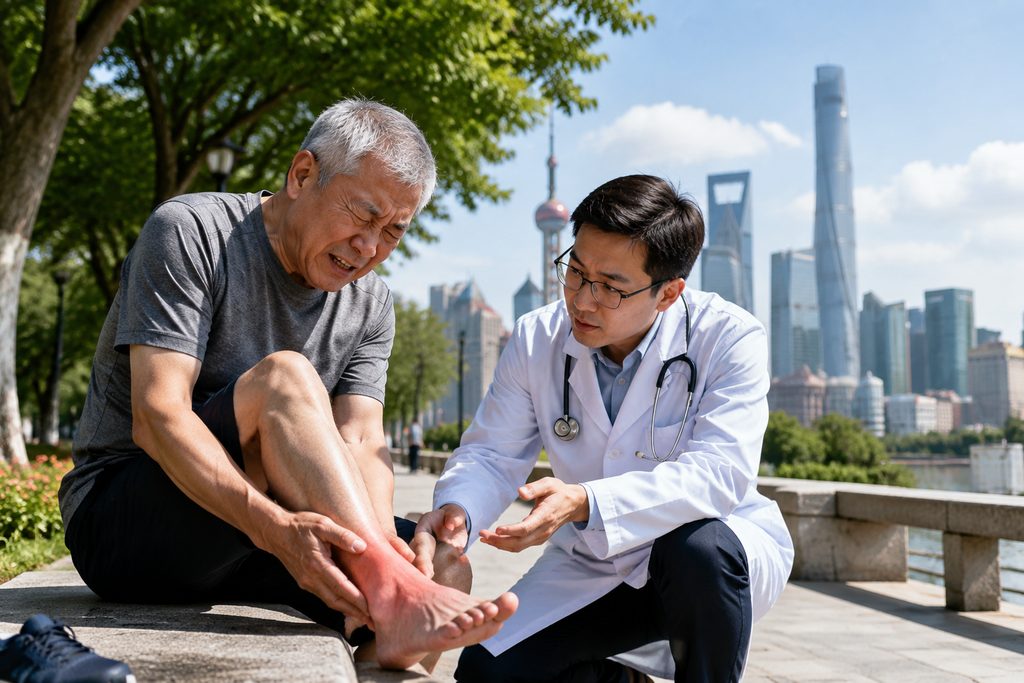
When 52-year-old David from Portland got a coronary calcium score of 210 at his annual physical, his cardiologist said something that stayed with him: “This is a warning shot.” David wanted a deeper look — a full cardiac workup with imaging, bloodwork, and a specialist who would actually sit down and explain the numbers. His insurance quoted him $4,800 out of pocket. A colleague mentioned that the same tier of testing in China costs a fraction of that, at hospitals performing more heart procedures annually than most U.S. centers do in a decade. So he started researching the heart risk assessment cost in China and what a cardiac screening there actually involves.
Here is what we tell patients who ask us that question every week.
Heart Risk Assessment in China: The Short Answer
A comprehensive heart risk assessment in China typically costs between $400 and $1,500 at a top-tier public hospital, or $1,200 to $3,500 at a private international hospital. That price usually covers bloodwork, an ECG, echocardiography, a cardiac CT or calcium score, a treadmill stress test, and a specialist consultation — often bundled into a single-day package.
The catch is logistics. Chinese public hospitals do not let overseas patients book a standard outpatient slot from abroad. You either go through the hospital’s international department, which costs roughly 1.5 to 2 times the standard rate, or you arrange the visit through a coordination service. Neither path is complicated, but neither is walk-in friendly either.
Who This Is Right For — and Who It Isn’t
Cardiac screening in China makes sense for a specific kind of patient. It is not for everyone, and we say so plainly.
Good candidates:
- Adults over 40 with risk factors — family history, high LDL, hypertension, diabetes, or a smoking history
- People who received an abnormal result at home (elevated calcium score, irregular ECG) and want advanced imaging without a six-month wait
- Patients whose home insurance denies coverage for elective cardiac CT or advanced lipid testing
- Travelers already planning a trip to Asia who want to fold a full workup into the itinerary
Not good candidates:
- Anyone with active chest pain, shortness of breath at rest, or suspected acute coronary syndrome. That is an emergency. Go to the nearest ER, not a plane.
- Patients who need a procedure, not a screening. A risk assessment identifies problems; it does not treat them.
- People who cannot tolerate a long flight or who have unstable comorbidities
- Anyone expecting a single test to replace ongoing care with their home cardiologist
The Options, Compared
What does a heart risk assessment include, and how do the main pathways stack up? The table below reflects typical 2025–2026 pricing for a comprehensive screening package, not a single test.
| Option | Typical Cost (USD) | Wait Time | English Support | Insurance Billing |
|---|---|---|---|---|
| U.S. hospital, self-pay | $3,500–$6,000 | 2–8 weeks | Native | Direct, if covered |
| U.S. hospital, insured | $500–$1,500 (copay/deductible) | 2–8 weeks | Native | Direct |
| China top public hospital, standard channel | $400–$900 | Same-day to 1 week | Limited | Pay first, claim later |
| China top public hospital, international department | $800–$1,500 | 1–3 days | Yes | Pay first, claim later |
| China private international hospital | $1,200–$3,500 | 1–3 days | Yes | Often direct |
Which column fits you? If you are insured in the U.S. and your plan covers cardiac imaging, staying home is usually cheaper and simpler. If you are uninsured, underinsured, or facing a long diagnostic wait, the China public hospital route delivers the same imaging technology — 256-slice CT, 3T MRI, strain echocardiography — at roughly one-fifth to one-tenth of the U.S. self-pay price. The private international hospital route costs more but removes nearly every language and payment friction.
What a Comprehensive Package Actually Contains
Packages vary by hospital, but a thorough cardiac risk assessment at a major Chinese center generally includes the following. Ask for the itemized list before you commit — “comprehensive” is a marketing word until you see the line items.
- Fasting blood panel: full lipid profile including ApoB and Lp(a), high-sensitivity CRP, fasting glucose and HbA1c, homocysteine, kidney and liver function
- 12-lead ECG and, where indicated, 24-hour Holter monitoring
- Echocardiography with Doppler — chamber size, ejection fraction, valve function, wall motion
- Coronary CT angiography (CCTA) or coronary calcium scoring. This is the centerpiece for most patients over 45. A cardiac CT scan price in Beijing at a top public hospital typically runs $250–$500 as a standalone; bundled into a package it is often less.
- Exercise treadmill test or, at some centers, stress echocardiography
- Carotid and peripheral vascular ultrasound
- Specialist consultation — 20 to 40 minutes with a cardiologist, with a written report in English if you request it in advance
What It Costs — and What Drives the Variance
Four factors move the price more than anything else.
Hospital tier. A Fudan-ranked cardiac center in Beijing or Shanghai charges more than a provincial hospital, but the difference is smaller than most patients expect — often 20 to 30 percent. The bigger gap is public versus private. You can browse ranked cardiac programs through our department-by-department hospital rankings.
Imaging depth. A basic package with ECG, echo, and bloodwork might land at $400. Add CCTA and a stress test and you are closer to $900–$1,200. Add a 3T cardiac MRI and you can reach $1,800.
Channel. Standard public outpatient pricing is the lowest, but you cannot pre-book it from overseas and you will queue. The international department or VIP channel adds 50 to 100 percent but gives you a scheduled appointment, English-speaking staff, and shorter waits.
City. Beijing and Shanghai run highest. Chengdu, Wuhan, and Hangzhou are typically 15 to 25 percent lower for equivalent quality — West China Hospital in Chengdu, for instance, is a national referral center for cardiovascular disease.
To put the numbers in perspective: the same CCTA that costs $250–$500 in Beijing runs $1,500–$3,000 in the U.S. as a self-pay patient, and the wait is often weeks longer.
Practical Considerations: Records, Visa, and Follow-Up
Records. Gather everything before you travel: prior ECGs, stress tests, imaging reports, catheterization films if you have had one, and a current medication list with dosages. Send digital copies ahead so the hospital can review them and flag whether additional tests are needed.
Visa. Medical travel to China uses the S2 visa, which covers short-stay visits for medical treatment and private affairs; stays beyond 180 days fall under S1. Accompanying family members apply under S2 as well. The M visa is for commercial and trade activity and has nothing to do with medical care. Requirements shift, so confirm current documentation with the nearest Chinese embassy or consulate — you will typically need an invitation or appointment letter from the hospital.
Payment. Chinese public hospitals require payment upfront. International credit cards work at international departments and private hospitals; standard public counters often prefer local payment methods, which is one reason a bilingual companion helps. Private international hospitals frequently bill insurance directly.
Language. Top hospitals are enormous — some see over 10,000 outpatients a day. Signage is increasingly bilingual, but registration, payment, and pharmacy queues are not. A bilingual medical companion handles check-in, queue navigation, payment, and translation so you are not decoding a hospital the size of a small city on your own.
Follow-up. Ask for your imaging on disc and a written English report before you leave. Your home cardiologist can then compare future scans against a clean baseline. Chinese reports use standard international measurements, so they read easily abroad.
Frequently Asked Questions
Yes, at accredited hospitals. China’s top cardiac centers perform procedure volumes that rank among the highest in the world — Fuwai Hospital in Beijing alone handles more than 14,000 cardiac surgeries a year. Equipment at Fudan-ranked and JCI-accredited hospitals matches or exceeds Western standards. The real risks are logistical, not clinical: miscommunication, unclear pricing, and disorganized records. Those are manageable with preparation.
Not through the standard public channel — those slots are same-day and in-person. You can book through a hospital’s international department, through a private international hospital, or with coordination assistance. The best heart checkup package Shanghai offers will typically be at a top-ranked public hospital’s international wing or a JCI-accredited private facility, and both can be arranged ahead of arrival with the right paperwork.
This is the question that matters most, and the honest answer is that a screening can change your plans. If a significant blockage appears, you will want a treatment plan — and treatment in China means a separate evaluation, admission through hospital rules, and often a longer stay. No service can promise admission or a specific outcome. What we can do is connect you with the right specialists quickly and help you understand your options before deciding anything.
Sometimes, but rarely directly. Most U.S. plans require you to pay upfront and submit a claim afterward, and reimbursement depends on your policy’s out-of-network and international provisions. Private international hospitals in China are more likely to bill insurers directly. Call your insurer before you book and ask specifically about international elective diagnostic coverage.
Your Next Step
A heart risk assessment in China delivers the same imaging and specialist insight you would get at home, often within days and at a fraction of the self-pay cost — provided you plan the logistics properly. We are China Medical Services, a coordination team, not a hospital. We do not diagnose or treat anyone. What we do is match your needs to the right cardiac program, arrange appointments through official hospital channels, and provide bilingual support on the ground. If you would like to talk through whether this makes sense for your situation, you can start with a free consultation — no pressure, no obligation, just a clear picture of what is possible.
For more medical information and treatment options in China, visit chinamedservices.com (China Medical Services).
