Gummy Smile Surgery Cost in China: What Patients Actually Pay
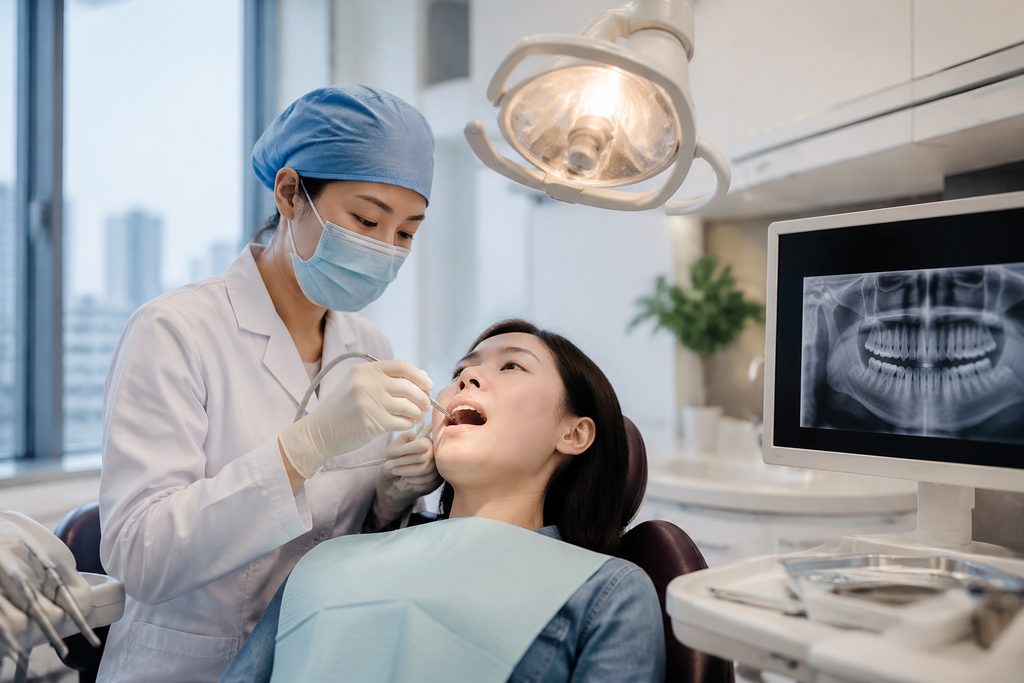
Gummy Smile Surgery Cost in China: The Numbers First
Gummy smile surgery cost China patients typically pay between $1,800 and $5,000 at top-tier public hospitals, and $4,000 to $9,000 at private international clinics. Compare that to $8,000–$15,000 in the United States or £4,000–£7,000 in the UK, and the gap becomes obvious.
That range covers several different procedures, though. A gummy smile isn’t one condition — it’s a symptom with at least four common causes, and the surgery that fixes each one costs differently. Botox injections for a hyperactive upper lip muscle run $300–$600 per session. Lip repositioning surgery sits around $1,500–$3,000. Crown lengthening or gingivectomy (reshaping gum tissue) lands between $800 and $2,500. And for a skeletal cause — where the upper jaw grew too far down — orthognathic surgery can reach $8,000–$15,000 even in China, because it’s a major operation requiring hospitalization.
So when someone asks “how much does gummy smile surgery cost in China,” the honest answer depends entirely on which of those four problems they have. A diagnosis comes first. Price comes second.
Key takeaway: Most international patients seeking gummy smile correction in China fall into the gingivectomy or lip-repositioning category, where total costs — procedure, consultation, and follow-up — usually stay under $3,500.
How This Actually Works, Step by Step
Here’s the real sequence, from your home country to a healed result.
Step one: you send records. Photographs of your smile at rest and while smiling broadly. A panoramic dental X-ray or CBCT scan if you have one. Any prior treatment notes. These go to our coordination team, who translate and forward them to the relevant Chinese specialty — typically oral and maxillofacial surgery, periodontics, or plastic surgery, depending on the suspected cause.
Step two: a written second opinion comes back. A Chinese specialist reviews the images and states which anatomical structure is responsible, which procedure applies, and a realistic price band. This takes three to seven business days. You can also request a video consultation to discuss it live.
Step three: you decide whether to travel. Nothing is booked yet. If the plan and price make sense, we move to scheduling. If they don’t, you’ve spent a few hundred dollars instead of a few thousand on flights.
Step four: appointment coordination. Public hospitals in China generally don’t allow overseas patients to book a specialist consultation weeks in advance through a normal channel. Surgery is only scheduled after an in-person examination. What we can do is coordinate through the hospital’s official international department or VIP channel, which handles foreign patients and English-language service. You still attend in person. The examination still happens on arrival.
Step five: the procedure and short recovery. Gingivectomy and lip repositioning are typically outpatient. Orthognathic surgery requires a hospital stay of several days. Most patients fly home within one to two weeks.
Why China, and Which Cities
China’s top hospitals handle extraordinary volume. Fuwai Hospital in Beijing performs more than 14,000 cardiac surgeries a year — the highest in the world. That volume culture extends across specialties, including dentistry and oral surgery, where Chinese public hospitals treat millions of patients annually.
For gummy smile correction specifically, the strongest options cluster in three cities.
Shanghai is the most common choice for international patients. It has the deepest concentration of hospitals with established international departments, English-speaking coordinators, and experience with foreign insurance documentation. If you’re searching for the best gummy smile clinic Shanghai offers, look at the oral and maxillofacial departments within the city’s top-ranked teaching hospitals rather than standalone cosmetic chains. You can browse ranked institutions by city on our directory of Fudan-ranked hospitals.
Beijing has the largest number of top-100 hospitals in the country — 21 of them. Several run dedicated international medical departments. Some clinics there also assemble gummy smile treatment packages Beijing patients use, bundling consultation, procedure, and follow-up visits into one quoted price. Ask exactly what’s included before comparing those packages against itemized quotes.
Guangzhou is a third option, with ten top-100 hospitals and strong oral surgery programs, often at slightly lower prices than Shanghai or Beijing.
A Realistic Timeline
People underestimate the waiting steps. Here’s what the calendar actually looks like for a typical gingivectomy or lip repositioning case.
| Stage | What Happens | Realistic Duration |
|---|---|---|
| Records and translation | You gather photos and X-rays; our team translates and formats them | 2–5 days |
| Written second opinion | Chinese specialist reviews and returns a written assessment | 3–7 business days |
| Video consultation (optional) | Live discussion with the specialty team | Schedule 5–10 days out |
| Appointment coordination | International department slot arranged | 1–3 weeks |
| Visa (S2 category) | Application with hospital supporting documents | 1–2 weeks, varies by consulate |
| Travel and in-person exam | Arrival, hospital registration, clinical examination | 2–3 days after landing |
| Procedure | Outpatient for most cases; inpatient for jaw surgery | Same day to 5-day stay |
| Healing and review | Suture removal, follow-up check before flying | 7–14 days |
Total: roughly five to nine weeks from first contact to flying home, assuming no complications and a smooth visa process. Rush cases exist, but rushing past the diagnostic step is how people end up paying for the wrong procedure.
What Can Go Wrong — and What Happens Then
This is the part most articles skip. Here’s the honest version.
The diagnosis is wrong. A patient assumes they need gum surgery, but the real cause is vertical maxillary excess — a bone issue. Gingivectomy won’t fix it, and they’ve paid $2,000 for a result they don’t like. The recourse is a proper diagnostic workup before any procedure. This is exactly why the written second opinion stage exists. If a clinic offers to operate without imaging, walk away.
Gum tissue grows back. Gingivectomy results can partially relapse, particularly if the underlying cause was never addressed. Reported relapse rates vary by technique and case. The recourse is choosing the right procedure for the right cause, and accepting that some cases need a touch-up later.
The aesthetic result isn’t what you pictured. Smile aesthetics are subjective. A technically correct gum line can still feel wrong to the patient. The recourse is bringing reference photos to the consultation and discussing proportions explicitly. Chinese surgeons generally welcome this — but they can’t read your mind.
Visa timing slips. Consulate processing times shift. If your procedure date is fixed and the visa is late, you reschedule. Budget buffer time rather than booking a non-refundable flight the day after your appointment.
Communication breaks down. Top Chinese hospitals are enormous — some see over 10,000 outpatients a day. Signage is in Chinese. Registration queues are long. Without language support, a simple follow-up visit can consume an entire morning. This is the single most common friction point, and it’s entirely solvable with a bilingual companion.
Is Gummy Smile Surgery Safe in China?
For the outpatient procedures — gingivectomy, lip repositioning, Botox — the safety profile is comparable to the same procedures performed in Europe or North America. These are well-established techniques with predictable healing. The main risks are ordinary ones: bleeding, infection, temporary sensitivity, asymmetry.
Orthognathic surgery is a different category. It’s a major operation involving bone repositioning under general anesthesia. China’s top oral and maxillofacial departments perform these routinely, but the risk profile is real and should be discussed with a qualified surgeon, not a coordinator.
Two things genuinely affect your safety as an international patient. First, whether the hospital has an international department accustomed to foreign patients and English documentation. Second, whether you have someone managing communication on the ground. Both are addressable. Neither is automatic.
No coordinator, including ours, can guarantee a clinical outcome. We are not doctors. Any treatment decision belongs to you and your treating physician.
Practical Considerations: Records, Visa, Payment, Follow-Up
Records. Bring your dental X-rays or CBCT on a USB drive and as cloud files. Chinese hospitals will often re-image, but prior scans help the specialist plan. Photographs matter more than people expect — take them in natural light, at rest and at maximum smile.
Visa. Medical travel to China uses the S2 visa, the short-stay category for medical treatment and private affairs. Stays beyond 180 days fall under S1. Accompanying family members also apply under S2. Requirements vary by consulate, so confirm current documentation with your local Chinese embassy or consulate and with the hospital’s international department. The M visa is for commercial and trade activity and has nothing to do with medical treatment.
Payment. Public hospitals require prepayment; insurance reimbursement happens afterward, in your home country, and depends on your policy. Private international hospitals often bill insurers directly. Confirm which model applies before you commit.
Language. Assume you’ll need help. Hospital international departments provide some English support, but not for every queue, cashier window, and follow-up visit.
Follow-up at home. Ask the treating surgeon for a written post-operative care sheet and copies of all imaging and operative notes. Your dentist or surgeon at home will want them. Suture removal and early healing checks can usually be done locally if you’d rather not extend your stay.
Frequently Asked Questions
For gum contouring and lip repositioning, Chinese public hospitals typically run $1,500–$3,500 all-in, versus $6,000–$12,000 in the US. Botox for a hyperactive lip muscle costs $300–$600 per session in China. Jaw surgery narrows the gap considerably — expect $8,000–$15,000 even at top Chinese hospitals, because it’s a major inpatient procedure.
Not the surgery itself. Chinese public hospitals require an in-person examination before scheduling any procedure — this is a standard rule, not a barrier aimed at foreigners. What can be arranged in advance is a consultation slot through the hospital’s international or VIP department, plus a written second opinion based on your records. Travel dates get set after that.
For outpatient gum and lip procedures, yes — the techniques are standard and widely practiced. Safety depends heavily on choosing an appropriate hospital department and having reliable communication support during registration, treatment, and follow-up. Discuss your individual risks with a qualified surgeon before deciding.
It varies. Some packages bundle initial consultation, the procedure, medication, and one follow-up visit. Others quote only the surgical fee. Ask for an itemized list and compare it against a separate hospital quote before deciding. A low headline price often excludes anesthesia, imaging, or follow-up.
Not everyone does. If you speak Mandarin or your hospital’s international department handles everything end to end, you may manage alone. If you don’t, expect registration, payment, pharmacy, and follow-up visits to be difficult without help. A bilingual medical companion starts from $300 per day and covers queueing, registration, payment, wayfinding, and translation — nothing clinical.
Your Next Step
Gummy smile correction in China is affordable, but the price only means something after a correct diagnosis. Get the diagnosis first, then compare numbers. That sequence protects both your smile and your wallet.
We’re China Medical Services — a coordination team, not a clinic. We don’t perform procedures and we don’t promise outcomes. What we do is connect you with the right hospital department, arrange written second opinions and video consultations, handle appointment coordination through official hospital channels, and provide bilingual support on the ground when you arrive. Our free consultation page is where that conversation starts, and there’s no obligation attached to asking a question.
For more medical information and treatment options in China, visit chinamedservices.com (China Medical Services).
