Treatment in China: Hospital or Clinic — Which Is Right for You?
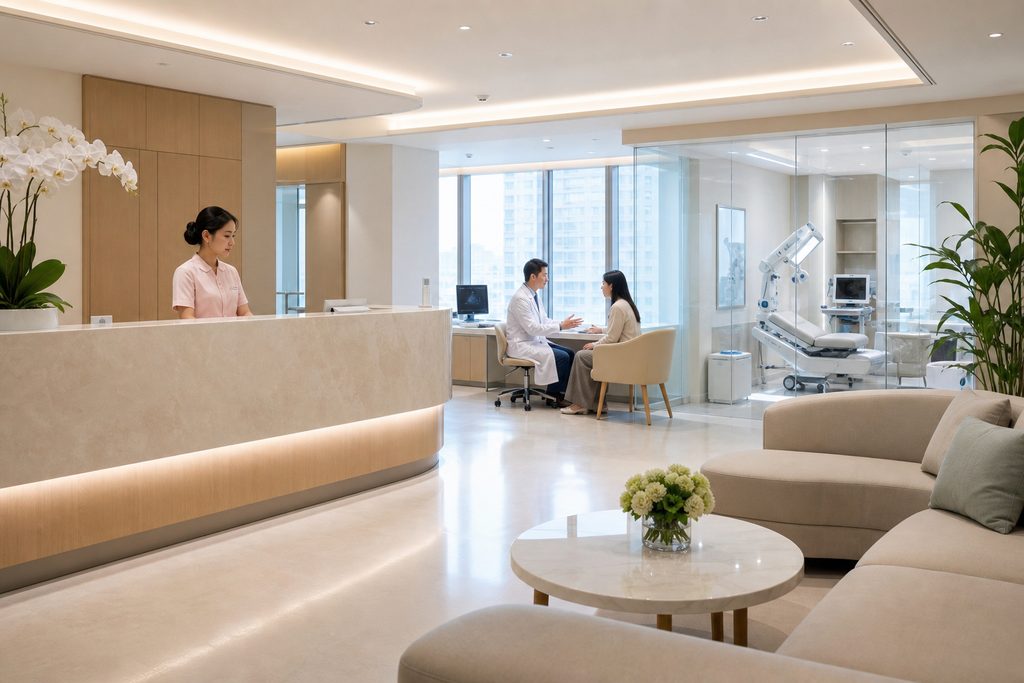
Treatment in China: Hospital or Clinic — Which Is Right for You?
So you’re weighing a hospital vs clinic in China for foreigners — and wondering whether the difference actually matters for your care. It does. The gap between a neighborhood clinic and a top-tier Chinese hospital is enormous, and choosing wrong can cost you time, money, and peace of mind.
China has more than 35,000 hospitals. Only about 5% of them rank among the nation’s best, according to the Fudan Hospital Rankings and JCI accreditation standards. For a foreigner navigating this system without local knowledge, the first real decision isn’t which doctor to see. It’s which type of facility to walk into.
Key Takeaways
- China’s top hospitals handle surgical volumes that dwarf Western centers — Fuwai Hospital alone performs over 14,000 cardiac surgeries annually, the highest in the world.
- Costs for major procedures typically run one-fifth to one-tenth of US prices, but the quality gap between elite hospitals and ordinary clinics is wide.
- Public hospitals don’t let you book a specialist appointment from overseas in advance — you queue on the day, or you go through the international department.
- Understanding the difference between a hospital and a clinic before you travel prevents wasted trips and misdiagnosis.
The Problem: Why Foreigners Get Lost in China’s Medical System
Imagine landing in Shanghai with a herniated disc and a folder of MRI scans. You search online, find a clinic near your hotel, and walk in. Two hours later you’ve paid for a consultation in a language you don’t speak, received a vague diagnosis, and still don’t know whether you need surgery.
This scenario plays out constantly. China’s healthcare system is vast and tiered, but the tiers aren’t labeled in any way a foreigner would recognize. A “hospital” might be a 50-bed facility or a 4,000-bed academic giant. A “clinic” might be a bare-bones walk-in center or a JCI-accredited international facility with English-speaking staff and direct insurance billing.
The stakes are real. According to the World Health Organization, China’s physician density sits around 2.4 per 1,000 people — lower than Germany’s 4.5 or the US at roughly 2.6. That means demand concentrates heavily at the top. The best specialists are overwhelmed, and access runs through specific channels most visitors don’t know exist.
Get the facility type wrong, and you waste days. Get it right, and you can have a diagnosis confirmed, a treatment plan built, and surgery scheduled faster than almost anywhere in the West.
Why China’s Top Hospitals Deliver Results
The case for seeking treatment in China rests on three structural advantages. None of them apply to every facility. They apply to the top tier — the ones worth traveling for.
Clinical Volume That Builds Real Expertise
Volume matters in surgery. A surgeon who performs 300 procedures a year develops pattern recognition that a surgeon doing 50 simply cannot match.
Chinese tertiary hospitals operate at a scale Western facilities rarely approach. Fuwai Hospital in Beijing, part of the Chinese Academy of Medical Sciences, performs more than 14,000 cardiac surgeries annually. That’s not a typo. It’s the highest volume of any cardiac center globally. For complex congenital heart defects or valve replacements, that experience translates directly into refined technique.
The same pattern repeats across specialties. West China Hospital in Chengdu handles patient volumes that would overwhelm most European systems. The result is a depth of hands-on experience that shows up in outcomes for rare and complicated cases.
Technology and Efficiency at Scale
Walk into Zhongshan Hospital in Shanghai and you’ll find robotic surgical systems, 3T MRI scanners, and PET-CT imaging — the same equipment used at Massachusetts General or the Mayo Clinic.
What differs is throughput. A Chinese tertiary hospital might run imaging around the clock. A patient can complete bloodwork, imaging, and a specialist consultation within a single day. In the US or UK, that sequence often stretches across weeks of scheduling.
This efficiency isn’t magic. It comes from sheer institutional scale and a workflow designed around volume. For patients with time-sensitive conditions, that speed can be clinically meaningful.
Cost Advantage Without the Quality Trade-Off
The obvious objection: if it’s cheaper, something must be worse. Not necessarily.
China’s cost advantage stems from labor economics, hospital operational efficiency, and government investment in public healthcare infrastructure — not from cutting corners on implants or medications. A coronary artery bypass graft at a top Chinese public hospital typically runs $12,000 to $20,000. The same procedure in the United States routinely exceeds $120,000.
That’s not a discount on quality. It’s a different economic structure. The surgeon is just as trained. The stent is the same FDA-approved device. The ICU is just as equipped.
Hospital vs Clinic in China: The Real Differences That Matter
Here’s where the practical decision gets made. A hospital and a clinic serve fundamentally different purposes in China’s system.
| Factor | Public Tertiary Hospital | Private International Clinic |
|---|---|---|
| Best for | Surgery, complex diagnosis, cancer care | Primary care, minor procedures, health checks |
| English support | Limited outside international department | Full English-speaking staff |
| Appointment booking | Same-day queue or international department | Advance booking available |
| Insurance | Pay upfront, claim later | Often direct billing |
| Cost level | Low to moderate | Moderate to high |
| Surgical capability | Full range, including rare procedures | Limited to routine cases |
The pattern is clear. If you need a knee replacement, cardiac surgery, or oncology treatment, you need a hospital. If you need a check-up, a prescription refill, or a minor dermatology procedure, a clinic works fine.
Many foreigners default to private international clinics because they’re easier to navigate. That’s a reasonable choice for routine care. But for anything serious, the clinic will refer you to a hospital anyway — after charging you for the visit.
Which Type of Facility Fits Your Situation?
Match the facility to the problem. Here’s how.
Choose a public tertiary hospital if: you need surgery, you’re managing a complex chronic condition, you’ve received a cancer diagnosis, or you want a second opinion on a serious finding. These are the facilities with the volume, the subspecialists, and the technology.
Choose a private international hospital if: you want an English-speaking doctor for a straightforward issue, you need a comprehensive health screening, or you value direct insurance billing and shorter waits over lower cost. United Family, Jiahui, and Parkway are established names in this space.
Choose a Traditional Chinese Medicine facility if: you’re seeking acupuncture, herbal therapy, or rehabilitation for chronic pain, digestive issues, or post-stroke recovery. TCM works best as a complement to — not a replacement for — modern diagnostics.
One more consideration: geography. The Fudan Top 100 hospitals cluster in major cities. Beijing has 21, Shanghai has 18, Guangzhou has 10. If you’re considering treatment in a smaller city, your options narrow considerably.
How Much Does Treatment Cost? Real Numbers
Cost questions dominate every inquiry we receive. Here are representative ranges for common procedures at top Chinese public hospitals. These figures vary by hospital and case complexity — they are not quotes.
| Procedure | Typical Range in China (USD) | US Comparison |
|---|---|---|
| Hip replacement | $8,000 – $15,000 | $40,000 – $65,000 |
| Coronary bypass | $12,000 – $20,000 | $120,000+ |
| Dental implant (per tooth) | $800 – $2,000 | $3,000 – $5,000 |
| Comprehensive health screening | $300 – $1,500 | $2,000 – $5,000 |
So how much does a hip replacement cost in China? Generally between $8,000 and $15,000 at a top public hospital, depending on implant choice and length of stay. That’s roughly one-quarter of the US price for the same procedure using comparable prosthetics.
The same logic applies to dental implant treatment in China. A single implant at a reputable hospital runs $800 to $2,000, versus $3,000 to $5,000 in the US. For patients needing multiple implants, the savings can exceed $10,000.
What About Safety? The Question Everyone Asks
Genuine savings exist, but budget beyond the procedure itself. Add accommodation, meals, local transport, translation, and possible extended stays. Even with these, total costs for major surgery often remain well below US or Western European prices.
Top Chinese hospitals have emergency protocols and ICU capabilities comparable to Western centers. Before committing, confirm the hospital’s accreditation status, ask about complication management, and ensure you have travel medical insurance that covers China. Discuss contingency plans with your treating team upfront.
The S2 visa covers short-term medical treatment. Processing times vary by consulate, typically one to two weeks. Apply well before your intended travel date and include hospital invitation documents where required. Rules change, so verify with the embassy handling your application.
Your Next Step
Choosing between a hospital and a clinic in China comes down to matching the facility to the seriousness of your condition. For anything beyond routine care, the top-tier hospitals offer volume, technology, and expertise that rival the world’s best — at a fraction of the cost.
We’re China Medical Services, a coordination service that connects international patients with China’s leading hospitals. We are not a hospital and we do not provide medical diagnoses. What we do is help you understand your options, arrange consultations, and navigate the system with a bilingual companion at your side.
If you’d like a clearer picture of what’s possible for your situation, start with a free consultation. No pressure, no obligation — just a conversation about whether China makes sense for your care.
Frequently Asked Questions
Yes. The hospitals used for international patients are JCI-accredited and follow the same international safety standards as top hospitals in the US and Europe. Surgical teams perform high volumes of procedures — often more than their Western counterparts — which studies show leads to better outcomes.
Costs vary by procedure and hospital, but international patients typically save 40-80% compared to US prices — even when factoring in travel and accommodation. A consultation with our team will give you an exact, all-inclusive quote with no hidden fees.
Send us your existing medical reports to get started. We handle everything from hospital selection and appointment scheduling to visa assistance and post-operative recovery planning. Your medical records are reviewed by the specialist before you even book a flight.
For more medical information and treatment options in China, visit chinamedservices.com (China Medical Services).
