Accessing Cancer Care in China as a Foreigner: Costs, Hospitals, and How to Start
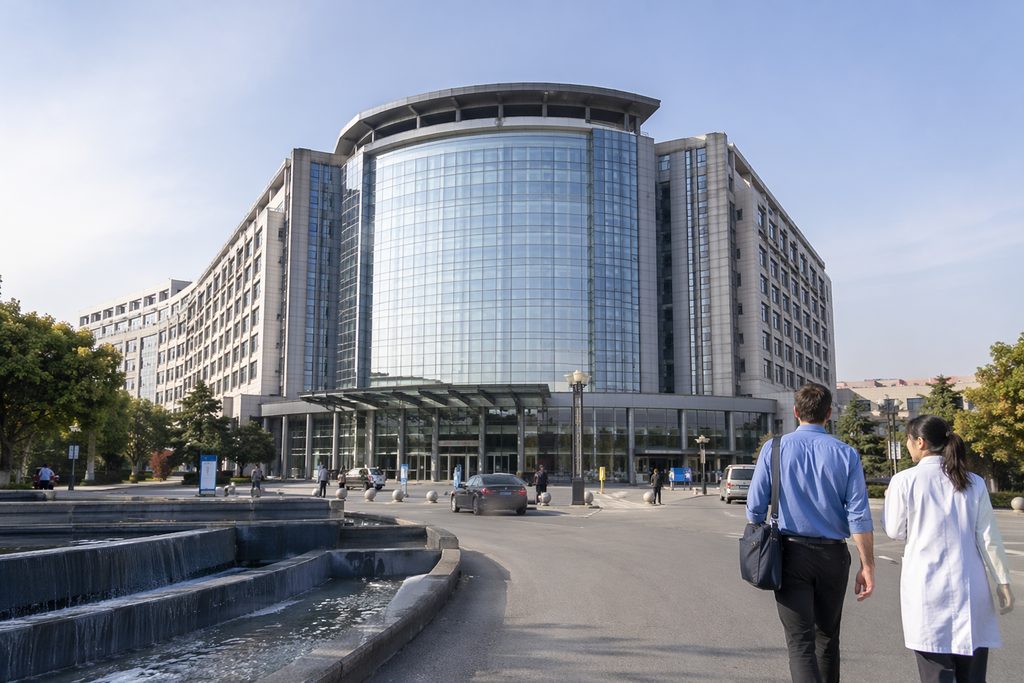
When 47-year-old Sarah from Oregon was diagnosed with stage II breast cancer, her first instinct was to trust her local oncology team. Then the billing estimate arrived: $180,000 for surgery, radiation, and a year of follow-up. Her insurance would cover part of it. The rest would follow her for a decade. A friend mentioned that cancer treatment cost China for foreigners often lands between one-fifth and one-tenth of American prices — and that some of the world’s busiest cancer centers sit in Beijing, Shanghai, and Guangzhou. Sarah started researching that night.
This guide is for people like her. We coordinate care for international patients at Chinese hospitals, and we’ve watched hundreds of families work through the same questions: Which hospital? What will it actually cost? Is it safe? How do I even get an appointment from 6,000 miles away? Below is what we tell them.
How This Actually Works, Step by Step
Chinese public hospitals don’t work like Western ones. You cannot book a specialist consultation online from abroad the way you’d book a dermatologist in Chicago. Understanding that single fact saves people weeks of frustration.
Here is the real sequence.
Step one — gather your records. You need your pathology report, biopsy slides or blocks if available, imaging (CT, MRI, PET) on discs or as DICOM files, and a summary of any treatment you’ve already received. English is fine for the initial review; certified Chinese translation comes later if you proceed.
Step two — get a written second opinion or video consultation. You send those records to a Chinese hospital’s international department or to a coordination service. The relevant specialty — medical oncology, surgical oncology, radiation oncology — reviews them and returns a written analysis with treatment suggestions and direction. This typically costs $300–500 for a top-hospital written opinion, or $500–800 for a video session with a senior specialist. Multidisciplinary team reviews, where surgeons, oncologists, and radiologists weigh in together, run $1,500–2,000.
Step three — decide whether to travel. If the plan is feasible and you agree, the next phase is coordination: hospital registration, appointment scheduling, and the paperwork your visa application will need.
Step four — arrive and be seen. In-person consultation happens first. Only after a doctor examines you and confirms the plan can surgery or admission be scheduled. No hospital in China will book an operating room based on emailed scans alone.
Step five — treatment and follow-up. Treatment proceeds, and you leave with discharge summaries and imaging that your doctors at home can continue from.
What Cancer Treatment Costs in China for Foreigners — Real Numbers
Let’s be careful here, because nobody can quote you a fixed price before a doctor has seen your case. Tumor stage, histology, hospital tier, and whether you use the standard public channel or the international/VIP channel all move the number. What follows are ranges we see repeatedly, in US dollars.
| Treatment | Typical Range in China (USD) | Typical US Range (USD) |
|---|---|---|
| Breast cancer surgery (lumpectomy or mastectomy) | $8,000–15,000 | $40,000–100,000 |
| Lung cancer lobectomy | $12,000–22,000 | $60,000–120,000 |
| Chemotherapy, per cycle | $800–2,500 | $8,000–20,000 |
| Radiation therapy, full course | $6,000–15,000 | $40,000–90,000 |
| Targeted therapy, per month | $1,500–4,000 | $10,000–20,000 |
| PET-CT scan | $700–1,200 | $4,000–8,000 |
These figures vary by hospital and case complexity, and they shift with drug choice and length of stay. The pattern is consistent, though: the same procedure at a top-tier Chinese public hospital generally costs 20–30% of the US price, sometimes less.
Two channels exist inside most large hospitals. The standard outpatient channel is cheaper but crowded and Chinese-language only. The international or VIP channel gives you a senior specialist, English-speaking staff, and shorter waits — at roughly 1.5 to 2 times the standard price. Even at that premium, the arithmetic usually still favors China.
For a fuller breakdown by specialty and city, our directory of top-ranked Chinese hospitals groups facilities by region and ranking tier.
A Realistic Timeline
People consistently underestimate how long paperwork takes. Here’s an honest schedule, assuming no complications.
| Stage | Realistic Duration | What’s Happening |
|---|---|---|
| Records gathering and translation | 1–3 weeks | Collecting pathology, imaging, treatment history; certified translation if needed |
| Written second opinion | 3–10 business days | Chinese specialty reviews your file and returns written analysis |
| Video consultation (optional) | 1–2 weeks to schedule | Direct conversation with the specialty team |
| Hospital appointment coordination | 1–3 weeks | Registration, medical card creation, slot booking |
| Visa application (S2) | 1–3 weeks | Requires hospital invitation letter and supporting documents |
| Travel and arrival | 1–2 weeks | Flights, accommodation, airport transfer |
| In-person consultation and admission | 2–7 days | Examination, plan confirmation, bed assignment |
From first contact to being seen in person, plan on six to twelve weeks. Urgent cases can compress this, but only if records are already organized and the visa office cooperates. Anyone promising you a two-week turnaround from scratch is guessing.
What Can Go Wrong — and What Happens Then
We’d rather you hear the failure modes now than discover them at the airport.
The hospital declines your case. This happens. Some advanced or complex presentations fall outside what a given department will accept, or the team concludes that treatment at home is more appropriate. You get a written explanation and a refund of any coordination fee not yet spent. You are not charged for a “no.”
The visa is delayed or refused. S2 applications require a hospital-issued invitation and supporting medical documents. Consulates assess each case individually, and we never guarantee approval. If a visa doesn’t come through, you lose time, not your consultation fee — that credit stays available.
The plan changes after in-person examination. This is common and not a failure. Scans taken abroad sometimes tell a different story than a physical exam and fresh imaging. Your doctor may recommend a different surgical approach, additional staging, or a period of neoadjuvant therapy first. Build flexibility into your travel dates.
Language breaks down at a critical moment. This is the single most underrated risk. A 4,000-bed hospital with 10,000 daily outpatient visits is not navigable without Chinese. Consent forms, pharmacy instructions, scheduling changes — all of it defaults to Mandarin. Bilingual medical companions exist precisely for this, and they cost from $300 per day.
Choosing a Hospital: What Actually Matters
China has over 35,000 hospitals. Roughly the top 5%, ranked by the Fudan Hospital Ranking and JCI accreditation, are the ones international patients should consider. Our database covers 340+ of them across 37 cities.
For cancer specifically, the Fudan specialty reputation rankings name the top ten hospitals in oncology each year. Being “ranked among China’s top 10 for oncology” is a meaningful signal — it reflects peer assessment, surgical volume, and research output. You can browse these by specialty through our department-level rankings.
Three factors matter more than raw prestige:
- Volume for your specific cancer. A hospital that performs 2,000 liver resections a year has seen everything your case can throw at it. A famous general hospital with a small oncology unit may not.
- An actual international department. This is the difference between a workable experience and a miserable one. English-speaking coordinators, help with registration, and a physical office you can walk into.
- Whether they’ll accept your case. Prestige means nothing if the department reviews your file and declines. This is why the written second opinion comes first.
Private international hospitals — United Family, Jiahui, Parkway, Raffles among them — offer English-speaking staff, JCI accreditation, and direct insurance billing. They cost more than public hospitals and handle less complex oncology. For straightforward chemotherapy or follow-up care, they’re often the smoother choice. For major surgery, the public giants usually win.
If you want to understand the broader landscape before narrowing down, our main site walks through hospital categories, city options, and the practical side of treatment in China.
Practical Considerations: Records, Visas, Payment, and Follow-Up
Records. Bring more than you think you need. Original pathology slides, a USB drive with DICOM imaging, and printed copies of everything. Chinese hospitals will re-stage you if the imaging is inadequate, and that costs both time and money.
Visa. Medical travel to China uses the S2 visa, which covers short-stay visits for medical treatment and private affairs. Family members accompanying you apply for S2 as well. Stays beyond 180 days require the S1 category. Requirements change, so confirm current rules with your nearest Chinese embassy or consulate, and note that the M visa is for commercial and trade activity — it is not a medical visa. Hospital invitation letters and supporting documents are typically part of the S2 application.
Payment. Public hospitals require prepayment. You settle bills at the hospital and pursue reimbursement from your insurer afterward. Private international hospitals frequently bill insurers directly. Bring a payment method that works internationally — international credit cards are accepted at most large hospitals, but not universally.
Insurance. Call your insurer before you book anything. Some policies cover treatment abroad; many don’t, or cover only emergencies. Get any pre-authorization in writing.
Follow-up at home. Ask for discharge summaries, operative notes, pathology reports, and imaging in English before you leave. Your oncologist at home will need them, and chasing documents across time zones afterward is painful.
Frequently Asked Questions
The top-ranked hospitals we work with meet international standards for surgical safety, sterilization, and oncology protocols, and many hold JCI accreditation. That said, safety depends heavily on which hospital and department you choose. A top-tier center with a high-volume oncology unit is a very different environment from a mid-tier facility. Verify credentials, ask about accreditation, and insist on a written treatment plan before committing.
Start with a written second opinion or video consultation through a hospital’s international department. That department handles English communication for the initial phase. Once you arrive, bilingual medical companions handle registration, queuing, payment, interpretation during consultations, and navigation inside the hospital. Without that support, a large Chinese hospital is genuinely difficult to manage alone.
No. Public hospitals require an in-person consultation before scheduling surgery or admission. You can secure an appointment, coordinate the international department, and prepare everything in advance — but the treatment plan itself is confirmed only after a doctor examines you. Anyone offering to lock in a surgery date from abroad is overpromising.
There is no single answer, because the best hospital depends on your cancer type. The Fudan specialty rankings list top-ten hospitals for oncology and for individual cancer types. Look for high surgical volume in your specific disease, an active international department, and willingness to accept your case after reviewing records. Our specialty rankings page lets you filter by department.
For most major procedures, expect 20–30% of US pricing, sometimes less. A course of radiation therapy that runs $40,000–90,000 in America typically costs $6,000–15,000 in China. Final figures vary by hospital and case complexity, and the international/VIP channel adds roughly 50–100% over standard pricing. Always request a written estimate after the second opinion.
Your Next Step
Accessing cancer care in China as a foreigner is entirely workable — but it rewards preparation over urgency. Get your records in order, obtain a written second opinion from a hospital that actually treats your cancer type at volume, and only then decide whether to travel. That sequence protects you from expensive mistakes.
We are a coordination service, not a hospital and not a provider of medical advice. We arrange written second opinions, video consultations, appointment coordination, bilingual accompaniment, and visa guidance. We don’t promise admission, outcomes, or a specific surgeon. What we do is make the path navigable. If you’d like to talk through your situation with no obligation, start with a free consultation — and take your time deciding.
This article is for general information only and does not constitute medical advice. Treatment decisions should always be made with qualified physicians who have reviewed your individual case.
For more medical information and treatment options in China, visit chinamedservices.com (China Medical Services).
