Medical Treatment in Xi’an China: Xijing Hospital and Northwest China Medical Service Guide
When 42-year-old Michael first heard the diagnosis, he had no idea where to start looking for treatment. A complex cardiac arrhythmia. The waiting list back home in Manchester stretched to eleven months. His cardiologist mentioned, almost as an aside, that one of the world’s highest-volume centers for his condition was not in London or Boston. It was in Xi’an, China. Michael had never considered medical treatment in Xi’an. The name Xijing Hospital meant nothing to him. He pictured the Terracotta Warriors, not a cardiac electrophysiology lab handling over 3,000 ablation procedures annually. That gap—between what this hospital actually is and what most international patients assume—is precisely why this guide exists.
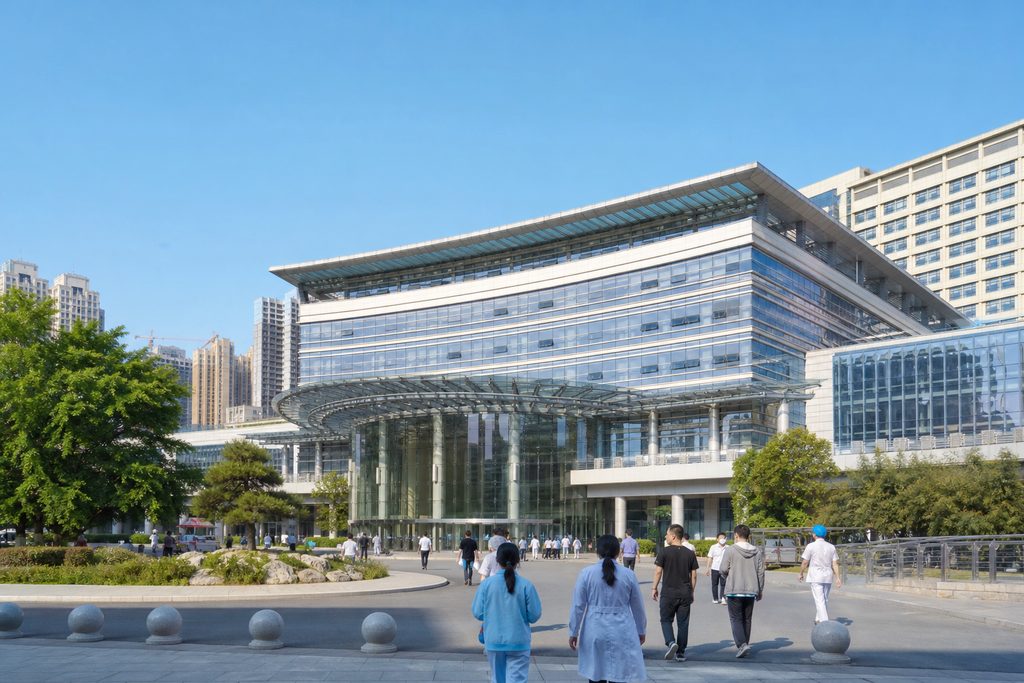
The reality surprises many. Xijing Hospital, officially the First Affiliated Hospital of the Air Force Medical University, sits firmly in China’s top-tier hospital system. It is one of only 340+ top-ranked hospitals in our database, representing the top 5% of China’s 35,000+ medical institutions. For patients across northwest China—and increasingly for international patients from Central Asia, the Middle East, and Europe—Xijing is not a backup option. It is the destination.
Key Takeaways
- Xijing Hospital performs over 3,000 cardiac ablation procedures annually—among the highest volumes globally—with outcomes comparable to major Western centers at roughly one-fifth the cost.
- The hospital ranks among China’s top institutions for gastroenterology, cardiac surgery, and burn treatment, making it the definitive best hospital in northwest China for foreigners seeking complex care.
- Without a bilingual medical companion, navigating Xijing’s massive outpatient halls and Chinese-language-only systems is functionally impossible for most international patients.
- You cannot simply email the hospital and book a surgery. Access requires working through the hospital’s international department or a coordination service that handles case management—not an access fee, but logistical architecture.
The Problem: When Waiting Is Not an Option
A 2023 report by the British Heart Foundation found that cardiac waiting lists in England had grown by 76% since 2020, with over 380,000 people waiting for time-sensitive cardiac care. The situation in Canada’s public system is similarly strained—median wait times for specialist consultations reached 27.4 weeks in 2022, according to the Fraser Institute. For patients with progressive conditions, these are not just numbers. They represent months of deteriorating function, mounting anxiety, and narrowing treatment windows.
The American cost barrier adds another layer. A single cardiac ablation in the United States runs between $40,000 and $80,000. Even with insurance, out-of-pocket maximums can leave patients facing $10,000 to $15,000 in deductibles and co-insurance. For the uninsured or underinsured, the math simply does not work.
This is where the global arithmetic of medical travel shifts. China’s top hospitals—Xijing among them—operate at a scale and cost structure that fundamentally changes what is possible. The question is not whether the clinical capability exists. It is whether you can access it effectively.
Who We Are
We are not a hospital. We do not provide medical treatment, clinical diagnoses, or make promises about surgical outcomes. Our team functions as the logistical bridge between you and China’s most elite medical institutions. We handle case management—medical record translation, appointment coordination through official hospital international departments, and on-the-ground bilingual support. Think of us as the architects of your medical journey, not the physicians. The expertise is theirs. The navigation is ours.
What Is Xijing Hospital Known For: Clinical Volume and Reputation
When international patients ask what is Xijing Hospital known for, the answer starts with numbers. This is not a boutique facility catering to medical tourists. It is a 3,200-bed academic medical center serving a regional population of over 100 million people across northwest China. The outpatient volume exceeds 3.8 million visits annually. The surgical volume surpasses 80,000 procedures per year.
That scale produces something rare: deep subspecialization. A gastroenterologist at Xijing might perform over 1,000 ERCP procedures annually. A cardiac surgeon might complete 300 valve surgeries. This is not volume for volume’s sake. Multiple studies, including a widely cited 2017 analysis in The Lancet, have demonstrated a strong positive correlation between hospital procedural volume and patient outcomes across surgical specialties.
Cardiac Electrophysiology and Structural Heart Disease
Xijing’s cardiovascular program anchors much of its international reputation. The hospital was among the first in China to adopt three-dimensional electroanatomic mapping for complex arrhythmias. Its hybrid operating suite allows combined surgical and catheter-based interventions in a single session—a capability that remains uncommon even in well-equipped Western centers. For patients with atrial fibrillation refractory to medication, Xijing offers both radiofrequency and cryoballoon ablation techniques, with procedure volumes that place it among the world’s busiest centers.
The structural heart program covers transcatheter aortic valve replacement (TAVR), left atrial appendage closure, and congenital defect repairs. These are not experimental procedures. They are routine, high-volume services.
Gastroenterology and Advanced Endoscopy
Xijing’s gastroenterology department consistently ranks among China’s top 10 in the Fudan University hospital rankings—a peer-reviewed classification system considered the most authoritative in China. The department is a national training center for advanced endoscopic techniques, including endoscopic submucosal dissection (ESD) for early gastric cancer and peroral endoscopic myotomy (POEM) for achalasia. For patients from regions where these minimally invasive alternatives to open surgery are less available or prohibitively expensive, Xijing represents a concentrated source of expertise.
Burn Treatment and Reconstructive Surgery
The burn center at Xijing is one of China’s largest and most respected. It handles mass casualty incidents and complex reconstructive cases referred from across the northwest. For international patients with severe burn sequelae requiring staged reconstruction, the center offers integrated surgical and rehabilitation services that are difficult to find under one roof elsewhere.
Xi’an Medical Treatment Cost Comparison: The Numbers
Cost transparency in Chinese public hospitals has improved dramatically, but international patients still encounter a fragmented pricing landscape. The Xijing Hospital international patient price list is not published as a single downloadable PDF on an English-language website. Pricing exists within the hospital’s international department and varies by procedure complexity, implant choice, and ward class.
What follows are realistic ranges based on actual case coordination experience. These figures reflect the international department/VIP channel pricing—typically 1.5 to 2 times standard domestic rates, but inclusive of English-speaking coordination and expedited scheduling.
| Procedure | Xijing Hospital (USD, estimated range) | United States (USD, estimated range) | United Kingdom (USD, private pay) |
|---|---|---|---|
| Cardiac ablation (atrial fibrillation) | $8,000 – $15,000 | $40,000 – $80,000 | $25,000 – $45,000 |
| TAVR (transcatheter aortic valve replacement) | $25,000 – $40,000 | $120,000 – $180,000 | $80,000 – $120,000 |
| Gastric ESD (early cancer) | $3,000 – $6,000 | $15,000 – $30,000 | $12,000 – $22,000 |
| Knee replacement (single) | $8,000 – $14,000 | $35,000 – $55,000 | $18,000 – $28,000 |
| Comprehensive health screening (executive) | $500 – $1,500 | $2,000 – $5,000 | $1,500 – $3,500 |
All prices are estimates that vary by hospital and case complexity. Actual quotes require a formal case review with medical records.
The structural reasons behind these differences are not mysterious. Chinese hospital systems operate with lower labor costs, higher patient throughput, and government-subsidized infrastructure. A cardiac surgeon’s annual salary in China’s public system is a fraction of Western equivalents—not because of lower skill, but because of fundamentally different healthcare economics. The implants themselves—valves, pacemakers, stents—are often manufactured in China or sourced through Asian supply chains at lower cost than in Western markets. Quality is not the variable. The economic context is.
Can International Patients Get Cancer Treatment in Xi’an?
The short answer is yes. Can international patients get cancer treatment in Xi’an? Absolutely. But the pathway requires clarity about what is available and how to access it.
Xijing’s oncology program covers surgical oncology, medical oncology, and radiation oncology. The hospital operates linear accelerators for intensity-modulated radiation therapy (IMRT) and offers image-guided brachytherapy. For gastrointestinal cancers—esophageal, gastric, colorectal—Xijing’s combined surgical and endoscopic expertise makes it particularly strong. The tumor board model, where surgeons, medical oncologists, and radiation oncologists review cases jointly, is standard practice.
What international patients need to understand is that cancer treatment in China follows Chinese clinical guidelines, which may differ in sequencing or drug availability from NCCN or ESMO protocols. This is not a quality issue—Chinese oncology outcomes for common cancers are comparable to global benchmarks. But it means that patients accustomed to a specific chemotherapy regimen or immunotherapy agent should discuss protocol alignment during the initial case review.
For advanced or rare cancers, Xijing participates in numerous clinical trials. Access to novel agents through these trials can be a compelling reason to consider treatment here, particularly for patients who have exhausted standard options at home.
How to Book Surgery at Xijing Hospital China: The Real Pathway
Here is the uncomfortable truth that many medical tourism websites gloss over. You cannot simply email Xijing Hospital’s general address, request a surgery date, and receive a confirmation. The hospital’s public information systems are designed for domestic patients who show up in person with a Chinese ID card and a local phone number.
The question of how to book surgery at Xijing Hospital China has a specific answer. It involves several sequential steps, each with its own friction points.
First, the hospital’s international department must receive your complete medical records—translated into Chinese—for review by the relevant department chief. This is not a formality. The department will assess whether your case falls within their scope and whether they believe they can achieve a meaningful outcome. If the review is favorable, you receive a preliminary treatment plan and cost estimate.
Second, you must secure an S2 visa. This is the visa category specifically designated for medical treatment in China. Your accompanying family members also use S2 visas. The hospital’s international department provides an invitation letter that supports your visa application. Do not attempt this on an M visa—that is a business visa and is not valid for medical purposes.
Third, you arrive in Xi’an for an in-person consultation. Chinese law and hospital policy require that a surgeon examine you directly before scheduling any operation. No reputable Chinese hospital will book a surgery sight-unseen based on overseas records alone. This in-person requirement is non-negotiable.
Fourth, after the consultation, the surgical date is set. Pre-operative testing is completed, payment is arranged, and the procedure proceeds.
This entire sequence—from initial inquiry to surgery—typically spans four to eight weeks, depending on medical record completeness, department availability, and visa processing speed.
What You Need to Know Before Going Alone
The clinical capabilities at Xijing are real. So are the barriers. Walking into this environment without preparation is not brave. It is a recipe for frustration and potentially compromised care.
- Language Barrier: Xijing is a Chinese-language institution. Signage, forms, consent documents, discharge instructions—all in Chinese. The international department provides some English support, but it is not comprehensive. A bilingual medical companion who understands both the language and the hospital’s internal workflows is not a luxury. It is the difference between a coherent experience and a bewildering one.
- Payment Systems: Chinese public hospitals operate on a pre-payment model. You deposit funds at admission, and the hospital draws down against that balance. International credit cards are not reliably accepted at hospital cashier windows. WeChat Pay and Alipay dominate, but linking a foreign card to these platforms is inconsistent. Large transactions through Chinese bank accounts remain the most reliable method. This is a structural reality that catches many international patients off guard.
- Medical Records and Continuity: Xijing will generate your Chinese medical records in Chinese. Your home physician will not be able to read them. Professional translation of discharge summaries, operative notes, and pathology reports is essential for continuity of care once you return home. This is not a task for Google Translate when the documents describe surgical details and medication regimens.
How We Help You Navigate This
These barriers exist for structural reasons, not because anyone is trying to obstruct care. Xijing Hospital serves an enormous domestic population. Its systems evolved to handle that load. International patients are a small fraction of total volume, and the hospital’s administrative machinery was not built around their needs.
Our role is to bridge that gap without pretending the gap does not exist.
Before you travel, we handle medical record translation and submission to the international department. We coordinate the department chief’s review and relay the treatment plan and cost estimate back to you in clear English. We guide you through the S2 visa process, including securing the hospital invitation letter.
During your treatment, a bilingual medical companion—from $200 per day—accompanies you through every step: registration, consultation, payment, pre-operative testing, admission, and discharge. This person is not a doctor. They are a logistics professional who speaks both languages and knows where to go, which window to approach, and how to resolve the small frictions that accumulate in a foreign hospital system.
After discharge, we coordinate translation of your medical records and facilitate any follow-up communication with your treating team. If your case requires ongoing monitoring after you return home, we arrange remote follow-up consultations—video consultations with ordinary international department physicians start at $100 to $300, while top-specialist video consultations range from $500 to $800.
And here is something worth knowing: any consultation fee you pay—whether for a written second opinion or a video session—is credited in full toward on-the-ground coordination services if you proceed with treatment within 90 days. That credit applies to our coordination fee. It never applies to hospital treatment charges, which are paid directly to the hospital.
Best Hospital in Northwest China for Foreigners: Is Xijing the Only Option?
Xijing Hospital is the most prominent institution in northwest China, but it is not the only option. Xi’an also hosts the Second Affiliated Hospital of Xi’an Jiaotong University, a respected comprehensive hospital with strong programs in orthopedics and neurology. Tangdu Hospital, also affiliated with the Air Force Medical University, has particular expertise in neurosurgery and thoracic surgery.
For patients who specifically seek the best hospital in northwest China for foreigners, Xijing’s combination of clinical volume, subspecialty depth, and international department infrastructure makes it the leading choice. But the right hospital depends on the specific condition. A patient needing complex spinal surgery might be better served at a different institution than one seeking cardiac ablation. Our hospital matching process starts with the diagnosis, not with institutional reputation.
We maintain profiles on 340+ top-ranked hospitals across 37 cities, including detailed information on department strengths, international patient capabilities, and cost structures. The goal is not to steer every patient to Xijing. It is to find the right hospital for the right case.
Frequently Asked Questions
Xijing does not publish a standalone international patient price list online. Pricing is provided through the hospital’s international department after a case review. You submit your medical records, the relevant department evaluates your case, and a treatment plan with cost estimate is issued. Our team handles this submission and translation process. Expect international department pricing to be 1.5 to 2 times domestic rates, reflecting the additional coordination and expedited scheduling.
No. Chinese law and hospital policy require an in-person consultation before any surgery is scheduled. The international department can confirm that your case has been accepted and provide a preliminary treatment window, but the final surgical date is set only after the surgeon examines you in Xi’an. Anyone promising a locked-in surgery date before you arrive is not being honest about how Chinese hospitals operate.
Xijing Hospital is a top-tier academic medical center with full intensive care capabilities, emergency response protocols, and multidisciplinary backup. Clinical complications are managed within the hospital’s existing systems, just as they would be for any patient. The more practical concern for international patients is post-discharge follow-up. We structure every case with a defined follow-up plan—either in-person if you remain in Xi’an, or via remote consultation if you return home. Continuity gaps are the real risk, and we design against them from the start.
For the specialties where Xijing excels—cardiac electrophysiology, advanced endoscopy, burn reconstruction—the outcomes data support comparability. The hospital’s procedural volumes in these areas exceed most Western centers, and volume correlates with outcome quality across surgical disciplines. The differences are in the care environment, not the clinical capability. The hospital is Chinese in language, culture, and workflow. That is not a quality deficit, but it is a reality that international patients must prepare for.
For a surgical procedure, plan on two to four weeks total. This includes arrival, in-person consultation, pre-operative testing, the procedure itself, initial recovery, and a post-operative follow-up visit before discharge. Complex cases or multi-stage treatments may require longer stays or multiple trips. Your specific timeline depends on the procedure and your individual recovery trajectory. We help you plan accommodation and logistics for the full anticipated duration.
Your Next Step
Michael, the patient from Manchester, had his ablation at Xijing eight weeks after his initial inquiry. The procedure was uncomplicated. He was discharged on day three. His total cost, including travel, accommodation, and coordination services, came to roughly one-third of what the private-pay price would have been in the UK—and he avoided an eleven-month wait.
That outcome is not guaranteed. But it is possible, and it is replicable, when the right case meets the right institution with the right support structure around it.
If you are considering medical treatment in Xi’an, start with a conversation. Tell us about your diagnosis. Send your medical records. We will help you understand whether Xijing—or another hospital in our network—is a genuine fit for your needs. No promises. No pressure. Just an honest assessment and a clear path forward.
Medical Disclaimer: This article is for informational purposes only and does not constitute medical advice. Treatment decisions should be made in consultation with qualified healthcare professionals. Outcomes vary by individual case. We do not guarantee specific results or access to any particular physician.
For more medical information and treatment options in China, visit chinamedservices.com (China Medical Services).
