Hip Replacement Surgery in China: Costs, Top Hospitals & Your Options
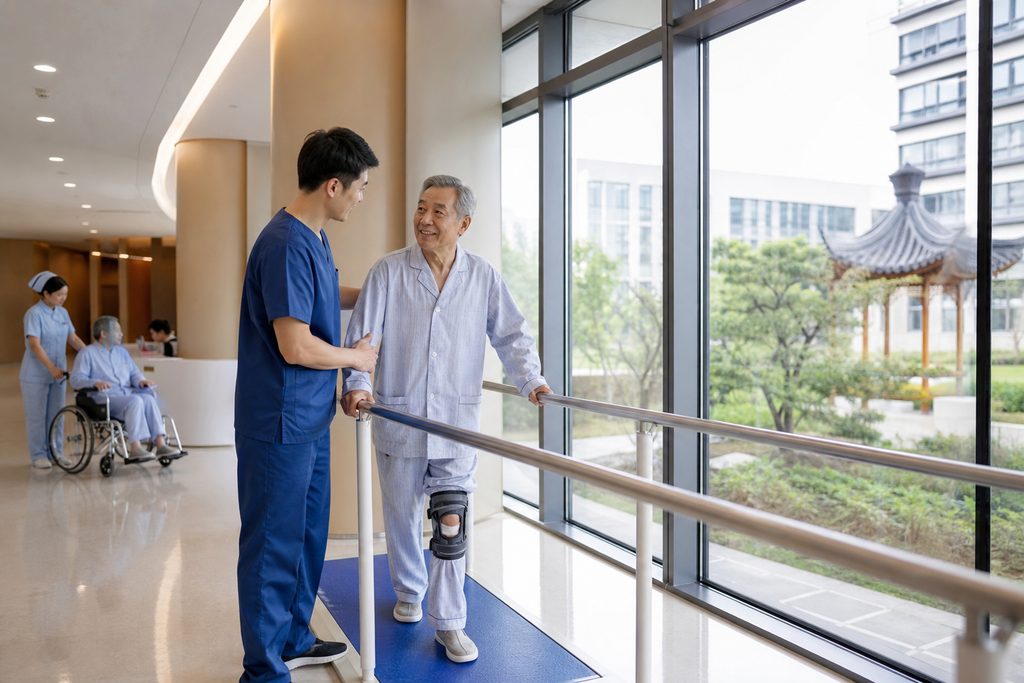
Hip Replacement Surgery in China: Your Options
A hip replacement — total hip arthroplasty, in plain terms — means removing a worn or damaged hip joint and replacing it with an artificial one made of metal, ceramic, or plastic. It is one of the most reliable operations in modern medicine. If you are searching for hip replacement surgery cost China figures before committing, here is the short answer: at a top-tier Chinese public hospital, the all-in price typically lands between $8,000 and $18,000, against $40,000–$70,000 in the United States for the same procedure. The caveat is that this range swings widely depending on implant type, hospital tier, and whether you use the standard or international channel.
That gap is why so many patients from the US, UK, Canada, and the Gulf start looking east. But cost alone is a bad reason to choose a surgeon. This guide lays out what the money actually buys, which hospitals carry real orthopedic weight, and where the friction points are.
Who This Is Right For — and Who It Isn’t
Not every patient with hip pain needs a replacement, and not every candidate for one should travel. Here is the honest split.
You are typically a reasonable candidate for surgery in China if:
- You have end-stage osteoarthritis, avascular necrosis, or a failed previous hip implant
- You have imaging (X-ray, MRI, CT) already done within the last 6–12 months
- You are medically fit for anesthesia and can tolerate a long-haul flight
- You can stay in China for roughly 3–4 weeks, covering surgery plus early rehabilitation
- You are paying out of pocket or have insurance that reimburses internationally
You should probably not pursue this if:
- You have an active infection, uncontrolled diabetes, or severe cardiac disease that your own physician considers a surgical contraindication
- You need urgent surgery — within days. Chinese public hospitals require an in-person consultation before scheduling, so there is no same-week pathway for overseas patients
- You expect a Western-style private room, English signage everywhere, and no cultural adjustment
- Your home country offers the procedure at a price you can absorb, with a surgeon you already trust
The last point matters. Traveling for surgery adds logistical stress to a physically demanding recovery. For some patients, staying home is genuinely the better call.
The Options, Compared
Four realistic paths exist for an international patient. The table below compares them on the numbers that usually decide the question.
| Option | Typical All-In Cost | Wait Time | English Support | Best For |
|---|---|---|---|---|
| US private hospital | $40,000–$70,000 | 3–8 weeks | Native | Insurance-covered patients |
| UK private | £12,000–£18,000 | 2–6 weeks | Native | UK residents with private cover |
| China — public hospital, standard channel | $8,000–$14,000 | Days to weeks after in-person consult | Limited without help | Cost-focused, self-sufficient patients |
| China — international / VIP channel | $14,000–$25,000 | Coordinated in advance | Full | Patients wanting a smoother path |
Which column fits you? If you are paying cash and comfortable navigating a foreign hospital with a translator app, the standard public channel delivers the same surgeon’s hands at the lowest price. If you want appointments locked in before you fly, English-speaking staff, and someone walking you through registration, the international channel costs roughly 1.5–2× more and removes most of the friction.
Best Hospitals for Hip Replacement in Shanghai and Beyond
China’s orthopedic capacity is concentrated in a handful of major cities. The Fudan Hospital Ranking, the closest thing the country has to a national league table, groups the top 100 hospitals into tiers rather than numbered positions, and its specialty reputation lists rank the top 10 hospitals in each of 45 disciplines — orthopedics among them.
Beijing holds the largest cluster of top-ranked hospitals (21), Shanghai follows with 18, and Guangzhou with 10. For hip replacement specifically, you want a hospital with a high-volume joint reconstruction department. Volume matters: surgeons who perform hundreds of arthroplasties a year tend to have more predictable outcomes.
Shanghai’s major teaching hospitals — including Ruijin Hospital and Zhongshan Hospital, both affiliated with Fudan University — run busy orthopedic departments. Beijing’s Peking Union Medical College Hospital is a national referral center. In the west, West China Hospital in Chengdu anchors a huge catchment area. You can browse the full directory of top-ranked Chinese hospitals by city to see which facilities sit in each tier.
For patients who prioritize English-language care, direct insurance billing, and a Western-style ward, the private international hospitals are a separate category entirely — JCI-accredited, with English-speaking staff. Our guide to private international hospitals in China covers that route in detail.
Is Hip Replacement Surgery Safe in China?
This is the question that decides the trip for most people, and it deserves a straight answer rather than a sales pitch.
China’s leading public hospitals perform joint replacement at enormous scale. A top-tier facility may run thousands of arthroplasties annually, and the surgical techniques — minimally invasive approaches, computer-assisted alignment, modern bearing surfaces — are the same ones used in Europe and North America. Implants are typically from international manufacturers (Zimmer Biomet, Stryker, DePuy Synthes) or from established Chinese makers that hold regulatory approval.
What differs is the system around the surgery. Chinese public hospitals are vast. A single outpatient day can see tens of thousands of patients. Signage, consent forms, and nursing communication are predominantly in Chinese. Without language support, a patient can feel lost in a way that has nothing to do with surgical quality.
Infection control and post-operative protocols at the top hospitals meet international standards, and many hold JCI accreditation. But you should verify the specific hospital’s credentials rather than assume them. Ask for the hospital’s complication rates if available, and confirm who will manage your anticoagulation and wound care after discharge.
How Long Is Recovery After Hip Replacement Abroad?
Recovery timelines are broadly similar wherever the surgery happens, because they follow human biology, not geography. What changes abroad is the logistics around each phase.
Days 1–3: You are mobilized, often within 24 hours, with a walker or crutches. Pain is managed with medication. In a Chinese hospital, expect to stay 3–7 days depending on the facility and your progress.
Weeks 1–2: You should be walking short distances with support. Most international patients remain in China during this window, attending early physiotherapy sessions before being cleared to fly.
Weeks 3–6: Many patients fly home around week 3, once the surgeon confirms no signs of complication. Physiotherapy continues at home. Most people transition from a walker to a cane in this period.
Months 2–6: Strength and range of motion improve steadily. Driving typically resumes around week 6, depending on which hip was operated on and your surgeon’s guidance.
Months 6–12: Full recovery. Most patients report the implant feeling like a natural part of them by the one-year mark.
The practical implication: budget 3–4 weeks in China, and arrange follow-up physiotherapy in your home country before you travel. Continuity of rehabilitation matters more than where the first two weeks happen.
What It Costs — and What’s Included
Returning to the headline number: hip replacement surgery cost China figures generally fall between $8,000 and $18,000 at a top public hospital, and $14,000–$25,000 through an international or VIP channel. Here is what drives the spread.
- Implant type — the single largest variable, often $2,000–$6,000 of the total
- Hospital tier and city — Beijing and Shanghai run higher than regional centers
- Channel — the international department charges roughly 1.5–2× the standard rate
- Length of stay — extra days add cost
- Pre-operative workup — bloodwork, imaging, cardiac clearance
A typical quote usually covers the surgeon’s fee, anesthesia, the implant, the hospital stay, and standard post-operative medication. It usually does not cover flights, accommodation for you and any companion, visa costs, translation, or follow-up care after you return home. Ask for an itemized estimate before you commit, and confirm whether the implant brand is specified.
Public hospitals in China generally require prepayment, with insurance reimbursement handled afterward in your home country. Private international hospitals often bill insurers directly. That difference alone can determine which route makes sense for you.
Practical Considerations: Visas, Records, and Payment
Three logistics trip up first-time medical travelers to China. Handle them early.
Visa. Foreign patients coming to China for medical treatment use the S2 visa, which covers short-stay private affairs including medical treatment. Stays beyond 180 days require the S1 category. Accompanying family members also apply under S2. Note that the M visa is for commercial and trade activity only — it is not a medical visa, and using it for treatment is a mistake. Requirements shift, so confirm current rules with your nearest Chinese embassy or consulate and bring supporting documents from the hospital.
Medical records. Have your imaging and clinical notes translated into Chinese before you arrive. This speeds up the in-person consultation considerably. If you want a specialist’s opinion before booking flights at all, a written second opinion or video consultation lets a Chinese orthopedic team review your films remotely — a low-risk way to test whether the trip is worth making.
Payment. International cards are accepted at major hospitals but often with transaction limits. Wire transfers are common for larger sums. Confirm the payment method with the hospital’s international office in advance, and keep receipts for insurance claims.
One more thing worth knowing: public hospitals in China generally do not allow overseas patients to book a standard outpatient slot in advance. You register on the day, and surgery can only be scheduled after an in-person consultation. If you want appointments and a surgical plan locked in before you fly, that is precisely what the international or VIP channel exists for.
Frequently Asked Questions
Not directly through a public hospital’s standard channel — those require an in-person consultation first. What you can do is arrange a remote evaluation, then coordinate a hospital appointment and admission through the international department. Packages that promise a guaranteed surgery date before any doctor has seen your imaging should be treated with caution.
At top-ranked hospitals, the surgical standards and implants match international norms, and many facilities hold JCI accreditation. The genuine risks for foreign patients are communication and follow-up coordination, not surgical technique. Language support and a clear rehabilitation plan reduce those risks substantially.
Expect $8,000–$18,000 at a top public hospital versus $40,000–$70,000 in the US. The range depends on implant choice, hospital tier, city, and whether you use the standard or international channel. Always request an itemized quote, since final pricing varies by hospital and case complexity.
This is a real concern and worth planning for. Before you leave China, obtain your complete operative report, implant details, and discharge summary in English. Share them with an orthopedic surgeon or physiotherapist in your home country so a local clinician owns your follow-up. Implant-related complications can surface months later, and having a domestic point of contact matters.
Your Next Step
The core message is simple: hip replacement in China can cost a fraction of Western prices at hospitals with genuine orthopedic depth — but the savings only make sense if the logistics are handled properly. Surgery is the easy part to compare. Recovery, communication, and follow-up are where trips succeed or fall apart.
We are China Medical Services, a coordination service rather than a hospital. We do not diagnose, operate, or promise outcomes. What we do is connect international patients with the right Chinese hospitals, arrange written second opinions and video consultations with orthopedic specialists, and provide bilingual support on the ground when you arrive. If you are weighing your options, a free consultation at our patient services page is a reasonable place to start — no obligation, just a clearer picture of what is possible.
This article is for general information only and is not medical advice. Treatment decisions should be made with a qualified physician who has reviewed your individual case.
For more medical information and treatment options in China, visit chinamedservices.com (China Medical Services).
