Cancer Screening Through Medical Tourism in China: Cost, Safety & Top Hospitals
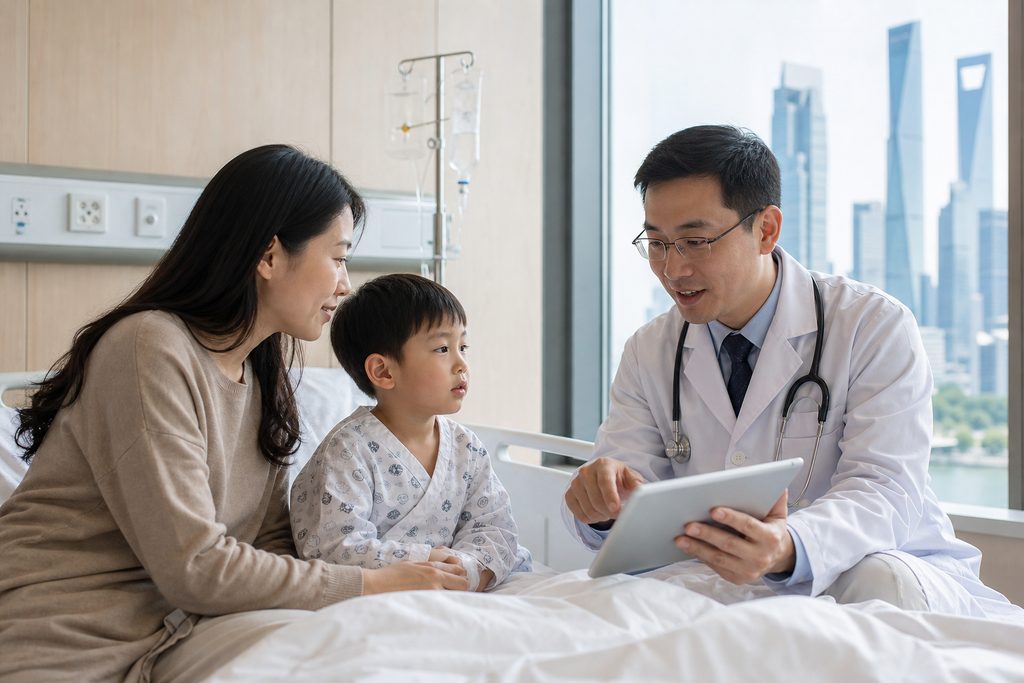
While a Canadian resident can wait months for a routine MRI, a patient at a top-tier Shanghai hospital can often complete a full-body cancer screening in two days. That gap is one reason international patients increasingly look east. The cancer screening cost in China typically runs 60–80% below equivalent US pricing, and the country’s top hospitals now see more imaging volume in a week than many Western centers handle in a month.
Cancer Screening Through Medical Tourism in China: The Short Answer
A comprehensive cancer screening package in China generally costs $500 to $3,500, depending on how deep you go. A basic checkup with bloodwork and ultrasound sits at the low end. A premium package with PET-CT, tumor markers, and specialist review sits at the top.
That range is the headline. The caveat matters just as much: price is not the hard part. Knowing which hospital, which package, and how to get an appointment as a foreigner is where most people get stuck.
Who This Is Right For — and Who It Isn’t
Not everyone should book a flight for a checkup. Screening abroad makes sense in specific situations, and it’s a poor fit in others.
Good candidates:
- Adults over 40 with a family history of cancer and no clear screening pathway at home
- Patients facing long public waitlists for MRI, PET-CT, or colonoscopy
- People whose insurance won’t cover advanced imaging without symptoms
- Travelers already planning a trip to Asia who want to combine it with a health check
- Anyone seeking a second read on an ambiguous result from their home country
Poor candidates:
- Anyone with acute symptoms — chest pain, unexplained bleeding, rapid weight loss. See a local doctor now, not next month on a plane.
- Patients who need ongoing cancer treatment, not screening. That’s a different conversation with different rules.
- People expecting a single test to rule out all cancers. No screening package does that, anywhere.
- Anyone unable to travel or manage a 10–14 hour flight for medical reasons.
If you fall into the second group, staying home and getting diagnosed first is genuinely the better path. Screening is for the worried-well and the at-risk, not the acutely ill.
The Options, Compared
Here is how China stacks up against the alternatives international patients usually weigh.
| Option | Typical PET-CT + full package cost | Wait time | Language support |
|---|---|---|---|
| United States | $4,000–$10,000+ | Days to weeks | Native English |
| United Kingdom (private) | £2,500–£4,500 | 1–3 weeks | Native English |
| China — top public hospital | $800–$2,000 | Often within days | Limited; interpreter needed |
| China — private international hospital | $1,500–$3,500 | Often within days | English-speaking staff |
| Japan / South Korea | $1,500–$4,000 | 1–4 weeks | Good English support |
Which column suits you? If budget is the deciding factor and you can work with an interpreter, a top Chinese public hospital delivers the most imaging per dollar. If you want an English-speaking doctor walking you through results the same day, a private international hospital is worth the premium. Japan and Korea sit in the middle — good service, higher prices than China.
How Much Does a PET-CT Scan Cost in Shanghai?
This is the single most common question we field, and the answer is refreshingly concrete. A PET-CT scan in Shanghai at a major public hospital typically runs $700 to $1,200. At a private international hospital, expect $1,200 to $2,000.
For comparison, the same scan in the US often bills at $3,000 to $6,000 before insurance. In the UK privately, it’s usually £1,500 to £2,500.
Why the gap? Equipment and radiopharmaceutical costs are lower in China, and public hospitals operate at enormous volume. A hospital running dozens of scans a day spreads its fixed costs across far more patients. That’s economics, not corner-cutting.
One caveat on PET-CT specifically: it involves a small dose of radioactive tracer. It is not a routine first-line screen for healthy people with no risk factors. Reputable Chinese hospitals will tell you the same thing their Western counterparts do — use it when there’s a reason.
Is Cancer Screening in China Safe and Reliable?
This deserves a direct answer, because it’s the question behind every other question.
The top Chinese hospitals are not fringe facilities. The Fudan Hospital Ranking, China’s most cited hospital assessment, places its top 100 hospitals across 23 cities. Many hold JCI accreditation, the same international standard applied to hospitals in the US and Europe. Equipment at these centers — 3-Tesla MRI, 128-slice CT, PET-CT — matches what you’d find in a Western academic medical center.
What’s genuinely different is the system, not the medicine. Public hospitals in China handle staggering patient volumes. A single top hospital can see over 10,000 outpatients in a day. That volume is a strength for diagnostic throughput and a weakness for hand-holding. Nobody will walk you through the corridors or explain your results in English unless you arrange it.
So is it safe and reliable? At the top tier, yes. At an unvetted clinic advertising cheap packages online, no. The difference is entirely in which door you walk through. Our database of 340+ top-ranked hospitals exists precisely to separate those two worlds.
Medical Tourism Cancer Checkup in Beijing: What a Package Actually Contains
Beijing concentrates more top-100 hospitals than any other Chinese city — 21 of them. That density is why “medical tourism cancer checkup Beijing” is such a common search. But package contents vary wildly, so here’s what a serious one includes.
A thorough package usually bundles blood tests (complete blood count, liver and kidney function), tumor markers such as CEA, AFP, and CA-125, ultrasound of the abdomen and thyroid, a low-dose chest CT, and a specialist consultation to interpret everything. Colonoscopy and gastroscopy are often add-ons, priced separately.
What drives the price up: imaging depth. Adding PET-CT, MRI, or both pushes a $600 package toward $3,000. What drives it down: skipping the endoscopies and sticking to bloodwork plus ultrasound.
A realistic timeline for a Beijing screening looks like this. Day one, registration and bloodwork. Day two, imaging. Day three, results review with a specialist. Some hospitals compress this into 48 hours; others spread it across a week. It depends on scheduling and how busy the imaging department is.
Practical Considerations: Visas, Records, and Payment
The logistics trip up more patients than the medicine does. Here’s what actually matters.
Visa category. Foreigners traveling to China for medical treatment generally use the S2 visa, which covers short-stay private affairs including medical treatment. Family members accompanying a patient apply for S2 as well. Stays beyond 180 days fall under S1. Requirements shift, so confirm current rules with the nearest Chinese embassy or consulate before you apply. One common misconception worth killing: the M visa is for commercial and trade activity. It has nothing to do with medical travel.
Medical records. Bring your prior imaging on disc and any pathology reports, translated into English or Chinese. Radiologists comparing a new scan against an old one catch far more than they can from a single snapshot.
Payment. Public hospitals require prepayment; you settle the bill, then claim reimbursement from your insurer afterward. Most private international hospitals bill insurance directly, which is simpler if your plan supports it. Bring a card that works internationally, and confirm your daily transaction limits before you fly.
Language. This is the real barrier. Very few public hospital staff speak functional English. Bilingual medical companions exist for exactly this reason — they handle registration, queueing, payment, wayfinding, and translation so you’re not navigating a 10,000-patient-per-day facility alone.
Follow-up at home. Ask for your imaging on disc and a written report in English before you leave. Your doctor at home will want both.
How to Book a Cancer Screening Package in China
Booking from abroad is the part that surprises people. Standard public hospital outpatient slots cannot be reserved in advance from overseas — you queue for a number on the day. That’s the general rule, not a policy aimed at foreigners.
There are two workable routes. The first is the hospital’s international or VIP department, which offers senior specialists and English service at roughly 1.5 to 2 times the standard price. The second is going through a coordination service that handles registration, the hospital medical card, and an in-person proxy visit using your records.
What we don’t do is promise you a specific doctor on a specific date. Nobody legitimately can. What we can do is coordinate the appointment, prepare your records, and refund the coordination fee in full if the booking doesn’t come through.
What It Costs: The Full Picture
Beyond the screening itself, budget for these line items, all in USD:
- Screening package: $500–$3,500 depending on imaging depth
- Bilingual medical companion: from $300 per day
- Airport transfer: $200 round-trip
- Written second opinion on your results: $300–$500
- Hospital appointment coordination: from $300
Hospital charges vary by facility and case complexity, so treat these as planning ranges rather than quotes. If a screening turns up something that needs a specialist review, a written second opinion from a top-hospital expert is often the smart next step — and if you later travel to China for treatment, that consultation fee is credited in full toward the on-the-ground coordination service within 90 days.
Frequently Asked Questions
A comprehensive package in China typically runs $500 to $3,500. The equivalent in the US often lands between $4,000 and $10,000 or more. The gap comes from lower equipment and drug costs plus far higher patient volume at Chinese hospitals. Final pricing depends on the hospital and how much imaging your package includes.
Not through standard public hospital channels — those require same-day queueing. You can arrange it in advance through a hospital’s international department or a coordination service. Expect to send your records ahead so the hospital can prepare. No service can guarantee a specific specialist or date.
The S2 visa covers short-stay medical treatment and private affairs, and accompanying family members apply for it too. The M visa is for business and trade only and does not apply to medical travel. Always verify current requirements with your nearest Chinese embassy or consulate.
Top Chinese hospitals can usually arrange follow-up imaging or a specialist consultation within days. If you’d rather have the results reviewed before committing to travel, a written second opinion from a Chinese specialist is available for $300 to $500. That report is for reference only and is not a prescription or a diagnosis.
If you’re already considering a trip to Asia, combining it with screening is efficient. Flying solely for a checkup makes sense mainly when you face long waits or high costs at home. For anyone with active symptoms, get seen locally first — that’s the honest advice.
Your Next Step
Screening in China is affordable, fast, and backed by hospitals that meet international standards — provided you choose the right tier and plan the logistics before you book a flight. The medicine is solid; the navigation is the hard part.
We are not a hospital and we don’t diagnose anything. We connect international patients with China’s top-ranked hospitals, coordinate appointments, and provide bilingual support on the ground. If you’d like to talk through whether screening in China fits your situation, start with a free consultation — no pressure, no obligation, just a clear picture of what’s possible.
This article is for general information only and is not medical advice. Screening decisions should be made with a qualified physician who knows your history. Costs and visa rules change; confirm details before you travel.
For more medical information and treatment options in China, visit chinamedservices.com (China Medical Services).
