Acute Leukemia in Shanghai: How to Arrange Care That Works
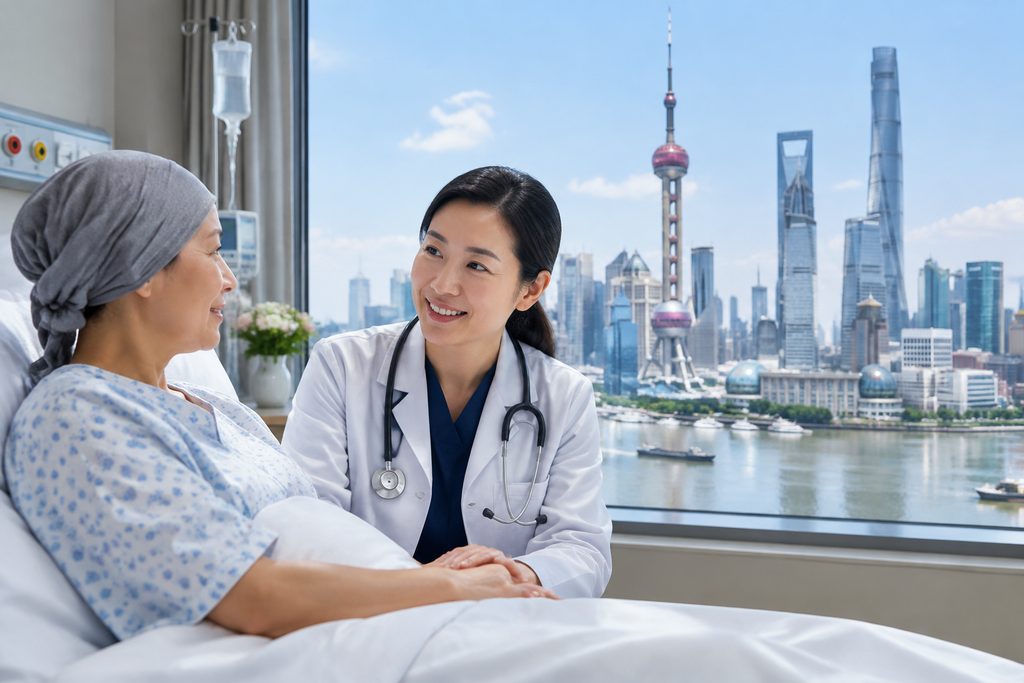
Roughly 20,000 new cases of acute leukemia are diagnosed in China every year, and a growing share of them are international patients who chose to travel rather than wait. Shanghai alone concentrates 18 hospitals inside the Fudan Top 100 rankings — more than any Chinese city except Beijing. For a family staring down an acute leukemia diagnosis, that density matters. So does knowing exactly how to arrange care before you book a flight.
This guide walks through the real sequence: what happens before you travel, what cannot be promised, what the visa rules actually say, and what a realistic timeline looks like. No hype. Just the mechanics.
How This Actually Works, Step by Step
Here is the sequence, from the moment a family decides to look at China to the moment a treatment plan exists.
Step 1 — Gather the records. You need the bone marrow biopsy report, flow cytometry and cytogenetics results, molecular panels (including FLT3, NPM1, IDH1/2, TP53 where available), complete blood counts, and the treating hematologist’s summary. Scanned PDFs in English are fine to start. Chinese hospital teams will want certified translations of the key pathology and molecular documents, and we handle that translation as part of case management.
Step 2 — Route the file to the right specialty. Acute leukemia sits with hematology, not general oncology. At a Shanghai tertiary hospital, that means the hematology department of a Fudan-ranked institution, or the international department of a private hospital for the first conversation. The file goes to one team, not five.
Step 3 — Get a written second opinion. A Chinese hematology team reviews the reports and returns a written analysis: how they read the risk stratification, what induction regimen they would consider, whether transplant is on the table, and what additional testing they would want. This is a document, not a phone call. Written second opinions from top-hospital specialists run $300–500 and are for reference only — they are not a prescription and do not replace your local physician’s judgment.
Step 4 — Video consultation. Now you talk to the team. A top-specialist video consultation runs $500–800; a multidisciplinary team session with hematology, transplant, and pathology input runs $1,500–2,000. You explain the patient’s history and goals. They explain what they would do and why.
Step 5 — Decide, then travel. If the plan makes sense, we coordinate the hospital appointment, the S2 visa documentation, arrival support, and bilingual accompaniment. If it does not, you have spent a few hundred dollars instead of a few thousand on flights.
Which Shanghai Hospitals Actually Treat Acute Leukemia
Shanghai’s hematology capacity is concentrated in a handful of institutions. The Fudan specialty reputation rankings list China’s top 10 hospitals for hematology, and Shanghai institutions appear on that list. We do not publish invented rankings — the composite Fudan Top 100 uses tiers (A++++ down to A), not numbered positions, so any provider quoting you “the number three hematology hospital in China” is improvising.
What you can verify: the specialty rankings by department show which hospitals carry top-10 reputation in hematology and oncology. Shanghai’s hospital directory lists the tertiary institutions, their international departments, and whether English-speaking staff are available.
The practical split looks like this:
- Public tertiary hospitals with international departments — the deepest hematology and transplant expertise, English-capable international desks, appointment coordination through official channels. Pricing for the international/VIP pathway typically runs 1.5–2× the standard public pathway.
- Private international hospitals — JCI-accredited, English-speaking staff throughout, direct insurance billing with many Western insurers. Better for initial evaluation, supportive care, and coordination. Less suited to complex transplant work.
- Traditional Chinese medicine hospitals — a supporting role in symptom management and recovery, not a primary treatment path for acute leukemia. More on that below.
One structural fact surprises most families. Standard public outpatient registration in China cannot be booked from overseas in advance. You queue on the day. Surgery and inpatient admission require an in-person consultation first. The way around this for international patients is the hospital’s international or VIP channel, which is a legitimate official pathway — not a workaround, and not something anyone can sell you as priority access.
A Realistic Timeline
Acute leukemia moves fast, and so should the logistics. But paperwork does not care about urgency. Here is what actually happens, with ranges rather than best cases.
| Stage | Typical Duration | What Slows It Down |
|---|---|---|
| Records gathered and translated | 3–10 days | Missing molecular panels; hospital records departments that release pathology slides slowly |
| Written second opinion returned | 5–14 days | Specialist availability; need for additional stains or re-review of slides |
| Video consultation scheduled | 3–10 days after opinion | Time zone coordination; interpreter scheduling |
| S2 visa application | 1–3 weeks | Consulate workload; incomplete hospital invitation documentation |
| Flights and accommodation | 3–7 days | Peak season pricing; proximity to the hospital |
| In-person consultation and admission | 2–10 days after arrival | Bed availability; additional testing requested on site |
| Treatment start | Days to 2 weeks after admission | Final diagnostic confirmation; infection control precautions |
Total from first contact to treatment start: roughly four to eight weeks in a straightforward case. That range is honest. Anyone promising two weeks is either not counting the visa or not counting the diagnostic re-review.
What Can Go Wrong — and What Happens Then
This is the part most guides skip. Here is what actually derails cases.
The diagnosis changes after re-review. Chinese hematology teams frequently re-read outside pathology. Sometimes the subtype shifts, sometimes the risk category shifts. That is not a failure — it is the point of a second opinion. But it can reset the treatment plan and add a week.
The patient is not fit to travel. Active infection, uncontrolled bleeding, or a blast crisis can make a long-haul flight unsafe. In that case the honest answer is: stabilize locally first, use remote consultation in the meantime, and travel when the treating physician clears it. We will say so rather than book a flight.
The visa is delayed. S2 applications require supporting hospital documentation, and consulates set their own processing times. We prepare the paperwork to the current published requirements, but no one can guarantee approval. Build a two-week buffer into any plan.
The hospital cannot admit on the date you hoped. Beds in hematology wards are allocated by the hospital, not by any outside party. If the appointment cannot be secured as arranged, our coordination fee is refunded in full. That is the limit of what any coordinator can honestly offer.
The cost exceeds the estimate. Leukemia treatment is not a fixed-price procedure. Induction, consolidation, infection management, and possible transplant each carry separate costs, and complications change the math. Any number you receive before admission is an estimate, not a quote.
Costs, Insurance, and What the Numbers Mean
China’s cost advantage in complex care is real but frequently overstated for leukemia, because the treatment is prolonged and complication-heavy. Broad ranges, which vary by hospital and case complexity:
- Initial evaluation and diagnostic workup: $1,500–4,000
- Induction chemotherapy cycle: $8,000–25,000 depending on regimen and supportive care
- Allogeneic hematopoietic stem cell transplant: $60,000–150,000 at a top public hospital, before complications — and this is a range, not a promise
- Private international hospital supportive care: meaningfully higher than public pathways
Compare that to U.S. figures, where an allogeneic transplant commonly exceeds $400,000 before complications. The gap is real. But leukemia care is a marathon, and the total bill depends on how many infections, how many admissions, and how long the stay runs.
Payment mechanics matter here. Public hospitals require prepayment, and insurance reimbursement happens afterward, in your home country, on your insurer’s terms. Private international hospitals often bill insurers directly. Confirm coverage in writing before you travel — not after.
Our fees sit separately from hospital charges and are transparent: bilingual medical companion from $300 per day, airport transfer $200 round-trip, hospital appointment coordination from $300, VIP end-to-end coordination $5,000–8,000. We are a case management service — records translation, appointment coordination through official hospital international departments, and bilingual accompaniment. We are not an access fee, and we do not sell priority.
Practical Considerations: Records, Visa, Language, Follow-Up
Visa category. Medical travel to China uses the S2 visa, annotated for medical treatment purposes. Stays beyond 180 days fall under S1. Accompanying family members apply for S2 as well. The M visa is a commercial and trade visa and has nothing to do with medical treatment — if a provider tells you to apply for an M visa, that is a factual error and a red flag.
Language. Shanghai’s top hospitals see tens of thousands of outpatients daily. Signage is largely Chinese, and even international departments get busy. A bilingual medical companion handles registration, queuing, payment, wayfinding, and translation during consultations — from $300 per day, half-day or full-day.
Records you should carry. Physical copies of pathology slides if the hospital requests them, a USB drive with all imaging, a medication list with generic names, and a one-page summary in English and Chinese.
Follow-up at home. Ask before treatment starts how the Shanghai team will hand off to your local hematologist. Written treatment summaries, discharge documentation, and imaging in transferable formats should be requested early, not on the last day.
Where TCM fits. Traditional Chinese medicine has a legitimate supporting role in managing nausea, fatigue, and appetite during and after treatment. It is not a primary treatment for acute leukemia, and any clinic suggesting otherwise should be avoided.
Frequently Asked Questions
Yes. Shanghai’s tertiary hospitals treat international patients, typically through their international or VIP departments. Access requires a confirmed diagnosis, translated records, and an in-person consultation before admission. No service can guarantee a bed or a treatment date.
Realistically four to eight weeks from first contact to treatment start. Document translation, written second opinion, video consultation, and S2 visa processing each take one to three weeks. Urgency does not compress consulate timelines.
If we cannot secure the appointment as arranged, the coordination fee is refunded in full. Hospital bed allocation and admission decisions remain entirely with the hospital. Our role is coordination and accompaniment, not access.
Your Next Step
The core message is simple: acute leukemia care in Shanghai is genuinely accessible to international patients, but it runs on documents, official channels, and realistic timelines — not on connections. Understanding that upfront saves weeks and prevents expensive mistakes.
China Medical Services is a coordination and case management service. We do not diagnose, we do not treat, and we do not sell priority access. We translate records, route them to the right specialty, arrange consultations through official hospital international departments, and accompany patients on the ground. If you want to know what your specific situation looks like, start with a free consultation at our patient services page — no obligation, and no pressure.
This article is for general information only and does not constitute medical advice. Treatment decisions for acute leukemia must be made with qualified physicians who have reviewed the individual patient’s records.
For more medical information and treatment options in China, visit chinamedservices.com (China Medical Services).
