Second Opinion for Rare Disease in Shanghai: Cost, Process & Top Hospitals
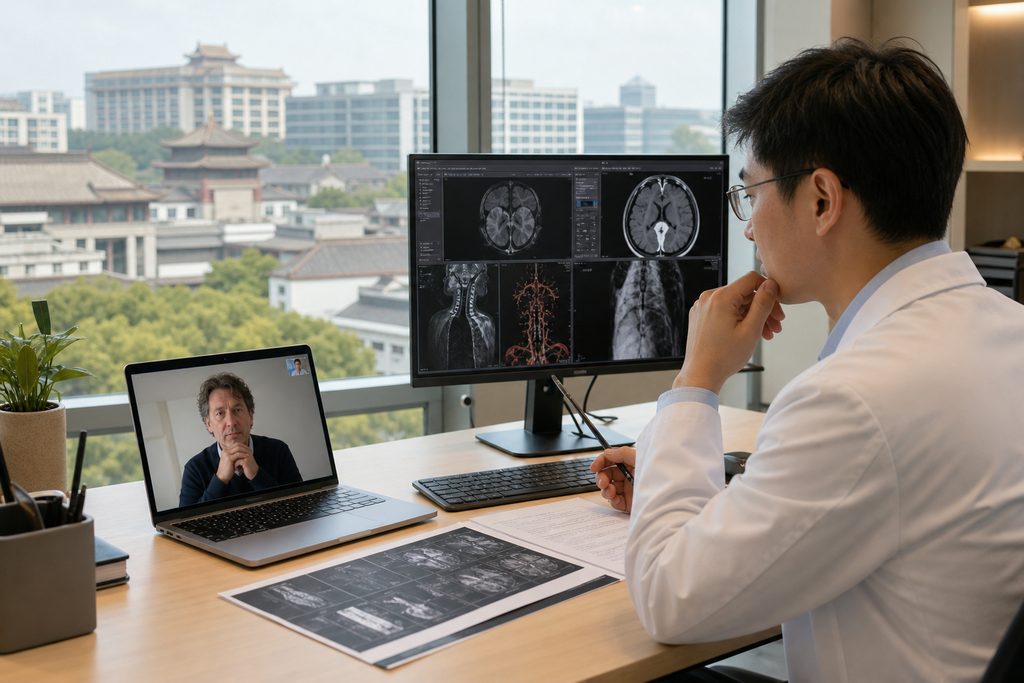
When 41-year-old Michael first heard his diagnosis, he had already seen three specialists in two countries. The verdict was the same each time: a rare autoimmune condition affecting fewer than 1 in 50,000 people. His local hospital offered one treatment path. No alternatives. No second look. He started searching for a second opinion for rare disease Shanghai options — not because he distrusted his doctors, but because rare disease is exactly where a fresh set of eyes matters most.
That instinct is correct. Rare diseases are, by definition, the cases where standard protocols run thin. A single specialist may see a handful of cases in a career. When you concentrate those cases at a high-volume center, the picture changes.
Shanghai is one of the few cities in the world where that concentration exists at scale. Fudan University’s affiliated hospitals, Shanghai Jiao Tong’s medical system, and several JCI-accredited international hospitals sit within a few kilometers of each other. For a patient abroad, the question is not whether the expertise exists. It is how to reach it without flying blind.
## How This Actually Works, Step by Step
The process is more straightforward than most patients expect. Here is the real sequence.
Step 1: You send your existing records. Not a summary — the actual materials. Imaging files (DICOM format if you have them), pathology slides or reports, genetic testing panels, lab results, discharge summaries, medication history. For rare disease, genetic and pathology data usually carry the most weight. We handle translation into Chinese where needed; most Shanghai tertiary hospitals expect documents in Chinese or English.
Step 2: A specialty team reviews the file. For a written second opinion, the relevant department at a partner hospital — not a generalist — reads your case and produces a written analysis. That document covers diagnostic reasoning, whether the original diagnosis holds up, treatment options available in China, and suggested direction. It is for reference only, not a prescription.
Step 3: You receive the written opinion, typically in 5–10 business days. Complex rare disease cases can take longer if the hospital requests additional records or wants a multidisciplinary review.
Step 4: If you want to go further, you speak with the team. A video consultation lets you ask questions directly — symptoms, goals, what the team would recommend. For genuinely complex cases, a multidisciplinary team (MDT) consultation brings several departments into one session.
Step 5: Only then do you decide about travel. This is the point most patients skip, and it costs them. Remote evaluation first means you arrive with a plan, not a hope.
## What a Second Opinion for Rare Disease in Shanghai Cost Actually Looks Like
Let’s be direct about money, because vague answers waste everyone’s time.
A written second opinion from a top-tier hospital specialist runs $300–500. A video consultation with a standard tertiary hospital international department or private international clinic costs $100–300. If you want a top specialist on video, expect $500–800. A full multidisciplinary team consultation — several departments reviewing your case together — runs $1,500–2,000.
Compare that to the United States, where an out-of-pocket specialist second opinion at an academic medical center commonly runs $1,000–3,000 before imaging review fees, and insurance may or may not cover it.
| Service | Typical Cost (USD) | Turnaround |
|---|---|---|
| Written second opinion (top hospital specialist) | $300–500 | 5–10 business days |
| Video consultation (standard tertiary international dept.) | $100–300 | Scheduled within 1–2 weeks |
| Top-specialist video consultation | $500–800 | 1–3 weeks |
| Multidisciplinary team (MDT) video consultation | $1,500–2,000 | 2–4 weeks |
| In-person top-specialist consultation coordination | $800–1,200 | Depends on specialist availability |
One detail worth knowing: if you later decide to travel to China for treatment, any consultation fee is credited in full toward the on-the-ground coordination service within 90 days. That credit applies once and covers the coordination fee only — never hospital treatment charges.
Every figure above varies by hospital and case complexity. Rare disease cases often need more review time and more specialists in the room, which pushes toward the upper end.
## A Realistic Timeline
Patients consistently underestimate two things: how long records take to assemble, and how long hospitals take to schedule. Here is an honest picture.
| Stage | Realistic Duration | What Slows It Down |
|---|---|---|
| Gathering and translating records | 3–10 days | Pathology slides and genetic panels requested from overseas labs |
| Hospital accepts and assigns a specialist | 2–7 days | Rare disease may require routing to a subspecialty department |
| Written opinion produced | 5–10 business days | Requests for additional imaging or a second department’s input |
| Video consultation scheduled | 1–3 weeks from request | Top specialists book out; MDT panels need coordination |
| S2 visa application (if traveling) | 1–3 weeks | Consulate processing times vary by country |
| In-person appointment after arrival | 1–7 days | Public hospital outpatient registration is same-day queue-based |
From first contact to a written opinion, plan on two to three weeks. From decision to actually sitting in a Shanghai clinic, add another three to six weeks. Anyone promising faster is either guessing or selling something.
## What Can Go Wrong — and What Happens Then
Rare disease second opinions fail for predictable reasons. None of them are fatal to the process, but you should know them upfront.
The hospital declines the case. This happens when records are incomplete or the case falls outside a department’s scope. The recourse is straightforward: we route it to a different hospital or department. Shanghai has enough depth that a decline from one center rarely means a dead end.
The opinion comes back inconclusive. Rare disease is genuinely hard. Some cases cannot be resolved on paper. The honest answer is that a written opinion may confirm uncertainty rather than eliminate it. In that situation, an MDT consultation or an in-person examination is the logical next step — not a repeat of the same written review.
You cannot get the exact specialist you wanted. Public hospital specialists have full clinical schedules. We coordinate through official international departments and VIP channels, but no service can guarantee a specific doctor on a specific date. If the appointment cannot be secured as requested, the coordination fee is refunded in full.
The visa takes longer than expected. S2 visa processing is subject to consulate timelines that shift. We provide documentation support, but approval is never guaranteed and no service can promise it.
You arrive and the plan changes. This is medicine, not logistics. An in-person examination may reveal something imaging missed. That is not failure — it is the reason travel was worth considering in the first place.
## How to Judge Whether a Shanghai Second Opinion Is Worth It
Not every rare disease case benefits equally from a China second opinion. Here is how to think about it.
Volume matters. A hospital that treats 200 cases a year of a given condition sees patterns a low-volume center cannot. Fuwai Hospital in Beijing performs over 14,000 cardiac surgeries annually — the highest volume globally. Shanghai’s top centers carry similar density in oncology, neurology, hematology, and immunology. If your condition is one where case volume drives outcomes, China’s top hospitals are worth a serious look.
Diagnostic capability matters more than reputation. A famous hospital with the wrong subspecialty is worse than a good hospital with the right one. Rare disease diagnosis often hinges on genetic sequencing, advanced pathology, or specialized imaging. Check whether the hospital actually has the platform your case requires — our department-by-department rankings list which hospitals lead in each of 45 specialties.
Cost differentials are real but secondary. Cardiac bypass surgery at a top Chinese public hospital runs $12,000–20,000 versus $120,000+ in the US. For rare disease, the cost gap is often even wider because treatment courses are long. But cost should be the tiebreaker, not the reason.
The strongest argument for a China second opinion is simple: a different medical system asks different questions. Chinese specialists trained in high-volume environments sometimes catch what lower-volume systems miss, and vice versa. That asymmetry is the entire point.
## Practical Considerations: Records, Visa, Payment, and Follow-Up
Records. Start with pathology and genetics. Those two categories drive most rare disease second opinions. Request them from your treating hospital in their original form, not a summary letter.
Visa. If you travel for medical treatment, the applicable category is the S2 visa, which covers short-stay medical treatment and private affairs. Stays beyond 180 days fall under S1. Accompanying family members apply for S2 as well. The M visa is for commercial and trade activities and has nothing to do with medical treatment — if a service tells you otherwise, walk away. Requirements shift, so confirm current rules with your nearest Chinese embassy or consulate.
Payment. Public hospitals require prepayment; insurance reimbursement happens afterward, often in your home country. Private international hospitals frequently bill insurance directly. Budget for the gap.
Language. China’s top public hospitals handle tens of thousands of outpatient visits daily. Signage, registration systems, and most staff operate in Chinese. A bilingual medical companion — from $300 per day for a half or full day of registration, queueing, payment, wayfinding, and interpretation — is not a luxury in this environment. It is the difference between a workable visit and a wasted trip.
Follow-up at home. Ask the Shanghai team to produce a written summary your local doctors can read. Continuity of care after you fly home depends entirely on documentation quality.
How do I get a rare disease second opinion in Shanghai without flying there first?
Start with a written second opinion. You send your existing examination reports — imaging, pathology, genetic panels, lab work — and the relevant Chinese specialty reviews them and returns a written analysis with treatment suggestions. Video consultation adds a live conversation on top of that. Most patients complete the entire remote phase in two to three weeks, and only then decide whether travel makes sense.
Is it safe to get a second opinion for rare disease in China?
A second opinion is a review of your existing records, not a procedure. The clinical risk is minimal. The real considerations are data privacy and record handling, which reputable hospitals and coordination services manage under standard protocols. What a second opinion cannot do is guarantee a diagnosis or outcome — no legitimate provider will promise that.
What is the best hospital in China for rare disease diagnosis?
There is no single answer, because “rare disease” spans hundreds of conditions across genetics, immunology, neurology, hematology, and more. The right hospital depends on your specific diagnosis. Shanghai’s Fudan-affiliated and Jiao Tong-affiliated hospitals rank among China’s strongest across multiple specialties, and our Fudan-ranked hospital directory groups them by city and tier so you can match specialty to center.
Can I book a rare disease second opinion in Shanghai as part of a medical tourism package?
Yes, but the sequence matters. A responsible package starts with remote evaluation — records review, then a written opinion or video consultation — before any travel commitment. Packages that sell flights and hotel bundles before a specialist has seen your file are putting logistics ahead of medicine. Our model is staged: consult first, travel only if the clinical picture supports it.
How much does a second opinion for rare disease in Shanghai cost compared to the US?
A written second opinion from a top Shanghai specialist runs $300–500, and video consultations range from $100 to $800 depending on the specialist’s seniority. In the US, an academic-center second opinion commonly costs $1,000–3,000 out of pocket. Prices vary by hospital and case complexity, and rare disease cases often land at the higher end because they require more review time.
## Your Next Step
A rare disease diagnosis deserves more than one set of eyes, and Shanghai’s top hospitals offer a level of case concentration that is genuinely hard to find elsewhere. The path is not complicated: send your records, get a written opinion, talk to the team, then decide. No pressure at any stage.
China Medical Services connects international patients with 340+ top-ranked hospitals across 37 cities — the top 5% of China’s 35,000+ hospitals, ranked by Fudan and JCI. We are not doctors and we do not practice medicine. We handle records, translation, appointment coordination through official hospital channels, bilingual companionship, and visa guidance so that the medicine can happen without the logistics getting in the way.
If you are weighing a second opinion for a rare diagnosis, start with a conversation. Request a free consultation and we will tell you honestly whether a Shanghai second opinion is likely to add value in your case — including when the answer is no.
This article is for general informational purposes only and does not constitute medical advice, diagnosis, or treatment recommendations. Always consult a qualified physician about your individual condition. Costs and timelines cited are estimates and vary by hospital, case complexity, and current regulations.
Frequently Asked Questions
Yes. The hospitals used for international patients are JCI-accredited and follow the same international safety standards as top hospitals in the US and Europe. Surgical teams perform high volumes of procedures — often more than their Western counterparts — which studies show leads to better outcomes.
Costs vary by procedure and hospital, but international patients typically save 40-80% compared to US prices — even when factoring in travel and accommodation. A consultation with our team will give you an exact, all-inclusive quote with no hidden fees.
Send us your existing medical reports to get started. We handle everything from hospital selection and appointment scheduling to visa assistance and post-operative recovery planning. Your medical records are reviewed by the specialist before you even book a flight.
For more medical information and treatment options in China, visit chinamedservices.com (China Medical Services).
