Arranging Refractory Epilepsy Care in China: Costs, Centers, and Timelines
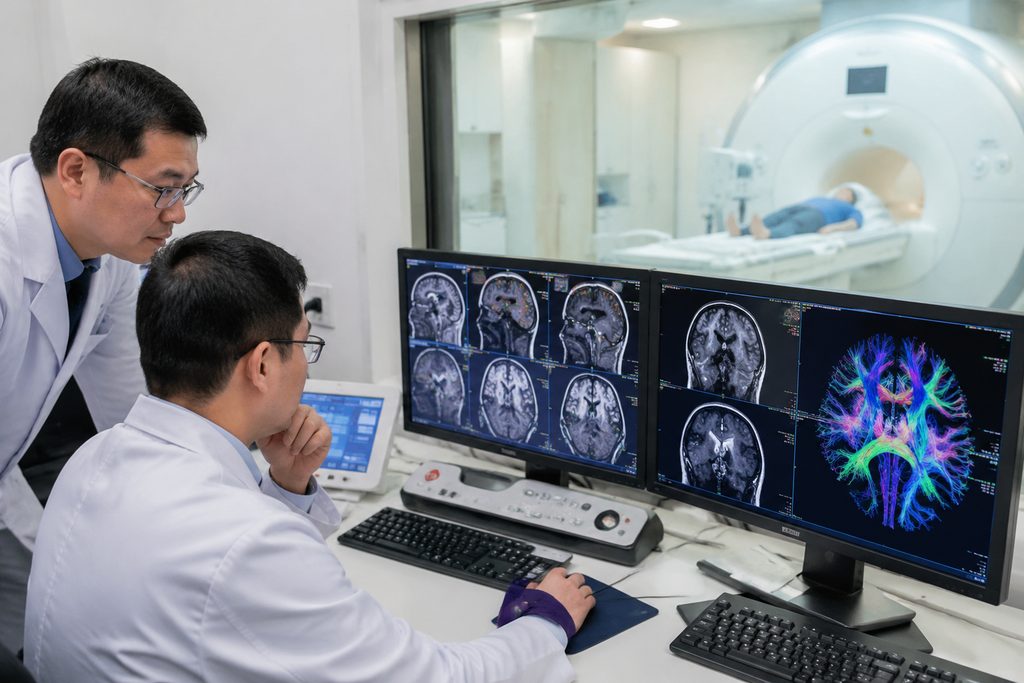
Arranging Refractory Epilepsy Care in China: Costs, Centers, and Timelines
You have probably been told that refractory epilepsy means running out of options. That is not true. It means running out of options where you currently live. For roughly one in three people with epilepsy, two or more anti-seizure medications fail to control seizures — that is the clinical definition of drug-resistant, or refractory, epilepsy. What happens next is a question of access, not biology. And refractory epilepsy treatment cost China is often the first thing families search for, because the price gap between Chinese tertiary hospitals and Western centers is real and large.
Here is what that gap looks like in practice. A comprehensive pre-surgical evaluation — long-term video EEG monitoring, high-resolution MRI, neuropsychological testing — plus resective surgery at a top-tier Chinese public hospital typically runs a fraction of the equivalent package in the United States or Western Europe. We will get into numbers below. What matters first is understanding that China’s epilepsy centers are not a budget compromise. Several are among the highest-volume epilepsy surgery programs in the world.
How This Actually Works, Step by Step
The sequence is more predictable than most patients expect. It just is not instant.
Step one: you send records, not yourself. You gather what you already have — MRI discs and reports, EEG tracings and summaries, medication history with dosages and dates, seizure diary, prior surgical or ablation reports if any. Our team arranges certified translation into Chinese. This matters more than people realize. A Chinese epileptologist reading an English-language EEG summary is working at a disadvantage; a properly translated record set is not.
Step two: a Chinese specialty team reviews the file. This is a written second opinion, typically $300–500. You get back an analysis: whether the case looks like a candidate for pre-surgical evaluation, what additional testing would likely be needed, and a directional treatment plan. It is a written opinion, not a prescription.
Step three: a video consultation. If the written opinion suggests a path forward, you speak directly with the epilepsy team — usually $500–800 for a top-specialist session, or $1,500–2,000 if the case warrants a multidisciplinary team review involving neurosurgery, neurology, and neuroradiology together. You explain the history. They explain what they would do.
Step four: the decision point. Only now does travel make sense. If the plan is feasible and you agree to it, we coordinate arrival, hospital registration, and the in-person evaluation.
Step five: in-person workup and surgery. In China, surgery cannot be scheduled from a file alone. Public hospitals require an in-person consultation before an operation is arranged. This is a fixed rule, not a negotiating position. The international department or VIP channel is how you lock in a senior specialist and English-language service in advance — expect roughly 1.5 to 2 times the standard-channel price for that access.
Which Epilepsy Centers Actually Take International Patients
China has more than 35,000 hospitals. Our database covers 340+ top-ranked hospitals across 37 cities, filtered to the top 5% by Fudan rankings and JCI accreditation. For epilepsy specifically, you are looking at a smaller list.
Beijing and Shanghai hold the deepest concentration. Beijing has 21 Fudan Top 100 hospitals; Shanghai has 18. If you are searching for the best epilepsy center in Shanghai for international patients, the practical answer involves hospitals with both a dedicated epilepsy monitoring unit and an international department accustomed to foreign records and English consent processes. Huashan Hospital’s neurosciences reputation and the major Shanghai teaching hospitals’ neurology departments are the usual starting points — you can browse the current list on our specialty rankings by department page.
Chengdu, Guangzhou, and Beijing also host high-volume epilepsy surgery programs. Volume matters here. Centers performing hundreds of resective procedures a year develop pattern recognition that lower-volume centers simply do not have.
Private international hospitals — United Family, Jiahui, Parkway, Raffles — offer English-speaking staff, direct insurance billing, and Western-style service. What they generally do not offer is the same depth of complex epilepsy surgery infrastructure as the large public tertiary centers. For straightforward medication management, private is comfortable. For pre-surgical evaluation and resection, the public tertiary route is usually the right call.
A Realistic Timeline
Nobody can promise you a surgery date. What we can give you is the honest shape of the calendar.
| Stage | Typical Duration | What Causes Delay |
|---|---|---|
| Record collection and translation | 1–3 weeks | Missing EEG tracings; hospital records departments responding slowly |
| Written second opinion | 5–10 business days | Case complexity; whether an MDT review is needed |
| Video consultation scheduling | 1–2 weeks | Time zone alignment; specialist availability |
| S2 visa application | 1–3 weeks | Consulate processing times vary by country; invitation letter and hospital documents required |
| Arrival and in-person consultation | 3–7 days after landing | Registration queues; additional imaging ordered on site |
| Pre-surgical evaluation (video EEG, MRI, neuropsych) | 1–3 weeks | EEG monitoring bed availability; seizure capture may take days |
| Surgery scheduling | 1–4 weeks after evaluation clears | Operating room slots; surgeon’s case load |
| Post-operative recovery before flying | 2–4 weeks | Surgeon’s clearance; wound healing; airline fitness-to-fly rules |
Add it up and a realistic door-to-surgery window is roughly two to four months. Some cases move faster. Complex ones move slower. Anyone quoting you a fixed two-week surgery date from overseas is not being straight with you.
What Can Go Wrong — and What Happens Then
This is the section most providers skip. We will not.
The evaluation concludes surgery is not appropriate. This happens more often than families expect. Not every refractory case has a resectable focus. If the team determines that surgery carries more risk than benefit, you have spent the cost of a second opinion and a consultation — not the cost of a surgery. That is a good outcome, even though it will not feel like one at first.
Seizures do not appear during video EEG monitoring. Capturing a typical seizure on monitoring is often essential for localization. Sometimes it takes days. Occasionally it does not happen at all, and the team has to adjust medication or extend monitoring. This is a known limitation of the technique everywhere, not a Chinese hospital problem.
The visa is delayed or questioned. Medical travel to China uses the S2 visa, annotated for medical treatment purposes, with accompanying family members applying under the same category. Stays beyond 180 days fall under S1. The M visa is a commercial and trade visa and has nothing to do with medical treatment — if anyone tells you otherwise, they are wrong. Requirements shift, so always confirm current documentation with the relevant Chinese embassy or consulate. We provide guidance, not guarantees; no one can promise approval.
Complications after surgery. Any neurosurgical procedure carries risk — infection, bleeding, neurological deficit. Chinese tertiary hospitals manage these routinely, and post-operative care is part of the admission. But you should go in with eyes open. Ask the surgical team directly about their complication rates for your specific procedure type.
Is Epilepsy Surgery Safe in China? Reading the Numbers Honestly
The question “is epilepsy surgery safe in China” deserves a direct answer rather than a patriotic one. Safety in epilepsy surgery tracks three things: center volume, surgical team experience, and patient selection. China’s top epilepsy centers perform high volumes of resective surgery, and their published outcomes are broadly comparable to international benchmarks for well-selected temporal lobe cases.
Where the honest caveat sits is in your case. A lesion clearly visible on MRI in the temporal lobe is a very different risk profile from a non-lesional extratemporal focus near eloquent cortex. The center matters. So does whether your case is a good fit for that center.
How do you evaluate a provider? Ask four questions. How many epilepsy surgeries does this team perform annually? What is the typical pre-surgical evaluation protocol? Who sits on the multidisciplinary review? And what does post-operative follow-up look like for a patient who returns home to another country?
That last question is the one people forget. Follow-up after you fly home needs to be arranged in advance — medication management, imaging schedules, and a communication channel back to the Chinese team. Get that plan in writing before surgery, not after.
Practical Considerations: Records, Visa, Payment, Language
No, and you should be skeptical of anyone who says otherwise. Public hospitals in China require an in-person consultation before surgery is scheduled. What you can arrange remotely is a written second opinion and a video consultation, which clarify whether surgery is even the right path. The international department or VIP channel is how you secure a senior specialist and English-language service in advance — at roughly 1.5 to 2 times the standard-channel price.
Comprehensive evaluation plus resective surgery at a top Chinese public hospital typically costs a fraction of the US equivalent — broadly in the range of one-fifth to one-tenth for comparable surgical packages, though figures vary substantially by hospital, city, and case complexity. Private international hospitals cost more. Get a written estimate after records review; do not plan around a number you found online, including this one.
The S2 visa, annotated for medical treatment, is the applicable short-stay category, and accompanying family members apply under the same category. Stays exceeding 180 days fall under S1. The M visa is for commercial and trade activity and is not a medical visa. Confirm current requirements with your local Chinese embassy or consulate, as documentation rules change.
At high-volume centers with dedicated epilepsy monitoring units, published outcomes for well-selected cases are broadly comparable to international benchmarks. Safety depends on center volume, team experience, and how well your specific seizure focus is localized. Ask any center directly for their annual surgical volume and their approach to your case type.
Your Next Step
Refractory epilepsy is a diagnosis, not a dead end — and the path forward runs through evaluation first, travel second. Get your records reviewed before you book anything. That single sequencing decision prevents most of the costly mistakes international patients make.
We are China Medical Services, a bilingual coordination team that connects international patients with 340+ top-ranked hospitals across 37 cities. We are not doctors and we do not practice medicine. We handle records translation, hospital matching, appointment coordination through official international departments, bilingual accompaniment, and visa guidance. If you would like your existing reports reviewed by an appropriate Chinese epilepsy team, you can start with a free consultation — no commitment, no pressure, just a clear read on whether China is the right next step for your case.
This article is for general information only and is not medical advice. Treatment decisions should always be made with a qualified physician who has reviewed your individual case.
Frequently Asked Questions
Yes. The hospitals used for international patients are JCI-accredited and follow the same international safety standards as top hospitals in the US and Europe. Surgical teams perform high volumes of procedures — often more than their Western counterparts — which studies show leads to better outcomes.
Costs vary by procedure and hospital, but international patients typically save 40-80% compared to US prices — even when factoring in travel and accommodation. A consultation with our team will give you an exact, all-inclusive quote with no hidden fees.
Send us your existing medical reports to get started. We handle everything from hospital selection and appointment scheduling to visa assistance and post-operative recovery planning. Your medical records are reviewed by the specialist before you even book a flight.
For more medical information and treatment options in China, visit chinamedservices.com (China Medical Services).
