Imaging in China: Booking From Overseas, Explained Step by Step
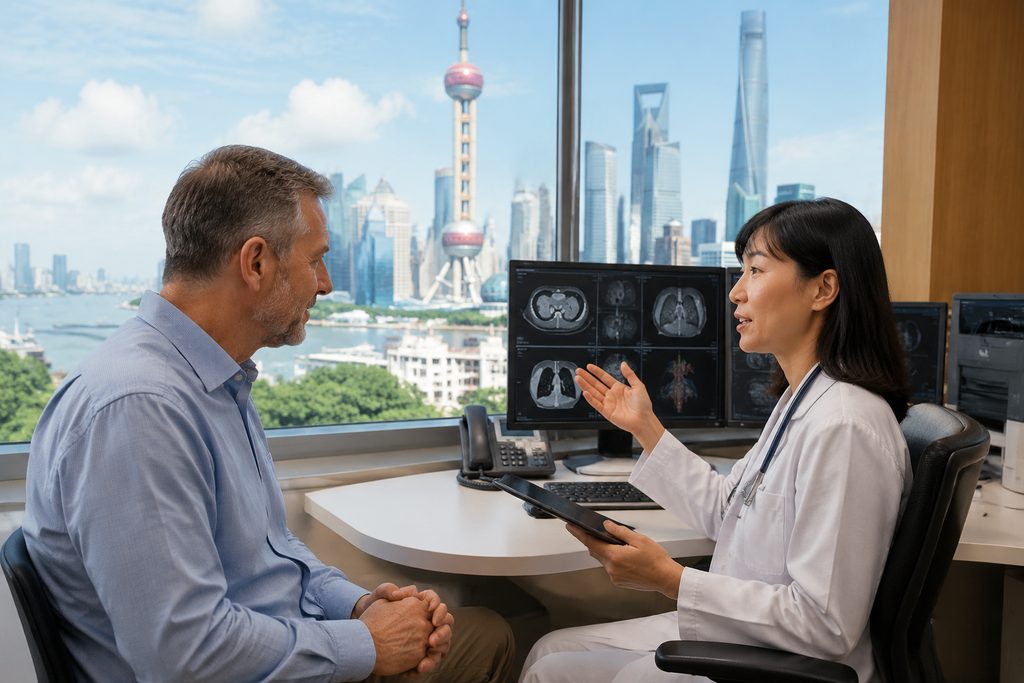
You Don’t Need a Chinese Address to Get Scanned in China
Most international patients assume that booking an MRI or CT in China requires physically standing in a hospital queue with a Chinese ID card. That assumption is wrong — and it costs people months of waiting in their home countries. The MRI scan cost China for international patients is often a fraction of Western pricing, and a growing number of top-tier hospitals now accept overseas bookings through their international departments. What you cannot do is walk into a standard outpatient clinic from abroad and reserve a slot. That distinction matters more than almost anything else in this article.
Here’s the honest version. China’s public hospital system was built for volume, not for remote scheduling. But the international wings of major hospitals operate differently. They handle foreign patients, they speak English, and they can coordinate imaging before you land.
How This Actually Works, Step by Step
The sequence below is what a real overseas imaging booking looks like. Nothing here is theoretical.
Step 1 — You gather your existing records. Prior imaging (DICOM files or CDs), radiology reports, lab results, and a short summary of your symptoms and clinical question. If your doctor at home wrote a referral or a specific imaging request, include it. Radiologists in China read a scan far more accurately when they know what they’re looking for.
Step 2 — Records go to the relevant specialty, not a generic inbox. This is where most DIY attempts fail. A neurology question needs a neurologist or neuroradiologist reviewing it, not a front-desk clerk. The specialty team confirms whether the imaging you’re asking for is actually the right study — sometimes a patient requests a full-body PET when a targeted MRI would answer the question better and cost less.
Step 3 — You receive a written response and a proposed plan. Which hospital, which scanner, roughly which timeframe, and an estimated price range. Not a fixed quote — imaging pricing varies by hospital and case complexity.
Step 4 — Appointment coordination. The hospital’s international department books the slot. You get a date window, a location, and a list of what to bring.
Step 5 — Visa and travel. For a short imaging trip, the S2 visa category is the applicable short-stay route for medical treatment and private affairs, subject to the latest embassy or consulate requirements and supporting hospital documents. Anyone traveling with you applies under the same category. Note clearly: the M visa is for commercial and trade activity and has nothing to do with medical treatment.
Step 6 — You arrive, scan, and get results. Reports are typically issued in Chinese with an English translation available through the international department. Turnaround on a standard MRI report is often same-day to 48 hours; complex cases take longer.
What Imaging Actually Costs, and Why the Range Is Wide
Price is the first question almost everyone asks. The second is whether cheap means worse. Both deserve straight answers.
| Study | Typical Range in China (USD) | Typical US Range (USD) |
|---|---|---|
| MRI, single region (non-contrast) | $150 – $500 | $1,200 – $4,000 |
| MRI with contrast | $300 – $800 | $2,000 – $6,000 |
| CT, single region | $100 – $400 | $800 – $3,500 |
| PET-CT, whole body | $900 – $2,000 | $4,000 – $12,000 |
| Ultrasound, diagnostic | $50 – $200 | $300 – $1,500 |
Those figures vary by hospital and case complexity, and the PET CT scan price Shanghai hospital quotes will sit at the higher end of the range — Shanghai and Beijing international departments charge more than regional centers, because you’re paying for equipment, English-language coordination, and shorter waits.
Why the gap versus the West? Equipment is largely the same. Siemens, GE, and Philips scanners dominate Chinese tertiary hospitals, and many institutions run 3T MRI units and 128-slice or higher CT systems. The difference is cost structure: labor, facility overhead, and the absence of the insurance-driven price inflation that defines US radiology billing.
A Realistic Timeline
People underestimate the front-end paperwork. Here’s a grounded schedule for a patient starting from scratch.
| Stage | Realistic Duration | What Slows It Down |
|---|---|---|
| Record collection and translation | 3 – 10 days | Getting DICOM files from your home hospital; radiology departments are slow to release images |
| Specialty review and written response | 2 – 7 days | Incomplete records; unclear clinical question |
| Hospital appointment coordination | 3 – 14 days | Scanner availability; whether you need a specific subspecialist to read it |
| Visa application (S2) | 1 – 3 weeks | Consulate processing times vary by country and season |
| Travel and scan | 2 – 5 days on the ground | Contrast fasting requirements; sedation arrangements |
| Report issuance | Same day – 5 days | Complex or tumor-board cases take longer |
Realistic total from first email to scan in hand: four to eight weeks. If you already have your visa and your records are digitized, it can compress to two weeks. Anyone promising you a scan in 72 hours from a cold start is either not being honest or not accounting for the visa.
What Can Go Wrong — and What Happens Then
This is the section most providers skip. We won’t.
The hospital can’t offer the exact date you wanted. Public hospital scanners are heavily booked, and international departments don’t control the entire machine schedule. Recourse: you get alternative dates, or a different hospital with equivalent equipment. This is why we never promise a specific date before the hospital confirms it.
Your home hospital won’t release your images. It happens more than you’d expect. Recourse: request a patient copy formally in writing; in most jurisdictions you’re legally entitled to your own imaging. If only CDs are available, they can be couriered.
The scan reveals something requiring immediate attention. This is the scenario nobody plans for. If imaging shows a finding that needs urgent intervention, you’re now in a foreign country with a serious result. Recourse: this is exactly why the review happens before travel. A good specialty review flags whether you’re likely to need treatment, not just imaging, so you can plan accordingly. If a finding appears on the day, the international department can connect you with the relevant specialist — but treatment decisions are always yours, made with qualified physicians.
The report is in Chinese and your home doctor can’t read it. Recourse: request an English translation at the time of booking, not after. Some hospitals charge a small fee for certified translation.
Is It Safe to Get Medical Imaging in China?
This question comes up constantly, and it usually masks a different worry: is the quality comparable?
China’s top-ranked hospitals — the ones in the Fudan Top 100 and JCI-accredited institutions — operate imaging departments that meet international standards. Many run equipment identical to what you’d find at a major US academic medical center. Radiologists at these institutions read thousands of studies annually; volume builds pattern recognition.
What varies is the experience around the scan, not the scan itself. Public tertiary hospitals see enormous daily patient volumes. Signage is often Chinese-only outside international wings. Waiting areas are crowded. If you don’t speak Mandarin, navigating a standard imaging department alone is genuinely difficult — and that’s the honest reason bilingual accompaniment exists, not a marketing invention.
If you want the smoothest experience, private international hospitals offer English-speaking staff, JCI accreditation, direct insurance billing, and Western-style facilities. You can browse options on our private international hospitals page. For complex diagnostics where you want the highest-volume subspecialty reading, a top public hospital’s international wing is usually the stronger choice. Both paths are legitimate; they serve different needs.
Practical Considerations: Records, Payment, Language, Follow-Up
Records. Bring DICOM files, not just printed reports. A radiologist needs the raw images. Cloud transfer is possible at some hospitals; USB or CD remains the most reliable.
Payment. Public hospitals generally require prepayment, and you claim reimbursement from your insurer afterward. Private international hospitals often bill your insurer directly if there’s a partnership in place. Confirm before you book — reimbursement surprises are avoidable.
Language. Ask specifically whether the imaging department itself has English service, or whether only the international coordination office does. These are not the same thing. A coordinator who speaks English is not the same as a technologist who can explain breath-holding instructions during a scan.
Follow-up at home. Get your images and report in a format your home physician can open. This is the single most common post-trip complaint — patients return with a paper report and no accessible images.
If you’re weighing a broader diagnostic workup rather than a single scan, our overview of top-ranked hospitals by city shows which institutions sit where, and the specialty rankings help match your clinical question to the right department.
Frequently Asked Questions
Yes. Hospital coordination and visa application run in parallel. You’ll want the hospital’s supporting documents before your visa interview, so start the medical side first. Just don’t book flights until the appointment is confirmed in writing.
Not always, but it helps enormously. A referral clarifies the clinical question, which improves how the radiologist reads your study and reduces the chance of scanning the wrong region.
Check whether the hospital appears in the Fudan rankings, holds JCI accreditation, or operates a recognized international department. Any of those three signals a facility accustomed to foreign patients and external scrutiny.
Imaging often leads to a treatment decision. If that happens, the same specialty team can discuss options with you, and any admission remains subject to hospital rules and your own informed consent. Nothing is automatic.
Usually not during the scan itself, for safety and radiation reasons. A companion can wait in the department and help with registration, payment, and instructions — which is where most of the difficulty actually lies.
Your Next Step
Getting imaging in China from overseas is a logistics problem, not a medical impossibility. The barriers are records, coordination, language, and timing — all solvable with the right preparation, and all much harder to solve alone from another continent.
Our team at China Medical Services connects international patients with 340+ top-ranked hospitals across 37 cities. We are not physicians and we do not give medical advice or guarantee any clinical outcome. What we do is handle the parts that trip people up: record translation, appointment coordination through official international departments, bilingual accompaniment, and visa guidance.
If you’d like a straight assessment of what your imaging request would involve, start with a free consultation. No pressure, no obligation — just a clear picture of what’s possible before you commit to anything.
This article is for general information only and does not constitute medical advice. Always consult a qualified physician regarding your individual condition and imaging needs.
For more medical information and treatment options in China, visit chinamedservices.com (China Medical Services).
