China-Japan Friendship Hospital Beijing: East-West Integrated Care for International Patients
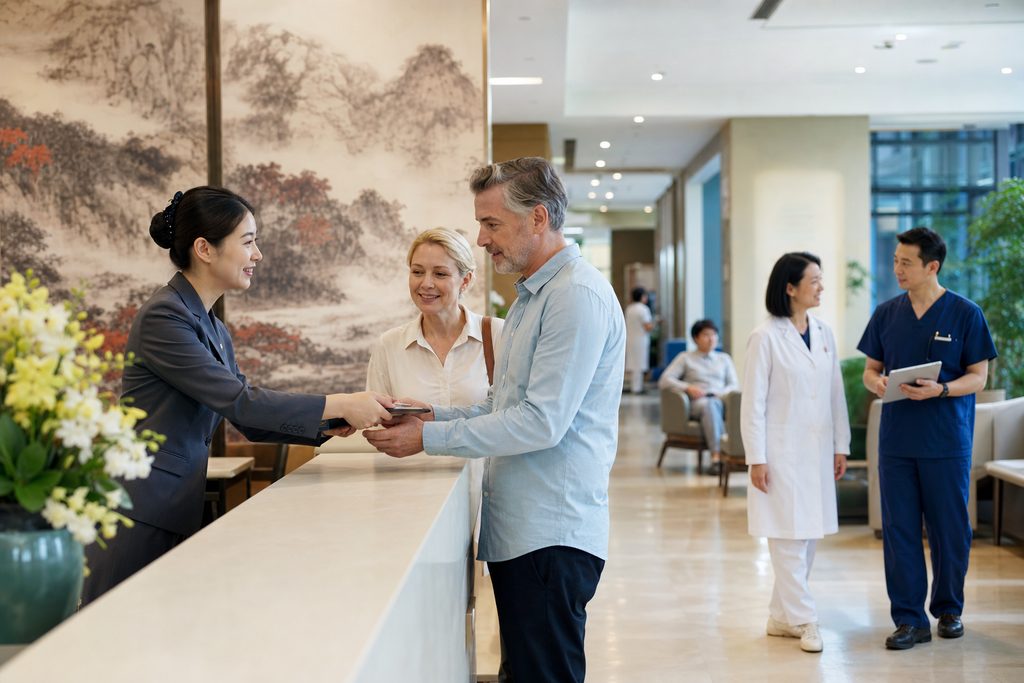
When 42-year-old Sarah first received the diagnosis of rheumatoid arthritis, her rheumatologist in Manchester laid out a clear path: methotrexate, then biologics, then pain management. The prognosis was a lifetime of medication with steadily diminishing returns. Sarah had read about traditional Chinese medicine approaches to autoimmune conditions. She wondered if combining the diagnostic precision of Western rheumatology with the systemic, whole-body perspective of Chinese medicine might offer something her current treatment plan could not. Her specialist had no opinion on the matter. The NHS does not fund integrated care pathways.
That gap between what patients want and what Western systems typically offer is real. An estimated 38% of adults in the United States and Europe use some form of complementary medicine annually. The demand for integrated models, where conventional and traditional approaches work alongside each other rather than in opposition, has outpaced the institutional capacity to deliver it. The China-Japan Friendship Hospital in Beijing has been building that capacity for four decades.
Key Takeaways
- The China-Japan Friendship Hospital operates one of China’s largest international departments, treating more than 50,000 foreign patients annually across 68 clinical specialties.
- Integrated East-West care here means both paradigms operate under one roof with shared medical records — not parallel systems that never communicate.
- Navigating this hospital as a foreign patient without Chinese language skills or local knowledge is genuinely difficult; the international department exists specifically to bridge this gap.
- Understanding the China-Japan Friendship Hospital international patient price structure before travel prevents the most common financial surprises foreign patients encounter.
The Problem: Fragmented Care Leaves Patients with Half-Answers
Most international patients seeking integrated care hit the same wall. They find a Western-trained specialist who dismisses traditional approaches as unproven. Or they find a TCM practitioner who lacks the diagnostic tools to rule out serious pathology. The patient ends up managing two separate treatment plans, two sets of medical records, and two practitioners who never speak to each other.
This is not a minor inconvenience. A 2022 study published in the Journal of Patient Safety found that fragmented care across multiple providers increased the risk of adverse drug interactions by 27%. When your rheumatologist does not know what herbs your TCM practitioner prescribed, nobody is watching for hepatotoxicity or drug-herb interactions. The burden of coordination falls entirely on the patient.
The China-Japan Friendship Hospital was built specifically to solve this. It was established in 1984 with direct cooperation between the Chinese and Japanese governments, and from day one, its mandate included integrating traditional Chinese medicine with conventional Western practice. This is not a hospital that added an acupuncture clinic as an afterthought. Integration is in the institutional DNA.
Who We Are
We are China Medical Services. We are not a hospital, and we do not provide medical treatment or clinical diagnoses. We are the logistical bridge between international patients and China’s top-tier medical institutions. Our team handles hospital matching, appointment coordination, bilingual medical companion services, visa guidance, and all the practical arrangements that make seeking treatment in a foreign country feasible. We work with more than 340 top-ranked hospitals across 37 Chinese cities, including the China-Japan Friendship Hospital. Our role is to make sure you walk into the right department, see the right specialist, and understand every step of the process — before you ever board a plane.
Why the China-Japan Friendship Hospital Delivers on Integrated Care
A Hospital Built Around Integration, Not Just Co-Location
Many hospitals worldwide offer TCM services. What makes this institution different is the structural integration. The hospital houses 68 clinical departments. A patient with rheumatoid arthritis can see a Western-trained rheumatologist, get joint imaging and blood work, and then walk to a TCM specialist on the same floor who has full access to those results. The TCM physician does not guess about the patient’s inflammatory markers. The rheumatologist sees the herbal prescription and can flag potential interactions. This is integrated medicine as a single clinical workflow, not two parallel tracks.
The hospital’s international department processed more than 50,000 foreign patient visits in the most recent reporting year. That volume matters. It means the registration desk has seen your insurance situation before. The phlebotomist knows that some international patients need extra time with English-language consent forms. The pharmacy understands that you may need documentation for reimbursement back home. These are small things that become enormous friction points when a hospital only occasionally treats foreign patients.
Clinical Depth Across Both Paradigms
The hospital is ranked in the top tier of Fudan University‘s hospital rankings for multiple specialties. Its respiratory medicine, endocrinology, and rheumatology departments are particularly strong. On the TCM side, the hospital operates a dedicated integrative medicine center with specialists in acupuncture, herbal medicine, tuina massage, and dietary therapy. The key distinction: these are not generalists who took a weekend course. They are specialists who completed five to seven years of TCM training and see the same conditions day after day.
For a patient like Sarah, this means the rheumatologist and TCM physician can actually discuss her case. The rheumatologist might note that methotrexate is causing significant gastrointestinal side effects. The TCM physician can formulate an herbal preparation specifically to mitigate those side effects while the disease-modifying drug continues its work. This is the model that draws international patients. Not replacing Western medicine. Augmenting it with tools that Western medicine does not have.
How Does Integrated Chinese Western Medicine Work in Practice?
This is the question patients ask most often, and the answer is more concrete than most expect. Integrated care at this hospital follows a protocol-driven model. For each condition, there is an established pathway that specifies which diagnostic steps are mandatory — lab work, imaging, specialist consultation — and which TCM modalities are indicated based on the patient’s presentation. The Western diagnosis anchors the treatment plan. TCM interventions are layered on top, with clear documentation of what is being prescribed and why.
This is not an experimental model. The hospital has published extensively on integrated care protocols for conditions including rheumatoid arthritis, chronic obstructive pulmonary disease, type 2 diabetes, and post-stroke rehabilitation. The evidence base is not perfect — large-scale randomized controlled trials of integrated protocols remain relatively rare. But the clinical experience is extensive, and the safety record is strong precisely because integration means both sides see the full picture.
Understanding the China-Japan Friendship Hospital International Patient Price Structure
Let us address the question that every international patient asks first. The China-Japan Friendship Hospital international patient price structure differs significantly from what you would encounter at a standard public hospital in China, and it differs even more from Western pricing models.
The international department operates on a fee-for-service basis. An initial specialist consultation typically ranges from $100 to $300 USD, depending on the seniority of the physician. Imaging studies — MRI, CT, ultrasound — run approximately 30% to 50% of what the same study costs at a US hospital. Laboratory panels are similarly discounted relative to Western prices. A comprehensive blood panel that might cost $800 in the United States frequently costs $150 to $250 here.
For integrated care specifically, a TCM consultation with a senior specialist ranges from $80 to $150. Acupuncture sessions run $60 to $120 per session. Herbal prescriptions are priced separately and vary widely based on the specific formulation — expect $30 to $100 per week of treatment.
| Service | China-Japan Friendship Hospital (International Dept) | Typical US Price |
|---|---|---|
| Specialist Consultation (Initial) | $100 – $300 | $350 – $600 |
| MRI (Single Region) | $400 – $700 | $1,200 – $2,500 |
| Comprehensive Blood Panel | $150 – $250 | $600 – $1,200 |
| TCM Consultation (Senior Specialist) | $80 – $150 | $150 – $300 (where available) |
| Acupuncture Session | $60 – $120 | $100 – $200 |
| Inpatient Stay (Per Day, Standard Room) | $200 – $500 | $2,000 – $4,000 |
These figures are reference ranges based on the hospital’s published fee schedule and actual patient invoices from the past 12 months. Final pricing varies by case complexity, specialist seniority, and treatment duration. The international department provides detailed cost estimates before treatment begins. You will not receive a surprise bill after discharge — prepayment or deposit is standard, with reconciliation at the end of your stay.
The East-West integrative medicine Beijing cost question deserves a specific answer. For a typical integrated treatment plan — say, a rheumatology consultation plus TCM evaluation plus one month of acupuncture and herbal medicine — patients should budget approximately $2,000 to $4,000 USD. This does not include travel, accommodation, or any surgical intervention. Compare this to the cost of biologic drugs alone, which can run $20,000 to $50,000 annually in the United States, and the economic logic becomes clear even before considering clinical outcomes.
What You Need to Know Before Going Alone
The hospital is excellent. The barriers to accessing it as an independent foreign patient are real and significant. We tell patients this directly because unrealistic expectations cause more problems than any clinical complication.
- Visa Requirements: You need an S2 visa with medical treatment annotation to enter China for hospital care. The hospital’s international department can issue an invitation letter — this is required for the visa application. Without this letter, you cannot apply for the correct visa category. The M visa is strictly for commercial and trade activities and cannot be used for medical treatment. Getting the invitation letter requires a confirmed appointment and, in many cases, a deposit. This circular dependency — need an appointment to get the letter, need the letter to confirm travel dates — is exactly where many independent patients get stuck.
- Language and Navigation: The international department has English-speaking staff at key touchpoints. But the hospital is enormous — more than 1,500 inpatient beds, daily outpatient volume exceeding 8,000 visits. Finding the right building, the right floor, the right registration window without Chinese language ability is genuinely difficult. Signs are in Chinese. Most staff outside the international department speak only Mandarin. A single wrong turn can mean an hour of lost time and a missed appointment slot.
- Payment and Insurance: The international department accepts major credit cards and international wire transfers. They do not do direct insurance billing with most foreign insurers. You pay upfront and seek reimbursement from your insurance provider afterward. This means you need sufficient liquidity to cover the full estimated cost of treatment before you arrive. The hospital provides detailed invoices with standardized medical codes to support your reimbursement claim, but the cash flow requirement is real.
How We Help You Navigate This
These barriers exist for structural reasons, not because the hospital is indifferent to foreign patients. A public hospital serving a domestic patient population of millions cannot redesign its entire registration system around international visitors. The international department exists specifically to create a workable interface. Our job is to make that interface as smooth as possible.
Before you travel, we handle the appointment coordination. We work directly with the international department to book appointment China-Japan Friendship Hospital international department slots that align with your travel window. We obtain the invitation letter, guide you through the S2 visa application, and confirm all appointments before you book flights. We also arrange the practical logistics — airport pickup, accommodation near the hospital, and a bilingual medical companion who stays with you throughout every clinical encounter.
During your treatment, the bilingual companion handles registration, payment, prescription pickup, and navigation. You focus on your consultations and treatment. The companion translates clinical conversations in real time, ensures you understand your diagnosis and treatment plan, and documents everything for your records back home. This is not a luxury service. It is the difference between a coherent treatment experience and a disorienting series of encounters where critical information gets lost in translation.
After you return home, we facilitate follow-up communication with your treating physicians. If you need ongoing herbal prescriptions or repeat imaging, we coordinate the logistics. The relationship does not end when you leave Beijing.
For patients considering medical tourism Beijing traditional Chinese medicine package options, we can structure a complete itinerary that combines clinical consultations with TCM wellness services — acupuncture, therapeutic massage, dietary counseling — in a single coordinated visit. These packages typically run 7 to 14 days and can include cultural orientation and recovery support. The key is that everything is arranged before you arrive, with clear pricing and no surprises.
The Best Hospital in Beijing for Foreign Patients: A Nuanced Answer
We are frequently asked to name the best hospital in Beijing for foreign patients. The honest answer is that it depends entirely on your condition. The China-Japan Friendship Hospital is an outstanding choice for patients seeking integrated East-West care, particularly for autoimmune conditions, respiratory diseases, endocrine disorders, and chronic pain management. Its international department is well-established, its integrated protocols are mature, and its pricing is transparent.
But if you need cardiac surgery, you may be better served at Fuwai Hospital, which performs more than 14,000 cardiac surgeries annually — the highest volume of any cardiac center globally. If you need oncology treatment, Peking Union Medical College Hospital or the Cancer Hospital Chinese Academy of Medical Sciences may be more appropriate. Our role is to match your specific condition to the right institution, not to steer every patient toward the same hospital. The Beijing medical landscape is deep and varied. The right choice depends on your diagnosis, your treatment goals, and your tolerance for an integrated versus purely conventional approach.
Frequently Asked Questions
Yes, but through the international department specifically. The standard public outpatient clinic does not accept advance bookings from overseas — you must appear in person to register. The international department operates differently. It accepts advance appointments with deposits, issues the invitation letter needed for your S2 visa, and confirms specialist availability before you travel. This is the channel we use for all patient coordination. Attempting to navigate the standard public registration system as a foreigner without Chinese language skills is not realistic.
This is a fair concern, and it is one the hospital takes seriously. Integrated care at this institution is not an all-or-nothing proposition. If TCM interventions are not producing measurable benefit — reduced pain scores, improved inflammatory markers, better functional outcomes — the treating team will adjust or discontinue them. The Western diagnostic framework provides objective benchmarks. You are never locked into a treatment modality that is not working. The integrated model means both sides of your care team see the same data and make decisions together.
The China-Japan Friendship Hospital operates its own in-house pharmacy with quality control standards that meet international pharmacopeia requirements. Herbal products are sourced from certified suppliers, tested for heavy metals and microbial contamination, and dispensed by licensed pharmacists. This is not an unregulated market. The hospital’s pharmacy is subject to the same regulatory oversight as any other hospital pharmacy in China. If you have specific concerns about a particular herb or formulation, the TCM physician can provide documentation of sourcing and testing.
The international department maintains communication channels for follow-up. You can schedule video consultations with your treating physicians. If you need to share records with a local provider, the department provides translated discharge summaries and treatment documentation. For medication-related issues — including questions about herbal prescriptions — you can reach the TCM pharmacy directly. We also provide ongoing coordination support for patients who need to manage their care across borders. The relationship does not end at discharge.
The international department’s fee schedule is published and standardized. Prices are not individually negotiable in the way you might negotiate with a private clinic. However, the hospital provides detailed estimates before treatment, and you will know your expected costs before you commit. For patients requiring extended inpatient stays or multiple procedures, the international department can sometimes structure payment in phases. The key is transparency: you receive a clear breakdown of costs upfront, and the final bill should closely match the estimate unless your clinical course requires unanticipated interventions.
Your Next Step
Integrated East-West medicine is not a fringe approach. It is a structured, protocol-driven model that the China-Japan Friendship Hospital has been refining for 40 years. The international department exists specifically to make this model accessible to patients who do not speak Chinese and who need a level of coordination that the standard public system cannot provide. If you are considering this path, start with a video consultation. Speak with a specialist. Understand whether your condition is appropriate for an integrated approach. Get a clear cost estimate. Then decide.
For a free consultation about treatment options at the China-Japan Friendship Hospital or any of our partner institutions, visit our patient coordination page. We will help you understand your options, compare hospitals, and plan a treatment journey that makes sense for your condition and your budget. No pressure. No hard sell. Just practical guidance from a team that has helped thousands of international patients navigate Chinese healthcare.
For more medical information and treatment options in China, visit chinamedservices.com (China Medical Services).
