West China Hospital International Patient Service: Accessing Southwest China’s Mega-Hospital
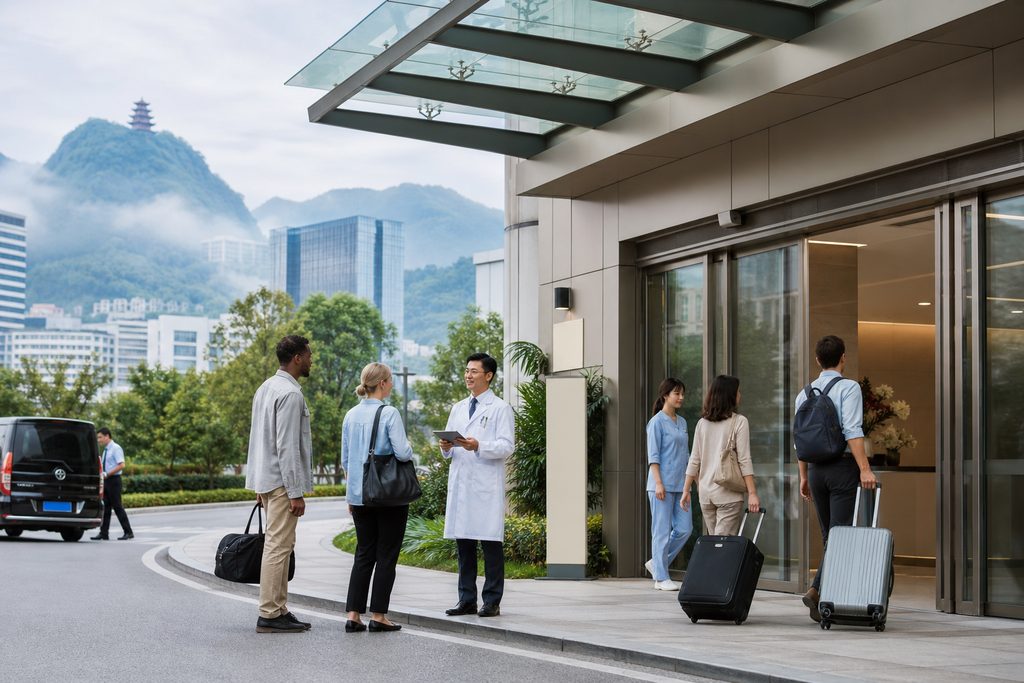
When 42-year-old Michael first heard the diagnosis—a complex aortic root aneurysm requiring precision surgical repair—he had no idea where to start. His cardiologist in Manchester was frank. The surgery was high-risk. The wait in the UK’s public system stretched past seven months. Private options in London quoted him north of £45,000. Michael started searching online. He typed phrases into Google that thousands of international patients type every month. “Best mega-hospital in China for complex surgery.” “West China Hospital international patient price list.” “Medical visa and treatment package Chengdu hospital.” The search results were a mess of fragmented information, unofficial agents, and dead ends. That’s where the real complexity of accessing a world-class institution like West China Hospital begins—and where a structured navigation strategy stops being a luxury and becomes a necessity.
Key Takeaways
- West China Hospital in Chengdu is one of the world’s largest single-site hospitals, with over 4,300 beds and a surgical volume that places it among the global leaders for complex procedures—cardiac surgeries alone exceed 7,000 annually.
- Accessing the hospital as a foreigner requires navigating a distinct international patient pathway; standard public registration channels are not designed for overseas patients and cannot be booked in advance from abroad.
- The cost of heart surgery at West China Hospital Sichuan University typically ranges from $12,000 to $22,000 USD—a fraction of the $120,000+ price tag common in the United States—but the final figure depends entirely on case complexity and the specific department’s international pricing schedule.
- West China Hospital international patient reviews consistently highlight clinical excellence but also underscore a harsh reality: without bilingual logistical support, the sheer scale of the campus and the language barrier can overwhelm even the most prepared traveler.
The Problem: When a Mega-Hospital’s Scale Becomes a Maze
West China Hospital Sichuan University isn’t just a big hospital. It’s a medical city. The main campus in Chengdu’s Wuhou District handles over 20,000 outpatient visits per day. The complex spans multiple towers connected by walkways, with dedicated buildings for cardiology, oncology, neurology, and emergency trauma. For a Mandarin-speaking local, navigating this requires patience. For an English-speaking international patient, it can feel like being dropped into an airport in a country where you don’t recognize the alphabet—with a serious medical condition adding pressure to every interaction.
We’ve seen the pattern repeat. A patient arrives with a confirmed diagnosis from their home country, imaging on a USB drive, and an email thread with a department coordinator who stopped responding three days before the flight. They stand at the wrong registration window. They can’t read the queue number display. They don’t know that the international outpatient clinic operates on a separate scheduling system from the standard public one. The clinical expertise exists inside the building. Getting to it is a different challenge entirely.
That gap between clinical capability and logistical accessibility is precisely what our team exists to close. We don’t perform surgery. We don’t set treatment protocols. We handle the architecture of the journey—so when a patient walks through those doors, they walk straight to the right consultation room with a bilingual companion who knows exactly which elevator to take.
Who We Are
We are China Medical Services, a medical concierge organization connecting international patients with China’s top-tier hospitals. We are not a hospital. We do not provide medical treatment, clinical diagnoses, or therapeutic recommendations. We are your logistical architects—the team that translates medical records, coordinates with hospital international departments, arranges bilingual medical companions, and builds a bridge between your clinical needs and China’s most capable institutions. Our network spans over 340 top-ranked hospitals across 37 cities. West China Hospital is one of the most requested destinations in our portfolio. We know its systems, its scheduling quirks, and the specific documentation its international office requires before confirming a single appointment.
Why West China Hospital Delivers Results for Complex Cases
The hospital’s reputation isn’t built on marketing. It’s built on volume, research output, and clinical outcomes that rival any institution in the world. Ranked consistently in the top tier of China’s Fudan Hospital Rankings (the most authoritative hospital evaluation system in the country), West China Hospital sits in the A++++ category—the highest tier—alongside names like Peking Union Medical College Hospital and Zhongshan Hospital Fudan University. But raw rankings don’t tell the full story. The operational reality matters more.
Clinical Volume That Creates Unmatched Surgical Experience
West China Hospital performs more than 200,000 surgeries annually. That number is hard to contextualize. Compare it to the Mayo Clinic in Rochester, which reports approximately 130,000 surgeries per year. Or Cleveland Clinic, around 90,000. The cardiac surgery department alone at West China completes over 7,000 procedures annually—including complex valve repairs, aortic reconstructions, and coronary artery bypass grafting. A surgeon here may see more rare pathology in a single year than a competent Western surgeon encounters in a decade.
This matters for outcomes. Study after study in the medical literature confirms the volume-outcome relationship in complex surgery. A 2017 analysis in The Lancet examining over 500,000 cardiac surgery patients found that hospitals in the highest-volume quartile had mortality rates 23% lower than those in the lowest. West China Hospital operates in the extreme upper tail of that distribution. For a patient like Michael with an aortic root aneurysm, the surgeon’s hands have done this exact repair hundreds of times—not dozens.
Technology and Efficiency at a Scale Western Hospitals Rarely Match
The hospital’s imaging infrastructure is staggering. The radiology department processes over 4 million studies per year. MRI and CT wait times that stretch weeks in Canada or the UK are often completed within 24-48 hours at West China. The hospital operates hybrid operating rooms equipped with intraoperative CT and MRI, enabling real-time surgical navigation for neurosurgery and complex orthopedic reconstruction. The da Vinci robotic surgery program here is one of the busiest in Asia.
But the real differentiator is the integration. Because the hospital is a single massive entity rather than a loose network of affiliated clinics, the referral pathway from diagnosis to specialist consultation to surgery can compress dramatically. A patient with a suspicious lung nodule can move from CT scan to thoracic surgery consult to operating room within a week—a timeline that would require heroic coordination in most Western systems.
Cost Advantage Without Quality Compromise
Let’s address the obvious question directly. Does lower cost mean lower quality? The structural economics of Chinese healthcare explain why the answer is no. A cardiac bypass graft that costs $120,000 to $150,000 in the United States runs approximately $12,000 to $20,000 at West China Hospital’s international department. The gap isn’t explained by inferior materials or less qualified surgeons. It’s explained by labor economics, hospital efficiency, and a healthcare financing system that doesn’t layer administrative overhead onto every procedure.
Chinese surgeons are salaried hospital employees. The billing doesn’t pass through a maze of insurance networks, coding specialists, and facility fees that inflate American hospital charges. The same St. Jude mechanical heart valve used in Houston is used in Chengdu—at a procurement cost that’s often lower due to regional pricing agreements. The cost of heart surgery at West China Hospital Sichuan University reflects these structural differences, not a discount on quality.
We’ve seen the West China Hospital international patient price list for common procedures. A total hip replacement: $8,000 to $15,000. A complex spinal fusion: $15,000 to $25,000. A Whipple procedure for pancreatic cancer: $18,000 to $28,000. These are international department rates—higher than what a Chinese national pays through the public system, but still a fraction of Western private-pay costs. Patients from the Middle East, Southeast Asia, and increasingly Europe and North America are noticing.
What You Need to Know Before Going Alone
Honesty matters here. We’ve watched independent patients hit walls that could have been avoided with advance preparation. The clinical excellence inside West China Hospital is real. The barriers to accessing it are equally real.
- Public Registration Channels Are Closed to Overseas Patients: The standard outpatient registration system—whether through the hospital’s WeChat mini-program or the on-site kiosks—requires a Chinese national ID number. Foreign passport numbers don’t work. You cannot simply show up and queue for a specialist appointment. The international outpatient clinic operates on a separate track with its own scheduling system, its own fee schedule, and its own documentation requirements. Learning how to make an appointment at West China Hospital for foreigners means understanding this bifurcated system from the start.
- Medical Records Must Be Translated Before Arrival: The international department requires a complete medical history, translated into Mandarin, before confirming any specialist consultation. This isn’t optional. Imaging must be provided in DICOM format on CD or USB. Pathology slides need to be available for re-reading by West China pathologists—they will not rely solely on outside reports. We’ve seen consultations delayed by weeks because a patient arrived with English-only records and no translation.
- Payment Is Prepaid and Insurance Reimbursement Is Retroactive: West China Hospital’s international department requires deposit payment before admission. They do not direct-bill Western insurance companies. The patient pays, receives detailed invoices and medical reports in English (upon request), and then seeks reimbursement from their insurer. This means the patient must have the liquidity to front the full treatment cost. The medical visa and treatment package Chengdu hospital pathway requires proof of sufficient funds as part of the S2 visa application—typically bank statements showing coverage for the estimated treatment cost plus living expenses.
How We Help You Navigate This
These barriers exist for structural reasons. They aren’t designed to exclude international patients—they’re simply the legacy of a system built primarily for China’s domestic population of 1.4 billion. Our role is to bridge that design gap.
Before you travel, we handle the document preparation. Your medical records get professionally translated by medical linguists who understand terminology—not general translators guessing at “troponin” and “stenosis.” We submit the complete package to West China Hospital’s international patient center, confirm the specialist consultation date, and provide you with a written appointment confirmation before you book a flight. The how to make an appointment at West China Hospital for foreigners question resolves through this structured pathway—not through trial and error on Chinese-language apps.
During your treatment, a bilingual medical companion stays with you. This person is not a doctor. They are a trained logistics coordinator who speaks fluent English and Mandarin, knows the hospital layout, handles registration queues, pays deposits at the correct windows, translates doctor-patient conversations in real time, and ensures you understand every medication instruction before leaving the pharmacy. The companion also manages the discharge paperwork—ensuring you receive English-language summaries, imaging copies, and itemized invoices formatted for international insurance submission.
After you return home, we coordinate follow-up. If your surgeon wants a CT scan at six months, we can arrange for that imaging to be reviewed by the same West China team through a remote consultation. The continuity doesn’t break when the plane lands.
For patients considering the best mega-hospital in China for complex surgery, West China Hospital’s combination of surgical volume, specialist depth, and cost structure makes it a compelling option. But the logistical layer is not optional. It’s the price of entry. Our coordination services start from $300 for appointment facilitation, with bilingual companion support from $200 per day. These amounts are separate from hospital charges—they cover the navigation, not the treatment. And any consultation coordination fee is fully credited toward on-the-ground service if you proceed with treatment within 90 days.
Frequently Asked Questions
The international department pricing covers the hospital’s charges: consultation fees, diagnostic imaging, laboratory tests, surgical procedure costs, anesthesia, and inpatient bed charges. It does not include medications dispensed outside the hospital pharmacy, post-discharge rehabilitation, or non-medical expenses like accommodation and meals. Prices are quoted in Chinese Yuan and converted at the prevailing exchange rate. The hospital provides an estimate before admission, but final charges can vary based on actual length of stay and any unexpected clinical needs that arise during treatment.
With complete medical records and a clear diagnosis already established, we typically secure a specialist consultation within 5 to 10 business days of document submission. Surgery scheduling depends on the surgeon’s availability and the urgency of the case. For medically necessary procedures without extreme urgency, a 2 to 4 week timeline from consultation to operating room is realistic. Emergency cases are triaged differently and can move faster. The variable is always the specific department’s surgical queue—cardiac surgery and neurosurgery tend to have tighter schedules than some other specialties.
West China Hospital carries the standard medical liability insurance required for Chinese tertiary hospitals. The international department has protocols for adverse events, including escalation to department heads and, when appropriate, multidisciplinary review. Our team’s role in such a situation is communication: we ensure you and your family understand exactly what happened, what corrective steps are being taken, and what the implications are for your treatment plan. We do not provide legal representation or make clinical decisions. We keep the information flowing clearly so you can make informed choices under pressure.
The reviews available online paint a consistent picture: clinical outcomes are rated highly, communication and logistics are the pain points. This aligns with what we observe. Patients who arrive with bilingual support consistently report better experiences than those who attempt the process independently. The medical care itself is not the variable—it’s the surrounding experience. When reading West China Hospital international patient reviews, pay attention to whether the reviewer had logistical assistance. The difference in tone is striking.
Yes, but the terminology matters. China issues S2 visas for medical treatment purposes, with a maximum stay of 180 days per entry. The hospital provides an invitation letter and treatment confirmation document that supports the visa application. This is not a “package” in the tourism sense—it’s a set of documents that demonstrate a legitimate medical purpose to the Chinese consulate. The visa application also requires proof of accommodation in Chengdu and evidence of sufficient funds. We guide patients through this documentation process as part of our coordination service, but visa issuance decisions rest solely with the Chinese diplomatic mission reviewing the application.
Your Next Step
West China Hospital represents one of the most capable medical institutions on the planet—a place where surgical volume, specialist expertise, and cost structure converge in a way that makes complex treatment accessible to patients who might otherwise face impossible waits or unaffordable bills. The hospital’s clinical outcomes speak for themselves. The logistics of getting there, getting registered, and getting treated are the part that requires a guide.
If you’re researching treatment options at West China Hospital, start with a conversation. Tell us your diagnosis, what documentation you have, and what you’re hoping to achieve. We’ll tell you honestly whether West China is the right fit—and if it is, we’ll map the path from where you are now to the consultation room in Chengdu. No pressure. No hard sell. Just an informed assessment from a team that’s done this before.
For more medical information and treatment options in China, visit chinamedservices.com (China Medical Services).
