Medical Treatment in Nanchang China: Jiangxi Province Hospital Service for International Patients
Key Takeaways
- Jiangxi Province Hospital performs over 2 million outpatient consultations annually, yet its international patient pathway remains largely undiscovered by Westerners, offering access to high-volume specialists without the queues common in major Chinese medical hubs.
- The cost of complex surgery here frequently runs 80-90% below US private-pay prices, but the trade-off is navigating a system with almost no English-language infrastructure on the public side.
- Walking into the public outpatient hall without Mandarin fluency and a local payment method is a recipe for frustration. The hospital’s VIP International Medical Center changes that equation entirely, but it must be coordinated before you travel.
- There is no official “medical tourism package” sold by the public hospital. Any service promising a pre-packaged deal is a third-party broker. The real pathway runs through the hospital’s own international department, which requires a case review before any appointment is confirmed.
The Problem: You Need a High-Volume Specialist, Not a High-Profile Price Tag
What if the specialist you need performs 400 procedures a year, but the one you can afford back home performs 40? That is the math confronting a growing number of patients from Europe, the Middle East, and Southeast Asia. A cardiac bypass in the United States can exceed $120,000. In the United Kingdom, the wait for an orthopedic consult can stretch past 18 weeks on the NHS, and private care in London still runs £15,000 to £25,000 for a hip replacement. These are not abstract figures. They are the reason patients start searching for “Jiangxi Province Hospital international patients cost” at two in the morning.
Jiangxi Province sits inland, southwest of Shanghai. It is not Beijing. It is not Guangzhou. That is precisely the point. The province’s flagship hospital handles a patient volume that rivals any top-tier Western academic medical center, yet its international profile is low. For a patient who prioritizes clinical experience over brand-name prestige, that gap is an opportunity. The surgeons here see pathology that a suburban US hospital might encounter once a month. They see it daily.
Who We Are
We are not a hospital. We do not provide medical treatment, issue prescriptions, or offer clinical diagnoses. Our team functions as your logistical architects for medical treatment in Nanchang China. We bridge the gap between your need for a specific surgical or diagnostic capability and the hospital that can deliver it. We handle case preparation, bilingual medical record translation, appointment coordination through the official hospital international channel, and on-the-ground support. We do not sell access. We coordinate a complex process so you do not have to fight it alone.
Why Jiangxi Province Hospital Deserves a Serious Look
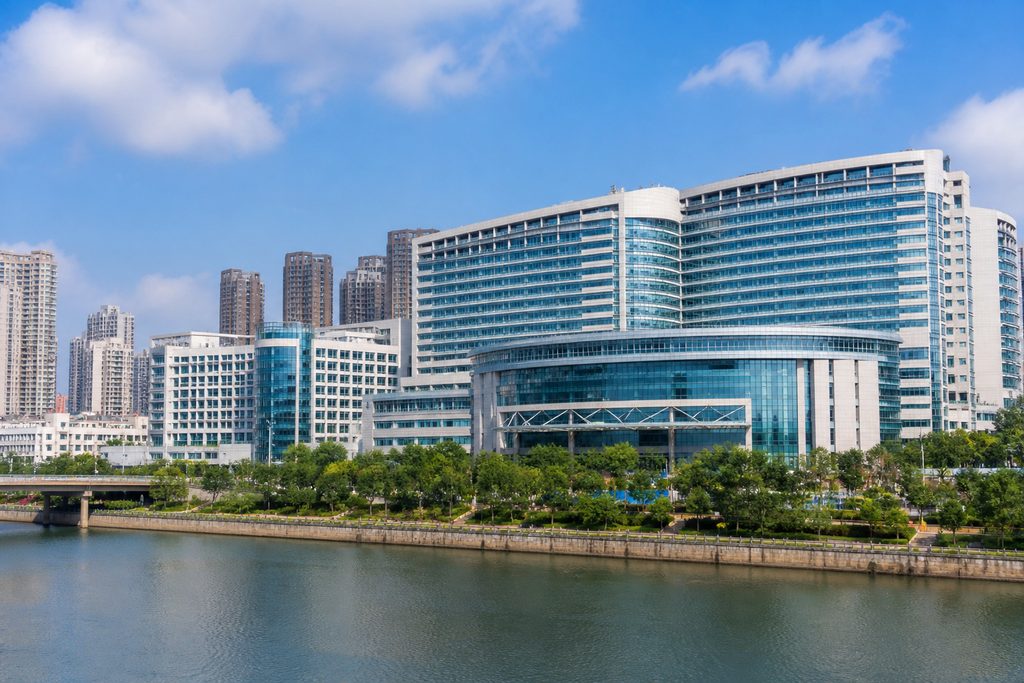
The First Affiliated Hospital of Nanchang University—commonly referred to as Jiangxi Province Hospital—is the province’s largest comprehensive hospital. It holds the highest-tier classification in China’s hospital grading system. Its outpatient volume exceeds 2.7 million visits per year. Surgical volume surpasses 80,000 procedures annually. Those numbers matter because volume drives proficiency, and proficiency drives outcomes.
Clinical Volume That Changes the Risk Calculus
Consider thoracic surgery. A surgeon performing 200 lung cancer resections a year develops an intuitive grasp of anatomical variation that no textbook can teach. Jiangxi Province Hospital’s thoracic surgery department runs at that scale. The gastroenterology department manages a caseload of liver disease and GI cancers that reflects the regional disease burden of central China—high prevalence, late presentation, complex intervention. For a patient with a challenging hepatobiliary diagnosis, being treated where the team sees 500 similar cases a year rather than 50 changes the risk profile of the surgery itself.
And it is not just surgery. The hospital’s cardiology intervention volume places it among the busiest centers in central China. Its neurology department handles acute stroke interventions at a pace that keeps the interventional team sharp. This is the structural advantage of China’s large public hospitals: concentrated clinical exposure.
What Is the Best Hospital in Jiangxi Province for International Patients
There are really two answers, and which one fits depends on what you need. Jiangxi Province Hospital operates a VIP International Medical Center that serves as the designated pathway for non-Chinese speakers. This is not a separate building. It is a dedicated service layer within the main hospital complex. The center provides English-speaking coordination, priority scheduling for imaging and lab work, and access to senior attending physicians. Consultation fees here run higher than the public walk-in rate—expect $100 to $300 for a specialist consult—but the alternative is navigating the general outpatient hall in Mandarin with a translation app, which is not a realistic plan for a serious medical visit.
The second option is the Second Affiliated Hospital of Nanchang University, also a top-tier facility with strong programs in oncology and cardiovascular medicine. It has a smaller international service footprint but can be coordinated for patients with specific department needs. Between the two, Jiangxi Province Hospital’s international center is the more established pathway for foreigners.
Cost Reality: Jiangxi Province Hospital International Patients Cost Breakdown
Let us put numbers on the table. These figures come from actual billing data for international patients treated through the VIP center pathway, and they vary by case complexity and length of stay.
| Procedure | Jiangxi Province Hospital (USD) | US Average (USD) | UK Private (USD) |
|---|---|---|---|
| Coronary Artery Bypass Graft | $14,000 – $22,000 | $120,000+ | $35,000 – $50,000 |
| Total Hip Replacement | $8,000 – $14,000 | $40,000 – $60,000 | $18,000 – $28,000 |
| Lung Cancer Resection (Lobectomy) | $10,000 – $18,000 | $55,000 – $80,000 | $30,000 – $45,000 |
| Gastric Cancer Surgery (Gastrectomy) | $9,000 – $16,000 | $60,000 – $100,000 | $35,000 – $55,000 |
| Comprehensive Health Screening (Executive) | $500 – $1,500 | $2,500 – $5,000 | $2,000 – $4,000 |
These are hospital-side charges. They do not include our coordination fee, travel, accommodation, or post-operative rehabilitation. But even with those costs added, the total spend typically lands at one-fifth to one-tenth of the US private-pay equivalent. The structural reasons are straightforward: lower labor costs, higher patient throughput, and a hospital financing model that is not built on maximizing per-procedure reimbursement.
How to Get Medical Treatment in Nanchang China as a Foreigner
The pathway is not complicated, but it is rigid. You cannot book surgery at Jiangxi Province Hospital China by sending an email to a general inquiries address and expecting a confirmation. The hospital requires a face-to-face consultation before any surgical scheduling occurs. This is non-negotiable. The sequence works like this.
First, your medical records must be translated into Chinese and submitted to the international center for a preliminary review. A department head or senior attending will assess whether your case falls within their scope and whether they are willing to accept it. This step takes three to seven business days. If the answer is yes, you receive an invitation letter that supports your visa application.
Second, you apply for an S2 visa at your nearest Chinese embassy or consulate. The S2 is the correct category for short-term private visits, including medical treatment. Your accompanying family member applies for the same S2. Do not let anyone tell you to apply for an M visa. M is for commercial trade. It is irrelevant to medical travel, and using it for healthcare can create problems at the border.
Third, you travel to Nanchang. On your first hospital visit, you meet the specialist. They examine you, review your imaging, and confirm the treatment plan. Surgery is then scheduled, typically within one to two weeks depending on bed availability and the surgeon’s operating room allocation. This is not a “fly in Monday, surgery Tuesday” arrangement. Plan for a minimum two-week stay for a straightforward surgical case, and longer if post-operative monitoring or rehabilitation is required.
Medical Tourism Packages Nanchang China: What Actually Exists
Let us be direct. Jiangxi Province Hospital does not sell a “medical tourism package.” If you see a website advertising an all-inclusive surgery-plus-hotel-plus-tour bundle branded with the hospital’s name, that is a third-party operator. Some are legitimate. Some are not. The hospital itself provides medical services and inpatient accommodation. Everything else—airport transfer, hotel for family members, local transportation, translation, post-discharge care coordination—must be arranged separately, either by you or by a service like ours.
That said, a well-constructed visit can absolutely include elements that feel like a coordinated package. Nanchang is a city of over six million people with a rich history. The Tengwang Pavilion, one of China’s most famous ancient towers, sits on the Gan River. The city’s food culture is distinct from the better-known Cantonese or Sichuan traditions—spicier, earthier, built around freshwater fish and pickled vegetables. For a patient traveling with family, the city offers genuine cultural interest during the pre-operative waiting period and post-operative recovery. But these are not bundled into a hospital product. They are elements you or your coordinator weave together.
Best Hospitals in Nanchang for Foreigners: A Practical Comparison
If you are evaluating options, here is how the landscape breaks down for an English-speaking patient who needs serious clinical care.
Jiangxi Province Hospital’s VIP International Medical Center is the clear first choice for complex surgery, cardiology intervention, and oncology. It has the deepest specialist bench and the most established international service protocol. The trade-off is that the international center is not a separate boutique hospital. It operates within a massive public institution. The corridors are busy. The administrative pace is brisk. This is not a spa-like experience.
The Second Affiliated Hospital of Nanchang University offers strong programs in cardiovascular medicine and oncology with a smaller international service footprint. It can work well for patients who have a specific department recommendation and do not need the broader coordination infrastructure.
Nanchang does not have a large private international hospital in the style of a United Family or Jiahui. Those brands operate in Beijing, Shanghai, Guangzhou, and a handful of other major cities, but they have not yet established a presence in Jiangxi. For a patient who insists on a Western-style private hospital with JCI accreditation and direct insurance billing, the nearest options are in Shanghai or Guangzhou. That means factoring in a connecting flight or high-speed train journey. For patients who prioritize the hospital’s clinical volume and cost advantage over luxury amenities, Jiangxi Province Hospital is the right node on the map. For those who prioritize a familiar care environment, we often recommend looking at our listings of private international hospitals in larger cities.
What You Need to Know Before Going Alone
The barriers to independent medical travel in Nanchang are real. They are not insurmountable, but underestimating them leads to wasted time, money, and occasionally worse.
- Language Infrastructure: Outside the VIP International Medical Center, essentially zero signage, forms, or verbal communication occurs in English. The public registration kiosks are Mandarin-only. The pharmacy instructions are Mandarin-only. Even within the international center, English proficiency varies among nursing staff. You need a bilingual companion who can translate clinical terminology accurately—not just a family friend who speaks conversational Mandarin.
- Payment Systems: The hospital accepts UnionPay, WeChat Pay, Alipay, and cash in RMB. International credit cards are not reliably accepted at the hospital cashier. WeChat Pay and Alipay now support foreign card linking, but the setup process is not trivial and sometimes fails for non-Chinese phone numbers. You need a payment plan that works on day one, not after three days of troubleshooting.
- Medical Records: The hospital requires translated, notarized copies of key records before the case review. A Google Translate export of your pathology report will not be accepted. The translation must be medically accurate and formatted to Chinese clinical documentation standards. This is not a task for a general translation service.
- Post-Discharge Gap: Once you leave the hospital, you are in a hotel room in a Chinese city where you do not speak the language, possibly with surgical drains still in place. The hospital does not provide home nursing. You need a plan for wound care, medication management, and a direct line to someone who can communicate with your surgeon if a complication arises.
How We Help You Navigate This
These barriers exist for structural reasons, not because the hospital is indifferent. A public hospital serving 2.7 million outpatient visits a year is optimized for volume and efficiency in its local language. The international patient pathway is a thin layer on top of that massive operation. Our job is to make that layer thick enough to support you.
Before you travel, we handle case preparation. We collect your records, arrange certified medical translation, and submit the package to the international center for formal review. We do not guess whether your case will be accepted. We get a written response from the department.
During your stay, our bilingual medical companion meets you at the hospital entrance and stays with you through every step: registration, vital signs, consultation, imaging, lab work, pharmacy, and discharge. This is not a tour guide service. Our companions understand medical terminology in both languages and have navigated this specific hospital’s workflows hundreds of times. They know which window to approach, which form to fill, and how to resolve the inevitable administrative snags that arise in any large hospital.
After discharge, we coordinate wound care supplies, arrange follow-up appointments, and maintain a communication channel with the hospital. If a post-operative concern arises at 10 PM, you are not alone with a translation app and a taxi driver who does not understand your destination.
Our coordination fee structure is transparent. For hospital appointment coordination, pricing starts from $300. Bilingual medical companion service starts from $200 per day. These are separate from hospital charges, and we provide a clear breakdown before any commitment. Any remote consultation fee you pay—such as a written second opinion at $300 to $500 or a video consultation at $500 to $800—is fully credited toward on-the-ground coordination if you proceed to in-person treatment within 90 days. We structure it this way because we believe the decision to travel for surgery should be informed by real clinical feedback, not a marketing brochure.
Frequently Asked Questions
No. The hospital requires an in-person consultation before any surgical scheduling. This is standard policy across Chinese public hospitals. What you can do before travel is submit your records for a preliminary case review, receive a confirmation that the department will accept your case, and obtain the invitation letter for your visa. That gives you a firm basis for travel. But the surgery date itself is set only after the specialist examines you in person.
Jiangxi Province Hospital operates a 24-hour emergency department. If a post-operative emergency arises, you go directly to the emergency department, and our companion coordinates communication with both the ER team and your original surgeon. For non-emergency concerns, the international center provides a contact channel during business hours. We also maintain a backup communication line for our clients. The limitation to understand is that after-hours English support at the hospital is thin. Having a coordinator who can be reached by phone makes a material difference.
For the procedures and specialties where Jiangxi Province Hospital runs high volume—cardiothoracic surgery, gastroenterology, oncology surgery, interventional cardiology—the clinical outcomes are comparable to international benchmarks. The surgeons train in the same global literature and many have fellowship experience abroad. The difference is in the care environment: nursing ratios are lower than in a US or European private hospital, family involvement in inpatient care is expected, and the administrative experience is less polished. If you define quality strictly by surgical outcome, the hospital performs. If your definition includes hotel-like amenities and hand-holding, you will notice the gap.
Plan for a minimum of two weeks from arrival to discharge for a straightforward procedure like a laparoscopic cholecystectomy or a single-joint replacement. For major surgery—cardiac, cancer resection, multi-level spine—plan for three to four weeks. Add another week if you want to do any pre-operative sightseeing or if your surgeon recommends a period of rest before flying. Long-haul air travel immediately after major surgery carries its own risks, and your surgeon may require you to remain in Nanchang for a post-operative check before clearing you to fly.
Then we tell you that. Our case review process exists precisely to determine fit. If your condition requires a subspecialty that is stronger at a different hospital—for example, certain pediatric cardiac surgeries are concentrated in Shanghai and Beijing—we will recommend that hospital instead. Our database covers over 340 top-ranked hospitals across 37 cities. Nanchang is one node in that network, not the only answer. We have no incentive to place a patient in a hospital that is not the right clinical match.
Your Next Step
Medical treatment in Nanchang China is not the right answer for every patient. But for someone who needs a high-volume surgical team, who can accept a clinical environment that prioritizes function over form, and who wants to pay a fraction of Western private rates without sacrificing outcome quality, Jiangxi Province Hospital’s international pathway is a serious option. The hospital has the volume, the specialist depth, and a working—if understated—international service channel. What it does not have is a user-friendly front door for the English-speaking world. That is the gap we fill. If you want to understand whether your specific case fits, reach out for a free consultation. We will review your situation honestly and tell you what is possible. No pressure. No pitch. Just the facts.
For more medical information and treatment options in China, visit chinamedservices.com (China Medical Services).
