PUMCH Rare Disease Diagnosis: International Patient Guide to Peking Union Medical College Hospital
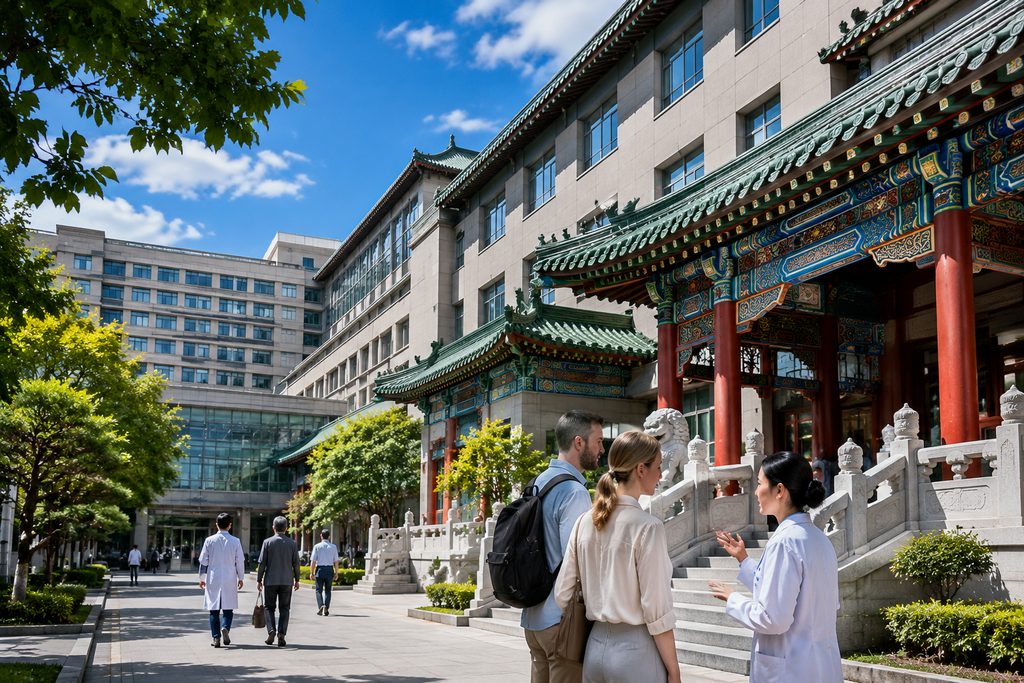
What if the diagnosis you have been chasing for years—the one that has eluded specialists in three countries and cost you a small fortune—could be reached in a single week of concentrated, coordinated investigation?
We see this scenario unfold regularly.
A patient arrives in Beijing carrying a binder full of scattered test results. They have been told it is autoimmune. Then neurological. Then psychosomatic. They are exhausted, not just by their symptoms, but by the diagnostic odyssey itself. And then, within days at Peking Union Medical College Hospital (PUMCH), a multidisciplinary team convenes. They re-examine the slides. They run a genomic panel that was never ordered before. A pattern emerges.
That is not a promise. It is what this institution was built to do.
Key Takeaways
- PUMCH diagnoses approximately 80% of the rare disease cases that reach its specialized multidisciplinary clinics, a figure that dwarfs the diagnostic yield of most single-center programs globally.
- The hospital’s Rare Disease Department coordinates over 40 clinical specialties under one roof, eliminating the months-long referral ping-pong that fragments care elsewhere.
- International patients cannot simply walk in and book a rare disease workup. The pathway requires pre-arranged specialist coordination, translated medical records, and the correct visa category—barriers we handle daily.
- A comprehensive rare disease diagnostic evaluation at PUMCH typically costs between $5,000 and $15,000 USD, a fraction of comparable multi-specialty investigations in the US or Europe.
The Problem: A Diagnostic Odyssey Without a Compass
Rare diseases are not rare in aggregate. Approximately 1 in 10 people worldwide lives with a rare disease. That is roughly 400 million individuals. For most, the journey to a correct diagnosis takes 5 to 7 years. Some never get one.
The math is brutal. A patient sees an average of eight physicians before a rare disease is identified. Two to three of those diagnoses will be wrong. The cost of this wandering—financially, emotionally, and physiologically—is staggering. A 2019 study in the Journal of Rare Diseases estimated the average annual medical cost for an undiagnosed rare disease patient in the United States at over $20,000, often spent on symptomatic treatments that miss the root cause entirely.
Why does this happen? Specialists work in silos. A rheumatologist sees rheumatologic patterns. A neurologist sees neurologic ones. But many rare diseases—think mitochondrial disorders, lysosomal storage diseases, or atypical vasculitides—cross every boundary. They demand a room full of experts looking at the same data simultaneously. That room is hard to find.
Who We Are
We are not a hospital. We do not employ doctors, offer clinical diagnoses, or provide medical treatment. Our team at China Medical Services functions as your logistical architects for accessing care at China’s most elite medical institutions, including PUMCH. We translate and structure your medical history for Chinese specialists. We coordinate the appointments across departments that a rare disease workup demands. We handle the visa guidance, the on-ground bilingual support, and the labyrinthine hospital navigation that would otherwise be impossible without Mandarin fluency. We bridge the gap between you and the diagnostic expertise you need.
Why PUMCH Delivers Results for the Undiagnosed
Peking Union Medical College Hospital occupies a singular position in Chinese medicine. It is not simply a large hospital. It is the national referral center for complex and undiagnosed disease. The Chinese government designated PUMCH as the lead institution for the National Rare Disease Diagnosis and Treatment Network, a system linking over 300 hospitals across the country. When local hospitals hit a wall, the case comes here.
Clinical Volume That Reshapes Clinical Intuition
Pattern recognition is the beating heart of rare disease diagnosis. And pattern recognition is a function of volume. PUMCH’s rheumatology department, for example, manages over 150,000 outpatient visits annually. The neurology department sees a similarly staggering load. A PUMCH specialist encounters more atypical presentations in a single year than many Western specialists see in a decade.
That volume translates into something tangible. The hospital has published the first or definitive clinical descriptions for dozens of rare diseases identified in the Chinese population. Their clinicians do not just read about unusual presentations. They write the literature.
A Structural Commitment to Multidisciplinary Diagnosis
Most hospitals claim to offer multidisciplinary care. What they usually mean is that a patient can be referred from one specialist to another, with weeks or months between appointments. PUMCH operates differently for rare disease. The hospital’s Rare Disease Diagnosis and Treatment Center physically convenes specialists from multiple departments in a single session. A patient with an undiagnosed multisystem disorder might be seen simultaneously by a rheumatologist, a neurologist, a geneticist, a dermatologist, and a pulmonologist.
All of them review the same history. All of them examine the same patient. The discussion happens in real time. This is not a luxury. For many rare diseases, it is the only reliable way to connect the dots.
Genomic Infrastructure at Scale
Rare disease diagnosis has become inseparable from genomic sequencing. PUMCH houses one of China’s most advanced clinical genomics centers. Whole-exome sequencing and whole-genome sequencing are integrated into the diagnostic workflow, not outsourced to a third-party lab with a six-week turnaround. Results are interpreted by in-house clinical geneticists who participate directly in the multidisciplinary discussions.
This integration matters. A raw genetic variant is meaningless without clinical correlation. At PUMCH, the geneticist who interprets the variant sits in the same room as the physician who examined the patient. That loop closes fast.
What Does Rare Disease Diagnosis Cost Beijing Patients at PUMCH?
Let us address the question directly. A comprehensive rare disease diagnostic evaluation at PUMCH—including specialist consultations, advanced imaging, laboratory panels, and genomic sequencing—typically falls between $5,000 and $15,000 USD. The wide range reflects the reality of rare disease: some workups require only targeted testing and a few key consultations, while others demand whole-genome sequencing with family studies and extensive biochemical assays.
For comparison, a similar multi-specialty diagnostic odyssey in the United States can easily exceed $50,000 to $100,000 when pursued across multiple institutions. Even within a single US academic center, whole-exome sequencing alone often carries a list price of $5,000 to $8,000 before specialist interpretation fees. At PUMCH, genomic sequencing costs are a fraction of that, and the interpretation is embedded within the clinical consultation structure.
Our team has seen international patients arrive at PUMCH after spending over $80,000 on inconclusive workups in their home countries. The diagnostic answer, when it finally came, cost them less than $10,000 here. That is not a guarantee of outcome. It is a statement about the economics of concentrated expertise.
If you are evaluating your options, our Beijing hospital guide provides a broader overview of the city’s medical resources for international patients.
How Accurate Is Rare Disease Diagnosis in China at a Center Like PUMCH?
The question behind the question is usually: can I trust the result?
PUMCH reports a diagnostic yield of approximately 80% for the complex cases that reach its rare disease center. This means that four out of five patients who have eluded diagnosis elsewhere receive a definitive answer here. That number is consistent with, and in some cohorts exceeds, the performance of top-tier rare disease centers in Europe and North America.
Accuracy is not magic. It is the product of three factors working together: the sheer volume of unusual cases that trains clinical intuition, the structural commitment to real-time multidisciplinary review, and the integration of advanced genomic tools into the diagnostic pathway. PUMCH has all three.
The hospital also participates in international rare disease networks and contributes data to global registries. Their diagnostic criteria align with international standards. When they make a rare disease diagnosis, they are speaking the same clinical language as specialists at the Mayo Clinic or Charité in Berlin.
Is PUMCH the Best Hospital for Undiagnosed Rare Disease Beijing Has to Offer?
For undiagnosed rare disease, the answer is unequivocally yes. No other hospital in China carries the same national mandate for complex diagnosis. PUMCH consistently ranks at the very top of China’s hospital evaluations. The Fudan University hospital rankings, the most authoritative in China, place PUMCH in the highest tier (A++++) for overall hospital quality. Its specialist departments—rheumatology, endocrinology, neurology, and many others—regularly appear among the top-ranked programs nationally.
But rankings tell only part of the story. The more relevant fact is structural. PUMCH was purpose-built as a comprehensive diagnostic institution. Its founding mission, dating back to its establishment by the Rockefeller Foundation in 1921, was to integrate clinical medicine, research, and education under one roof. That DNA persists. The hospital thinks in terms of whole patients, not isolated organ systems.
For a patient with an undiagnosed condition affecting multiple systems, that institutional mindset is not a nice-to-have. It is the entire ballgame.
How to Book an Appointment at Peking Union Medical College Hospital for Rare Disease
This is where the reality of Chinese healthcare hits hard. You cannot simply email PUMCH and book a rare disease consultation. The hospital’s public outpatient clinics operate on a same-day registration system. Patients line up early in the morning, often in massive crowds, to secure a limited number of daily slots. For a complex rare disease workup requiring multiple specialists, this system is essentially non-navigable for anyone without Mandarin fluency and deep familiarity with the hospital’s internal processes.
The pathway for international patients runs through the hospital’s International Medical Services department. This is a separate channel with English-speaking coordination, but it still requires structured medical records, appropriate specialist identification, and sequenced appointments. You cannot call the international department and say, “I need a rare disease workup.” You need to know which specialists to see, in what order, and what pre-requisite testing must be completed before those consultations.
This is precisely what we handle. Our team identifies the appropriate specialists based on your medical history, translates and formats your records to meet PUMCH’s requirements, and coordinates the appointment sequence so that you arrive in Beijing with a clear diagnostic plan already in motion. For more details on how this works, visit our patient coordination service page.
Medical Tourism Rare Disease Treatment China Packages: What Is Realistic?
Some international agencies market “rare disease treatment packages” for China. Be skeptical. A genuine rare disease diagnostic process cannot be pre-packaged. It is investigative by nature. The specialists do not know what tests you need until they review your history and examine you. A package that promises a fixed set of consultations and tests for a fixed price is, by definition, not a real diagnostic process.
What does exist is a coordinated diagnostic pathway with transparent, per-service pricing. You pay for the consultations you actually need, the tests that are clinically indicated, and the coordination services required to make the process run. At China Medical Services, our coordination fees are separate from hospital charges and are always quoted upfront. A typical coordination engagement for a PUMCH rare disease workup starts from $800 for specialist appointment coordination, with comprehensive end-to-end support available from $5,000 depending on complexity and duration.
Any coordination fees you pay to us are credited in full toward on-the-ground services if you proceed to treatment in China within 90 days. That means your diagnostic coordination investment converts directly into treatment support. It is not an added cost. It is an advance on the next phase of your care.
What You Need to Know Before Going Alone
We have seen patients attempt to navigate PUMCH independently. A few succeed. Most do not. The barriers are structural, not personal.
- Visa Requirements: Medical treatment in China requires an S2 visa with a clear treatment purpose annotation. This is not a tourist visa. You need an invitation letter from the hospital or a coordinating entity, documentation of your medical situation, and proof of sufficient funds. The S2 visa application is specific and unforgiving. Applying under the wrong category—such as an M business visa—will result in rejection. We guide every patient through the exact documentation package required.
- Payment Systems: PUMCH’s international department accepts payment in Chinese yuan, typically via UnionPay cards, major international credit cards, or wire transfer. But the hospital operates on a pre-payment model. You deposit funds before services are rendered and settle the balance upon discharge. International wire transfers can take days to clear. Without local payment coordination, you can find yourself sitting in Beijing with a scheduled appointment and no cleared funds to pay for it.
- Medical Records and Translation: PUMCH specialists need your medical history in a format they can rapidly absorb. That means structured, translated summaries—not raw Google Translate outputs of hundreds of pages. Critical details get lost in poor translation. A mistranslated medication name or lab value can send a diagnostic workup in the wrong direction entirely. Our team includes medically trained translators who understand what Chinese specialists need to see and how they expect to see it.
How We Help You Navigate This
These barriers exist for structural reasons. They are not designed to exclude international patients. They are simply the byproducts of a healthcare system built for a domestic population of 1.4 billion people. Our job is to bridge that gap.
Before you travel, we collect and translate your complete medical history. We identify the PUMCH specialists whose expertise matches your clinical picture. We coordinate the appointment sequence so that your time in Beijing is maximally productive. We handle the visa documentation.
During your stay, a bilingual medical companion accompanies you to every appointment. This person manages registration, payment, and navigation within the hospital’s sprawling campus. They ensure that questions get asked and answers get understood. They are your voice in a system where language is otherwise an impenetrable wall.
After your diagnosis, if treatment is indicated and you choose to pursue it in China, we coordinate the transition from diagnostic workup to therapeutic care. That might mean surgical scheduling, ongoing medication management, or rehabilitation support. The coordination fee you paid for the diagnostic phase is credited toward this next stage.
We are not selling access to PUMCH. We are selling the logistical competence required to use the access that PUMCH’s international department already provides. The hospital wants to help international rare disease patients. They simply do not have the internal bandwidth to hold every patient’s hand through the pre-arrival, cross-cultural, and cross-linguistic complexities. That is our role.
Frequently Asked Questions
PUMCH is the designated national lead for China’s Rare Disease Diagnosis and Treatment Network. It has a dedicated Rare Disease Department that coordinates over 40 specialties for multidisciplinary diagnosis. Most Chinese hospitals, even excellent ones, lack this centralized rare disease infrastructure. Cases that baffle provincial hospitals are formally referred here.
A focused inpatient workup typically takes 5 to 10 days, depending on the complexity of the case and the tests required. Some genomic analyses may extend the timeline if they require family member samples or specialized biochemical assays. We advise patients to plan for at least two weeks in Beijing to allow for the full diagnostic process and a conclusive discussion of results.
PUMCH’s international department provides detailed invoices and medical documentation suitable for insurance reimbursement. However, the hospital operates on a pre-payment model—you pay upfront and seek reimbursement from your insurer afterward. We recommend contacting your insurance provider before travel to confirm coverage for international diagnostic services and to understand their requirements for claim submission.
This happens. Some rare diseases have no established treatment anywhere in the world. Others may require therapies only available in specific countries or through clinical trials. If your diagnosis falls into this category, the PUMCH team will provide a comprehensive medical summary and treatment recommendations. We can then help coordinate a transition back to your home country’s healthcare system or to another international center, armed with a definitive diagnosis that gives you a clear path forward.
The strongest candidates are patients who have undergone extensive workups in their home countries without reaching a definitive diagnosis, particularly those with multisystem involvement that suggests a genetic or complex immunological basis. Patients with a known rare disease seeking treatment are also appropriate, though the pathway differs from a diagnostic workup. The first step is a detailed review of your medical history, which our team conducts at no charge to help determine whether PUMCH is the right destination for your specific situation.
Your Next Step
A rare disease diagnosis is not a transaction. It is a process of disciplined investigation. PUMCH offers one of the world’s most concentrated environments for that investigation—high volume, multidisciplinary, genomically integrated, and structurally committed to solving the unsolved. The barriers to accessing it are real but entirely navigable with the right support. If you have spent years chasing an answer, Beijing may be where the chase ends.
To discuss whether PUMCH is the right destination for your diagnostic needs, reach out to our team for a free, no-obligation consultation at our patient services page. We will review your situation honestly and tell you whether this pathway makes sense for you.
For more medical information and treatment options in China, visit chinamedservices.com (China Medical Services).
