Colonoscopy Cost in China vs at Home: What Patients Actually Pay
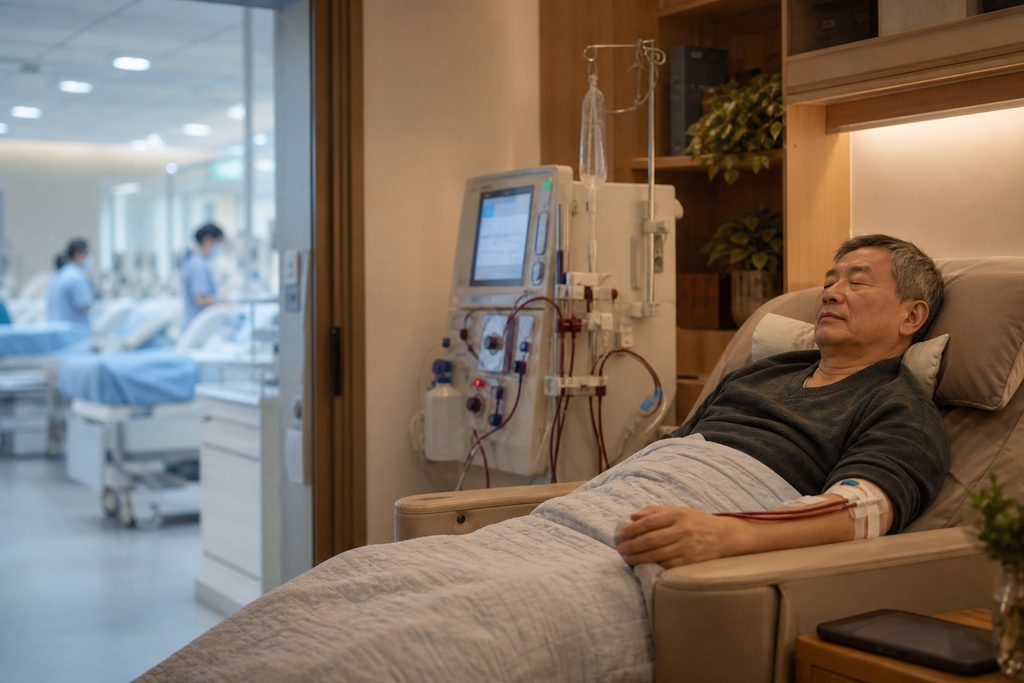
When 58-year-old David from Portland received his first positive FIT test result, his gastroenterologist handed him a referral and a phone number. The scheduler’s news was worse than the test: the next available screening colonoscopy was 4.5 months out. His insurance deductible stood at $3,200, and the clinic’s estimated patient responsibility ranged from $1,800 to $3,500 depending on whether they removed a polyp. David started searching for alternatives that same evening, and within an hour he had landed on a question thousands of Americans now ask: what does a colonoscopy cost in China, and is it worth the flight?
That question deserves a real answer, not a sales pitch. Here is what the numbers actually look like.
Key Takeaways
- A diagnostic colonoscopy in China’s top-tier public hospitals typically runs $250–$600 total, versus $1,500–$6,000 in the US depending on insurance and polyp removal.
- China’s high-volume gastroenterology departments perform screening and diagnostic colonoscopy at a scale that keeps both wait times and prices low — often days, not months.
- The real friction is not cost or quality. It is logistics: public hospital registration, Chinese-language forms, and same-day scheduling rules that assume you live there.
- Anyone considering this should understand the visa category, the difference between public and international-department pricing, and what follow-up looks like after returning home.
The Problem: A Screening Test That Costs More Than a Vacation
Colorectal cancer is the second-leading cause of cancer death in the United States, and screening catches it early enough to cure in the large majority of cases. Yet roughly 1 in 3 eligible American adults remains unscreened, according to CDC surveillance data. Cost and access are two of the biggest reasons.
The American Cancer Society and independent cost surveys consistently place a screening colonoscopy without polypectomy somewhere between $1,250 and $3,000 for patients with insurance, and considerably higher for the uninsured or those on high-deductible plans. Add a polyp removal or biopsy and the billed amount can climb past $6,000. A 2023 study in JAMA Internal Medicine found that even among commercially insured patients, surprise out-of-pocket costs for preventive colonoscopy remained common despite the Affordable Care Act’s no-cost-sharing rule for screening.
Wait times compound the problem. In many US metropolitan areas, routine screening appointments are booked 2 to 6 months out. For someone with symptoms — rectal bleeding, unexplained weight loss, a positive stool test — that is an uncomfortable window.
Why China Changes the Equation on Colonoscopy Cost
The price gap is real, but it is not magic. It comes from three structural realities that are worth understanding before you book a flight.
Volume That Most Western Centers Cannot Match
China’s leading tertiary hospitals — the ones ranked in the Fudan Hospital Rankings’ top tiers — run endoscopy units that perform hundreds of procedures per week. A single large gastroenterology department in Shanghai or Beijing may handle more colonoscopies in a month than a mid-sized US hospital does in a year. That volume drives down per-procedure overhead and shortens scheduling queues dramatically.
For context, the Fudan ranking places 100 hospitals in its top tier out of more than 35,000 hospitals nationwide — the top 5% by reputation and clinical output. These are the institutions where the pricing below applies.
Cost Structure, Not Cost Cutting
A colonoscopy is a procedure with modest equipment needs: an endoscope, sedation, a pathology lab, and a trained physician. In China, physician salaries, facility overhead, and consumable costs are all substantially lower than in the US, while the endoscopes themselves come from the same global manufacturers — Olympus, Fujifilm, Pentax. The scope in a Shanghai hospital is the same scope in a Boston hospital. What differs is what it costs to run the room.
Transparent Pricing and No Insurance Middlemen
Most international patients in China pay out of pocket, often at a hospital’s international department or VIP channel. That channel prices at roughly 1.5 to 2 times the standard public rate but still lands far below US cash prices — and it includes English-speaking staff, shorter waits, and direct scheduling.
Colonoscopy Cost in China vs the US, the UK, and Singapore: A Real Comparison
Here is how the numbers stack up for a straightforward diagnostic colonoscopy without polypectomy, based on publicly listed hospital rates and published cost surveys. Prices vary by hospital and case complexity, and any polyp removal or biopsy adds to the total.
| Location | Typical Total Cost (USD) | Typical Wait Time |
|---|---|---|
| China — top public hospital, standard channel | $250–$450 | Days to 2 weeks |
| China — international/VIP department | $400–$900 | Days to 1 week |
| United States — insured, in-network | $1,500–$3,500 | 2–6 months |
| United States — uninsured cash price | $2,500–$6,000 | Varies widely |
| United Kingdom — private | £1,500–£2,800 (~$1,900–$3,500) | 2–8 weeks |
| Singapore — private hospital | $1,200–$2,500 | 1–3 weeks |
Even after adding a round-trip flight ($700–$1,400 from the US West Coast) and a few nights of hotel, a patient paying cash in the US can come out ahead by more than a thousand dollars — and skip a four-month wait. That math changes if your insurance covers the procedure at low out-of-pocket cost, which is why the decision is genuinely personal.
Is Colonoscopy Safe in China? What the Evidence Shows
This is the question that stops most people cold, and it deserves a direct answer.
Colonoscopy safety tracks two things: operator skill and endoscope quality. China’s top-tier hospitals use the same Olympus and Fujifilm platforms found in Western endoscopy suites, with the same automated disinfection and reprocessing standards. The Fudan-ranked hospitals are accredited teaching institutions that train the country’s gastroenterologists and publish in the same international journals their Western peers read.
Perforation rates for diagnostic colonoscopy are reported in the range of 1 in 1,000 to 1 in 2,000 across major international series, and there is no evidence that high-volume Chinese centers perform worse than this benchmark. Bleeding after polypectomy, sedation reactions, and inadequate bowel prep are the other common complications, and all are managed with the same protocols used elsewhere.
Two honest caveats. First, not every Chinese hospital meets this bar — the quality gap between a top-tier tertiary hospital and a small local clinic is wide, and choosing the right institution matters enormously. Second, communication is a real risk factor. If you cannot describe your symptoms clearly or understand consent forms, you are accepting a safety compromise. That is a fixable problem, but it must be fixed deliberately.
How to Book a Colonoscopy in China as a Foreign Patient
Here is the sequence that actually works, based on how public hospitals operate.
Start with your records. Gather your FIT or Cologuard result, any prior colonoscopy reports, imaging, medication list, and a brief history in English. A Chinese gastroenterologist can review these remotely and confirm whether the procedure is appropriate — sometimes it is not, and you will be told so.
Next comes appointment coordination. Standard public hospital outpatient registration in China is same-day and walk-in; you cannot book a routine outpatient slot from overseas weeks in advance. The workaround is the hospital’s international department or VIP channel, which does accept advance scheduling and provides English-language support. That is the path most foreign patients take, and it prices at the 1.5–2x premium noted earlier.
Then the procedure itself. Bowel preparation instructions will be given in advance — typically a low-fiber diet for 1–2 days followed by a split-dose polyethylene glycol solution. The colonoscopy itself takes 20–40 minutes under sedation, and you will be observed for 1–2 hours afterward. If polyps are found, they are usually removed during the same session and sent for pathology, with results back in 3–7 days.
Total time on the ground: 3 to 5 days for a straightforward case. That is a real trip, not a day visit, and it should be planned as one.
What a Colonoscopy Medical Tourism Package in China Should and Should Not Include
The phrase “medical tourism package” gets used loosely. Here is what a legitimate arrangement covers and what it should never promise.
What it should include: hospital selection matched to your case, appointment coordination through the international department, a bilingual medical companion to handle registration, queuing, payment, and translation on procedure day, and help with visa documentation and local logistics. A companion service typically runs from $300 per day for a half or full day of hands-on support.
What it should never promise: a guaranteed appointment with a specific named professor, a guaranteed procedure date before your records have been reviewed, or any clinical outcome. Reputable coordinators work through official hospital channels and refund the coordination fee if the appointment cannot be secured.
Be cautious with any provider that describes its fee as paying for “access” or “priority” to a hospital. That framing suggests something other than standard scheduling, and it is not how legitimate medical coordination works.
Practical Considerations Before You Fly
Visa. Foreign patients traveling to China for medical treatment apply for the S2 visa, which covers short-stay visits for medical treatment and private affairs. Accompanying family members apply for S2 as well. Stays exceeding 180 days require the S1 category instead. Requirements shift, so confirm current documentation with the nearest Chinese embassy or consulate — and note that the M visa is for commercial and trade activity, not medical care.
Payment. Public hospitals require prepayment for international-department services; you settle the bill before or at the time of service. International credit cards are accepted at major hospitals’ international departments, though some smaller facilities are cash or domestic-card only. Private international hospitals in China often bill insurance directly.
Insurance and reimbursement. Most US insurers will not reimburse elective care abroad, and Medicare generally does not cover treatment outside the US. Check your plan’s out-of-network and international provisions before assuming anything. Some travel insurance policies cover complications but not the planned procedure itself.
Records and follow-up. Request a written report, the endoscopy images, and the pathology report in English before you leave. Your US gastroenterologist will need these for surveillance scheduling — repeat intervals depend on what was found, and that decision belongs with a physician who knows your history.
Language. Do not underestimate this. A top Chinese hospital can see 10,000 or more outpatients in a day. Signage, forms, and staff communication are predominantly in Chinese. If you do not speak Mandarin, arrange interpretation in advance rather than improvising on arrival.
Frequently Asked Questions
The procedure price itself is genuinely lower — $250 to $900 depending on the channel. The hidden costs are travel, accommodation, and time. Add a $900 flight and four nights of hotel and you may still save money versus a US cash price, but the margin narrows. Run your own numbers before deciding.
Not through the standard public outpatient system, which is walk-in and same-day. Advance booking is possible through a hospital’s international or VIP department. This is the route most foreign patients use, and it typically costs 1.5 to 2 times the standard rate.
Polyps are usually removed during the same colonoscopy. If a malignancy is suspected, the pathology report guides next steps, and you will want to discuss treatment options with a gastroenterologist or oncologist — potentially in China, potentially at home. No coordinator can promise a particular outcome, and any that does should be avoided.
Most Chinese tertiary hospitals offer conscious sedation or monitored anesthesia care for colonoscopy, similar to US practice. If you have had problems with sedation before, tell the anesthesiology team in advance and bring documentation.
Plan for 3 to 5 days for a straightforward diagnostic colonoscopy: one day for pre-procedure preparation and bloodwork, one day for the procedure, and 1 to 2 days for recovery and pathology follow-up. More complex cases take longer.
Your Next Step
For a cash-paying patient facing a four-month wait, the arithmetic on a colonoscopy in China can be compelling — and the safety profile at a top-tier hospital is comparable to Western benchmarks. The variables that matter are which hospital, which channel, and how well the language and logistics are handled. Those are exactly the parts that determine whether the trip is smooth or stressful.
At China Medical Services, we are not a hospital and we do not provide diagnoses. We are a coordination service: we help international patients identify appropriate hospitals from our database of 340+ top-ranked institutions across 37 cities, arrange written second opinions and video consultations, and provide bilingual medical companions on the ground. If you would like to understand your options before committing to anything, you can start with a free consultation — no pressure, no obligation, just a clear picture of what is possible.
This article is for general information only and does not constitute medical advice. Colonoscopy is a medical procedure with individual risks and benefits. Always consult a qualified physician about your personal situation before making treatment decisions.
For more medical information and treatment options in China, visit chinamedservices.com (China Medical Services).
