Beijing Puhua International Hospital: Neurosurgery Private Care & Costs for International Patients
Key Takeaways
- Beijing Puhua International Hospital performs complex cranial procedures using advanced intraoperative imaging and navigation, with neurosurgery package costs starting from approximately $25,000–$45,000 USD for international patients — a fraction of Western private hospital rates.
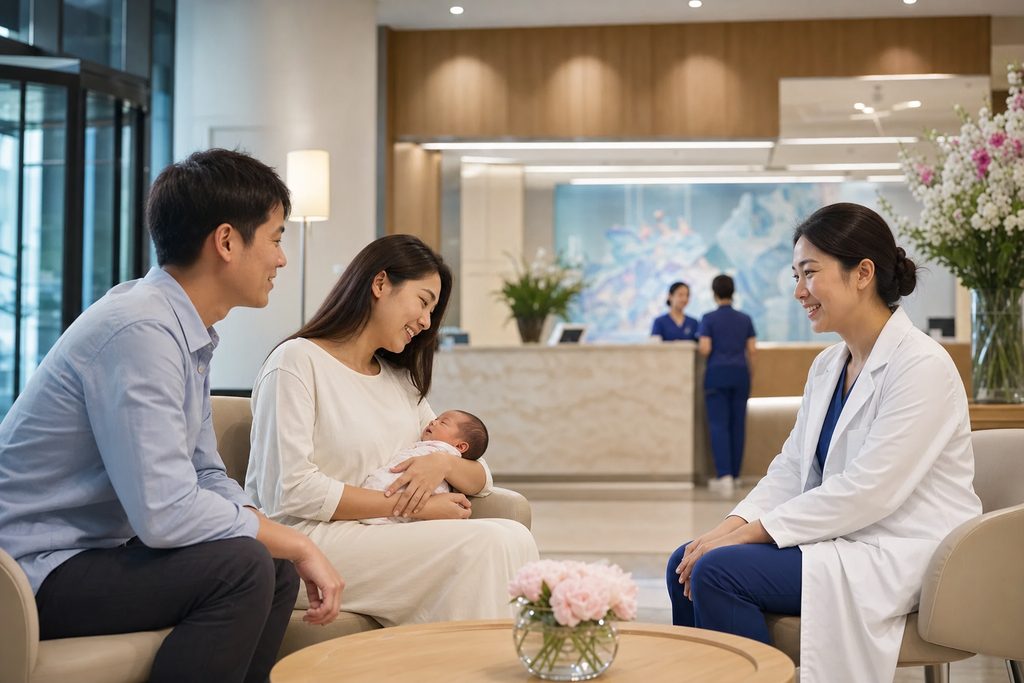
- The hospital maintains a dedicated international patient center with English-speaking coordinators who handle everything from medical record translation to post-discharge recovery planning.
- Awake craniotomy and deep brain stimulation are available on-site, but surgical scheduling requires an in-person consultation first — no remote booking exists for major procedures, which catches many overseas patients off guard.
- You cannot simply email the hospital and lock in a surgery date. The pathway runs through their international department, and having a local coordinator who understands the system prevents weeks of frustrating back-and-forth.
What Brain Surgery in a Private Beijing Hospital Actually Looks Like
A brain tumor diagnosis lands like a physical blow. You sit in a specialist’s office somewhere in London, Sydney, or Los Angeles, and the clock starts ticking. The surgeon recommends resection. Then you hear the wait time: four months. Maybe six. And the quote — $150,000, $200,000, sometimes more. Your insurance covers part of it. The rest is on you.
That moment — when the numbers stop making sense — is when some patients start looking at Asia. Not out of desperation. Out of calculation.
Beijing Puhua International Hospital sits in the Dongcheng district, a private facility purpose-built for international patients. The neurosurgery department here handles roughly 800 cranial procedures annually. That is not a massive number by Chinese public hospital standards — the giant public centers do thousands. But in the private sector, it signals a focused, high-touch service model. The surgeons are senior, often dual-trained abroad, and the nursing ratios are closer to what a Western patient expects. One-to-one in the neuro-ICU. That matters when you are recovering from a craniotomy.
The key question every patient asks first: what is the Beijing Puhua International Hospital neurosurgery price? We will break that down with real ranges. But cost is only part of the equation. The process of getting there, getting booked, and getting through surgery without losing your mind to logistics — that is where the real complexity lives.
Who We Are
We are not a hospital. We do not diagnose, treat, or prescribe. Our team operates as your logistical backbone — the bridge between you and China’s top-tier medical institutions. We translate medical records, coordinate with hospital international departments, arrange bilingual companions who physically walk you through every registration desk and waiting room, and handle the visa guidance and accommodation planning. Think of us as the people who make sure you show up at the right place, at the right time, with every document in order, so you can focus entirely on your health. We work across 340+ top-ranked hospitals in 37 Chinese cities, including Beijing Puhua.
Why Patients Travel to Beijing for Brain Surgery
Three structural advantages drive the decision. None of them are about magic. All of them are measurable.
Surgical Volume Creates Pattern Recognition
A neurosurgeon who removes 150 gliomas a year sees rare intraoperative complications more often than one who removes 30. That is not a knock on Western surgeons — it is simple statistics. At Beijing Puhua, the neurosurgery team operates five days a week. The lead surgeons have each logged thousands of cranial cases over careers spanning two or three decades. When a tumor adheres unexpectedly to eloquent cortex, they have seen that variant before. Pattern recognition saves function. It saves lives.
One study published in The Lancet examined surgical outcomes across volume tiers and found that high-volume centers demonstrated significantly lower 30-day mortality rates for complex cranial procedures. The effect was most pronounced in glioma resection. This is not a Chinese phenomenon — it is a volume phenomenon. China’s top centers simply generate more volume.
Awake Craniotomy Is Available, and It Is Routine Here
Patients often ask us: is awake craniotomy available in China? The answer is yes — and at Beijing Puhua, it is a standard offering, not an experimental protocol. The hospital uses intraoperative MRI and cortical mapping to preserve motor and language function during tumor resection. The anesthesiology team manages the asleep-awake-asleep protocol with experienced precision. For a patient with a low-grade glioma in the left frontal lobe near Broca’s area, this technique can mean the difference between speaking normally after surgery and struggling to form sentences.
Western hospitals offer awake craniotomy too. The difference is access. In Canada or the UK, the wait for a functional neurosurgery slot can stretch past three months. At Puhua, once you complete the in-person consultation and pre-operative workup, surgery is typically scheduled within two to three weeks. That speed matters when your tumor shows contrast enhancement on the last MRI.
The Cost Structure Is Fundamentally Different
Let us address the Beijing Puhua International Hospital neurosurgery price directly. A craniotomy for tumor resection at a US private hospital runs $80,000 to $150,000. At a top London private facility, £40,000 to £70,000. At Beijing Puhua, international patient packages for complex neurosurgery typically range from $25,000 to $45,000, depending on tumor location, surgical complexity, and length of ICU stay.
Why the gap? Not because of corner-cutting. Chinese private hospitals operate with lower structural costs: nursing labor, facility overhead, and pharmaceutical pricing all run below Western equivalents. The equipment is the same — Siemens MRI, Brainlab navigation, Zeiss microscopes. The implants and consumables come from the same multinational suppliers. You are paying for clinical work, not for a marble lobby in Beverly Hills.
| Procedure | Beijing Puhua (USD) | US Private Hospital (USD) | UK Private Hospital (GBP) |
|---|---|---|---|
| Craniotomy — Tumor Resection | $25,000–$45,000 | $80,000–$150,000 | £40,000–£70,000 |
| Awake Craniotomy | $30,000–$50,000 | $100,000–$180,000 | £50,000–£85,000 |
| Deep Brain Stimulation (DBS) | $35,000–$55,000 | $120,000–$200,000 | £60,000–£100,000 |
| Microvascular Decompression | $20,000–$35,000 | $70,000–$120,000 | £35,000–£60,000 |
All prices are estimates for international patients paying out-of-pocket. Final quotes vary by tumor size, location, comorbidities, and implant requirements. Hospital charges only — travel and accommodation are separate.
The Surgeon Question: Finding the Right Hands
Patients searching for the best brain tumor surgeon Beijing private hospital often imagine a single famous name. Reality is more nuanced. Beijing Puhua’s neurosurgery department operates as a team. The department head typically holds a professorship at a major Chinese medical university and has completed fellowships in Europe or North America. Several attending surgeons trained at PLA General Hospital or Tiantan Hospital — two of China’s highest-volume neurosurgery centers — before moving to the private sector.
You cannot simply pick a surgeon off a website and book them. The international patient coordinator matches your case to the appropriate attending based on tumor pathology and location. Skull base meningiomas go to one subspecialist. Deep-seated gliomas go to another. Functional cases — DBS for Parkinson’s, epilepsy surgery — go to the functional team. This triage process protects you. It ensures the surgeon who opens your dura has done hundreds of cases just like yours.
How to Book Neurosurgery at Beijing Puhua Hospital — The Real Process
Here is where most guides get it wrong. They imply you can email the hospital, get a quote, pick a date, and fly over. That is not how it works.
To understand how to book neurosurgery at Beijing Puhua hospital, you need to accept a hard truth: no reputable Chinese hospital — public or private — will schedule a major surgery without an in-person consultation first. The surgeon needs to examine you. They need to review your original imaging, not just the reports. They need to order their own pre-operative labs and imaging studies. This is not bureaucracy. This is safety.
The pathway runs like this: you contact the international patient department, submit your medical records and imaging (DICOM format on a CD or secure upload), and receive a preliminary assessment — usually within three to five business days. If the case is accepted, the hospital issues an invitation letter for your visa application. You travel to Beijing, complete the consultation and workup over two to three days, and then receive a surgical date. The entire on-the-ground timeline from landing to surgery is typically seven to fourteen days.
That preliminary step — getting your records in front of the right neurosurgeon — is where a coordinator earns their keep. Hospital international departments are busy. Emails get lost. Imaging files bounce because they exceed size limits. A Beijing Puhua Hospital international patient coordinator contact exists, but reaching the right person on the first try requires knowing the internal routing. Our team handles this daily. We know which coordinator handles neurosurgery cases, what format they need imaging in, and how to follow up without being annoying.
What You Need to Know Before Going Alone
The barriers are real. Pretending otherwise would be dishonest.
- Visa Requirements: Medical treatment in China requires an S2 visa with an endorsement specifying the purpose. You need an invitation letter from the hospital. Your accompanying family member also needs an S2. Tourist visas do not cover hospitalization. M visas are for business — they are irrelevant here. The invitation letter must come from the hospital’s legal representative office, not from a doctor’s personal email. Getting this document issued correctly the first time saves weeks.
- Payment Systems: Chinese private hospitals expect payment upfront — a deposit before admission, with the balance settled upon discharge. International credit cards work at the hospital’s international billing desk, but daily transaction limits on your card can block a $30,000 deposit. Wire transfers take three to five business days. Alipay and WeChat Pay dominate local transactions, but linking a foreign card is hit-or-miss. You need a payment plan mapped out before you board the plane.
- Medical Records and Imaging: The hospital requires original DICOM files, not just printed reports or JPEG screenshots. A CD from your home hospital works, but some facilities encrypt their discs. You may need to request a de-identified copy. Also, all non-English records must be professionally translated into Chinese — the hospital’s medical records department will not accept Google Translate outputs for clinical documents.
How We Help You Navigate This
These barriers are structural, not malicious. Chinese hospitals built their systems for a domestic patient population of 1.4 billion people. The international patient pathway is a bolt-on adaptation, not the core design. That is where friction lives.
Our process starts with a free consultation. You tell us about your diagnosis, your timeline, and your concerns. We review your existing records and imaging. If Beijing Puhua is the right fit, we initiate contact with the neurosurgery international coordinator, submit your case summary in the format they expect, and track the response. We handle the invitation letter logistics, guide you through the S2 visa application, and arrange your airport transfer and accommodation near the hospital.
On the ground, a bilingual medical companion meets you at the hospital entrance. This person is not a doctor. They are a professional escort who knows exactly where the international registration desk is, which floor the neurosurgery clinic occupies, and how to pay the consultation fee without standing in the wrong queue for forty minutes. They translate between you and the neurosurgeon during the pre-op consultation, ensuring nothing gets lost. During your hospital stay, they check in daily, coordinate with the nursing station, and handle discharge paperwork and pharmacy runs. After discharge, they help schedule follow-up imaging and surgeon reviews before you fly home.
For patients considering a neurological surgery package cost China international patient comparison, we provide transparent cost breakdowns: hospital charges, coordination fees, companion fees, and estimated living expenses. Our coordination fee starts from $300 for hospital appointment arrangement. The bilingual companion service starts from $200 per day. These are separate from hospital charges and are always quoted upfront. No surprises. And any consultation fee you pay to us — whether for a remote video consultation or a second opinion — is credited in full toward on-the-ground coordination if you proceed with treatment within 90 days.
Frequently Asked Questions
You can receive a preliminary estimate based on your imaging and medical history. A binding quote requires the in-person consultation and pre-operative workup. Tumor characteristics on the surgeon’s own MRI, your cardiac and pulmonary clearance, and any unexpected findings can shift the final number. Estimates are generally accurate within 15–20%. We help patients budget conservatively and plan for contingencies.
Beijing Puhua’s neuro-ICU is equipped for post-craniotomy complications, including intracranial hemorrhage, cerebral edema, and infection. The hospital stocks third-generation cephalosporins and vancomycin. They have 24/7 CT scanning capability. For rare catastrophic events requiring endovascular intervention, the hospital maintains transfer agreements with larger public centers. Complication rates for elective craniotomy at this facility are comparable to international benchmarks — in the 2–4% range for serious adverse events. No surgery is risk-free. But the safety net here is real.
The hospital’s international department can be reached through their official website contact form or by phone during Beijing business hours. Response times vary. Our team maintains direct working relationships with the neurosurgery coordination staff, which typically cuts the initial response time from one week to one business day. We do not charge for the initial inquiry — only for coordination services if you decide to proceed.
The international patient floor has English-speaking nursing staff and coordinators. Surgeons often speak functional medical English, especially those with overseas training. But outside the international wing — in the CT suite, the billing office, the pharmacy — English evaporates quickly. This is why a bilingual companion matters. They bridge the gaps that the hospital’s own system does not cover.
The hospital provides a detailed discharge summary in English, including operative notes, pathology reports, and imaging on CD. Your home neurosurgeon and rehabilitation team can use these records to continue your care. We recommend establishing a handoff plan with your local provider before traveling to Beijing. Telemedicine follow-ups with the Puhua surgeon can be arranged at the three-month and six-month marks.
Your Next Step
A brain tumor diagnosis forces decisions under pressure. The temptation is to rush. But the smartest move is to gather information methodically — costs, surgeon qualifications, logistics, and backup plans. Beijing Puhua International Hospital offers a genuine private neurosurgery option with experienced surgeons, modern technology, and prices that make treatment accessible when Western bills would bankrupt a family.
If you want to understand whether this path fits your specific case, start with a conversation. Visit our patient coordination page to schedule a free consultation. No commitment. No pressure. Just straight answers from a team that has walked this road with hundreds of patients before you. You can also explore our Beijing hospital guide for a broader view of the city’s medical landscape, or review our top-ranked hospital database to compare institutions across China. We are here when you are ready.
For more medical information and treatment options in China, visit chinamedservices.com (China Medical Services).
