Beijing Anzhen Hospital International Patient Service: Heart & Lung Surgery Without the Wait
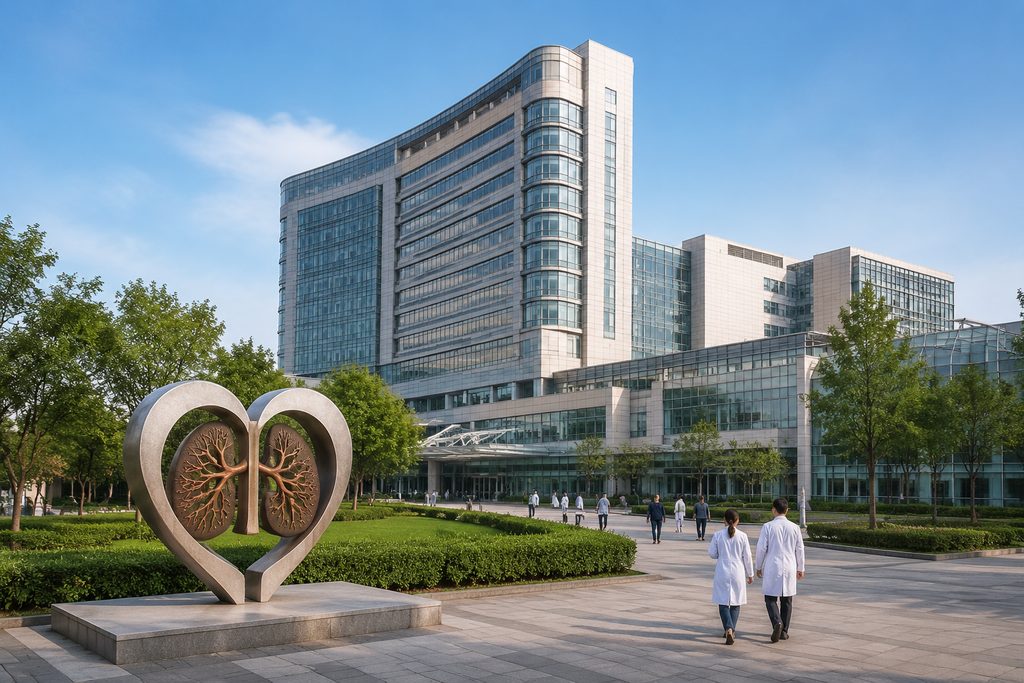
You have probably heard that traveling to China for major heart or lung surgery means gambling on quality to save money. The data tells a different story. Beijing Anzhen Hospital handles over 15,000 cardiac surgeries annually — a volume that dwarfs most Western centers and directly correlates with better outcomes. The real gamble is not the clinical standard. It is trying to navigate the system alone, without knowing how the international patient pathway actually works. Our team has coordinated care at Anzhen for patients from over a dozen countries. We know the process inside out. This article lays out exactly what overseas patients need to understand before making the decision — the costs, the clinical reality, the logistical barriers, and how to move through them without unnecessary friction.
Key Takeaways
- Beijing Anzhen Hospital performs more than 15,000 cardiac surgeries each year, making it one of the highest-volume heart centers globally — volume that studies link to lower mortality rates.
- The Beijing Anzhen Hospital heart surgery cost for international patients typically ranges from $18,000 to $35,000 for a coronary artery bypass graft, roughly one-fifth to one-eighth of the US price.
- You cannot simply book a surgery slot online from overseas. Public hospital rules require an in-person consultation first. The international department pathway is the only realistic route for pre-arranged surgical scheduling.
- Language barriers, payment systems, and visa logistics create real obstacles. Going without bilingual coordination means navigating a 1,500-bed hospital with signage and forms entirely in Mandarin.
The Problem: When the Price of Survival Is Out of Reach
A coronary artery bypass graft in the United States costs $120,000 on average. For uninsured or underinsured patients, that number is not just daunting — it is disqualifying. Approximately 1 in 8 American adults under 65 carry medical debt, and cardiac surgery ranks among the most common causes of catastrophic health expenditure. Wait times in publicly funded systems add another layer of risk. In parts of Canada, the median wait for elective bypass surgery stretches past 60 days. For a patient with unstable angina or worsening left main disease, waiting two months is not a neutral experience. The disease progresses. The surgical risk climbs.
These are not edge cases. They are structural realities of Western healthcare systems — high costs in the US, long queues in Canada and the UK, and limited access to high-volume surgical centers in smaller nations. Patients find themselves caught between financial ruin and clinical deterioration. That is the moment when looking beyond borders stops being a luxury and becomes a rational medical decision.
Who We Are
We are not a hospital. We do not provide medical treatment, make clinical diagnoses, or offer second opinions ourselves. China Medical Services functions as your logistical architect — we bridge the gap between you and the expertise inside Beijing Anzhen Hospital and 340+ other top-ranked Chinese institutions across 37 cities. Our team handles case management, medical document translation, appointment coordination through official hospital international departments, bilingual medical companionship on the ground, and visa guidance. We do not promise to skip queues or guarantee a specific surgeon on a specific date. We promise to navigate the system honestly and competently, and if we cannot secure the appointment you need, we refund the coordination fee in full.
Why Beijing Anzhen Hospital Delivers Results for International Heart and Lung Patients
Beijing Anzhen Hospital is not just another large hospital. It is one of the few centers in the world where cardiac surgery volume, research output, and subspecialty depth converge at a scale that changes outcomes. Understanding why requires looking past the brand name and into the operational reality.
Clinical Volume That Reshapes Surgical Outcomes
Anzhen performs over 15,000 cardiac surgeries annually. That number places it in a rarefied tier of global heart centers. Volume matters in cardiac surgery — and the evidence is not anecdotal. A 2017 study published in The Lancet examining over 500,000 patients across 1,200 hospitals found that for every 100-patient increase in annual hospital volume, 30-day mortality after coronary artery bypass grafting dropped significantly. Surgeons who perform a procedure hundreds of times per year develop pattern recognition that no textbook can replicate. They see rare complications often enough to manage them reflexively. For international patients weighing the Beijing Anzhen Hospital heart surgery cost against domestic options, this volume-to-outcome relationship is the clinical foundation of the value proposition.
The lung surgery program operates at comparable scale. Anzhen’s thoracic surgery department handles complex pulmonary resections, lung transplants, and minimally invasive thoracic procedures at a pace that keeps surgical teams sharp. China’s lung transplant volume has grown rapidly over the past decade, and Anzhen is one of the centers driving that growth. For a patient researching how much does lung transplant cost in Beijing, the volume question matters as much as the price tag. A transplant program that performs the procedure infrequently carries risks that a high-volume program does not.
Technology Infrastructure Built for Scale
Walk into Anzhen’s surgical wing and the equipment matches anything you would find at Mayo Clinic or Cleveland Clinic. Hybrid operating rooms integrate real-time imaging with surgical capability, allowing teams to switch between catheter-based interventions and open surgery without moving the patient. Da Vinci robotic systems support minimally invasive cardiac and thoracic procedures. The difference is not the brand of equipment. It is how the hospital deploys it.
Anzhen runs a dedicated chest pain center that processes suspected heart attack patients through a protocol designed to cut door-to-balloon times below 90 minutes. The hospital’s imaging department operates extended hours to clear backlogs quickly — a practical efficiency that reduces the time between consultation and surgery. For international patients, this operational tempo means less time waiting in Beijing and a faster path from arrival to treatment.
Cost Structure: The Economics Behind the Numbers
Let us address the obvious question directly. Why does the same coronary bypass that costs $120,000 in the US cost $18,000 to $35,000 at Anzhen? The answer is structural, not a reflection of quality. Chinese hospital labor costs are lower across every category — surgeons, nurses, anesthesiologists, perfusionists. Hospital construction and equipment amortization costs are lower. Administrative overhead tied to insurance billing, which consumes an estimated 25% of US hospital expenditures, is dramatically reduced in China’s direct-payment public hospital model. The clinical inputs — the surgical skill, the equipment, the infection control protocols — are comparable. The economic wrapper around them is not.
For patients researching China heart and lung surgery package for overseas patients, it is important to understand that “packages” are not standardized products you can buy off a website. The international department at Anzhen provides cost estimates before travel based on your medical records and imaging. Final pricing depends on case complexity, implant choices, and length of stay. A straightforward three-vessel bypass with no complications lands at the lower end. A complex redo surgery with valve involvement lands higher. Our role is to get you that pre-travel estimate from the official hospital channel — not a third-party markup.
| Procedure | Estimated Cost at Anzhen (USD) | US Average (USD) |
|---|---|---|
| Coronary Artery Bypass Graft (CABG) | $18,000 – $35,000 | $120,000+ |
| Heart Valve Replacement (single) | $20,000 – $38,000 | $130,000+ |
| Lung Lobectomy (VATS minimally invasive) | $10,000 – $18,000 | $45,000+ |
| Lung Transplant | $80,000 – $120,000 | $400,000+ |
Cost ranges are estimates for international patients via the hospital international department pathway. Actual pricing varies by case complexity, implant selection, and length of stay. These figures do not include travel, accommodation, or coordination service fees.
What You Need to Know Before Going Alone
We tell every prospective patient the same thing: the clinical standard at Anzhen is world-class. The logistical pathway is not built for foreigners navigating it independently. Here is what you face if you try to go it alone.
- Visa Requirements Are Specific and Unforgiving: Medical treatment in China requires an S2 visa with a treatment-purpose annotation. You cannot enter on a tourist visa and legally receive scheduled surgery. Your accompanying family member also needs an S2. The application demands an invitation letter from the hospital — a document the international department issues, but only after confirming your consultation schedule. Getting that letter without a local contact who speaks Mandarin and understands hospital bureaucracy is a slow, frustrating process. We have seen patients lose weeks to back-and-forth emails that a bilingual coordinator could resolve in a single phone call.
- Payment Systems Do Not Work Like Home: Chinese public hospitals operate on a prepaid deposit model. You load funds onto a hospital account at admission, and services draw down from that balance. International credit cards are not accepted at most public hospital payment counters. WeChat Pay and Alipay dominate, and linking a foreign card to these platforms is not always straightforward. You need a plan for moving funds into the hospital’s system before surgery, and that plan usually involves wire transfers or assistance from someone who understands the local banking infrastructure.
- Medical Records Must Be Professionally Translated: The surgical team at Anzhen needs your full medical history, imaging, and diagnostic reports in Chinese. Google Translate will not cut it for a cardiologist reviewing your angiogram report. Mistranslating “left anterior descending artery stenosis” could have consequences. Professional medical translation is a prerequisite, not a nice-to-have. This is part of what our case management fee covers — we handle the translation through qualified medical linguists and submit the complete package to the international department before you travel.
How We Help You Navigate This
These barriers exist for structural reasons, not because anyone is trying to make the process difficult. Chinese public hospitals serve enormous domestic patient volumes. The international department pathway exists precisely to handle overseas cases, but it still requires someone on the ground who speaks both languages and understands both medical systems. That is where we come in.
Before you travel, we collect and translate your medical records, submit them to the Anzhen international department, and secure a consultation appointment with the appropriate specialist. We obtain the official invitation letter that supports your S2 visa application. We provide guidance on accommodation near the hospital — there are serviced apartments within walking distance that cost a fraction of what you would pay near a major US medical center.
During your treatment, a bilingual medical companion accompanies you to every appointment. This person handles registration, payment deposits, queue navigation, and real-time interpretation between you and the clinical team. They are not a doctor. They are your logistical anchor in a hospital where thousands of patients move through the system daily and all signage is in Mandarin. After discharge, we coordinate follow-up appointments and help arrange any recovery accommodation you need before flying home.
For patients who want to explore the option before committing to travel, we can arrange a video consultation with an Anzhen specialist. The cost ranges from $500 to $800 for a top-specialist session. If you later proceed with our on-the-ground coordination service, that consultation fee is credited in full toward the coordination cost. It is a one-time credit, applied to our service fee only, never to hospital treatment charges. The logic is simple: we want you to make an informed decision with real clinical input before you get on a plane.
Frequently Asked Questions
Yes — with an important qualifier. The clinical quality is excellent, backed by surgical volumes that rank among the highest in the world. The international department has treated patients from across Asia, the Middle East, Europe, and North America. But the patient experience is not Westernized in the way you would find at a private international hospital. Nursing ratios, room amenities, and bedside communication styles reflect Chinese hospital norms. If you expect a United Family-style experience with English-speaking nurses at every bedside, you will be disappointed. If you prioritize surgical expertise and are comfortable with a culturally different care environment supported by a bilingual companion, Anzhen delivers. This is the honest answer to the question is Beijing Anzhen Hospital good for international patients — it depends on what “good” means to you.
At Beijing Anzhen Hospital, a lung transplant for an international patient typically falls in the range of $80,000 to $120,000. This covers the surgical procedure, hospital stay, immunosuppressive therapy initiation, and immediate post-operative care. It does not include long-term immunosuppressive medications after discharge, extended rehabilitation, or accommodation costs. The comparable procedure in the United States exceeds $400,000 before insurance. The cost difference is real, but lung transplantation is never a low-cost endeavor anywhere. It requires lifelong follow-up and medication. Patients researching how much does lung transplant cost in Beijing should factor in the total cost of care over years, not just the surgical admission.
No. This is one of the most common misconceptions we encounter. Chinese public hospitals, including Anzhen, do not allow direct surgical booking from overseas without an in-person consultation first. The surgeon must evaluate you face-to-face, review your imaging personally, and confirm that surgery is appropriate before scheduling an operating room slot. What you can do — and what the international department pathway enables — is secure a consultation appointment, complete pre-operative testing efficiently after arrival, and then proceed to surgery on a compressed timeline. Patients who try to book heart bypass surgery Beijing medical tourism without understanding this two-step process end up frustrated. The pathway works, but it follows a specific sequence. We help compress the timeline, not skip the steps.
Anzhen has a cardiac intensive care unit staffed by intensivists who manage post-operative complications daily. The hospital’s reoperation and complication management experience is substantial precisely because of the high surgical volume. That said, international patients need to plan for the possibility of extended recovery in Beijing. If a complication extends your hospital stay beyond the initial estimate, your hospital deposit must cover the additional days. Travel insurance with medical complication coverage is strongly advisable. We can help coordinate extended accommodation and visa extensions if recovery takes longer than planned, but the financial responsibility for extended care rests with the patient. This is not a risk unique to China — it applies to any medical travel — but it is one you should plan for explicitly.
There is no single answer that fits every patient. Beijing Anzhen Hospital and Fuwai Hospital are both world-class cardiac centers in Beijing with international department pathways. Fuwai performs over 14,000 cardiac surgeries annually and is widely regarded as the highest-volume cardiovascular center globally. Anzhen’s volume is comparable, and its integrated cardiology-cardiac surgery model is particularly strong for complex cases requiring combined interventions. The best cardiac hospital in China for foreigners depends on your specific diagnosis, the surgeon specializing in your condition, and practical factors like appointment availability. Our role is to match your case to the right department and the right specialist, not to push one hospital over another. We work with both institutions and can help you understand the trade-offs before deciding.
Your Next Step
Beijing Anzhen Hospital offers something that is increasingly hard to find in Western healthcare systems: high-volume surgical expertise at a cost that does not require mortgaging your future. The trade-off is not clinical quality. It is complexity — logistical, linguistic, and cultural complexity that you cannot simply power through with determination and Google Translate. The international patient pathway exists for exactly this reason. It works when someone who understands both systems manages the handoffs. If you are considering heart or lung surgery at Anzhen, start with a conversation. Not a commitment. Just an honest discussion about your case, your options, and what the pathway actually looks like for someone in your situation.
Visit our patient coordination page to begin. There is no cost for the initial consultation, and no pressure to proceed. We would rather you make the right decision slowly than the wrong one quickly.
For more medical information and treatment options in China, visit chinamedservices.com (China Medical Services).
