Beijing Jishuitan Hospital International Patients: Orthopedic & Burn Surgery Access
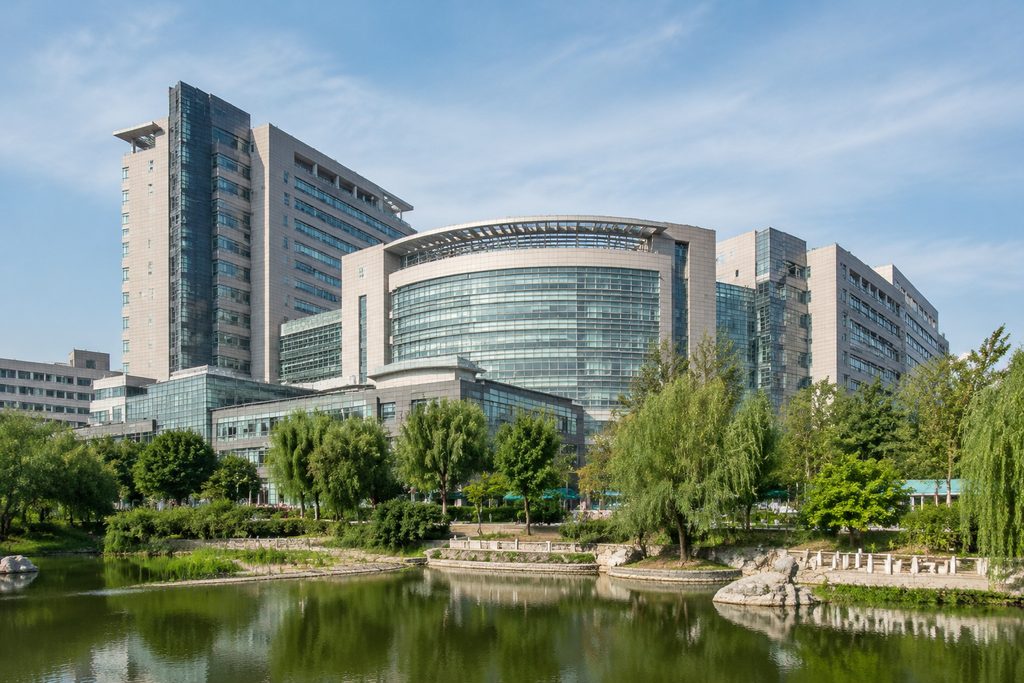
While patients in Canada wait a median 27.4 weeks from specialist referral to orthopedic treatment, surgeons at Beijing Jishuitan Hospital perform over 1,200 orthopedic procedures every single month. The volume gap is staggering. The outcome data holds its own. For a patient stuck on a waiting list, watching their mobility erode week by week, the question shifts from “Should I consider this?” to “How do I actually make this happen?”
We have spent years answering that second question. Our team does not perform surgery. We do not provide medical advice. What we do is dismantle the logistical wall that stands between a foreign patient and one of the world’s busiest, most specialized orthopedic and burn centers. We handle the architecture of your medical journey—the visas, the appointments, the language barrier, the local navigation. Beijing Jishuitan Hospital is a public institution with extraordinary clinical firepower. Accessing it from abroad without a guide is a test of endurance most people cannot pass alone. That is precisely why our service exists.
Key Takeaways
- Beijing Jishuitan Hospital is China’s undisputed leader in orthopedics and burn surgery, with orthopedic surgeons handling a caseload volume that dwarfs most Western centers and burn specialists treating over 2,000 inpatients annually.
- International patients cannot simply book surgery online—access requires navigating the hospital’s official International Medical Department, a process where a bilingual coordinator changes everything.
- The cost of complex fracture surgery abroad in Beijing typically runs 60-80% less than equivalent US private-pay rates, but payment is upfront and insurance reimbursement happens later.
- Visa logistics are precise and inflexible: you need an S2 visa with a medical treatment annotation, and getting one requires verified hospital documentation that takes time to assemble.
The Problem: When Waiting Is Not an Option
Orthopedic pain does not pause politely while a health system processes paperwork. A torn ACL in a 34-year-old construction worker. A shattered tibial plateau in a 52-year-old who slipped on ice. Severe burn contractures in a child who needs reconstruction to regain full range of motion. These are not conditions that can comfortably wait 20, 30, or 40 weeks. Yet that is the reality in publicly funded systems across Canada, the UK, and parts of Europe. The Canadian Institute for Health Information reported a median wait of 27.4 weeks between specialist consultation and orthopedic surgery in 2023. In some provinces, the number crosses 40 weeks.
For burn survivors, the situation is even more precarious. Specialized burn reconstruction surgeons are rare. In many countries, there are only a handful of centers with the caseload and experience to handle complex post-burn contracture releases, skin grafting, and functional restoration. A patient in Norway or New Zealand might face a year-long queue for a procedure that a dedicated burn unit in Beijing performs multiple times a week. The math is brutal. The human cost—progressive joint stiffness, chronic pain, lost income, psychological decline—is worse.
Private options exist in the West. They come with price tags that can bankrupt a family. A complex multi-ligament knee reconstruction in the United States can exceed $50,000 in surgeon and facility fees alone. A staged burn reconstruction series? The numbers become abstract. This is the fork in the road where our team starts getting phone calls.
Who We Are
We are a medical concierge organization that connects international patients with China’s top-tier hospitals. We are not clinicians. We do not treat, diagnose, or recommend specific surgical approaches. Our role is logistical and navigational. Think of us as the bilingual, culturally fluent operational layer that sits between you and a massive public hospital system that was not designed with foreign patients in mind. We translate medical records, coordinate with the hospital’s official International Medical Department, arrange S2 visa support documentation, book bilingual medical companions, and manage the thousand small frictions that arise when you travel to a non-English-speaking country for major surgery. We work with over 340 top-ranked hospitals across 37 Chinese cities. Beijing Jishuitan Hospital is one of our most requested destinations for orthopedic and burn cases. There is a reason for that.
Why Beijing Jishuitan Hospital Delivers Results
Orthopedic Volume That Reshapes Surgical Instinct
Beijing Jishuitan Hospital is not simply a good orthopedic hospital. It is the orthopedic hospital. Founded in 1956, the institution has spent nearly seven decades building what is now the largest orthopedic department in China. The numbers are difficult to contextualize. The hospital’s orthopedic surgeons perform more than 14,000 procedures annually across subspecialties that include spine, joint replacement, trauma, hand surgery, sports medicine, and pediatric orthopedics. A senior attending surgeon here might complete 300 to 500 joint replacements in a year. The average orthopedic surgeon in the United States performs approximately 65 per year, according to data published in the Journal of Arthroplasty.
Volume is not vanity. It is a clinical variable. Surgeons who repeatedly encounter rare fracture patterns, complex revisions, and high-risk trauma cases develop an intraoperative intuition that textbooks cannot replicate. When a patient presents with a malunion from a previous surgery performed elsewhere, or a periarticular fracture that requires simultaneous ligament reconstruction, the Jishuitan team has almost certainly seen and managed dozens of similar cases that month. This is why the hospital consistently ranks at the very top of China’s national orthopedic specialty reputation list—a ranking compiled by Fudan University that surveys peer specialists across the country. It is not a marketing claim. It is a peer judgment.
Burn Surgery: A Specialized Ecosystem Few Hospitals Possess
Burn care is a different animal entirely. It requires a vertically integrated system: acute resuscitation, infection control, early excision and grafting, and then months or years of reconstructive surgeries to restore function and appearance. Most hospitals have a burn unit. Very few have a burn ecosystem that handles over 2,000 inpatients and tens of thousands of outpatient visits annually. Beijing Jishuitan Hospital’s Burn Department is one of China’s original burn centers, established in 1958. It is a national key clinical specialty.
For international patients, the relevant question is often about reconstruction. A patient who suffered severe burns five years ago in a house fire now lives with contractures that limit elbow extension or neck mobility. The acute care happened long ago. What they need now is a series of Z-plasties, tissue expansion procedures, or free flap reconstructions. These are technically demanding operations where the surgeon’s aesthetic judgment and functional understanding matter enormously. Jishuitan’s burn reconstructive surgeons perform these procedures at a cadence that few Western burn centers can match—not because Western surgeons are less skilled, but because the patient volume is simply not concentrated in the same way. When you want the surgeon who has done your specific procedure hundreds of times, you go where the patients are. For burn reconstruction, Beijing Jishuitan Hospital is where the patients are.
Cost Reality: What “Affordable” Actually Means
Let us address the question that sits beneath every inquiry we receive about the Beijing Jishuitan Hospital orthopedic surgery international patient price. People want a number. We understand why. Medical costs in the United States are opaque and terrifying. A total hip replacement in the US carries a list price that can exceed $40,000 before negotiation. A complex fracture fixation with hardware can push past $60,000. Burn reconstruction staged over multiple procedures? The total can easily cross six figures.
At Beijing Jishuitan Hospital’s International Medical Department, the pricing structure is fundamentally different. A total hip or knee replacement typically falls in the range of $12,000 to $18,000, inclusive of implant costs, surgeon fees, and hospital stay. Complex trauma surgery—say, an acetabular fracture requiring specialized plating—runs between $10,000 and $20,000 depending on hardware complexity and operating time. Burn reconstruction procedures vary widely based on the technique and surface area involved, but a single-stage contracture release with skin grafting often lands in the $5,000 to $10,000 range.
These are not discounted “medical tourism” rates. They reflect the structural economics of China’s hospital system: lower labor costs, high patient turnover efficiency, and a pricing environment that has not been inflated by the insurance-administrative complex that drives up US hospital charges. The quality of implants and surgical technique is equivalent. Jishuitan uses the same international orthopedic implant systems—Stryker, DePuy Synthes, Zimmer Biomet—that you would find in any major Western orthopedic center. The cost savings come from the system, not from cutting clinical corners.
Payment is upfront. This is non-negotiable at Chinese public hospitals. You pay the estimated cost before admission, and the hospital settles the final amount at discharge. Your international insurance may reimburse you afterward; we help compile the documentation you need for claims. But the hospital does not bill your insurer directly. That is a structural difference you need to plan for.
| Procedure | Beijing Jishuitan (USD) | US Average (USD) | UK Private (USD) |
|---|---|---|---|
| Total Hip Replacement | $12,000 – $18,000 | $40,000+ | $18,000 – $25,000 |
| Complex Fracture Fixation | $10,000 – $20,000 | $50,000 – $70,000 | $20,000 – $35,000 |
| ACL Reconstruction | $6,000 – $10,000 | $20,000 – $50,000 | $8,000 – $15,000 |
| Burn Contracture Release + Graft | $5,000 – $10,000 | $25,000 – $45,000 | $12,000 – $20,000 |
Prices are estimates for international patients via the hospital’s International Medical Department. Actual costs vary by case complexity, implant selection, and length of stay. Always confirm with the hospital before travel.
What You Need to Know Before Going Alone
We have seen patients try to navigate this independently. Some succeed. Most hit walls they did not anticipate. The barriers are real and they are structural, not personal. The hospital is not hostile to foreigners. It simply operates within a system that assumes local knowledge, Mandarin fluency, and familiarity with administrative workflows that differ sharply from Western norms.
- Visa Requirements Are Precise: You need an S2 visa with a medical treatment purpose annotation. The Chinese embassy or consulate will require an invitation letter from the hospital confirming your treatment arrangement. You cannot obtain this letter by emailing the hospital’s general inquiries address. It must come through the International Medical Department, and they issue it only after reviewing your medical records and confirming that your case is appropriate for their services. Without this document, your visa application will be rejected. Family members accompanying you also need S2 visas. Do not apply for an M visa—that is for commercial business and will not cover medical treatment.
- Payment Systems Do Not Work Like Home: Chinese public hospitals require a deposit before admission. The deposit amount is estimated based on your treatment plan. You pay via bank transfer, UnionPay card, or in some cases international credit card with a processing fee. WeChat Pay and Alipay dominate daily transactions in China, and linking a foreign card to these platforms can be hit-or-miss. Cash in RMB works, but carrying large amounts is impractical. You need a payment strategy before you arrive.
- Medical Records Must Be Professionally Translated: The International Medical Department can work with English-language records, but the consulting surgeon needs Chinese-language summaries of your imaging reports, surgical history, and relevant lab work. Google Translate is not sufficient for an operative plan. A mistranslated medication allergy or prior implant specification can have serious consequences. Professional medical translation is a prerequisite, not a nice-to-have.
- Language on the Ground Is a Hard Barrier: Beijing is an international city, but inside a public hospital, English fluency among nursing staff, administrative clerks, and technicians is limited. The surgeons may speak some English. The nurse taking your vitals at 3 AM probably does not. Navigating registration, payment counters, imaging departments, and pharmacy pickups without Mandarin or a bilingual companion is exhausting and error-prone. This is not a criticism of the hospital. It is simply the reality of seeking care in a non-English-speaking country.
How We Help You Navigate This
These barriers are not insurmountable. They are logistical. We solve logistics. When a patient contacts us asking how to book burn surgery at Beijing Jishuitan Hospital for foreign patients, the conversation starts with medical records. You send us your imaging, your surgical history, your current condition summary. Our team has the documents professionally translated into medical Chinese. We then submit the package to the hospital’s official International Medical Department for review. This is the same channel a Chinese patient would use to access the VIP international wing—we are not creating a backdoor. We are navigating the front door in the language and format the hospital requires.
Once the department confirms they can treat your case, we coordinate the invitation letter for your S2 visa application. We advise on the exact documentation the embassy will require. We book your initial consultation with the relevant specialist—an orthopedic trauma surgeon, a joint replacement specialist, a burn reconstruction surgeon. You fly to Beijing. A bilingual medical companion meets you at the airport, takes you to your accommodation, and accompanies you to every hospital visit: registration, consultation, pre-operative testing, admission, discharge, and follow-up. The companion translates in real time, handles payment counters, navigates the physical campus, and ensures nothing gets lost between departments.
After surgery, we coordinate your follow-up appointments and, if needed, rehabilitation arrangements. If your case requires staged procedures—common in burn reconstruction—we manage the scheduling so you can plan return visits efficiently. Throughout the process, you are speaking with your surgeon directly during consultations. We are beside you translating, not replacing the doctor-patient relationship.
For patients researching the best orthopedic hospital in China for international patients reviews, Jishuitan’s clinical reputation is unambiguous. But the patient experience hinges on execution. The surgery itself may be world-class. If you cannot communicate with the ward nurse about post-operative pain, or you miss a follow-up imaging appointment because you could not read the slip, the outcome suffers. This is why our service exists. Not to sell access. To prevent the frictions that erode an otherwise excellent clinical result.
Frequently Asked Questions
Yes. Beijing Jishuitan Hospital’s Burn Department accepts international patients for both acute burn care and reconstructive procedures. The process requires medical record review, an invitation letter for visa purposes, and treatment coordination through the International Medical Department. Burn reconstruction is often staged over multiple procedures, so patients should plan for the possibility of return visits. The department’s experience with complex contracture releases, tissue expansion, and microsurgical reconstruction is extensive—they handle cases that many smaller burn units refer out.
The hospital’s International Medical Department handles all foreign patient inquiries through official channels. You can contact them directly, though response times vary and Mandarin fluency helps. Our team functions as a bridge—we submit your case to the same department, but we handle the language translation, document formatting, and follow-up so you are not waiting weeks for an email response you cannot read. We do not have a secret phone number. We use the same official pathway, just more efficiently.
For international patients at Beijing Jishuitan Hospital, complex fracture surgery—such as an acetabular fracture, pilon fracture, or multi-fragmentary long bone fracture requiring specialized plating—typically ranges from $10,000 to $20,000. The final figure depends on implant hardware costs, operating time, and length of inpatient stay. This compares to $50,000 to $70,000 or more in the United States for equivalent procedures. Pre-operative imaging and consultation fees are additional but modest. You will receive a detailed cost estimate after the surgeon reviews your case and determines the surgical plan.
For orthopedics, yes—it consistently ranks at the top of China’s national specialty reputation rankings. But “best” depends on your specific condition. Jishuitan excels in trauma, joint replacement, spine surgery, hand surgery, and pediatric orthopedics. For orthopedic oncology, other centers like Peking University People’s Hospital may be more appropriate. For sports medicine, several Shanghai-based hospitals are also excellent. The right hospital matches your diagnosis, not a generic ranking. This is why our initial consultation focuses on your medical records before we recommend any specific institution. You can explore orthopedic specialty rankings across multiple hospitals on our specialty departments page.
This is the question every patient should ask. Beijing Jishuitan Hospital is a tertiary referral center with full intensive care capabilities, in-house imaging, and the ability to manage surgical complications. The standard of care is high. That said, you are far from home. If a complication requires extended hospitalization, your costs increase and your return flight gets delayed. Travel insurance with medical complication coverage is essential—standard travel insurance often excludes planned medical treatment abroad, so you need a policy that specifically covers complications from elective surgery. We advise on insurance options but do not sell policies. The hospital’s International Medical Department has experience managing foreign patients with extended stays, and we remain involved throughout to help with logistics. But the clinical management of complications rests with your surgical team, as it would in any hospital anywhere.
Your Next Step
Beijing Jishuitan Hospital represents a specific value proposition: extraordinary clinical volume in orthopedics and burn surgery, outcomes that hold up to international scrutiny, and costs that make treatment accessible to patients who would otherwise face years of waiting or financially devastating bills. The trade-off is distance, language, and administrative complexity. Those are real costs. They are also manageable with the right support structure in place.
If you are considering orthopedic or burn surgery at Jishuitan, start with your medical records. Get them organized. Send them to us for review. We will tell you honestly whether your case is a good fit and what the timeline and costs look like. There is no charge for the initial discussion. No pressure. Just clarity on whether this path makes sense for you. Reach out when you are ready to explore the option seriously. We will walk you through every step from there.
Medical Disclaimer: This article is for informational purposes only and does not constitute medical advice, diagnosis, or treatment recommendation. Surgical decisions should be made in consultation with a qualified physician after a thorough clinical evaluation. China Medical Services is a logistical coordination service and does not provide medical care or guarantee specific surgical outcomes.
For more medical information and treatment options in China, visit chinamedservices.com (China Medical Services).
