Shenyang Laboratory Medicine: Lab Testing Access for Foreign Patients
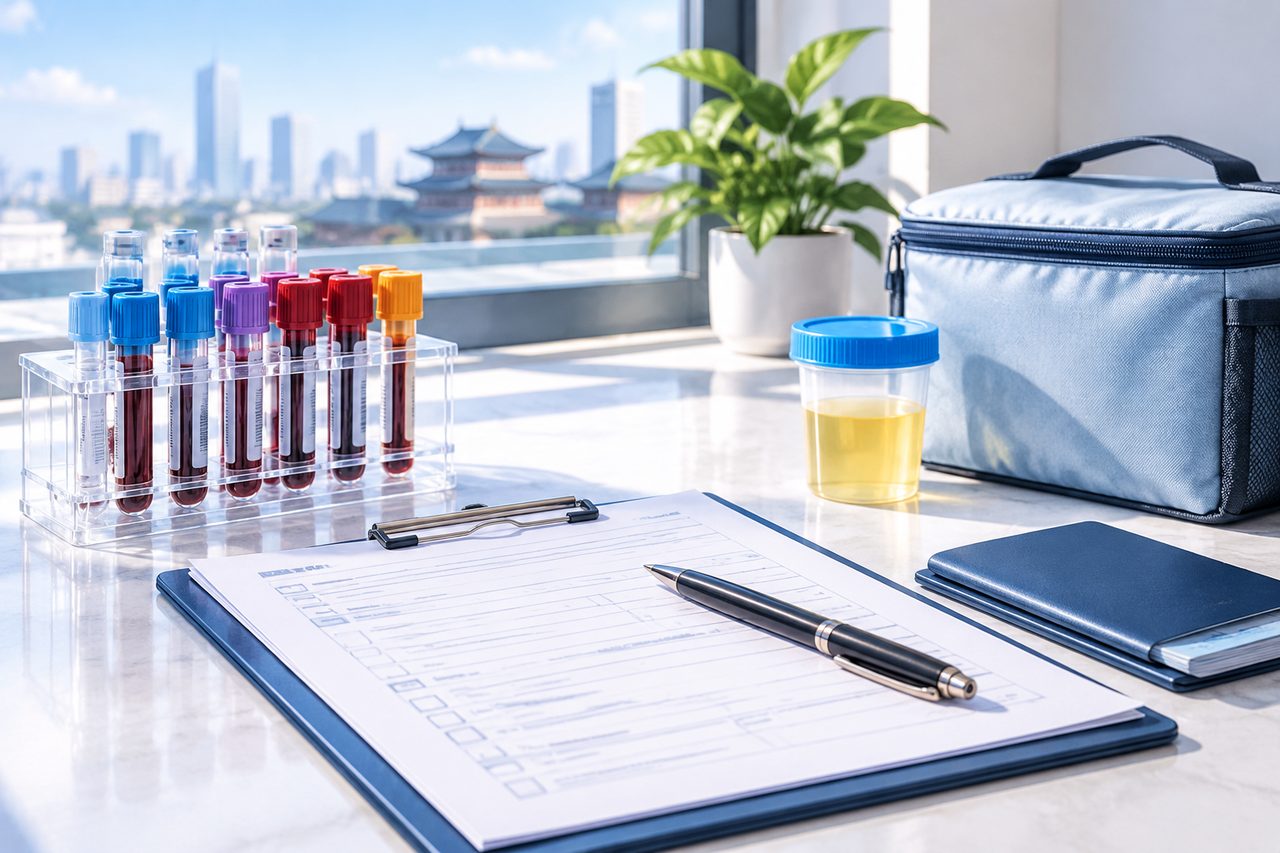
Shenyang Laboratory Medicine: Access for Foreign Patients
What if the blood test your specialist at home wants could be done, reported and translated in a single morning in Shenyang — without you queuing in Chinese at 6 a.m.? Understanding the laboratory testing cost Shenyang for foreigners is usually the first practical question, and the honest answer depends less on the price list than on how Chinese hospital laboratories actually receive patients. This guide explains the sequence, the realistic price ranges, and the preparation that makes a lab visit in Shenyang predictable rather than improvised.
Shenyang is the capital of Liaoning Province and one of northeast China’s largest medical hubs. Its major teaching hospitals run high-volume clinical laboratories serving both local residents and, through international departments, a growing number of foreign patients. What follows is a practical map of that system — not a price sheet, because no responsible provider can quote a lab bill before knowing which tests a clinician has ordered.
How This Actually Works, Step by Step
Laboratory medicine in China is organized differently from the walk-in lab chains many Western patients are used to. You generally cannot book a standalone blood draw online from abroad and stroll in with a requisition. The realistic path looks like this.
Step one: clarify what is actually needed. Gather the reports you already hold — recent blood counts, chemistry panels, hormone results, imaging reports, and the specialist’s note explaining what they want repeated or added. A laboratory cannot interpret a request like “full check-up”; it needs specific test names or a clinician’s order.
Step two: route the request through a clinical department, not the lab counter. At Chinese public hospitals, laboratory tests are ordered by a physician during an outpatient consultation. That means the sequence is registration, consultation, physician order, payment, then specimen collection. A hospital’s international department or VIP channel can compress this into a single coordinated visit with English-speaking support; the standard outpatient route usually cannot be pre-booked from overseas.
Step three: confirm which laboratory performs the test. Large tertiary hospitals run their own clinical laboratories with internal quality control, and some tests — specialized immunology, genetics, certain tumor markers — are sent to reference laboratories. Ask which category your tests fall into, because turnaround differs.
Step four: collect results and have them explained. Results are typically issued electronically and printed at the hospital. A bilingual companion can collect the report, confirm reference ranges are the ones used by that laboratory, and arrange for a clinician to explain the findings rather than leaving you to interpret a Chinese-language printout alone.
What Laboratory Testing Costs in Shenyang, Realistically
This is where honesty matters more than a tidy table. Chinese public hospital laboratories are generally inexpensive by Western standards, but published figures vary by hospital tier, test method and whether the test sits inside a health-check package. Rather than invent numbers, here is how the cost structure actually breaks down, and what to ask before you commit.
| Cost component | What drives it | What to confirm in writing |
|---|---|---|
| Outpatient registration and consultation | Hospital tier; standard versus international/VIP channel | Whether the international department fee is separate from the lab fee |
| Individual laboratory tests | Number of analytes, method (routine chemistry versus specialized assays) | Itemized list of ordered tests, not a package name |
| Health-check packages | Bundle size; whether imaging is included | Exactly which tests the bundle contains and which are add-ons |
| Repeat or confirmatory testing | Whether the laboratory re-runs an abnormal result | Whether repeats are billed again |
| Interpretation and translation | Whether a clinician explains results; document translation | Who provides the English explanation and in what format |
For context on the general question of how much diagnostic testing costs in China, the broad pattern is that routine laboratory panels at public tertiary hospitals sit well below equivalent private-sector prices in the United States and Western Europe, while specialized assays and international-department surcharges narrow that gap. Any specific figure should come from the hospital’s own international office for your test list, in writing, before you travel. Prices vary by hospital and case complexity, and a quote for a general check-up is not a quote for a targeted diagnostic workup.
A Realistic Timeline
Patients routinely underestimate the front-end administrative work. The table below reflects typical ranges, not promises; public hospital scheduling and visa processing both introduce variability.
| Stage | Typical duration | What people forget |
|---|---|---|
| Assembling and translating existing records | 3–10 days | Reports need consistent test names and units; translated summaries help the Chinese clinician |
| Remote review or written second opinion | Several days to about two weeks, depending on specialty workload | Specialists may request additional tests before commenting |
| S2 visa application | Varies by embassy or consulate; allow several weeks | Supporting hospital documentation is usually required; approval is never guaranteed |
| Hospital appointment coordination | Days to a few weeks | Standard outpatient slots generally cannot be reserved from abroad; international channels can |
| On-the-day laboratory visit | Half a day, sometimes a full day | Fasting requirements, morning collection windows and payment steps add time |
| Results and explanation | Same day for routine panels; longer for specialized or send-out tests | Some assays take days; plan buffer before your return flight |
Is Shenyang Hospital Lab Testing Reliable for International Patients?
The fair answer is that reliability depends on the specific laboratory and test, not on the city. China’s major tertiary hospitals participate in national external quality assessment schemes for clinical laboratories, and their labs handle very high daily volumes — which supports consistency in routine testing. That said, “reliable” is not a single property. Three distinctions are worth making.
Analytical reliability versus interpretive context. A chemistry panel run on a calibrated analyzer at a large hospital laboratory is analytically sound. What travels less well is interpretation: reference ranges, units, and assay methods can differ from the laboratory that produced your home results. If you are monitoring a chronic condition, bring your previous reports so the Chinese clinician can compare trends rather than reading a single snapshot in isolation.
Accreditation is test-specific. Ask whether the laboratory holds accreditation relevant to your test type, and whether the assay is run in-house or referred out. For highly specialized tests, referral to a reference laboratory is normal practice worldwide, not a red flag.
Documentation matters for your doctor at home. Request a report that includes the test name, result, unit, reference range and the laboratory’s name. A bilingual summary makes it usable when you return home. Without that, a Chinese-language printout may be difficult for your own physician to act on.
Choosing Where to Go, and the Mistakes to Avoid
Shenyang’s strongest laboratory capacity sits within its large teaching and tertiary hospitals, several of which maintain international departments accustomed to foreign patients. When comparing options, weigh these factors rather than brand recognition alone.
- Does the hospital have an international or VIP department? This is the practical determinant of whether you can pre-arrange a coordinated visit with English support. Expect fees roughly 1.5 to 2 times the standard channel.
- Can the specific tests you need be run there? Confirm in advance; a hospital that must refer everything out adds days to your stay.
- Who will explain the results? A laboratory issues data; a clinician interprets it. Make sure the second part is arranged.
- Is the appointment confirmed in writing? Verbal assurances from a third party are not the same as a hospital-issued confirmation.
The most common mistakes we see are these: arriving without translated records and losing a day to clarification; assuming a health-check package covers a specialist’s specific requests; booking a flight home before confirming turnaround for send-out tests; and treating a laboratory result as a diagnosis. A result is a data point that a qualified physician must interpret in context.
Practical Considerations: Records, Visa, Payment and Follow-Up
Records. Bring original reports plus English translations, a medication list, and a short summary of why each test was ordered. If a Chinese specialist is reviewing you remotely first, these documents are the entire basis of the review.
Visa category. Foreign patients travelling to China for medical treatment generally use the S2 visa, which covers short-stay medical treatment and private affairs; stays exceeding 180 days fall under S1. Accompanying family members apply under the same category. Requirements and supporting documents are set by the relevant Chinese embassy or consulate and should be checked against the latest published guidance — no service can guarantee approval. Note that the M visa is for commercial and trade activities and is not the medical-travel category.
Payment. Public hospitals generally require payment at the point of service, with insurance reimbursement handled afterward in your home country. Private international hospitals more often bill insurers directly. Confirm which model applies before you arrive, and keep itemized receipts for reimbursement.
Language. Shenyang’s major hospitals are large and busy, and English signage and English-speaking staff outside international departments are limited. A bilingual medical companion can handle registration, queueing, payment, wayfinding and translation so that a half-day visit does not become a two-day ordeal.
Follow-up at home. Ask for results in a format your own physician can read, and confirm whether any repeat testing is recommended and on what schedule.
Frequently Asked Questions
Standalone laboratory booking from abroad is generally not available at Chinese public hospitals, because tests are ordered by a physician during a consultation. What can be arranged in advance is a coordinated visit through a hospital’s international department, including registration, consultation and specimen collection on the same day. Confirm the specific arrangement in writing before booking travel.
The practical route is a hospital international department or a bilingual companion who handles registration, payment and specimen collection logistics. Bring your passport, your translated records and a clear list of the tests requested. Without language support, the registration and payment steps alone can consume a morning.
Routine laboratory panels at public tertiary hospitals are generally considerably cheaper than equivalent private-sector testing in the US or Western Europe, though specialized assays and international-department surcharges reduce the difference. Because prices vary by hospital and case complexity, request an itemized quote for your specific test list rather than relying on a general figure.
Packages can be convenient for general health screening, but they are built around average needs, not a specialist’s specific request. If a physician at home has ordered particular tests, verify that each one is included and that results will be reported individually with units and reference ranges. A bundle that omits the test you actually need is not a saving.
The laboratory will typically flag the value and the ordering physician will discuss it with you. Some abnormalities require repeat testing or additional investigation, which may extend your stay. Build buffer days into your itinerary, and do not treat a single abnormal result as a diagnosis — interpretation belongs with a qualified clinician.
Your Next Step
Access to laboratory medicine in Shenyang is less about price lists than about routing your request through the right clinical channel with the right documents in hand. Our team at China Medical Services helps international patients navigate exactly this kind of administrative groundwork — written second opinions, video consultations, proxy visits and hospital appointment coordination — while making clear that we are not clinicians and do not provide medical advice or guarantee any appointment or outcome. If you would like to understand what your existing reports can tell a Chinese specialist before you consider travelling, you can start with a free consultation and we will explain the realistic options for your situation.
This article is for general information only and does not constitute medical advice. Laboratory testing should be ordered and interpreted by a qualified physician. Costs, availability and visa requirements change and should be confirmed with the relevant hospital and embassy or consulate.
For more medical information and treatment options in China, visit chinamedservices.com (China Medical Services).
