Deep Brain Stimulation China: Beijing Tiantan Hospital’s DBS Program for Parkinson’s and Dystonia
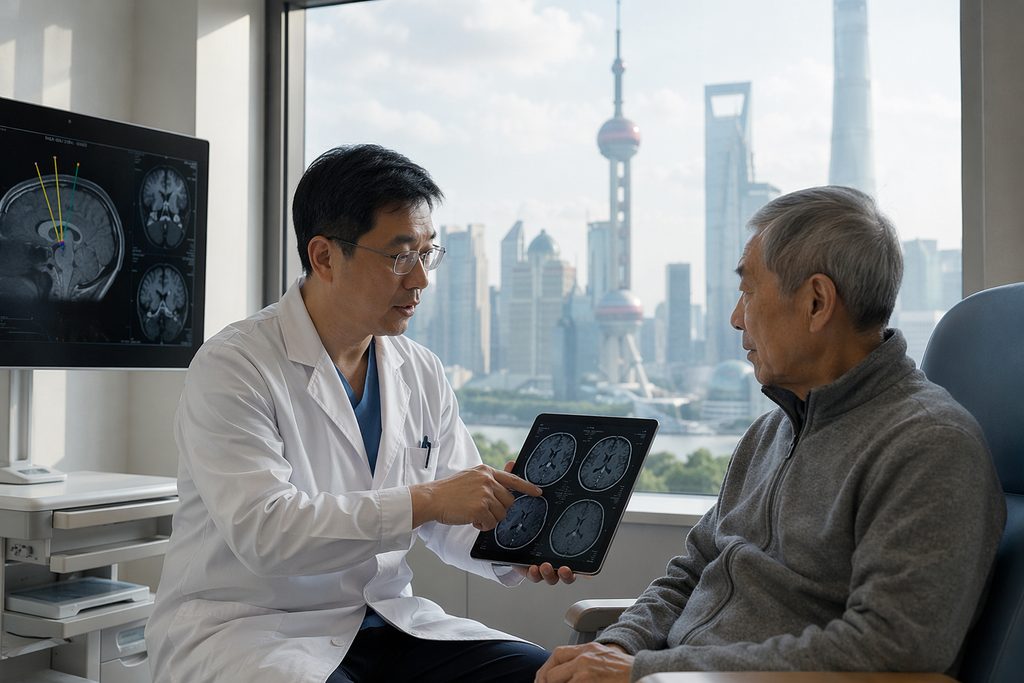
When 42-year-old Michael first heard the diagnosis—Young-Onset Parkinson’s disease—his neurologist in Manchester handed him a pamphlet and a prescription for levodopa. The medication worked. For a while. Three years later, the dyskinesias arrived. His hands would writhe when he didn’t want them to. His legs would freeze mid-step in the grocery store aisle. His specialist mentioned deep brain stimulation. Then came the second blow: the waiting list stretched 18 months, and the quoted cost, even with private insurance, would leave him with roughly £35,000 in out-of-pocket expenses.
Michael is not alone. Approximately 1 in 500 people live with Parkinson’s disease in the UK. For a subset of those patients, DBS is the most effective intervention when medications lose their reliability. But access is throttled by cost and capacity. That reality pushes a growing number of patients to look beyond their borders. And increasingly, their search leads to one institution.
Beijing Tiantan Hospital performs more DBS implantations annually than any other center on the planet. Its neurosurgery department, housed within a hospital affiliated with Capital Medical University, handles a clinical volume that fundamentally changes the risk calculus for this procedure. For international patients, the question is no longer just “is it good?” It is “how do I actually make this happen?”
Key Takeaways
- Beijing Tiantan Hospital is the highest-volume DBS center globally, with neurosurgeons implanting over 600 systems annually—a caseload that directly correlates with lower complication rates.
- The all-inclusive deep brain stimulation cost Beijing Tiantan Hospital ranges from $28,000 to $38,000 USD for international patients, roughly one-third to one-half of comparable US or UK private-sector pricing.
- International patients cannot simply book DBS surgery online. Access requires navigating a mandatory in-person consultation, visa logistics, and hospital international department protocols—barriers that demand local coordination.
- Tiantan’s program covers Parkinson’s disease, essential tremor, and dystonia, with bilateral implantation completed in a single surgery when clinically appropriate.
The Problem: DBS Access in Western Healthcare Systems Is Broken
A 2023 study published in Movement Disorders found that the median wait time for DBS surgery in Canada’s public system was 23 months from initial referral to implantation. In the United States, the barrier is not time but money. The average total cost for bilateral DBS—including the device, surgeon fees, anesthesia, and hospital stay—runs between $80,000 and $120,000. Even insured patients frequently face $15,000 to $30,000 in deductibles and coinsurance.
Why is DBS so expensive in Western markets? The neurostimulator device itself, manufactured by companies like Medtronic, Abbott, and Boston Scientific, carries a wholesale cost that hospitals mark up significantly. Add in operating room time billed at $100 to $200 per minute, neurophysiologist monitoring fees, and multi-day inpatient stays, and the arithmetic becomes punishing. The result: a procedure with Class I evidence for improving motor function in advanced Parkinson’s remains out of reach for thousands of patients who would benefit from it.
Dystonia patients face an even steeper climb. Because dystonia is rarer—affecting roughly 300,000 people in the United States—fewer centers have meaningful experience with DBS targeting the globus pallidus internus (GPi) for this condition. A surgeon who implants 10 DBS systems a year for dystonia simply cannot match the outcomes of one who implants 100.
Who We Are
We are not a hospital. We do not provide medical treatment, perform surgeries, or offer clinical diagnoses. China Medical Services functions as your logistical architects—we bridge the gap between you and China’s top-tier hospitals. Our team handles the practical architecture of your medical journey: identifying the right hospital for your specific condition, coordinating with international patient departments, arranging bilingual medical companions who accompany you through every consultation, and managing the visa and accommodation logistics that make treatment abroad possible. We work with over 340 top-ranked hospitals across 37 cities. But our value is not the database. It is knowing how to navigate a system that was not designed for foreign patients.
Why Beijing Tiantan Hospital’s DBS Program Delivers Results
Clinical Volume That Reshapes the Risk Profile
Deep brain stimulation is a procedure where surgeon experience directly predicts patient outcomes. A 2022 analysis in JAMA Neurology examined over 2,400 DBS cases and found that centers performing fewer than 25 implantations per year had a 2.3 times higher rate of surgical complications—including intracerebral hemorrhage and infection—compared to high-volume centers. This is not controversial. It is a straightforward dose-response relationship: more cases, fewer errors.
Beijing Tiantan Hospital’s functional neurosurgery team implants over 600 DBS systems annually. To put that number in context, a busy academic medical center in the United States might perform 80 to 120 DBS surgeries per year. Tiantan’s neurosurgeons are operating at five to seven times that volume. They see atypical anatomy regularly. They have managed intraoperative complications that lower-volume surgeons encounter only a handful of times in a career. For a patient with dystonia—where lead placement in the GPi requires sub-millimeter precision—this depth of experience is not a luxury. It is a safety requirement.
The hospital’s neurosurgery department, ranked among China’s top 10 for neurosurgery by the Fudan University Hospital Ranking, houses dedicated DBS programming teams who manage post-operative stimulation adjustments. Implanting the electrodes is only half the battle. The months of fine-tuning that follow determine whether a patient walks smoothly or shuffles. Tiantan’s programmers see the full spectrum of stimulation responses because their patient volume exposes them to every variation.
Technology Deployed at Scale
Tiantan’s DBS workflow integrates several technologies that improve targeting accuracy. The hospital uses intraoperative microelectrode recording (MER) to map the boundaries of the subthalamic nucleus or GPi before final electrode placement. This technique allows the surgical team to hear the characteristic firing patterns of neurons in the target region, confirming they are in the right spot before committing to the permanent lead position.
Intraoperative CT or MRI verification is standard. The patient undergoes a scan while still in the operating suite, and the surgical team checks electrode position against the pre-operative plan. Any deviation beyond 1 millimeter triggers repositioning. This intraoperative imaging loop eliminates the risk of waking a patient up only to discover on a post-op scan that the lead is suboptimally placed.
The hospital works with all three major neurostimulator manufacturers—Medtronic, Abbott, and Boston Scientific—giving the surgical team flexibility to select the device best suited to the patient’s specific symptom profile. Directional leads, which allow current to be steered away from structures that cause side effects, are routinely available. Rechargeable pulse generators that last 15 years before replacement are offered alongside non-rechargeable options for patients who prefer not to manage weekly charging.
Cost Structure: The Economics of Scale
Let’s address the question patients ask first: how much is deep brain stimulation for Parkinson’s in China? At Beijing Tiantan Hospital, the all-inclusive cost for international patients—covering the neurostimulator device, bilateral electrode implantation, hospital stay, surgeon and anesthesia fees, and initial programming—ranges from $28,000 to $38,000 USD. The final figure depends on the specific device chosen (rechargeable vs. non-rechargeable, directional vs. conventional leads) and the length of inpatient recovery required.
This is not a discounted rate. It is the natural consequence of structural economic differences. Chinese hospital operating costs are lower because labor costs for nursing and support staff are lower. Device pricing from manufacturers is negotiated at national scale for a population of 1.4 billion. And high surgical volume amortizes fixed costs—imaging equipment, operating room infrastructure—across more procedures. The outcome is a price that undercuts Western private-sector rates by 60 to 70 percent without any compromise in the technology or surgical technique deployed.
| Cost Component | Beijing Tiantan (USD) | US Private Sector (USD) | UK Private Sector (USD) |
|---|---|---|---|
| Bilateral DBS System (Device) | $18,000–$24,000 | $35,000–$50,000 | $30,000–$45,000 |
| Surgeon & OR Fees | $6,000–$8,000 | $25,000–$40,000 | $20,000–$30,000 |
| Hospital Stay (3–5 days) | $3,000–$4,000 | $15,000–$25,000 | $10,000–$15,000 |
| Anesthesia & Monitoring | $1,000–$2,000 | $5,000–$8,000 | $4,000–$6,000 |
| Estimated Total | $28,000–$38,000 | $80,000–$123,000 | $64,000–$96,000 |
For patients asking about the Parkinson’s brain pacemaker price China 2025 specifically, the rechargeable pulse generator options from all three manufacturers are available at Tiantan, with the device cost falling within the range above. The hospital’s international department provides itemized billing, which is essential for patients who plan to seek reimbursement from their home-country insurers after treatment.
What You Need to Know Before Going Alone
We believe in telling patients the hard truths upfront. Beijing Tiantan Hospital is an extraordinary institution. It is also a Chinese public hospital, and that means navigating it without local support is genuinely difficult. Here is what you are up against.
- Visa Requirements Are Specific and Non-Negotiable: Medical treatment in China requires an S2 visa with a treatment-purpose annotation. This is not a tourist visa. It is not a business visa. The application requires an invitation letter from the treating hospital, which Tiantan’s international department can issue—but only after you have completed an in-person consultation and the hospital has formally accepted you as a patient. This creates a chicken-and-egg problem: you need the visa to attend the consultation, but you need the consultation to get the visa invitation. Solving this requires advance coordination with the hospital’s international patient office.
- You Cannot Book DBS Surgery Remotely: Chinese public hospital regulations require an in-person specialist consultation before any surgery can be scheduled. There is no online booking portal for international DBS patients. You fly to Beijing, attend the outpatient consultation, undergo pre-operative assessments including a brain MRI and neuropsychological evaluation, and only then is a surgery date assigned. The timeline from landing in Beijing to surgery day typically spans two to four weeks, depending on the department’s schedule and your clinical workup results.
- Language Barriers Are Absolute: Tiantan’s neurosurgeons are world-class. Their English varies. Nursing staff, administrative personnel, and the technicians who run pre-op imaging generally speak Mandarin exclusively. Every step—registration, payment, test scheduling, discharge instructions—happens in Chinese. Without a bilingual companion who understands both the language and the hospital’s internal workflows, a foreign patient will struggle to complete even basic administrative tasks.
- Payment Is Upfront and Cash-Based: Chinese public hospitals require prepayment for scheduled procedures. International patients pay a deposit upon admission, and the final bill is settled before discharge. Credit cards are accepted, but international wire transfers and insurance direct billing are generally not available in the public hospital system. You pay the hospital, then seek reimbursement from your insurer afterward. Keep every receipt. The international department can provide the documentation you need for claims.
How We Help You Navigate This
These barriers are real. They are also solvable with the right support on the ground. Our team has coordinated DBS journeys at Beijing Tiantan Hospital for international patients from over a dozen countries. The process we have refined works in three phases.
Before you travel, we handle the hospital matching and initial communication. We review your medical records—neurologist reports, medication history, brain imaging—and present your case to Tiantan’s international department for preliminary assessment. The hospital’s specialists confirm whether you are a suitable DBS candidate before you book a flight. We coordinate the invitation letter required for your S2 visa application and advise on accommodation near the hospital in Beijing’s Fengtai District.
During your stay, a bilingual medical companion accompanies you to every appointment. This person is not a translator on a phone. They are physically present, guiding you through the hospital’s sprawling campus, handling registration and payment queues, interpreting your conversations with the neurosurgeon, and ensuring you understand every step of the pre-operative workup. When the surgeon explains the surgical plan—which target structure, which device, which lead configuration—you hear it in clear English, in real time.
After surgery, the support continues. The initial DBS programming session, where the stimulation parameters are first set, is a critical moment. Your companion ensures the programming neurologist’s instructions about activity restrictions, medication adjustments, and follow-up programming sessions are fully understood. If you need remote programming adjustments after returning home, we can coordinate video consultations with Tiantan’s DBS team through our consultation coordination service.
Is Beijing Tiantan Hospital Good for Dystonia DBS?
The short answer is yes. The longer answer requires understanding what makes dystonia DBS technically distinct from Parkinson’s DBS.
Dystonia involves sustained muscle contractions that produce twisting movements and abnormal postures. DBS for dystonia typically targets the globus pallidus internus rather than the subthalamic nucleus, which is the more common target for Parkinson’s. GPi targeting demands exceptional precision because the structure is small and bordered by the optic tract and internal capsule—stimulating the wrong fibers can cause visual disturbances or muscle contractions.
Beijing Tiantan Hospital’s functional neurosurgery team manages a high volume of dystonia cases, including generalized dystonia, cervical dystonia, and DYT1-positive genetic dystonia. The hospital’s MER mapping protocol is particularly valuable here, as the GPi has a distinct electrophysiological signature that experienced neurophysiologists can identify. A 2021 study from Tiantan’s neurosurgery department, published in Stereotactic and Functional Neurosurgery, reported significant improvement in Burke-Fahn-Marsden Dystonia Rating Scale scores at 12-month follow-up for patients undergoing GPi-DBS, with a complication rate consistent with the best international benchmarks.
For patients researching the best hospital for DBS surgery China, Tiantan’s claim rests on more than reputation. It rests on volume, published outcomes, and the institutional infrastructure that supports a high-throughput DBS program. Other Chinese centers with strong DBS programs include Ruijin Hospital in Shanghai and Xuanwu Hospital, also in Beijing. But Tiantan’s neurosurgery caseload places it in a category of its own.
Frequently Asked Questions
No. Chinese public hospital regulations require an in-person specialist consultation before any surgical procedure can be scheduled. You must travel to Beijing for the initial outpatient assessment, which includes a clinical evaluation, brain MRI, and neuropsychological testing. Only after the surgical team confirms your candidacy can a surgery date be assigned. There is no workaround for this requirement. What we can do is ensure your consultation is scheduled efficiently and that all necessary pre-consultation documentation is prepared in advance to avoid wasted trips.
The all-inclusive cost ranges from $28,000 to $38,000 USD. This covers the neurostimulator device, bilateral electrode leads, surgeon and anesthesia fees, a three-to-five-day inpatient stay, and initial post-operative programming. The exact figure depends on device selection—rechargeable pulse generators cost more upfront but avoid future battery replacement surgeries—and on whether any unexpected complications extend your hospital stay. The hospital’s international department provides a detailed cost breakdown before you commit to surgery. This price does not include airfare, accommodation, or our coordination services.
Tiantan’s program is distinguished primarily by surgical volume—over 600 DBS implantations per year, compared to 80–120 at a typical high-volume US academic center. The technology deployed is equivalent: the same three manufacturers’ devices, the same intraoperative MER mapping, the same imaging verification protocols. The neurosurgeons train in the same techniques published in international journals. The difference is not in what is available but in how many times the team has done it. For a procedure where surgeon experience directly predicts complication rates, that volume gap matters.
DBS complications fall into two categories: surgical (infection, hemorrhage, lead misplacement) and device-related (hardware malfunction, battery depletion, stimulation side effects). Surgical complications typically present within the first 30 days. We strongly advise patients to remain in Beijing for at least two weeks post-discharge for wound checks and initial programming before flying home. Device-related issues can arise months or years later. In those cases, we can coordinate remote video consultations with Tiantan’s DBS programming team. If hardware replacement is needed, the surgery can often be performed by a local neurosurgeon in your home country, as the implant technique is standardized globally. We help facilitate the transfer of your surgical records and imaging to your local provider.
This depends on your neurologist, but the answer is usually yes when proper documentation is provided. Beijing Tiantan Hospital issues a comprehensive discharge summary, surgical report, and post-operative imaging that any movement disorder specialist can review. The neurostimulator devices implanted are the same FDA-approved or CE-marked models used in Western hospitals—Medtronic, Abbott, or Boston Scientific systems—so your local neurologist or DBS programmer will be familiar with the programming interface. We recommend informing your home neurologist of your plans before traveling. A collaborative approach, where your local doctor knows you are pursuing DBS abroad and is prepared to resume your care upon return, produces the smoothest transition.
Your Next Step
Deep brain stimulation is a major decision. The surgery itself is only one part of a journey that includes candidacy evaluation, device selection, lead implantation, and months of post-operative programming. Beijing Tiantan Hospital offers world-class surgical expertise at a cost that makes DBS accessible to patients who would otherwise wait years or drain their savings. The barrier is not the quality of care. It is the complexity of accessing it from abroad.
We exist to remove that barrier. If you are considering DBS at Beijing Tiantan—whether for Parkinson’s disease, dystonia, or essential tremor—our team can assess your case, coordinate with the hospital’s international department, and guide you through every logistical step from visa application to post-operative follow-up. Start with a conversation. There is no cost and no commitment for an initial discussion about whether this path makes sense for your specific situation.
Contact our patient coordination team to discuss your DBS treatment options at Beijing Tiantan Hospital. We will review your medical history, explain the likely timeline and costs, and help you decide if this is the right move.
For more medical information and treatment options in China, visit chinamedservices.com (China Medical Services).
