Skull Base Tumor Surgery China: Beijing Tongren Hospital for Acoustic Neuroma and Meningioma
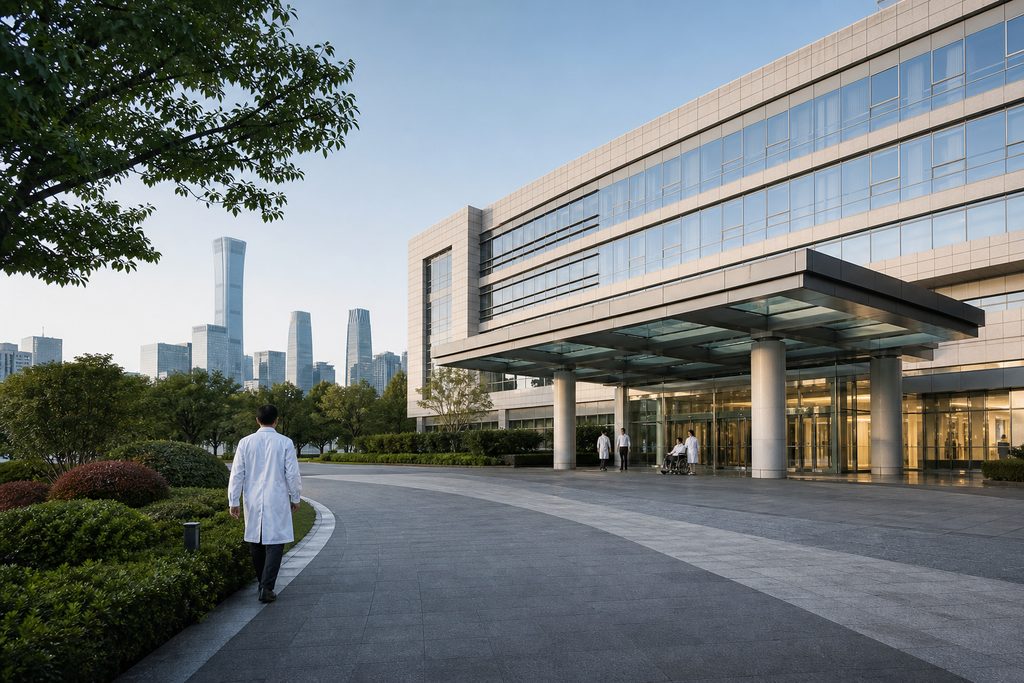
What if the tumor growing inside your head could be removed by a surgeon who does this exact procedure not a few times a year, but several times a week?
The question cuts through the noise. A skull base tumor diagnosis—whether an acoustic neuroma pressing on your hearing nerve or a meningioma crowding your brain—sends your life into a tailspin. You need answers. Not just about survival, but about preserving the functions that make you who you are. Your hearing. Your facial movement. Your balance.
And you need to know if there is a path that does not involve depleting your savings or waiting months while anxiety eats at you.
Beijing Tongren Hospital has emerged as a focal point for international patients asking exactly these questions. Our team at China Medical Services has spent years building the bridge between patients like you and the specific departments within China’s top-tier hospitals that handle these complex cases. Knowing the acoustic neuroma surgery cost Beijing Tongren Hospital charges is one piece of the puzzle. Understanding why their neurosurgeons achieve the outcomes they do is another.
Key Takeaways
- Beijing Tongren Hospital’s neurosurgery department performs a high volume of skull base procedures annually, with surgeon experience directly linked to better facial nerve preservation rates.
- The acoustic neuroma surgery cost Beijing Tongren Hospital quotes for international patients typically ranges from $18,000 to $35,000 USD—a fraction of the $100,000+ common in the US.
- Language barriers and hospital navigation are the single biggest obstacle for foreign patients; the hospital’s VIP International Department is the only viable channel for pre-arranged surgical scheduling.
- Success rates for meningioma resection in China’s top-tier centers mirror international benchmarks, but the definition of “success” must include functional preservation, not just tumor removal.
The Problem: A Diagnosis That Demands High-Volume Expertise
Acoustic neuromas affect approximately 1 in 100,000 people each year. Meningiomas are far more common, accounting for about 30% of all primary brain tumors. Neither is common enough that your local community hospital sees them daily. That is the crux of the issue. Studies published in the Journal of Neurosurgery have repeatedly shown that hospitals performing more than 20 acoustic neuroma surgeries per year have significantly lower complication rates than those doing fewer. A 2020 analysis in Neurosurgery found that high-volume centers reduced the risk of facial nerve injury by nearly half compared to low-volume centers. The numbers do not lie. If your surgeon does this surgery six times a year, you are rolling dice with your face and your hearing.
For many Western patients, the wait to see a high-volume specialist can stretch to three or four months. Then the bill arrives. In the United States, the uninsured or underinsured cost for skull base tumor surgery can exceed $120,000. Even with insurance, out-of-pocket maximums and denied claims create financial ruin for families. The system forces a terrible choice: wait and worry, or pay and pray.
Who We Are
We are not a hospital. We do not perform surgery, prescribe medication, or offer medical opinions. China Medical Services is a medical concierge organization. We are the logistical architects connecting international patients to the resources within China’s 340+ top-ranked hospitals across 37 cities. Our work begins where your confusion starts—translating medical records, coordinating with hospital VIP departments, arranging bilingual medical companions, and ensuring that when you arrive in Beijing, you walk into the right building and speak to the right clinical team. We do not sell access. We manage the complexity of a foreign healthcare system so you can focus entirely on recovery.
Why Beijing Tongren Hospital Delivers Results for Skull Base Tumors
Beijing Tongren Hospital is not a one-department institution. It is a massive, integrated medical center with a particular reputation in otolaryngology and neurosurgery. The hospital’s ENT department is consistently ranked among China’s top programs. For skull base tumors that sit at the intersection of the ear, the brain, and the cranial nerves, this cross-specialty strength matters enormously.
Surgical Volume and Nerve Preservation
What is the success rate of meningioma surgery in China at a center like Tongren? When you ask this, you must define success carefully. Total tumor resection rates for meningiomas at top Chinese neurosurgical centers run between 85% and 95%, depending on tumor location and involvement with critical structures. These figures align with outcomes published by the Mayo Clinic and Johns Hopkins. But the more meaningful metric—the one patients feel every time they look in a mirror—is facial nerve preservation. In acoustic neuroma surgery, Tongren’s neurotology teams report anatomical facial nerve preservation rates exceeding 90% for tumors under 3 centimeters. Functional preservation—meaning your face actually moves—depends on tumor size, but the data trends positively when surgery is performed by teams that do this weekly, not monthly.
Volume is the engine behind these numbers. A neurosurgeon at a major Chinese center may perform over 100 skull base procedures in a year. Many Western surgeons perform fewer than 30. This repetition is not about speed. It is about intraoperative judgment—the split-second decision when the nerve monitor signals and the surgeon must choose between taking more tumor and protecting function. Judgment comes from pattern recognition. Pattern recognition comes from volume.
Integrated Surgical Technology
Tongren’s neurosurgical suites are equipped with intraoperative MRI, neuronavigation systems, and continuous electrophysiological monitoring. These are the same tools found in any world-class operating theater. The difference is not the brand of the equipment. It is how the team integrates them. The hospital pioneered approaches that combine endoscopic and microscopic techniques for skull base tumors. For a meningioma wedged deep beneath the brain, this dual-visualization approach can mean the difference between a complete resection and a dangerous residual tumor fragment left behind. The technology supports the technique. It does not replace it.
How Much Does Skull Base Tumor Surgery Cost in Beijing?
Let us address the question that keeps patients awake at night. How much does skull base tumor surgery cost in Beijing? For an acoustic neuroma resection at Beijing Tongren Hospital’s international department, the total surgical package—including surgeon fees, anesthesia, operating room, ICU stay, and standard ward recovery—typically falls between $18,000 and $35,000 USD. Meningioma surgeries range similarly, though complex cases involving vascular reconstruction can push toward $45,000.
These figures are not guesses. They reflect the case complexity and the specific surgical approach required. A translabyrinthine approach for a small acoustic neuroma sits at the lower end. A retrosigmoid craniotomy for a large meningioma compressing the brainstem sits higher. The acoustic neuroma surgery cost Beijing Tongren Hospital offers does not mean corners are cut. China’s cost advantage stems from structural factors: lower labor costs for hospital staff, high patient throughput that spreads fixed equipment costs, and a pricing environment unburdened by the administrative bloat of the US insurance system. A surgery that costs $120,000 in Houston does not become $30,000 in Beijing because it is half as good. It becomes $30,000 because the system is built differently.
| Procedure | Estimated Cost (Beijing Tongren VIP) | Estimated Cost (US) |
|---|---|---|
| Acoustic Neuroma Resection (Small-Medium) | $18,000 – $28,000 | $80,000 – $150,000 |
| Meningioma Resection (Standard) | $20,000 – $35,000 | $90,000 – $180,000 |
| Complex Skull Base Meningioma | $30,000 – $45,000 | $150,000 – $250,000+ |
Costs vary by hospital and case complexity. The figures above represent the international patient channel pricing, which includes English-language coordination and expedited admission scheduling. Standard public ward pricing is lower but functionally inaccessible to foreign patients without Mandarin fluency and local residency.
What You Need to Know Before Going Alone
The clinical data is compelling. The practical barriers are real. We have seen patients arrive with a printout of an address and a hope, only to spend hours lost in a hospital campus that handles over 10,000 outpatient visits daily. Honesty about these obstacles is not discouragement. It is preparation.
- Visa Requirements: Medical treatment in China requires an S2 visa with the specific annotation for medical purposes. Your accompanying family member needs their own S2. The application demands an invitation letter from the hospital—a document that only the hospital’s international department can issue. Walk-in patients cannot obtain this retroactively. Without the correct visa, you will be turned away at immigration. We have seen it happen.
- Hospital Navigation and Registration: Beijing Tongren’s public outpatient system does not accept international pre-booking. You cannot call from London and reserve a surgery slot on the general ward. The only channel for pre-arranged surgical scheduling is the hospital’s VIP International Medical Center. This channel operates on a different fee structure and requires medical records to be submitted, translated, and reviewed before an invitation letter is issued.
- Payment Systems: Chinese public hospitals operate on a prepayment model. You deposit funds at admission, and the hospital deducts costs daily. International credit cards are not reliably accepted at hospital cashiers. WeChat Pay and Alipay dominate, but linking a foreign bank account to these platforms is a labyrinthine process. Large wire transfers to the hospital’s account are possible but require precise instructions in Chinese.
How We Help You Navigate This
These barriers are not flaws in the Chinese healthcare system. They are features of a system designed for a billion domestic patients. We exist because bridging this gap requires more than a translation app.
The process begins before you book a flight. You send us your imaging—MRI with contrast, CT if available—and your clinical summary. Our team works with the international department at Tongren to have your case reviewed by a neurosurgeon who specializes in your tumor type. This is not a generic consultation. The surgeon reviews your films and determines surgical candidacy, approach, and a preliminary timeline. If the team confirms they can treat you, the hospital issues the formal invitation letter. We handle the visa guidance, the appointment coordination, and the financial logistics.
When you land in Beijing, a bilingual medical companion meets you. This person does not wear a white coat. They are your navigator. They take you to the correct building, sit with you during registration, translate your conversation with the neurosurgeon in real time, and ensure that when you wake up from anesthesia, someone who speaks your language is there to explain what happened. They handle the pharmacy runs, the payment top-ups at the cashier, and the discharge paperwork. You focus on walking again, on regaining your balance, on healing.
After discharge, we coordinate follow-up imaging and video consultations with your surgeon back home. The relationship does not end when you leave Beijing. Recovery from skull base surgery is a marathon measured in months. We stay in the loop until your local neurologist has everything needed to manage your long-term care.
Many patients ask us about the best neurosurgeon for skull base tumor China can offer. We understand the impulse. You want a name—a single, reassuring name at the top of a resume. The reality is more nuanced. Beijing Tongren has a team of senior neurosurgeons, each handling specific tumor subtypes and locations. The best surgeon for a petroclival meningioma may not be the same person who excels at a small intracanalicular acoustic neuroma. Our role is to match your specific imaging and clinical history to the surgical team best equipped for your case. We do not pick a name from a list. We present your case and let clinical judgment determine the fit.
Frequently Asked Questions
For accessible convexity meningiomas, gross total resection rates exceed 95% with low complication profiles. For skull base meningiomas involving the cavernous sinus or encasing major arteries, total resection rates drop to 60-80%, with the surgical strategy often shifting to subtotal resection followed by radiosurgery for the remnant. This is consistent with global neurosurgical practice. No ethical surgeon guarantees total removal when the tumor is wrapped around your carotid artery. The success is measured in safe maximal resection with neurological preservation.
The quotation you receive after your case review covers the surgical procedure, standard hospital stay, and routine postoperative care. Complications that extend ICU stay, require additional surgery, or demand prolonged rehabilitation will increase the total cost. This is true in every hospital in every country. We advise patients to budget a 20% contingency above the quoted figure. Surprises in surgery are not unique to China. The financial buffer is universal wisdom.
Yes, through the VIP International Department channel. This is precisely the pathway we facilitate. You submit your complete medical records and imaging. The surgical team reviews them remotely. If surgery is indicated and the team accepts your case, the hospital schedules your admission date and issues the visa invitation letter. You travel to Beijing for the pre-operative workup and surgery in one trip. The “package” is not a tourist product. It is a coordinated medical journey. You cannot book skull base tumor surgery China package deals on a website shopping cart. Every case requires individual clinical review.
The feedback we have received from patients we have served highlights two consistent themes. First, the surgical skill is world-class—patients express deep gratitude for preserved facial function and, in some cases, retained hearing. Second, the hospital environment is culturally different from Western facilities. Nursing ratios are lower. Families are expected to assist with non-clinical care like feeding and mobility support. Private rooms in the VIP ward mitigate much of this, but the expectation that a family member or hired companion remains present is real. We prepare every patient for this cultural difference before departure. Those who arrive expecting a Western hospital experience are unsettled. Those who arrive understanding the system report high satisfaction with the clinical outcome.
Your Next Step
A skull base tumor diagnosis demands decisions made with clarity, not panic. The surgical expertise exists in Beijing. The cost advantage is structural and real. The path to accessing it requires navigation through language, logistics, and a healthcare system built on different assumptions than your own.
If you are weighing your options and want to understand whether your specific case is suitable for treatment at Beijing Tongren Hospital, start with a conversation. No commitment. No pressure. Just a clear-eyed assessment of your imaging and your options. Request a free consultation with our team, and let us show you what the path forward actually looks like. You can also explore our database of Beijing hospitals to understand the broader landscape of care available in the capital.
Disclaimer: This article is for informational purposes only and does not constitute medical advice. All treatment decisions should be made in consultation with a qualified neurosurgeon after a thorough clinical evaluation. Surgical outcomes vary by individual case characteristics, tumor biology, and patient health status.
For more medical information and treatment options in China, visit chinamedservices.com (China Medical Services).
