Medical Escort for Surgical Consultation in Chengdu: A Patient’s Guide
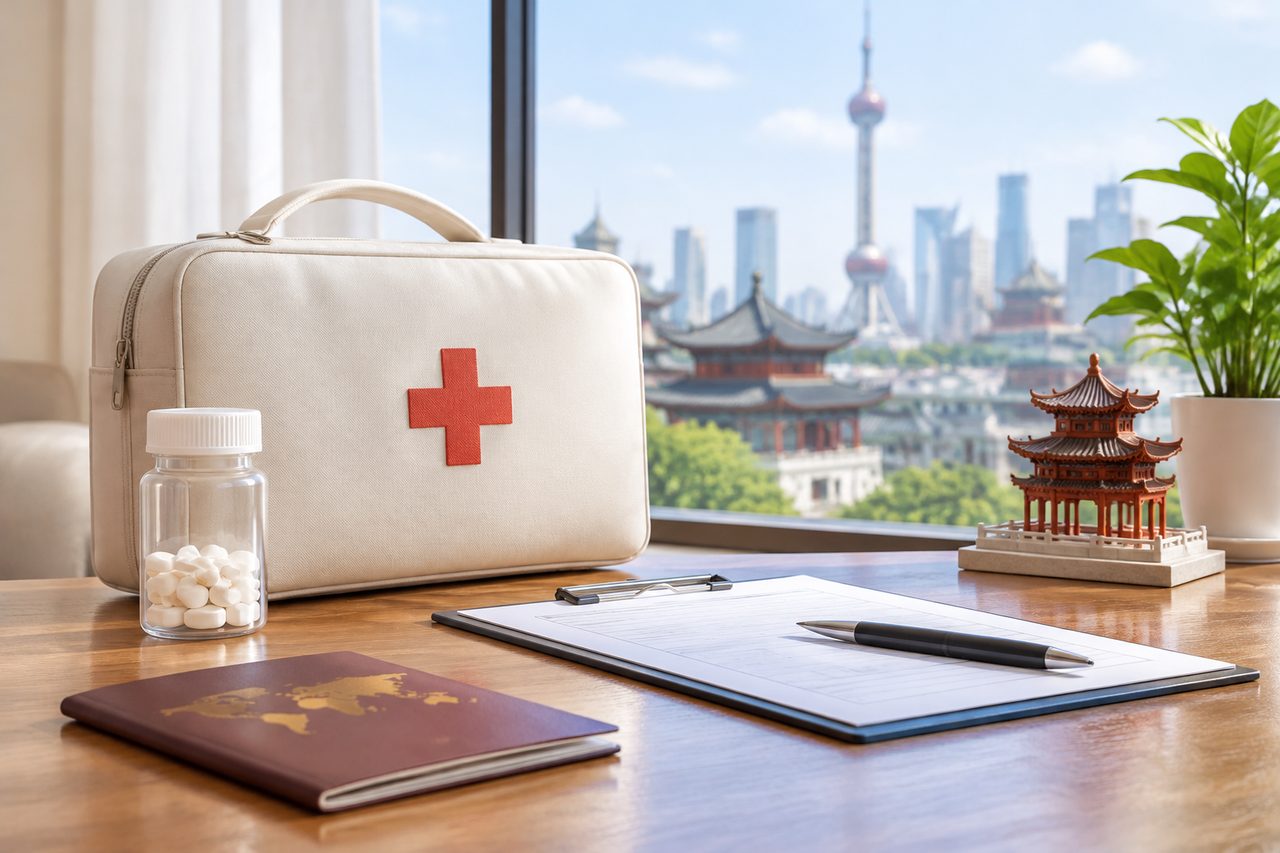
Medical Escort for Surgical Consultation in Chengdu
A medical escort for surgical consultation in Chengdu is a bilingual support professional who accompanies an international patient through the practical steps of seeing a Chinese surgeon in person: hospital registration, medical card creation, queueing, payment, wayfinding and interpretation between patient and clinical team. The escort does not examine you, diagnose you or operate. The surgeon does that. The escort makes sure the appointment actually happens, on the right day, in the right department, with nothing lost in translation.
That distinction matters more than it sounds. In Chengdu’s large public hospitals, a surgical consultation is not a single event you book online and attend. It is a sequence: obtain a hospital medical card, register in the correct department, wait for your turn in a queue that may include hundreds of people, pay separately for each test or scan, collect results, then return to the surgeon with those results in hand. For a patient who does not read Chinese, each of those steps is a potential dead end. West China Hospital, one of the institutions most international patients ask about in Chengdu, serves enormous outpatient volumes daily, and its corridors are not designed around English signage.
This guide explains what a medical escort actually does during a surgical consultation in Chengdu, what it costs, what it cannot do, and how to prepare so that a single trip produces a usable surgical opinion rather than a wasted week.
Key Takeaways
- In most Chinese public hospitals, surgery cannot be scheduled from abroad. A surgeon must see you in person first, which is why the consultation trip is the pivotal step — not an optional preliminary.
- Bilingual medical companion service starts from $300 per day (half day of 4 hours or full day of 8 hours), covering registration, queueing, payment, wayfinding, interpretation and accompaniment. It does not guarantee an appointment with a named specialist.
- The honest barrier is structural, not linguistic alone: public hospital outpatient registration generally cannot be secured from overseas in advance, and same-day queues are long. Understanding this before you fly prevents most disappointments.
- Before booking any travel, clarify three things: which department and hospital fit your case, what records the surgeon will want to see, and whether a remote second opinion should come first.
The Problem: A Surgical Opinion You Cannot Reach From Abroad
Consider the arithmetic facing a patient in another country with a surgical question. In many Western systems, the path is familiar: referral, imaging, a consultation, then a date. The waiting is the pain — and it is well documented. In Canada, the Fraser Institute’s long-running wait-time reporting has for years measured median waits from specialist referral to treatment in the weeks-to-months range depending on specialty and province. In the United Kingdom, NHS referral-to-treatment targets have repeatedly been missed, with waiting lists exceeding seven million pathways at points in recent years. For a patient with a symptomatic hernia, a suspicious thyroid nodule or a knee that has stopped responding to conservative care, months of waiting is not abstract — it is months of lost function and mounting anxiety.
China offers an alternative, but the entry point is confusing. A patient searching for help quickly discovers that Chinese public hospitals generally do not allow international patients to book an ordinary outpatient surgical consultation online in advance. Registration happens on the day, in person, through the hospital’s own system. The surgeon who will operate must meet you first. There is no way around that sequence, and anyone who tells you otherwise is misrepresenting how the system works.
The result is a gap. The clinical capability exists — Chengdu hosts major teaching hospitals with high surgical volumes — but the administrative and linguistic path to reach it is opaque to a first-time foreign visitor. That gap is precisely where a medical escort for surgical consultation in Chengdu earns its place.
Why Chengdu Delivers Results for Surgical Patients
Clinical Volume Concentrated in a Few Institutions
China’s top hospitals are not evenly distributed. Fudan University’s hospital rankings place the strongest institutions in a small number of cities, and Chengdu is one of them, anchored by West China Hospital of Sichuan University. High surgical volume matters for a practical reason: teams that perform a procedure frequently tend to have refined workflows, dedicated equipment and experienced post-operative care. That is a structural observation about large referral centers, not a promise about your individual outcome. No responsible coordinator will quote you a success rate for your specific case before a surgeon has reviewed your imaging.
Consultation and Diagnostics Compressed Into Days
The operational difference international patients notice most is speed of diagnostics. In a Chinese tertiary hospital, a consultation, blood work, ultrasound, CT or MRI and a return visit to the surgeon can often be arranged within a short window, because imaging and outpatient services operate at very high daily throughput. For a patient who has traveled far, this compression is the whole point: you want the surgical opinion and the supporting tests finished before you fly home, not spread across three separate trips.
Cost Structure That Reflects Local Economics
Cost is lower for structural reasons — local labor economics, high patient volume spreading equipment costs, and public hospital pricing — not because something is being skipped. As a broad reference, cardiac bypass surgery at a top Chinese public hospital has been reported in the range of $12,000–20,000, against $120,000 or more in the United States. Those figures vary by hospital and case complexity and should never be treated as a quote. For a consultation trip specifically, the relevant costs are smaller and more predictable: registration fees, imaging, laboratory tests, interpretation and accommodation.
What a Medical Escort Actually Does During a Chengdu Surgical Consultation
Strip away the marketing language and the service is a set of concrete tasks, performed in order, on the day.
- Before the visit: your existing reports — imaging films, pathology, laboratory results, medication lists — are organized and translated into a format the Chinese clinical team can read quickly. Missing records are identified so you can request them from your home doctor before traveling.
- Medical card and registration: the hospital medical card is created and the correct department registration is completed. This is the step most foreign patients cannot complete alone, because it runs through Chinese-language interfaces and physical counters.
- Queueing and payment: the escort waits, pays at each payment point on your behalf, and keeps the receipts organized. Chinese public hospitals typically require prepayment, with insurance reimbursement handled afterward in your home country.
- Interpretation during the consultation: symptoms, history and goals are conveyed to the surgeon; the surgeon’s findings, surgical options, risks and recommended workup are conveyed back to you in plain English. You leave with notes, not a vague memory.
- Follow-through: if the surgeon orders tests, the escort helps schedule and navigate them, then ensures results reach the surgeon for the follow-up discussion.
Practical tip: Ask for a written summary of the consultation in English at the end of the day. Memory fades on long travel days, and a written record is what your home physician will need if you decide to continue care locally.
What the Escort Cannot Do — and Why That Matters
Honesty here protects you. A medical escort is not a doctor, does not interpret imaging independently, and cannot influence a surgeon’s clinical judgment. The service also cannot guarantee that a specific named professor will be available on your chosen date, nor that surgery will be recommended at all. Some patients arrive expecting a surgical date and leave with a recommendation for conservative management, further imaging or a different specialty entirely. That is a legitimate clinical outcome, not a service failure.
There is also a structural limit worth stating plainly: ordinary public hospital outpatient registration generally cannot be locked in from overseas. What can be arranged in advance is coordination — through a hospital’s international department or VIP channel, where senior specialists and English-language support are available, at roughly 1.5 to 2 times the standard-channel price. Patients who need certainty about timing should discuss this option openly rather than assume the standard queue will accommodate a tight travel schedule.
Caution: Be skeptical of any provider promising a guaranteed appointment with a specific surgeon, a guaranteed surgery date, or a fixed all-in price before your records have been reviewed. None of those can be truthfully committed in advance.
Practical Considerations Before You Fly to Chengdu
Visa category. Foreign patients traveling to China for medical treatment typically use the S2 visa, issued for short-term medical treatment and private affairs, with family members accompanying you applying under the same category. Stays expected to exceed 180 days fall under S1. Requirements are set by the Chinese embassy or consulate serving your location and change over time, so confirm current documentation — including a supporting letter from the treating hospital — directly with the mission before applying. Note that the M visa is a commercial and trade category and is not the correct route for medical travel.
Records. Bring imaging on disc or film, not just reports. Chinese surgeons, like surgeons everywhere, want to see the actual images. A pathology slide or block, where relevant, should travel with you if the question is oncological.
Payment. Public hospitals require prepayment; international credit cards may not work at every counter, so carry a payment method confirmed in advance. Private international hospitals in China more often offer direct insurance billing, though Chengdu’s options in this category are narrower than Beijing’s or Shanghai’s.
Language and follow-up. Outside the consultation room, daily life in Chengdu is largely Chinese-speaking. Plan interpretation for pharmacy visits, test collection and any post-operative instructions. If surgery follows, ask early how follow-up will work once you return home, and request discharge documentation in English.
For a broader view of which institutions handle which specialties, our department-by-department rankings of China’s top hospitals and the Chengdu city guide are useful starting points. Patients weighing a first step before committing to travel often begin with a written second opinion, which lets a Chinese specialty team review existing reports remotely.
Frequently Asked Questions
Generally not through the ordinary public hospital channel, where registration happens in person on the day. Coordination through a hospital’s international or VIP department can secure a scheduled appointment in advance, at a higher price. A remote written second opinion or video consultation is often the more sensible first step, because it clarifies whether traveling is worthwhile at all.
Bilingual medical companion service starts from $300 per day, covering either a 4-hour half day or an 8-hour full day of registration, queueing, payment, wayfinding, interpretation and accompaniment. Hospital fees, tests and medication are billed separately by the hospital. Final pricing depends on the hospital and the complexity of your case, and a written quote follows a conversation about your needs.
That is a normal and valuable outcome. The purpose of the consultation is an honest clinical opinion, and a recommendation for conservative treatment, further imaging or a different specialty saves you from unnecessary surgery. The escort’s role is to make sure you understand the reasoning clearly before you decide anything.
Your Next Step
The core message is simple: a surgical consultation in Chengdu is reachable, but it rewards preparation — correct records, the right department, realistic expectations about scheduling, and interpretation you can trust in the room. China Medical Services is a coordination service, not a hospital; we do not diagnose or treat, but we help international patients match with appropriate Chinese hospitals, prepare records, arrange remote opinions and provide bilingual accompaniment on the ground. If you would like to talk through your situation before making any commitment, start with a free consultation — no pressure, and no obligation to travel.
This article is for general information only and does not constitute medical advice. Treatment decisions should always be made with a qualified physician who has reviewed your individual case.
For more medical information and treatment options in China, visit chinamedservices.com (China Medical Services).
