New Zealand Medical Travel China: Complex Surgery Access at China Largest Hospital Systems
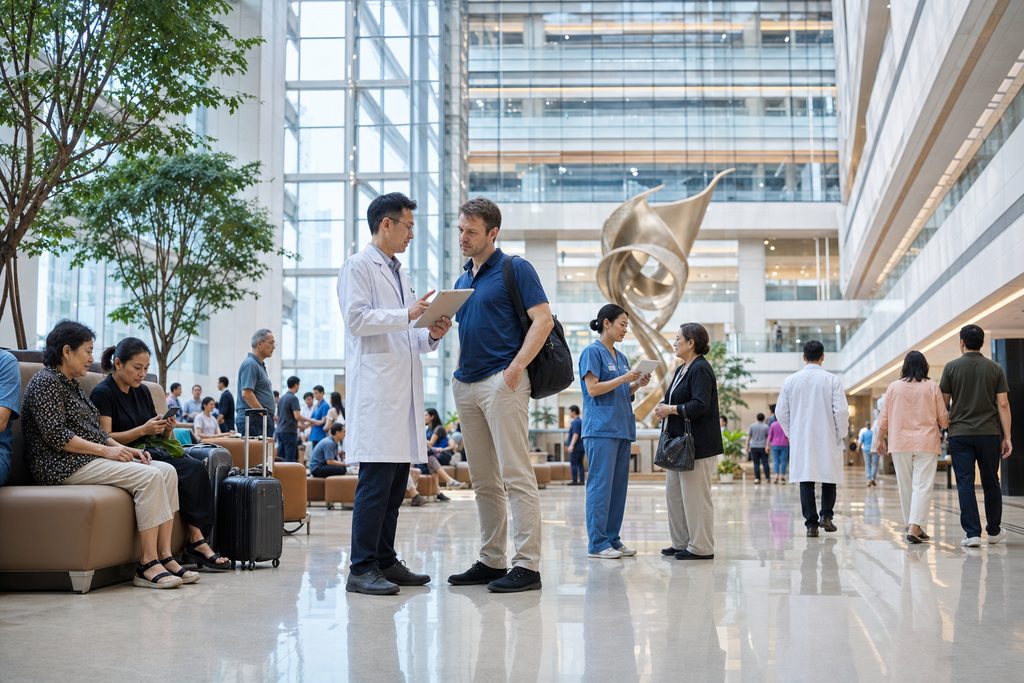
When 42-year-old Michael first heard the diagnosis, he had no idea where to start looking for treatment. A spinal tumor. Benign, but growing. His orthopedic surgeon in Christchurch laid out the path: join the public waitlist, expect 9 to 14 months before a surgical slot opens. Private care in Auckland would cost upwards of NZ$85,000. Michael did not have that kind of money sitting around. He started searching online at 2 a.m., typing phrases like “complex surgery package China cost” into Google, wondering if traveling halfway across the world for an operation was reckless or the most rational decision he could make.
That question sits at the center of a quiet but growing shift in global healthcare. New Zealanders face a peculiar bind. Public healthcare is excellent when you can access it, but waitlists for non-emergency complex procedures have stretched to breaking point. As of late 2024, over 88,000 New Zealanders were waiting longer than four months for a first specialist assessment. The figure does not even count those already approved for surgery and waiting for an operating theater. For spinal fusions, cardiac valve replacements, and major joint reconstructions, delays routinely exceed twelve months. Private alternatives exist but at prices that can wipe out a family’s savings. So patients look abroad. And increasingly, they look to China.
We are not a hospital. We do not provide medical treatment or clinical diagnoses. Our team functions as logistical architects — we bridge the gap between you and China’s top-tier medical expertise, handling everything from hospital matching and appointment coordination to visa guidance and bilingual accompaniment. We have seen firsthand how the largest hospital in China for international patients surgery prices compare to Western quotes, and we understand exactly what it takes to turn a Google search into a safe, successful surgical journey.
The Problem: Waitlists at Home, Unreachable Prices, and a Clock That Keeps Ticking
New Zealand’s surgical waitlist crisis has a body count. Not in dramatic headlines, but in quiet deteriorations. A hip that was painful but manageable at month three becomes a wheelchair sentence by month eleven. A cardiac valve that leaked moderately in January causes irreversible heart muscle damage by December. Te Whatu Ora — Health New Zealand — reported in mid-2024 that the number of patients waiting more than 365 days for surgery had tripled compared to pre-pandemic levels. The system is not broken in a way that will be fixed next quarter. It is structurally overwhelmed.
Private surgery in New Zealand offers a way out, but the price tags are punishing. A single-level spinal fusion runs NZ$55,000 to NZ$90,000. A total knee replacement: NZ$28,000 to NZ$40,000. Cardiac bypass surgery: well north of NZ$60,000. Most New Zealanders do not carry private health insurance that covers these amounts in full. The ones who do often face policy exclusions for pre-existing conditions.
This is the moment when medical travel stops sounding like something only the ultra-wealthy do and starts sounding like a clear-eyed financial decision. When you compare a complex surgery package China cost against New Zealand private rates, the math becomes difficult to ignore. The same spinal fusion that costs NZ$70,000 in Auckland might cost US$18,000 to US$28,000 at a top-tier Chinese hospital — including the implant, the surgeon’s fee, the hospital stay, and postoperative rehabilitation. That is not a discount. That is a structural price difference rooted in how the Chinese healthcare economy works.
Who We Are
We operate a curated database of 340+ top-ranked hospitals across 37 cities in China. These institutions represent the top 5% of China’s 35,000+ hospitals, ranked by the authoritative Fudan University hospital rankings and international JCI accreditation standards. We do not take commissions from hospitals. We do not steer patients toward facilities that pay us referral fees. Our loyalty runs one direction: toward the patient sitting in Wellington or Dunedin at 2 a.m., trying to figure out if this is even possible.
Our team handles the parts of medical travel that have nothing to do with medicine and everything to do with whether you actually get treated. Visa paperwork. Hospital selection based on real surgical volume data. Appointment scheduling through official international patient channels. Bilingual accompaniment so you never sit alone in a 10,000-patient-per-day hospital campus trying to guess which queue leads to radiology. We translate medical records, coordinate video consultations before you ever book a flight, and stay with you through discharge and follow-up instructions. We are not doctors. We are the people who make sure you get to the right doctor, at the right time, without losing your mind or your savings in the process.
Why China’s Largest Hospital Systems Deliver Results for Complex Surgery
The phrase “largest hospital in China for international patients surgery prices” is not marketing fluff. It points to something real about how surgical volume, operational efficiency, and labor economics combine to produce outcomes that surprise Western patients.
Surgical Volume Drives Mastery
A surgeon who performs 300 spinal fusions a year has seen complications that a surgeon performing 40 a year has only read about in journals. This is not a knock on New Zealand surgeons — they work within a smaller population and a system that spreads surgical load across multiple centers. But the data is unambiguous. Studies published in The Lancet and BMJ have repeatedly demonstrated a volume-outcome relationship in complex procedures: higher surgical volumes correlate with lower mortality rates, fewer complications, and shorter hospital stays.
At Fuwai Hospital in Beijing, the cardiovascular surgery team completes over 14,000 cardiac operations annually — the highest volume of any cardiac center on the planet. A valve replacement that might happen a few dozen times a year at a New Zealand tertiary hospital is a routine Tuesday morning at Fuwai. The surgeons have seen every anatomical variation, every intraoperative surprise. That depth of experience translates directly into patient safety.
Orthopedic surgery follows the same pattern. A top joint replacement surgeon in a major Chinese public hospital may complete 200 to 500 procedures annually. The average orthopedic surgeon in New Zealand performs approximately 50 to 70 per year. When you are the one on the operating table, those numbers matter.
Technology Deployed at Scale
China’s largest hospital systems invest in surgical technology at a pace that smaller health systems cannot match. Robotic-assisted surgery platforms — da Vinci systems, orthopedic navigation robots like Mako and TiRobot, spinal surgery robots — are deployed across multiple operating theaters in flagship hospitals. A patient booking complex surgery at China’s largest hospitals medical tourism channels often encounters technology that would require a lengthy wait or a separate private facility referral back home.
This is not about shiny gadgets. Robotic-assisted spinal surgery, for instance, allows for screw placement accuracy above 97%, reducing the risk of nerve injury and revision surgery. The technology exists in New Zealand too. But accessing it through the public system for a non-urgent case can mean waiting until the condition has worsened enough to justify the slot. That is a perverse incentive no patient should have to accept.
Cost Structure: Why Lower Prices Do Not Mean Lower Quality
Let us address the elephant in the room directly. How can a complex surgery package China cost one-fifth to one-tenth of what it costs in New Zealand or the United States without cutting corners?
The answer sits in structural economics, not in quality sacrifice. Chinese public hospitals operate on a high-volume, lower-margin model. Labor costs for surgeons, anesthesiologists, and nursing staff are substantially lower than in Western economies — not because the professionals are less skilled, but because the overall wage structure in China’s healthcare sector differs. Hospital stays are shorter because Chinese facilities prioritize efficient discharge planning and early rehabilitation. Implant costs are lower because many orthopedic and cardiac devices are manufactured domestically under international quality certifications.
A cardiac bypass surgery that costs US$120,000 or more in the United States might run US$12,000 to US$20,000 at a top Chinese cardiac center. A total hip replacement: US$8,000 to US$15,000 in China versus US$35,000 to US$50,000 privately in New Zealand. The savings are not marginal. They are life-changing. For patients who have been told to wait a year in pain or drain their retirement accounts, these numbers open a door that looked firmly shut.
But there is a catch. Actually accessing these hospitals and these prices from New Zealand is not as simple as booking a flight and showing up at the front desk.
What You Need to Know Before Going Alone
The Chinese public hospital system was not designed with international patients in mind. It was built to serve a domestic population of 1.4 billion people. Walking into one of these institutions without preparation is not adventurous — it is a recipe for confusion, delay, and potentially serious medical risk.
- Visa Requirements Are Specific and Non-Negotiable: Medical treatment in China requires an S2 visa with a treatment purpose annotation. This is not the same as a tourist visa, and it is absolutely not an M visa — the M category is for commercial and trade activities only, and presenting yourself at the border with an M visa for medical treatment can result in denial of entry. Your accompanying family member also needs an S2 visa. The application requires an invitation letter from the receiving hospital, confirmed treatment arrangements, and documentation that most patients cannot assemble without an established relationship with the facility. Getting this wrong is not a paperwork error. It is a trip-canceling mistake.
- Payment Systems Do Not Work Like Home: Chinese public hospitals require upfront payment — typically a deposit at admission that covers estimated costs, with settlement upon discharge. International credit cards are not universally accepted, and daily transaction limits on foreign cards can block large deposit payments. WeChat Pay and Alipay dominate the Chinese payment ecosystem, and linking a foreign bank account to these platforms is a process that can take days or fail entirely without a Chinese bank card. Insurance reimbursement is almost always retrospective: you pay the hospital, then claim from your insurer. Direct billing arrangements exist primarily at private international hospitals like United Family and Jiahui, not at the public giants where the highest surgical volumes and most experienced specialists practice.
- You Cannot Book Surgery Remotely Through Standard Channels: This is the hardest truth for most international patients to absorb. Chinese public hospitals do not allow overseas patients to book surgery or hospital admission through their standard registration systems. You cannot email the orthopedics department, send your MRI, and receive a surgery date. The system requires an in-person consultation first — a face-to-face meeting with the specialist who will operate. This is non-negotiable. The workaround is the hospital’s international patient center or VIP department, which can coordinate pre-arrival consultations and provisional scheduling. But those channels are not publicly listed on English-language websites. Accessing them requires someone on the ground who knows the system.
- Language Barriers Are Absolute at Scale: A major Chinese public hospital might see 10,000 to 20,000 outpatients in a single day. The signage is predominantly in Chinese. The registration kiosks operate in Chinese. The pharmacy queue runs on a number system announced in Mandarin. Even finding the correct building on a campus that spans multiple city blocks can defeat a visitor who does not read Chinese characters. English-speaking staff exist — in the international departments. Outside those walls, you are functionally illiterate and mute. This is not a criticism of the system; it is a description of reality for a country where English is not an official language.
How We Help You Navigate This
These barriers exist for structural reasons. They are not malice or incompetence — they are the natural result of a healthcare system optimized for a domestic population. Our job is to route around every single one of them.
The process starts before you ever book a flight. You send us your medical records — imaging, pathology reports, clinical summaries. Our team translates them into medical Chinese, formatted to the standards Chinese specialists expect. We match your case against our database of 340+ hospitals, identifying the institutions and departments with the highest surgical volumes and best outcomes for your specific condition. If you need a complex spinal reconstruction, we are not sending you to a general orthopedics department. We are looking at the Fudan University specialty rankings, cross-referencing with surgical volume data, and identifying the centers where your exact procedure is performed hundreds of times per year.
We coordinate a pre-arrival video consultation with the specialist who would potentially perform your surgery. This is where the 90-day credit policy matters: the consultation fee you pay now is fully credited toward our coordination service if you proceed with treatment. You get to look the surgeon in the eye, ask your questions, and make an informed decision before committing to travel.
Once you decide to proceed, we handle the S2 visa invitation documentation, working directly with the hospital’s international patient center to generate the paperwork immigration authorities require. We coordinate your arrival — airport transfer, accommodation near the hospital, and a clear schedule for your first in-person consultation. A bilingual medical companion meets you at the hospital entrance on day one and stays with you through every registration, every queue, every consultation, every pre-operative test, every post-operative follow-up. This person is not a translator on a phone app. They are physically present, navigating the hospital’s physical and administrative layout so you do not have to.
During your hospital stay, we remain in contact. After discharge, we coordinate follow-up appointments and rehabilitation arrangements. If you need a written discharge summary in English for your GP back in New Zealand, we produce it. The goal is continuity — no gaps where a patient falls through the cracks because they do not speak the language or understand the next step.
Is Complex Surgery in China Safe for New Zealand Patients?
The short answer is yes — when accessed through the right channels at accredited institutions. The longer answer requires looking at what “safe” actually means in a medical travel context.
China’s top-tier hospitals — the ones in the Fudan University Top 100 and those holding JCI accreditation — operate to international standards of care. Infection control protocols, surgical safety checklists, and anesthesia monitoring standards are comparable to what you would find in any developed-world hospital. Many of the senior surgeons trained in the United States, Europe, or Japan. Medical device implants — the hardware that goes into your spine or your hip — are the same multinational brands used in New Zealand operating theaters: Medtronic, Stryker, Zimmer Biomet, Johnson & Johnson.
The safety question is less about clinical standards and more about system navigation. A patient who arrives alone, cannot communicate with staff, cannot read postoperative instructions, and does not understand the payment system is at risk — not because the surgery is unsafe, but because the surrounding infrastructure was not built for them. That risk disappears when you have a bilingual companion and a coordination team managing the non-clinical side of your care. The surgery itself is the safest part of the equation. The logistics are what trip people up.
We have seen New Zealand patients access complex surgery safely in China — spinal fusions, joint replacements, cardiac procedures, cancer resections — and return home with outcomes that match or exceed what they would have received through a private facility at home, at a fraction of the cost and without the year-long wait. The key variable is not the hospital’s capability. It is whether the patient had someone who knew the system walking beside them.
Frequently Asked Questions
How do I book complex surgery at China’s largest hospitals as a New Zealand patient?
You cannot book directly through the hospital’s public registration system. The pathway runs through the hospital’s international patient center or VIP department, which requires a referral and coordination partner on the ground. The process starts with a translated medical record submission, followed by a video consultation with the relevant specialist. Only after that in-person or video assessment can a surgical date be provisionally scheduled. Our team manages this entire chain — from record translation to appointment coordination to visa documentation — so you arrive with a confirmed consultation and a clear treatment plan.
What is the real complex surgery package China cost compared to New Zealand private surgery?
Prices vary by hospital, surgeon seniority, and case complexity. As a general benchmark, a cardiac bypass that costs NZ$60,000 to NZ$80,000 privately in New Zealand might cost US$12,000 to US$20,000 at a top Chinese cardiac center. A spinal fusion: US$18,000 to US$28,000 in China versus NZ$55,000 to NZ$90,000 at home. A total hip replacement: US$8,000 to US$15,000 versus NZ$28,000 to NZ$40,000. These are all-in figures covering the surgeon’s fee, anesthesia, implant, hospital stay, and standard postoperative care. The exact quote comes after the specialist reviews your case — never before.
What if something goes wrong during or after surgery in China?
Top Chinese hospitals carry medical liability insurance and have established protocols for managing surgical complications. The international patient centers are experienced in handling cases where follow-up care or revision surgery is needed. The practical challenge for a New Zealand patient is that if a complication arises after you return home, the Chinese hospital cannot provide direct follow-up care. This is why we emphasize continuity: we ensure your discharge summary and operative notes are translated and formatted for your New Zealand GP or specialist, so the handover is seamless. You are not left holding a stack of Chinese-language documents with no one at home who can read them.
Can I use my New Zealand health insurance for surgery in China?
Some New Zealand private health insurance policies include provisions for overseas treatment, but coverage varies widely by insurer and policy. Most operate on a reimbursement model: you pay the hospital upfront, then submit claims with translated invoices and medical reports. Direct billing arrangements are rare outside of JCI-accredited private international hospitals. We recommend contacting your insurer before making any commitments and asking specifically about coverage for planned surgery in China. We provide the documentation you need for claims — translated invoices, operative reports, discharge summaries — but we do not guarantee insurance coverage.
How long do I need to stay in China for complex surgery?
The timeline depends on the procedure. For a major joint replacement, plan for approximately two to three weeks: a few days of pre-operative consultation and testing, the surgery itself, and ten to fourteen days of in-hospital recovery and initial rehabilitation before you are cleared to fly. Spinal fusions and cardiac procedures may require three to four weeks. Your surgeon will advise on the specific timeline after reviewing your case, and we coordinate accommodation and follow-up appointments for the full duration of your stay.
Your Next Step
Michael, the 42-year-old from Christchurch with the spinal tumor, had his surgery in Shanghai four months after that 2 a.m. Google search. The tumor was removed, the spine was stabilized, and he walked out of the hospital on day twelve. The total cost was less than his private surgery quote in Auckland by a factor of four. He returned to New Zealand with a translated operative report, a rehabilitation plan, and a story that still surprises his GP.
Not every case is Michael’s. Not every patient is a candidate for medical travel. But if you are staring down a year-long waitlist or a private surgery quote that makes your stomach drop, you owe it to yourself to understand what is actually available. The hospitals exist. The surgical expertise exists. The pathway exists. It just requires someone who knows the way.
Request a free consultation with our team. We will review your case, identify the right hospital and specialist, and give you a clear picture of what the process looks like — timelines, costs, and logistics — before you commit to anything. No pressure. No sales pitch. Just the information you need to make a decision that could change the next year of your life.
For more medical information and treatment options in China, visit chinamedservices.com (China Medical Services).
