WeChat Pay for Foreigners in China: Setup Explained Step by Step
WeChat Pay for Foreigners in China: Setup Explained Step by Step
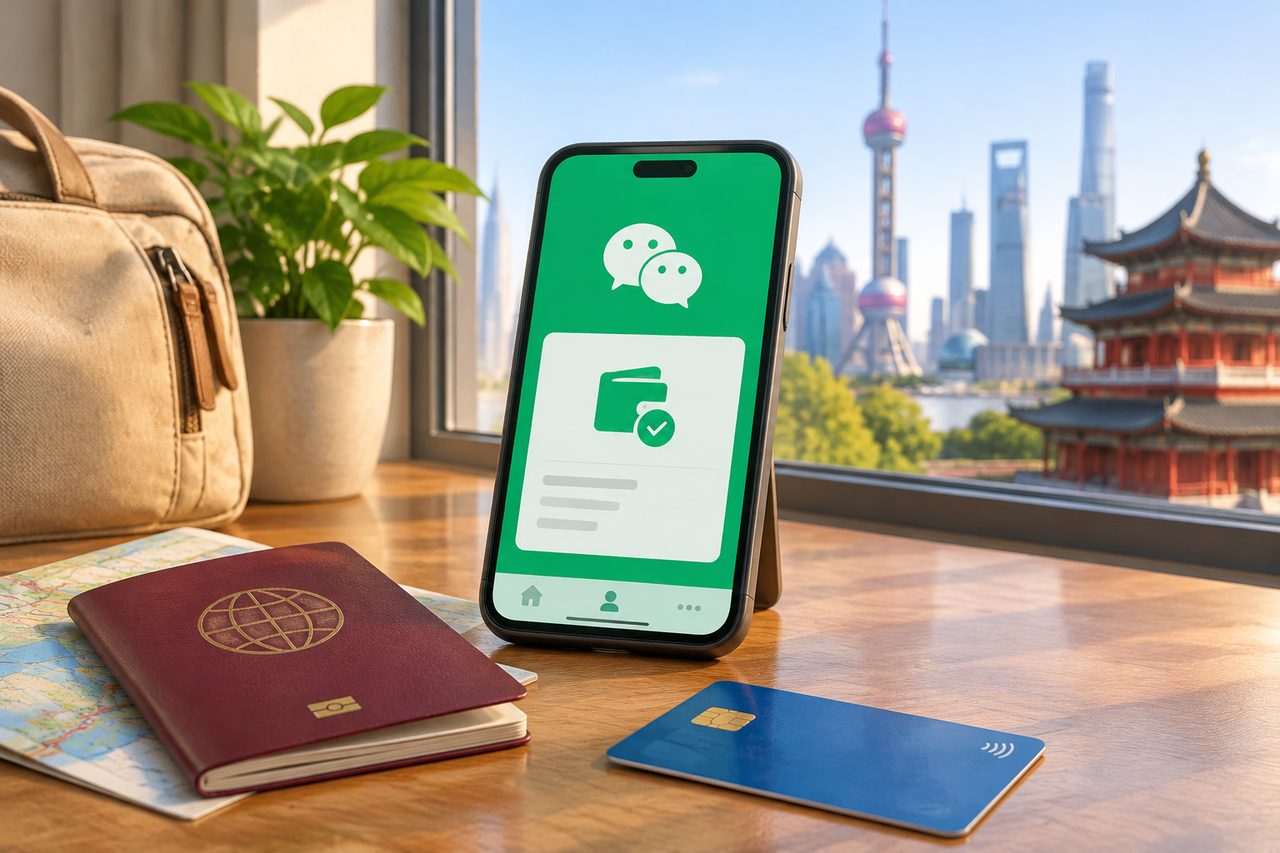
WeChat Pay for foreigners in China is workable, and most visitors can get it running before they board their flight. In plain terms: you install WeChat, register with a phone number, open the built-in wallet, verify your identity with a passport, and link an international card. The catch is that a linked foreign card does not behave like a Chinese bank account — some payments are blocked, fees may apply, and the wallet works best as a backup rather than your only way to pay.
This guide explains the setup sequence, the limits that surprise people, and where mobile payment fits into a medical trip — a context where a failed payment at a hospital cashier is more than an inconvenience.
What WeChat Pay Actually Is — and What It Is Not
WeChat began as a messaging app and grew into a super-app: chat, news, ride-hailing, food delivery, and a payment wallet all live inside it. WeChat Pay is that wallet. It is not a bank account, not a credit line, and not a separate app you download. It sits inside WeChat, which is why setup always starts with a working WeChat account.
For a foreign visitor, the practical model is simple. You either hold a balance in the wallet (funded by a friend, or by certain transfers) or you link a card and let WeChat charge it at the moment of payment. Most short-term visitors use the second route. The wallet then acts as a payment layer between your card and a merchant’s QR code.
Two things it is not: it is not universally accepted (some small vendors still prefer cash), and it is not a substitute for carrying a physical card. Treat it as one tool in a set.
Who This Is Right For — and Who It Isn’t
Mobile payment is close to essential in large Chinese cities, but “essential” needs unpacking.
You are typically a good fit if you:
- Will spend more than a few days in China and want to pay for transport, meals, and small purchases without hunting for cash machines.
- Hold a Visa, Mastercard, JCB, Discover, or Diner’s Club card issued outside mainland China — these are the international networks most commonly supported for foreign-card linking.
- Have a smartphone that can receive SMS verification codes while abroad, and a passport whose name matches your card exactly.
- Are traveling with a companion who can help with Chinese-language prompts during setup.
You may want to skip it, or plan around it, if you:
- Are visiting for only one or two days and will mostly be inside a hospital or hotel that accepts cards directly.
- Rely on a card type or issuer that your research shows is not supported for foreign linking — check with your bank before departure rather than at a checkout counter.
- Cannot complete identity verification, for example because your passport is expiring mid-trip or your name on the card differs from your passport.
- Prefer to keep payment simple: cash plus a physical card still works in hospitals, hotels, and larger retailers.
Being honest about the last group matters. Nobody should arrive in China believing mobile payment is the only option, then panic when setup stalls.
How to Set Up WeChat Pay as a Foreigner: The Sequence
The order of operations is what trips people up. Follow it in this sequence and most of the friction disappears.
- Install WeChat from your official app store. Avoid third-party download sites; account security depends on the app being genuine.
- Register with a phone number you can access abroad. Your home number usually works. You will receive an SMS code.
- Complete the security steps WeChat asks for. New accounts may be asked to verify through a friend or an additional check. Do this before you travel, not at a hospital reception desk.
- Open the wallet. In the app, go to Me, then Services (sometimes labeled Pay), then Wallet. The English interface labels vary slightly by app version, so match by position rather than exact wording.
- Add a payment method. Choose the option to add a bank card and enter your international card details. WeChat will run a small verification charge or a code check with your bank.
- Complete identity verification. You will be asked for your name, passport number, and possibly a photo of the passport page. Enter your name exactly as printed on the passport.
- Test it small. Buy something inexpensive — a bottle of water, a metro ticket — before relying on it for anything larger.
Can Foreigners Use WeChat Pay in China? The Limits That Matter
Yes — with conditions. The single most useful distinction is between paying a merchant and sending money to a person. Merchant payments (scanning a shop’s QR code, or having your code scanned) are the core supported function for foreign-card users. Person-to-person transfers, red packets, and some in-app purchases are more restricted for accounts verified with a foreign passport and funded by an international card.
Expect these practical constraints:
- Transaction and annual caps. Foreign-card payments are subject to limits set by the payment scheme and by WeChat itself. These figures change, so confirm current limits inside the app or with your card issuer rather than relying on a blog post — including this one.
- Possible fees. Some foreign-card transactions carry a service fee above a certain amount. The threshold and percentage are set by the platform and can be revised; check the fee notice shown in the app before you confirm a large payment.
- No credit float. A linked card is charged immediately. There is no statement period to lean on.
- Refunds route back the way they came. A refund to a foreign card can take days to reappear, which matters if you are settling a hospital deposit and the plan changes.
WeChat Pay vs. Alipay vs. Cash vs. Card: An Honest Comparison
Four payment routes are realistically available to a foreign patient. They are not equal.
| Method | Setup effort for a foreigner | Typical acceptance | Best suited to |
|---|---|---|---|
| WeChat Pay (linked foreign card) | Moderate: app install, registration, passport verification, card linking | Wide in cities — shops, transport, restaurants, many hospitals | Visitors who want one app for messaging and payment |
| Alipay (linked foreign card) | Moderate: similar verification flow, separate app | Comparable to WeChat Pay in urban areas | Visitors who prefer a payment-first app or want a backup wallet |
| Cash (renminbi) | None | Legally required to be accepted; in practice universal, though small vendors may lack change | Short trips, emergencies, anyone whose app setup failed |
| Physical bank card | None | Hotels, larger retailers, private international hospitals; less reliable in small shops and public hospital cashiers | Deposits, insurance-linked payments, large-ticket items |
Which column suits you depends on trip length and where you will spend money. A two-week patient traveling with a family member is best served by setting up both WeChat Pay and Alipay, carrying a few hundred renminbi in cash, and keeping one physical card for hospital deposits. A day-visitor to a private international hospital may need none of it.
Where Payment Fits in a Medical Trip to China
This is the part generic payment guides omit. A hospital visit is not a coffee purchase, and the money flows are different.
Public tertiary hospitals in China generally require prepayment for admissions and procedures, with insurance reimbursement handled afterward by the patient’s own insurer. Private international hospitals more often bill insurance directly. Neither pattern is guaranteed for a foreign patient on a given day — hospital finance policies vary, and international departments may have their own arrangements.
That means your payment plan needs three layers: a mobile wallet for daily expenses, a physical card for hospital deposits, and a clear answer from the hospital’s international office about which methods they accept for large sums. Ask this question in writing before you travel. Our team routinely builds this into pre-trip coordination, because a payment method that works at a restaurant may not work at an admissions window.
For readers still choosing where to be treated, the hospital directory at the top-ranked hospitals listing groups institutions by city and tier, and each hospital page notes the international services available.
Practical Considerations Before You Fly
Passport and name matching. Identity verification compares your wallet name to your passport. If your card carries a shortened first name, linking can fail. Bring a second card with matching details.
Phone access abroad. You need to receive SMS codes in China. Confirm with your carrier that international roaming for incoming texts is active, or plan to use a Chinese SIM once you arrive — but note that switching numbers can complicate an account already verified on your home number.
Visa category. Medical travel to China uses the S2 short-stay visa for treatment and private affairs, with family members accompanying a patient applying under the same category; stays beyond 180 days fall under S1. Requirements are set by the embassy or consulate handling your application and can change, so verify against the latest official guidance and the supporting documents your hospital issues. The M visa is for commercial and trade activity and is not the medical-travel route.
Insurance. Most international policies reimburse rather than pay upfront in China. Keep itemized receipts and payment records — a mobile payment screenshot is weaker evidence than a formal hospital invoice, so always request the official document.
Language. Payment apps, hospital forms, and cashier counters are largely Chinese-language. A bilingual companion removes a real source of error at exactly the moment money changes hands. Details of that support are on the patient consultation and companion service page.
After you return home. Unlink cards you no longer need, and check that any hospital refunds have landed. Cross-border refunds can take longer than domestic ones.
Frequently Asked Questions
Usually yes. Installation, registration, and card linking can generally be completed from abroad, provided you can receive SMS codes and complete passport verification. Some accounts are asked for extra confirmation steps, so start at least a week early. If setup fails remotely, it can often be finished after arrival — but do not plan your first hospital payment around that assumption.
Often, yes. Foreign-card transactions may carry a service fee above a threshold set by the platform, and both per-transaction and cumulative limits apply. These figures are revised periodically, so the authoritative source is the fee notice displayed inside the app at the moment of payment, plus your card issuer’s own foreign-transaction terms. Budget for the possibility rather than being surprised by it.
Fall back in this order: try your physical card, then cash, then ask the hospital’s international office whether an alternative arrangement exists. Failures usually stem from card-network restrictions, verification mismatches, or limits — not from a lack of funds. This is precisely why carrying a second payment method is standard advice, not pessimism.
The wallet itself uses standard protections, but your security depends on your own habits: official app downloads, a strong passcode, and caution with QR codes from unfamiliar sources. Never scan a code someone sends you unsolicited, and never share verification codes. If a payment request feels unusual, stop and verify through a channel you initiated.
Your Next Step
Setting up WeChat Pay for foreigners in China takes an afternoon at home and removes a genuine source of daily friction — but it is a convenience layer, not a medical plan. The bigger questions are which hospital fits your case, what the visit will cost, and how payment, records, and language will be handled on the day. China Medical Services is a coordination service, not a hospital and not a clinical provider; we do not diagnose or treat. If you would like help mapping those logistics before you commit to travel, you can start with a free consultation and we will tell you honestly what we can and cannot arrange.
This article is general information, not medical or financial advice. Payment rules, fees, and limits change; confirm current terms with WeChat, your card issuer, and your hospital. Treatment decisions should always be made with a qualified clinician.
For more medical information and treatment options in China, visit chinamedservices.com (China Medical Services).
