A Taxi Card for the Hospital in China: A Practical Guide
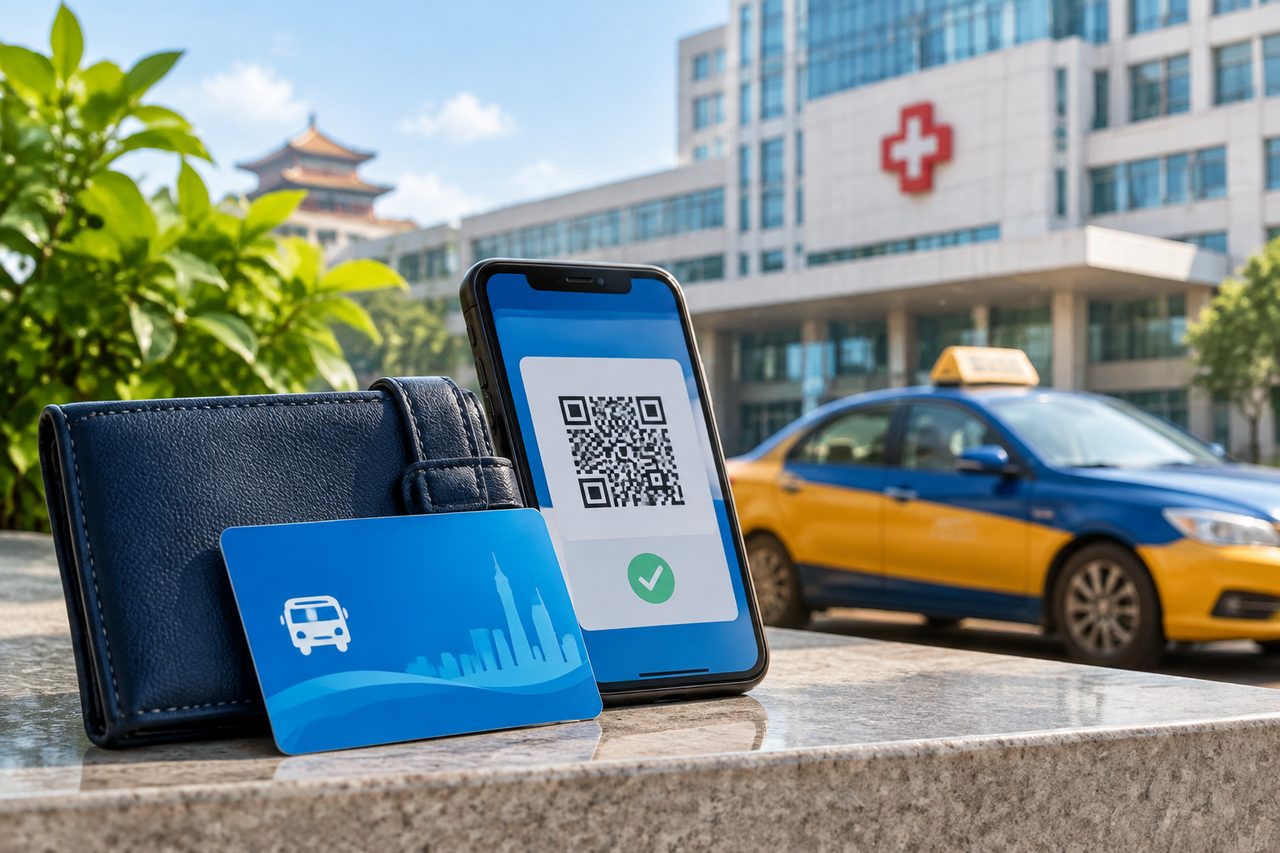
Key Takeaways
- There is no single national “hospital taxi card.” In most Chinese cities, the card you are thinking of is a rechargeable transit card (often called a Yikatong in Beijing or a Jiaotong card in Shanghai) that can also be used for taxis, metro and some convenience purchases.
- Foreigners can buy and use these transit cards, but the card is for transport, not for paying a hospital bill. Knowing how to pay hospital in China as a foreigner means understanding two separate systems: getting to the hospital and settling the medical bill.
- The biggest practical barrier is not the card itself but the payment ecosystem around it. Many public hospitals expect prepayment, and international cards are not always accepted at self-service kiosks.
- Before you travel, confirm the hospital’s accepted payment methods, bring a backup payment option, and keep receipts for insurance reimbursement.
The Problem: Getting to and Paying for Care in a Chinese Hospital Is Not Obvious
Imagine arriving in Beijing after a long flight, hailing a taxi to a large public hospital, and discovering that the driver expects a transit card or a mobile payment app rather than the international credit card in your wallet. That scenario is common. China’s largest hospitals can see more than 10,000 outpatient visits in a single day, and the payment infrastructure that keeps those queues moving is built around domestic mobile wallets and prepaid cards, not around foreign bank cards.
The confusion often starts before the hospital doors. Visitors hear about a “taxi card” and assume it is a medical payment card. In practice, the term usually refers to a city transit card that can be swiped in taxis and on public transport. That card will help you reach the hospital, but it will not settle a consultation fee, a lab test or a hospital deposit. Understanding the difference is the first step toward a smooth visit. For a broader overview of how international patients move through the system, the China Medical Services homepage is a useful starting point.
How to Pay Hospital in China as a Foreigner: The Two Systems Explained
The phrase “how to pay hospital in China as a foreigner” really covers two separate questions. The first is transport payment: how do you get to the hospital and move around the city? The second is medical payment: how do you pay the hospital for consultations, tests, treatment and deposits? Treating them as one system is where most travelers get stuck.
System One: The Transit Card for Taxis and Metro
Major cities sell rechargeable transit cards at metro station service desks and some convenience stores. In Beijing the card is commonly called a Yikatong; in Shanghai, a Jiaotong card. These cards can typically be used on the metro, on buses and in many taxis. They require a deposit or minimum balance, and you top them up at station counters or designated machines. They are convenient, but they are not linked to any hospital account.
System Two: Hospital Payment
Public hospitals in China generally require payment before or during service. You may be asked to pay a registration fee, then a consultation fee, then separate charges for labs, imaging and pharmacy. Larger hospitals often use self-service kiosks, but those kiosks may only accept Chinese mobile payments or domestic bank cards. International credit cards are more reliably accepted at private international hospitals and at the international or VIP departments of top public hospitals. For a directory of hospitals that routinely serve foreign patients, see the top hospitals by city.
Can Foreigners Use a Taxi Card in a China Hospital?
Sometimes, but not reliably at public hospital kiosks. Private international hospitals and international departments are more likely to accept international cards or offer direct insurance billing. Always carry a backup method and ask the hospital in advance.
Public hospitals commonly require payment before or during each service, and admission usually requires a deposit. Private hospitals may bill differently. The exact sequence depends on the hospital and the procedure, so confirm the payment flow when you book.
Bilingual hospital staff, international departments and patient service teams can explain the steps. If language is a barrier, a bilingual medical companion can assist with registration, queuing, payment and translation during the visit.
Your Next Step
The core message is simple: a taxi card helps you reach the hospital, but paying for care is a separate process that depends on the hospital and your payment setup. Plan both before you travel, and confirm the details with the hospital you choose. China Medical Services is a patient navigation service, not a hospital, and we do not provide diagnoses. If you would like help matching a hospital, understanding payment steps or arranging bilingual support, you can request a free consultation through our patient services page.
For more medical information and treatment options in China, visit chinamedservices.com (China Medical Services).
