IVF Diet in China: Questions International Patients Ask
Key Takeaways
- Diet is supportive, not curative: no food plan can guarantee an IVF outcome, and reputable Chinese fertility teams present nutrition as one part of a wider treatment plan.
- The practical questions international patients ask most are about food safety, clinic-provided diet guidance, and whether an IVF diet plan China cost line appears in their budget at all.
- The real barriers are logistical: public hospital fertility departments generally cannot be booked from overseas in advance, and appointments are handled on the day unless you go through an international or VIP channel.
- Before committing to travel, clarify what the clinic actually provides in writing — including whether diet advice is included, who delivers it, and in what language.
The Problem: Diet Advice Is Everywhere, and Almost None of It Is Personalized
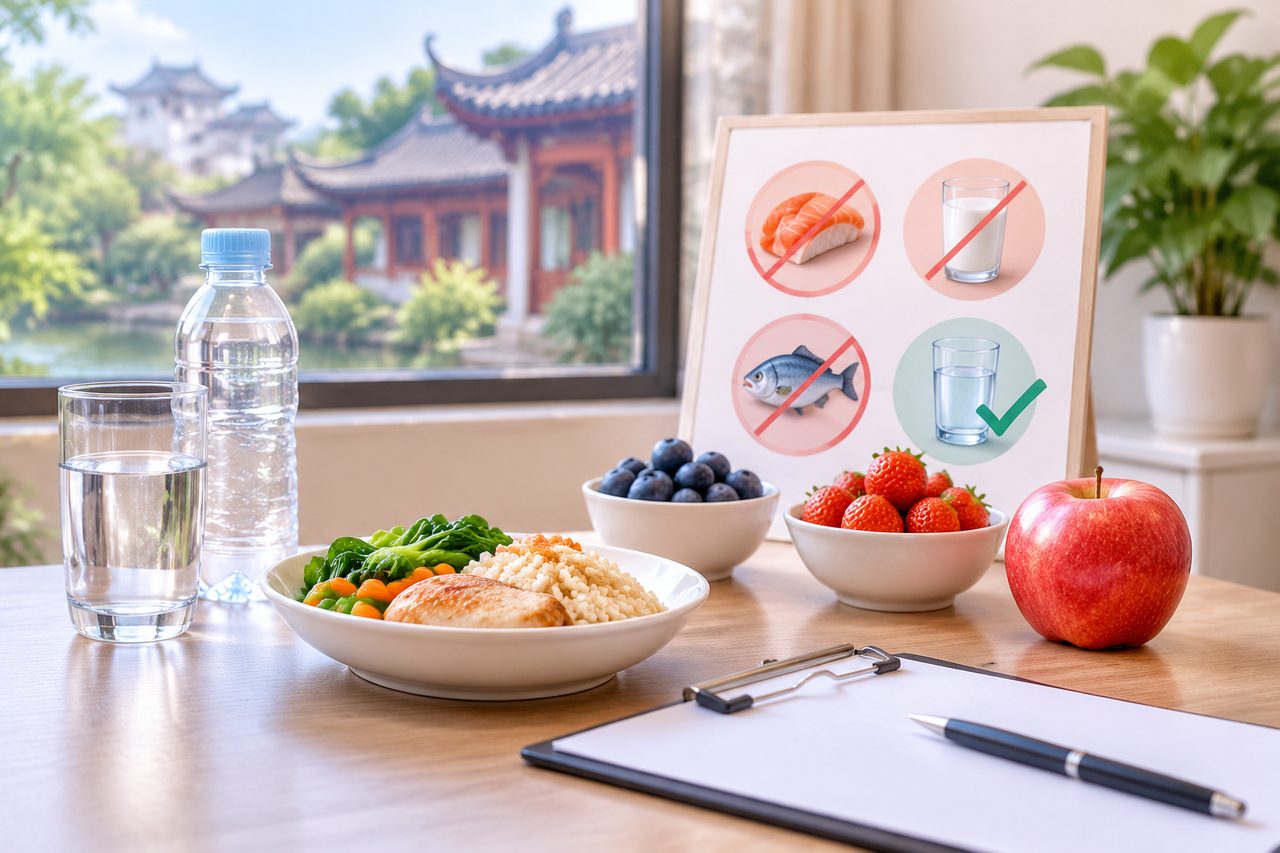
During stimulation and after embryo transfer, many clinics advise avoiding raw or undercooked animal products, unpasteurized dairy, and high-mercury fish — standard pregnancy-oriented food safety advice. If you are eating outside the hospital, choose freshly cooked food from reputable establishments. Tap water is not drunk directly in most of China; bottled or boiled water is the norm, and this is a practical point rather than a warning.
Folic acid supplementation before conception is well established. Other supplements marketed for fertility — CoQ10, DHEA, inositol — have specific indications and are not universally appropriate. Bring your current supplement list to your consultation and have it reviewed; do not add products based on forum recommendations, and be aware that imported supplement labels may not match what is dispensed in China.
Expect questions about your menstrual history, prior cycles, weight and recent weight change, thyroid and metabolic conditions, and any diagnosed insulin resistance. These matter more to your protocol than whether you eat pineapple. If you have a condition such as polycystic ovary syndrome, diabetes, or a history of disordered eating, say so explicitly — diet guidance should be adapted, not generic.
Is Chinese IVF Diet Advice Safe for Foreigners? Separating Culture From Medicine
This is the question we are asked most often, and it deserves a direct answer: the underlying medical advice in Chinese fertility departments is broadly consistent with international practice, because the physiology is the same and Chinese reproductive medicine specialists are trained in the same evidence base. What differs is the cultural layer — the emphasis on warm foods, congee and soups, and the avoidance of cold drinks — which is a tradition rather than a clinical requirement.
Safety concerns arise in three specific situations. First, if you have food allergies or intolerances, you must communicate them clearly; dietary staples differ and cross-contamination practices vary. Second, if you have a chronic condition managed by diet — kidney disease, diabetes, coeliac disease — your plan should come from a clinician who knows that condition, not from a general fertility handout. Third, be cautious with herbal preparations. Chinese herbal medicine is a genuine discipline with real pharmacological activity, and some herbs are contraindicated during fertility treatment or early pregnancy. Do not take any herbal formula without telling your fertility doctor, and do not assume that “natural” means compatible with your cycle.
If a clinic or intermediary promises that a specific diet will improve your success rate, treat that as a warning sign. Nutrition supports treatment; it does not replace or guarantee it.
How Nutrition Fits Into the Actual Appointment Process
Understanding the workflow prevents wasted travel. In Chinese public hospitals, outpatient registration is generally handled on the day rather than booked from overseas in advance, and a treatment plan follows an in-person consultation — you cannot arrange a procedure remotely on the basis of a diet discussion. Patients who want to secure a specialist appointment and English-language service in advance typically go through a hospital’s international or VIP department, where prices run roughly 1.5 to 2 times the standard channel.
A staged approach usually makes more sense than flying first and asking questions later. You can begin with a written second opinion, sending your existing examination reports for review by the relevant specialty, which returns written analysis and direction. If questions remain, a video consultation lets you speak with the team directly about your history and goals, including nutrition. Only once a feasible plan is clear does travel become worth considering. Our team coordinates these steps, and the broader process is described on the China Medical Services homepage.
For hospital selection, fertility care sits within reproductive medicine, one of the specialties ranked in the Fudan specialist reputation listings. You can review ranked departments on the departments page and browse hospitals by city, for example Shanghai or Beijing.
Practical Considerations Before You Travel
Visas. Medical treatment in China is covered by the S2 visa, the short-stay category for medical treatment and private affairs, with S1 for stays exceeding 180 days. Accompanying family members apply under the same category. Requirements and supporting documents — including hospital invitation or appointment documentation — should be confirmed with the latest embassy or consulate guidance, as these change. Approval is never guaranteed. Note that the M visa is for commercial and trade activity and is not the correct category for medical travel.
Payment and insurance. Chinese public hospitals generally require prepayment, with insurance reimbursement handled afterward in your home country; private international hospitals more often bill insurers directly. Confirm in writing which applies to you, and check whether your insurer requires pre-authorization for treatment abroad.
Language. Large tertiary hospitals see enormous outpatient volumes daily, and signage and processes are primarily in Chinese. Interpretation is not a luxury in this environment; it is how appointments, payments, and instructions get completed correctly.
Records. Bring prior cycle records, hormone results, imaging, and a medication list in English, with copies. Chinese clinicians read English reports routinely, but a clear summary helps.
Follow-up at home. Ask before you travel how monitoring after your return will be handled and what documentation the clinic will provide to your local physician. Cross-border continuity is a planning question, not an afterthought.
Frequently Asked Questions
Will a Chinese clinic give me a specific IVF diet plan?
Most fertility departments provide general nutrition guidance during consultation, and some hospitals can refer you to a dedicated nutrition department. A highly individualized plan is more commonly available at private international hospitals or through a dietitian consultation. Ask the specific hospital what is included, who provides it, and in what language before you commit.
Does diet advice cost extra, and how much should I budget?
It varies by hospital and by whether you see a dedicated dietitian; some settings include basic guidance in the consultation fee, others charge separately. We do not quote hospital fees on a hospital’s behalf. Request a written cost breakdown for your case, and keep our service fees — which are separate and not offset against medical costs — clearly distinguished in your budget.
Can I follow my own diet from home while having treatment in China?
Usually yes, provided it is nutritionally adequate and safe. Tell your clinician what you eat, flag allergies and any chronic condition, and avoid introducing new supplements or herbal products without review. The main adjustment for most patients is food safety and routine rather than the composition of the diet itself.
Is Chinese herbal medicine safe alongside IVF?
Not automatically. Some herbs have hormonal or other pharmacological effects and may be inadvisable during stimulation or early pregnancy. Any herbal formula should be disclosed to and cleared by your fertility doctor. This is a genuine safety issue, not a cultural preference.
Your Next Step
The useful takeaway is that diet is a supporting factor in fertility treatment, not a lever you can pull to control the outcome — and that the practical questions about food safety, clinic guidance, and cost are answerable before you book a flight. China Medical Services helps international patients navigate Chinese hospitals: we arrange written second opinions, video consultations, appointment coordination, and bilingual accompaniment during visits. We are not a hospital and we do not provide diagnoses or treatment. If you would like to clarify what a specific clinic offers before making any commitment, you can start with a free consultation and take it from there.
This article is for general information only and does not constitute medical advice. Treatment decisions should be made with a qualified clinician who has reviewed your individual history.
For more medical information and treatment options in China, visit chinamedservices.com (China Medical Services).
