Shanghai Ninth Hospital International Patients: Plastic & Craniofacial Surgery Guide
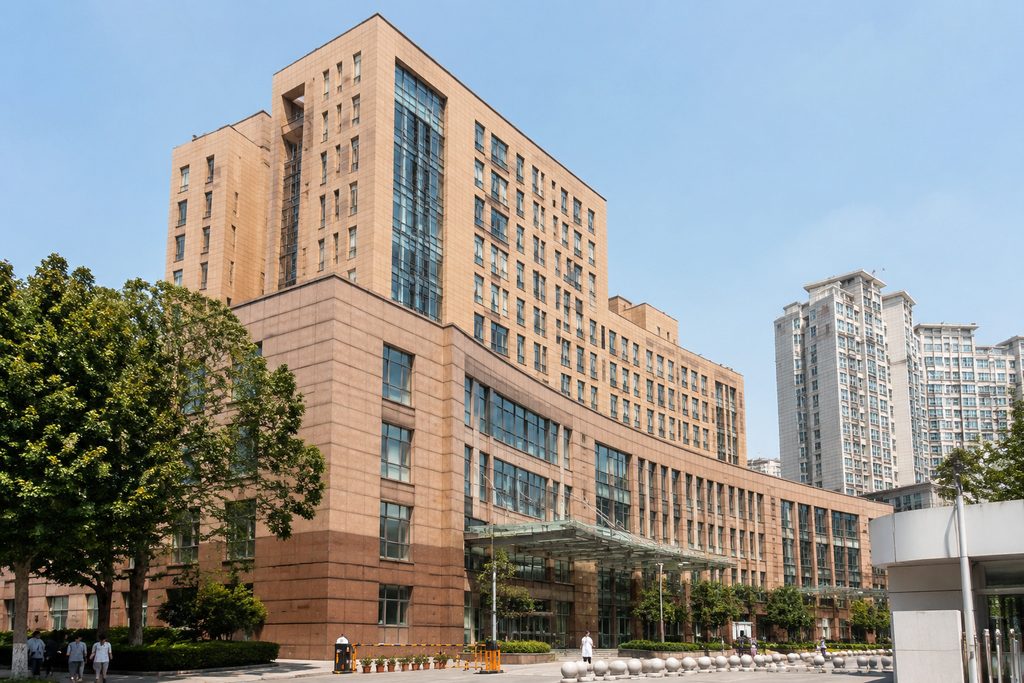
When 47-year-old David from Manchester finally decided to address the jaw asymmetry that had bothered him for two decades, he faced a wall of silence. His local NHS wait for an initial consultation alone stretched past 18 months. Private quotes in London started at £35,000. He began searching for alternatives. That search led him to a single, recurring name in craniofacial surgery: Shanghai Ninth People’s Hospital. Then came the real challenge — figuring out how an English speaker with no connections in China could actually access that expertise.
Our team receives calls like David’s every week. The clinical reputation of Shanghai Ninth is not the question. The question is navigation. We exist to answer it.
Key Takeaways
- Shanghai Ninth People’s Hospital performs over 40,000 plastic and reconstructive surgeries annually, making it one of the highest-volume centers globally for craniofacial procedures.
- Total treatment costs for international patients typically range from 30% to 50% of comparable Western private-pay rates, but accessing the hospital’s top specialists requires navigating a system not designed for overseas visitors.
- The hospital does not offer a direct international patient hotline that functions like a Western hospital’s international desk. Booking requires in-person registration and local payment infrastructure.
- Working with a ground-level coordination team is not a luxury for this hospital — it is the difference between months of frustrating dead ends and a confirmed surgical date.
The Problem: Accessing World-Class Craniofacial Surgery as a Foreigner
About 1 in 1,700 children are born with craniosynostosis, and countless adults live with untreated maxillofacial deformities, post-traumatic injuries, or simply the accumulated dissatisfaction of a face that does not feel like their own. The surgical solutions exist. They are just unevenly distributed across the globe. A 2023 report by the International Society of Aesthetic Plastic Surgery noted that medical travel for plastic surgery grew 18% year-over-year, with Asia capturing an increasing share of complex, non-cosmetic reconstructive cases. The reason is straightforward: certain hospitals in China have surgical volumes that create a feedback loop of expertise no low-volume center can replicate.
Shanghai Ninth People’s Hospital sits at the apex of that pyramid. Its Department of Plastic and Reconstructive Surgery is not just busy. It is a high-throughput engine of surgical innovation. But volume alone does not help a patient sitting in Toronto or Sydney who cannot read the hospital’s Chinese-language appointment system, does not have a Chinese bank card for the deposit, and cannot physically queue at 6:00 AM for a registration ticket. That gap between clinical excellence and logistical impossibility is where most international patients stall out.
Who We Are
We are not a hospital. We do not provide medical treatment, diagnose conditions, or influence clinical decisions. We are China Medical Services — a ground-level coordination team built specifically to solve the logistical nightmare that David faced. Our database covers over 340 top-ranked hospitals across 37 cities in China. We handle the non-clinical scaffolding: appointment coordination through official hospital international channels, bilingual medical companions who physically accompany you through every registration, payment, and consultation step, visa guidance for the correct S2 medical visa, and recovery-phase logistics. Think of us as your in-country operational team. You focus on healing. We handle everything that happens around the healing.
Why Shanghai Ninth People’s Hospital Delivers Results Few Centers Can Match
Clinical Volume That Creates Surgical Mastery
The Department of Plastic and Reconstructive Surgery at Shanghai Ninth handles an extraordinary caseload. The craniofacial unit alone completes thousands of orthognathic surgeries each year. For context, a busy craniofacial center in the United States might perform 100 to 150 orthognathic cases annually. Shanghai Ninth’s surgeons routinely complete multiples of that figure. This is not just a statistic. In craniofacial surgery, where millimeter-level bone movements determine both function and aesthetics, surgical volume correlates directly with complication rates. A 2022 study published in the Journal of Cranio-Maxillofacial Surgery found that centers performing more than 200 orthognathic procedures per year had significantly lower rates of nerve injury and nonunion compared to lower-volume centers. Shanghai Ninth’s surgeons operate in a realm of repetition that breeds a particular kind of precision.
This volume also means the surgical teams have seen virtually every anatomical variation. A rare midface deformity that might be a career-defining case for a surgeon in a smaller country is a Tuesday afternoon here. That familiarity translates into shorter operative times, more predictable outcomes, and protocols refined through tens of thousands of iterations.
Integrated Craniofacial Teams Under One Roof
Many Western hospitals silo specialties. The plastic surgeon handles the soft tissue. The oral maxillofacial surgeon manages the jaw. The orthodontist works separately. The patient shuttles between appointments, often with conflicting timelines and communication gaps between providers. Shanghai Ninth’s structure is fundamentally different. The hospital houses plastic surgeons, maxillofacial surgeons, orthodontists, speech pathologists, and prosthodontists within a unified craniofacial program. Pre-surgical orthodontic preparation, the osteotomy planning, the actual surgery, and post-operative rehabilitation are coordinated through a single treatment protocol managed by a team that meets weekly on complex cases.
For an international patient, this integration solves a major coordination headache. You are not stitching together three different providers in an unfamiliar city. The entire pathway exists within one institution, with one medical record, and one chain of clinical accountability.
Shanghai Ninth People’s Hospital Plastic Surgery Price: The Structural Cost Advantage
Let us address the question that sits behind every international patient inquiry: what is the Shanghai Ninth People’s Hospital plastic surgery price for a foreigner? The answer requires understanding how the hospital structures its international patient pathway. Shanghai Ninth does not publish a fixed international price list online. International patients access the hospital through its International Medical Center or VIP clinic channels, which charge differently from the standard public pathway that Chinese citizens use.
For a complex orthognathic surgery case involving both upper and lower jaw repositioning, an international patient should expect total hospital charges in the range of $18,000 to $35,000 USD. This typically includes surgeon fees, anesthesia, hospital stay of 5 to 7 days, and basic post-operative care. Pre-surgical orthodontics and any required imaging add to this figure. A comparable private-pay orthognathic surgery in the United States runs $50,000 to $100,000. In Australia, $40,000 to $70,000 AUD for the surgical component alone. The gap is not marginal. It is structural.
Why the difference? Chinese hospital pricing reflects domestic labor economics. A senior craniofacial surgeon’s professional fee is not inflated by the malpractice insurance premiums and administrative overhead that burden Western systems. Hospital bed costs, nursing labor, and operating theater time all sit at a fraction of OECD-country pricing. And critically, the surgical volume means fixed costs are amortized across far more cases. This is not discount surgery. It is the same titanium plates, the same piezoelectric osteotomy equipment, the same rigid fixation protocols — delivered within a different economic model.
Is Shanghai Ninth Hospital Good for Jaw Surgery? The Evidence
The short answer is yes — but let us examine why. The hospital’s Department of Oral and Craniomaxillofacial Surgery is consistently ranked among China’s top institutions in the Fudan University Hospital Rankings, which evaluate clinical reputation and research output across 45 specialties. Shanghai Ninth’s plastic surgery program is categorized in the highest tier (A++++) on the Fudan comprehensive hospital list, placing it in the top 5% of China’s 35,000+ hospitals.
What does this mean for someone asking “is Shanghai Ninth Hospital good for jaw surgery”? The department pioneered several techniques now used internationally, including specific distraction osteogenesis protocols for hemifacial microsomia and advanced virtual surgical planning workflows for complex dentofacial deformities. The surgeons routinely publish in high-impact journals. More relevant to a patient, the hospital’s orthognathic surgery program has a dedicated inpatient floor with nursing staff who manage post-operative jaw patients exclusively. They know what a normal recovery looks like and what signals a problem. That focused nursing experience matters enormously when you are wired shut in a foreign country.
But we must be honest about what “good” means in this context. The hospital’s public wards are crowded. Privacy is limited. English proficiency among nursing staff on standard floors is low. The international patient pathway addresses some of these issues — private rooms, English-speaking coordination — but the core experience is still a high-volume Chinese hospital, not a boutique Western private clinic. Patients who want a spa-like recovery environment should look elsewhere. Patients who want surgical expertise forged in extraordinary volume will find it here.
How to Book Plastic Surgery at Shanghai Ninth Hospital: The Real Process
If you search “how to book plastic surgery at Shanghai Ninth Hospital” and expect to find an online booking portal with available time slots, you will be disappointed. The hospital’s standard outpatient registration system is built for domestic patients with Chinese ID numbers. It operates on a same-day queuing model for many clinics, and the English-language interface is minimal. The international patient pathway exists, but it is not a self-service system.
Here is the actual flow for an international patient seeking craniofacial surgery:
Step one: Clinical pre-screening. Before any booking can happen, the surgical team needs to review your case. This means providing recent CT scans (cone beam or spiral, depending on the case), panoramic X-rays, clinical photographs, and a summary of your treatment history. A surgeon reviews these materials and determines whether your case is appropriate for the department. Not every patient is accepted. Complex revision cases or those with specific medical comorbidities may be declined.
Step two: In-person consultation. Chinese public hospital rules require that surgery cannot be scheduled without an in-person consultation. This is non-negotiable. The surgeon must examine you, review imaging with you present, and confirm the surgical plan before any date is locked. This means at least one trip to Shanghai before the actual surgery. Some patients combine the consultation and surgery into one trip with a gap for pre-surgical preparation. Others make two separate visits. Your clinical situation dictates which approach works.
Step three: Payment and scheduling. Once the surgeon approves the case and you consent to the plan, the hospital requires a deposit. For international patients, this is typically paid through the International Medical Center’s billing office. Payment methods accepted include international credit cards and wire transfers, but the process can be slow. A local coordinator who understands the billing department’s workflow can compress what might take weeks of email back-and-forth into a single in-person visit.
Step four: Pre-operative preparation. If your case requires pre-surgical orthodontics, this typically adds 12 to 18 months before the operation. Some patients complete orthodontics in their home country with a treatment plan coordinated by Shanghai Ninth’s orthodontists. Others relocate to Shanghai for the full duration. There is no universal answer — the logistics depend on the complexity of your dental movements and your orthodontist’s willingness to collaborate across borders.
The Shanghai Ninth People’s Hospital International Patient Coordinator Reality
Many patients search specifically for a “Shanghai Ninth People’s Hospital international patient coordinator” — imagining a dedicated hospital employee who handles overseas cases from inquiry to discharge. The reality is more nuanced. Shanghai Ninth’s International Medical Center does have staff who assist foreign patients, but their capacity is limited relative to demand. They handle a high volume of inquiries and may not provide the kind of end-to-end case management that a complex craniofacial patient requires.
This is where external coordination teams fill a genuine gap. A craniofacial surgery cost China international patient estimate depends heavily on having someone on the ground who can walk your imaging to the right department, follow up on surgical review timelines, translate nuanced clinical discussions accurately, and troubleshoot the inevitable friction points — a delayed lab result, a payment hold, a scheduling conflict. The hospital’s internal coordinators do valuable work, but they are not personal case managers for each of the thousands of international patients who inquire annually.
Our bilingual medical companions serve this function. They are physically present at the hospital. They know which window processes international deposits, which department handles CT scheduling, and how to interpret a surgeon’s shorthand notes into plain English for a nervous patient. They do not replace the hospital’s international staff. They augment what those staff can realistically provide.
What You Need to Know Before Going Alone
We have seen patients attempt to navigate Shanghai Ninth independently. Some succeed after months of effort. Many give up. Here are the barriers that typically derail solo attempts:
- Visa requirements are specific and unforgiving: Medical treatment in China requires an S2 visa with a clear treatment purpose annotation. This is not the same as a tourist visa, and arriving on the wrong visa category can result in denied hospital registration. The supporting documents — a hospital invitation letter, treatment confirmation, accommodation proof — must be exactly right. Embassies do not offer do-overs on short notice.
- Payment infrastructure assumes local banking: The hospital’s standard payment terminals accept UnionPay, WeChat Pay, and Alipay. International credit cards work at the International Medical Center but not necessarily at every ancillary department. A patient trying to pay for a CT scan at a standard cashier window with a foreign Visa card may find themselves stuck. Large deposits for surgery often require wire transfers that take days to clear and need precise invoicing details.
- Language barriers compound at every step: The surgeon may speak some English. The surgical team likely reads English medical literature. But the registration clerk, the lab technician drawing pre-op bloods, the pharmacist dispensing post-operative medications, and the discharge coordinator almost certainly do not. Medical translation is a specialized skill. A mistranslated dosage instruction or a misunderstood allergy warning has real consequences.
- Post-operative recovery in an unfamiliar city is isolating: After a major craniofacial procedure, you will be swollen, in discomfort, and possibly on a liquid diet. Navigating follow-up appointments, medication refills, and hotel accommodations while recovering is physically and emotionally draining. Having a local contact who can handle logistics while you rest is not a luxury.
How We Help You Navigate This
These barriers exist for structural reasons, not because the hospital is hostile to foreigners. Shanghai Ninth is a public institution serving a domestic population of millions. The international patient pathway is an adaptation, not a core design feature. Our role is to make that adaptation work smoothly for you.
Before you travel, we handle the clinical pre-screening submission — ensuring your imaging meets the hospital’s format requirements, your medical history is translated accurately into Chinese clinical terminology, and your case reaches the appropriate sub-specialty team. We coordinate the hospital invitation letter for your S2 visa application and advise on accommodation within walking distance of the hospital for the recovery period.
During your treatment, a bilingual medical companion accompanies you to every appointment. This person manages registration, payment, queue navigation, and real-time interpretation of clinical discussions. They take notes during surgeon consultations so you can review the details later — because no one retains everything a surgeon says when they are hearing about their own operation. If the surgeon orders additional imaging or lab work, the companion routes you to the correct departments and handles the paperwork.
After discharge, we remain reachable. Follow-up appointments, suture removal, medication questions — our team stays with you until you are cleared to fly home. For patients who need extended recovery in Shanghai before long-haul travel, we coordinate extended-stay accommodations and any interim check-ups the surgeon requires.
We do not promise outcomes. No ethical coordinator does. We promise that the logistical path to Shanghai Ninth’s operating theaters will be as short and frictionless as possible.
Frequently Asked Questions
Based on cases we have coordinated, total hospital charges for bimaxillary orthognathic surgery typically fall between $18,000 and $35,000 USD. This covers surgeon fees, anesthesia, inpatient stay, and basic post-operative care. Pre-surgical orthodontics, if needed, adds $3,000 to $8,000 depending on duration and complexity. These are estimates — the final figure depends on your specific surgical plan, the surgeon’s seniority, and length of stay. Costs for international patients are higher than domestic rates because the International Medical Center pathway charges different fee schedules. Compared to private-pay orthognathic surgery in the US, UK, or Australia, patients typically save 50% to 70%.
Plan for a minimum of three to four weeks in Shanghai. This allows for pre-operative final consultations and any last-minute preparations, the surgery itself, an inpatient stay of five to seven days, and at least two weeks of early recovery before you are cleared for air travel. Some surgeons require a post-operative review at the four-week mark before signing off on international travel. Complex cases or those with unexpected healing issues may require a longer stay. Do not book a tight return flight. Your surgeon will advise on the safe window for flying — cabin pressure changes after craniofacial surgery are not trivial.
Direct pre-consultation communication with the surgeon is limited. The standard pathway is a clinical pre-screening where your imaging and case history are reviewed, followed by a determination of whether the department will accept your case. A video consultation can sometimes be arranged through the International Medical Center, but availability is not guaranteed and depends on the surgeon’s clinical schedule. This is one reason patients engage a coordination team — we facilitate the pre-screening and can often arrange a preliminary discussion before you book flights. Any video consultation fee you pay with us is credited in full toward our on-the-ground coordination service if you proceed with treatment within 90 days.
This is the hardest question and deserves an honest answer. Post-operative complications — infection, hardware issues, nonunion, nerve problems — can occur after any major craniofacial surgery, regardless of where it is performed. If a complication arises after you have returned to your home country, your local healthcare system becomes your first line of management. Shanghai Ninth’s surgeons can provide remote guidance to your local provider, but they cannot physically intervene. You need a plan for this scenario before surgery. Identify a local maxillofacial surgeon who is willing to manage post-operative issues from another center. Some patients arrange a formal handoff before traveling. Others accept the risk. There is no perfect solution — only informed decision-making. Our team can help coordinate communication between your home provider and Shanghai Ninth if follow-up is needed, but we do not manage clinical complications directly.
Shanghai Ninth is the highest-volume center for craniofacial surgery in China, and its plastic surgery department is ranked in the top tier nationally. But “best” depends on your specific condition. Peking University Stomatology Hospital in Beijing has a strong orthognathic surgery program with particular expertise in obstructive sleep apnea-related jaw surgery. West China Hospital of Stomatology in Chengdu is another major center with high surgical volumes. For purely aesthetic craniofacial procedures, several private international hospitals in Shanghai offer English-speaking environments and Western-style amenities, though with lower surgical volumes. The right choice depends on your diagnosis, your surgical goals, and your tolerance for navigating a high-volume public hospital environment. Our team helps match patients to the appropriate center based on clinical needs, not just reputation.
Your Next Step
Shanghai Ninth People’s Hospital offers craniofacial surgical expertise that is genuinely difficult to match in most Western countries — built on case volumes that create a different order of surgical experience. Accessing that expertise requires navigating a system that was not designed for international patients. That gap is real, but it is bridgeable.
If you are considering craniofacial surgery and want to understand whether Shanghai Ninth is a viable option for your specific case, start with a clinical pre-screening. Our team can facilitate that process — handling imaging submission, translation, and departmental routing — so you get a clear answer without months of dead-end emails. Reach out for a free consultation to discuss your case and what a realistic pathway might look like. There is no cost for the initial discussion, and no pressure to proceed. We would rather you make an informed decision, whatever direction it takes.
For more medical information and treatment options in China, visit chinamedservices.com (China Medical Services).
